

Partner Toolkit
Download key resources prepared by the CA4SH Global Team to help advocate for scaling global soil health
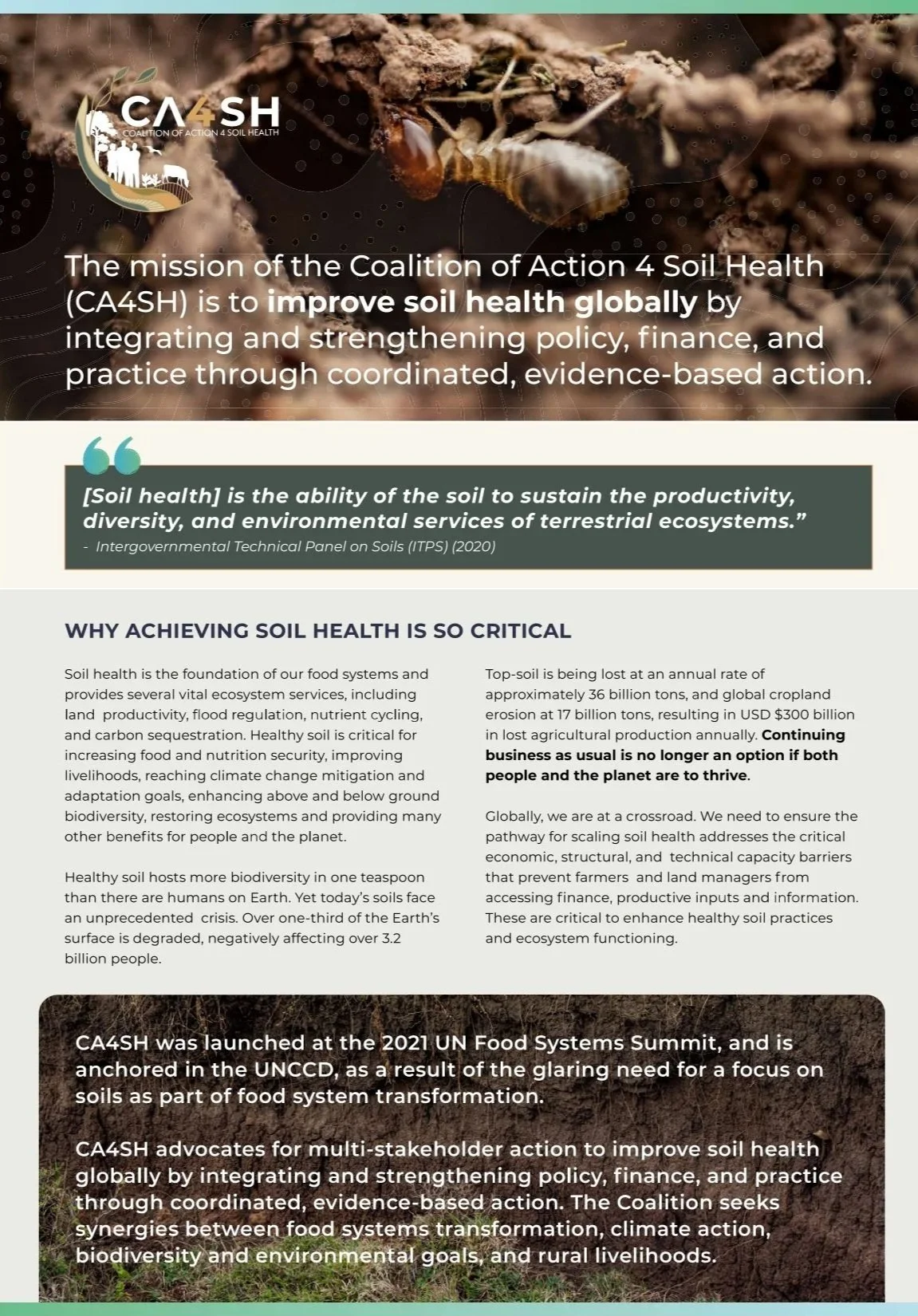
The Coalition of Action 4 Soil Health (CA4SH) grew out of the 2021 United Nations Food Systems Summit (UNFSS). The objective of the Coalition is to scale soil health globally. Download the brochure to find out more.
CA4SH is now a multistakeholder Coalition of over 350 diverse organizations and individuals working together to scale global soil health through collective action. As the Coalition has grown over the years, so too has the need to adapt and refine our strategy to engage effectively with our partners.
2025 was marked by this spirit of continual learning, which we are operationalizing through an updated strategic framework. Key to the success of this model is strategic engagement in diverse fora, and in 2025, we did just that; CA4SH had a strong presence at global, national and regional events and has launched several unique initiatives to engage in these processes. For example, in 2025, we played a role in streamlining soil health in the Comprehensive African Agriculture Development Programme (CAADP) by engaging at the CAADP Partnership Platform in Kigali, Rwanda, and we launched a new joint initiative for establishing an ecosystem of soil data driven services in four African countries to support the CAADP implementation. Underpinning all of our work is youth engagement, and several youth partner initiatives engaged in these processes and implemented unique, context-specific projects on the ground.
CA4SH will celebrate its fifth anniversary in 2026, and we have much to look back on and learn from to chart the next five years and beyond.

This presentation is for use by CA4SH members and stakeholders to introduce CA4SH, our ongoing activities, and key achievements.

2024 was a big year for soil health and for the Coalition of Action 4 Soil Health (CA4SH). We engaged global stakeholders in united advocacy to scale soil health through our priority areas of action, including science, policy, finance, youth engagement, and implementation on the ground. Scaling soil health can not happen in a vacuum; it requires the diverse perspectives, expertise, experience, and networks of the global community to come together. CA4SH is uniquely positioned to bring these voices together, offering a community and a meeting place for these partnerships to grow and bloom, and in 2024, we did just that in the name of healthy soil.
The support letter is a non-binding agreement between CA4SH and stakeholders interested in joining the Coalition.
Learn more about membership on our Membership page

This presentation is for use by CA4SH members and stakeholders to introduce CA4SH and communicate key messages around why we should scale soil health.


Available in five languages, the Resolution for Soil Health is a set of commitments to enable and scale healthy soil practices to mitigate and adapt to climate change, restore biodiversity, improve water resilience, enhance food and nutrition security, and protect natural and cultural heritage.
News
The AfroGrow project promotes sustainable agroforestry ecosystems in six African countries. The project’s approach includes robust monitoring of biophysical, vegetation, and climate indicators to assess the efficacy of the agroforestry systems and approaches being applied in context. This also enables reliable, cross-site comparisons of soil physical properties, soil moisture, vegetation, microclimate, and meteorological data, which supports adaptive management and cross-country learning.
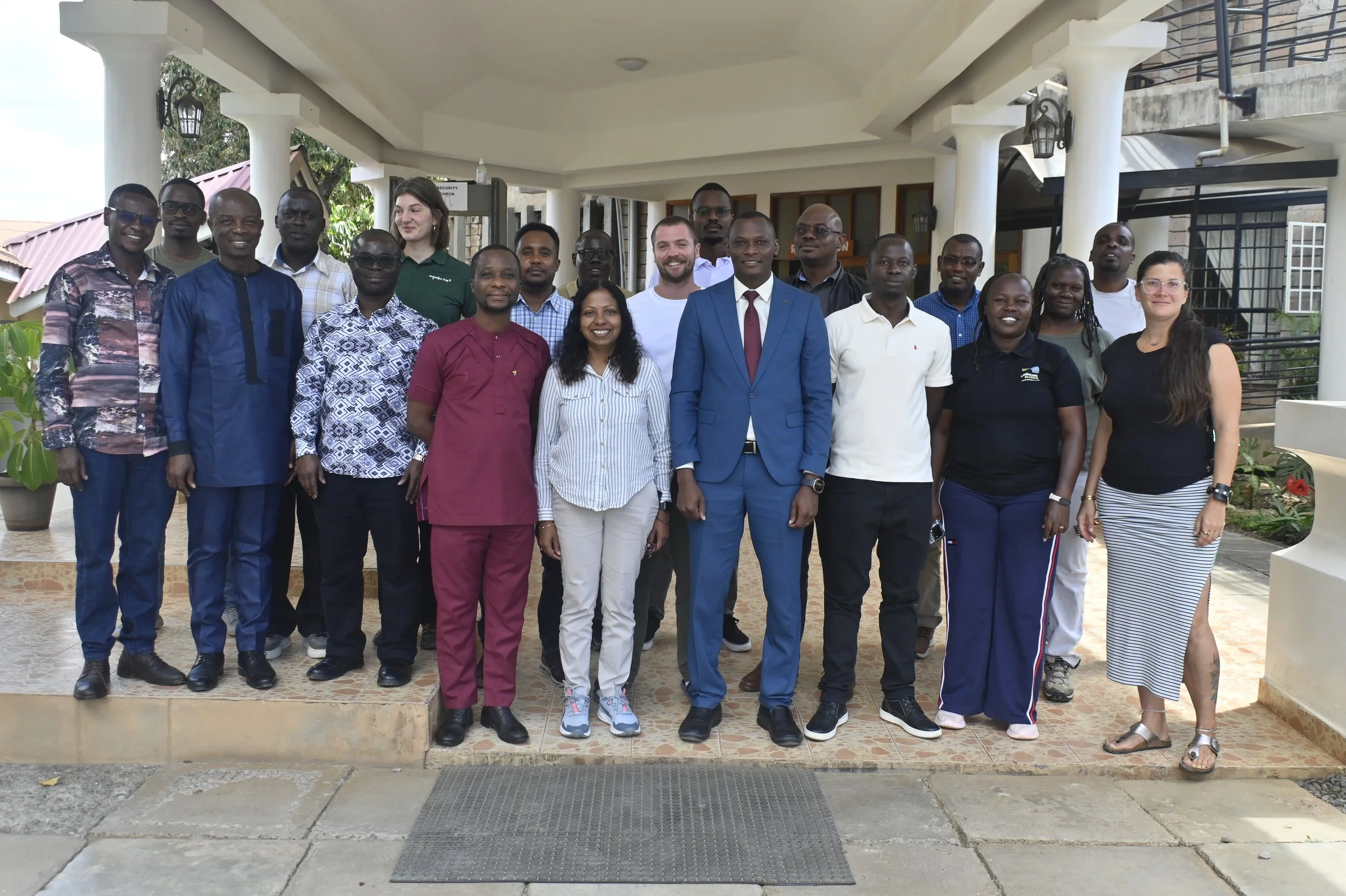
From 23-29 August 2026, the AfroGrow project hosted an in-person training workshop in Makueni, Kenya to foster knowledge exchange between the project countries, facilitate collaboration, and bring to life the tools and protocols that support multifunctional agroforestry systems monitoring.
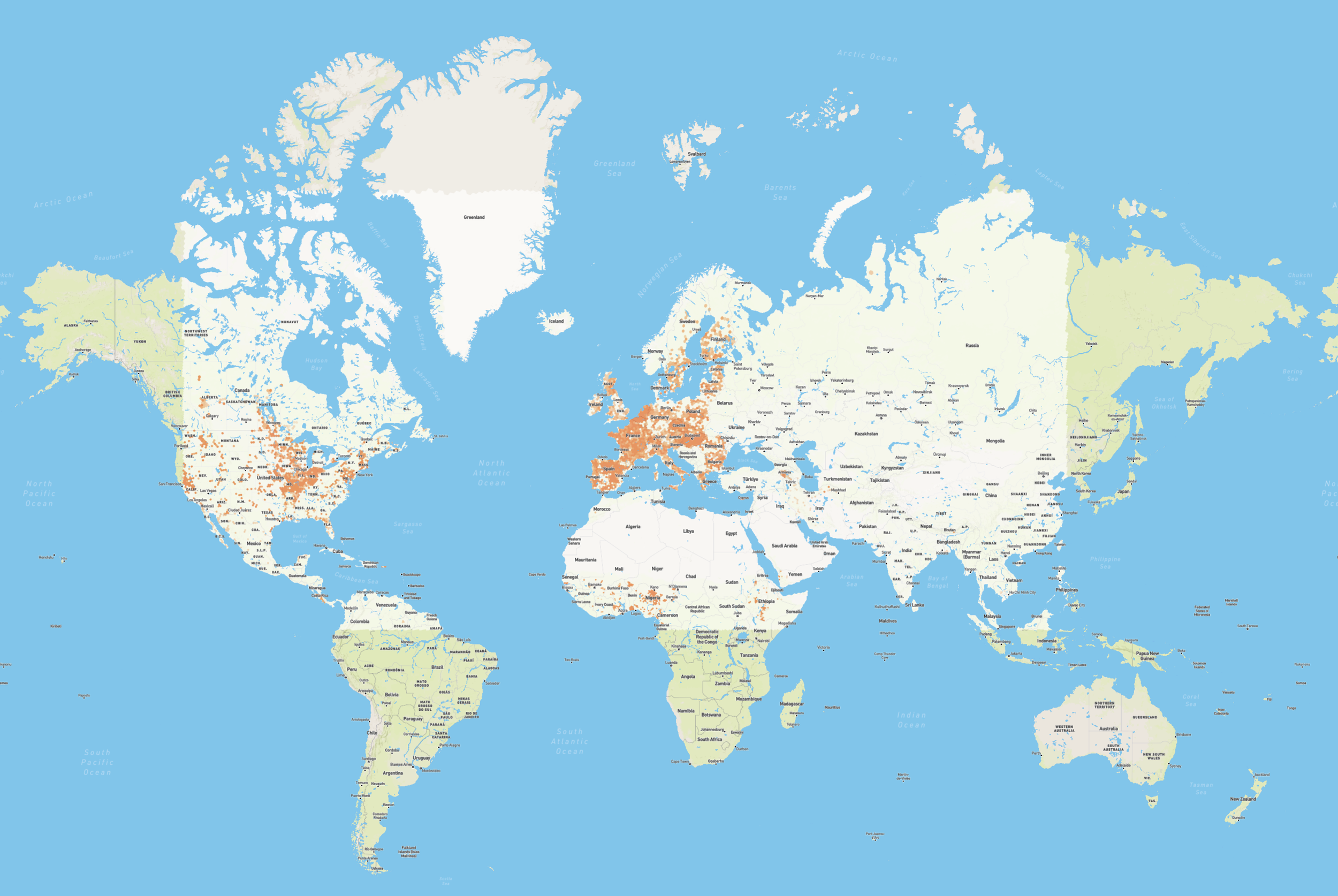
On 20 August 2026, SoilHive reached an important milestone: its code became fully open source.
Developed through the Norad-funded initiative Establishing an Ecosystem of Soil Data-Driven Services to Meet the Global Fertilizer and Soil Health Challenge, the new release is about more than opening up a piece of technology. It is part of a wider effort to rethink how soil data is shared, accessed and ultimately put to work.
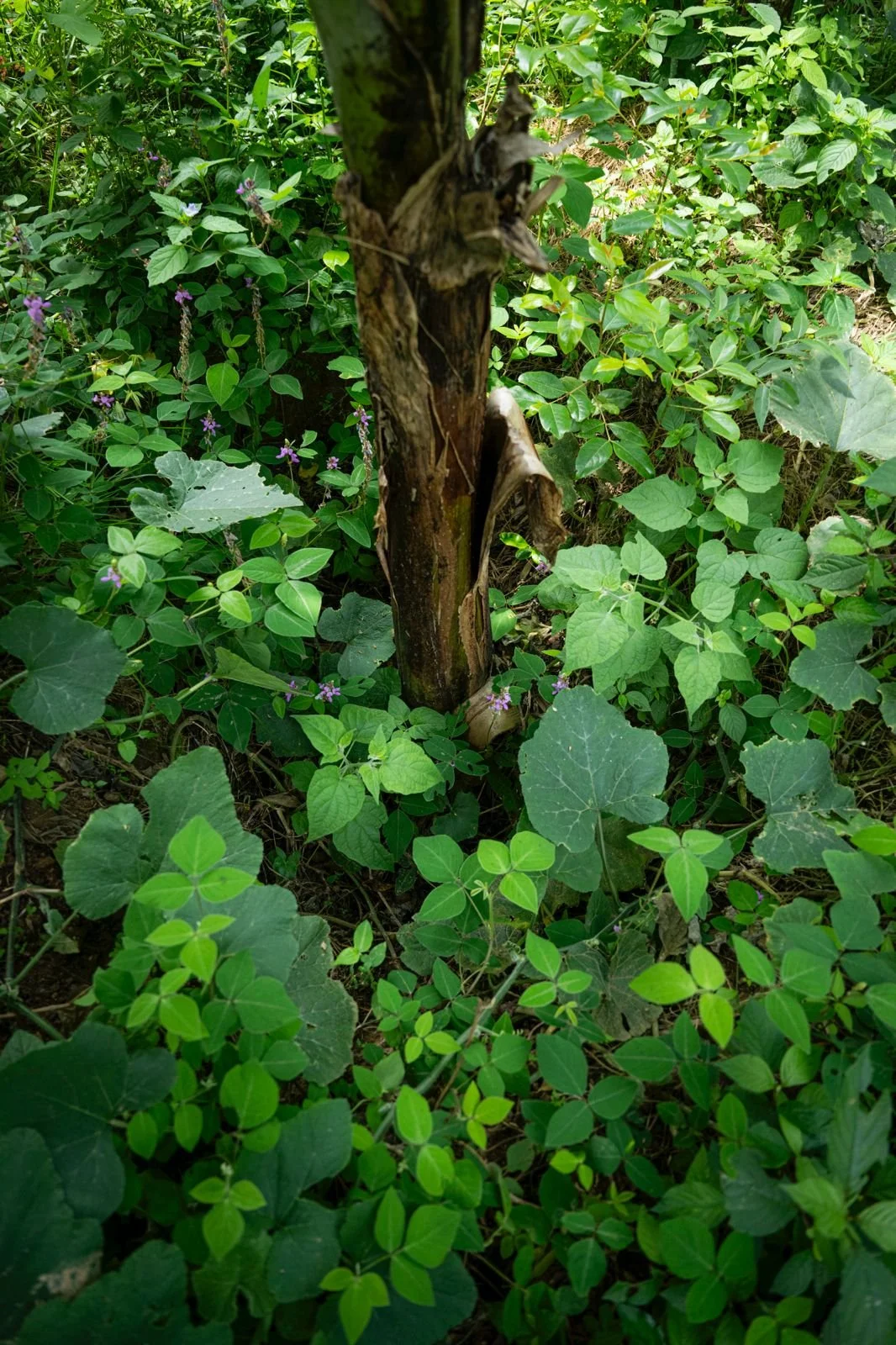
By Olanrewaju E. Adeyemi, Ph.D. Student, Plant, Soils, and Climate Department, Utah State University
Cover crops are often promoted as a win for soil health. They can reduce erosion and nutrient losses, improve water infiltration, contribute organic matter, suppress weeds, and provide other benefits that extend well beyond a single growing season. Yet despite these benefits, adoption remains limited in many agricultural regions. One reason is surprisingly straightforward: a practice can be good for the soil, good for water quality, and good for society without immediately benefiting a farmer’s bottom line. That distinction matters.
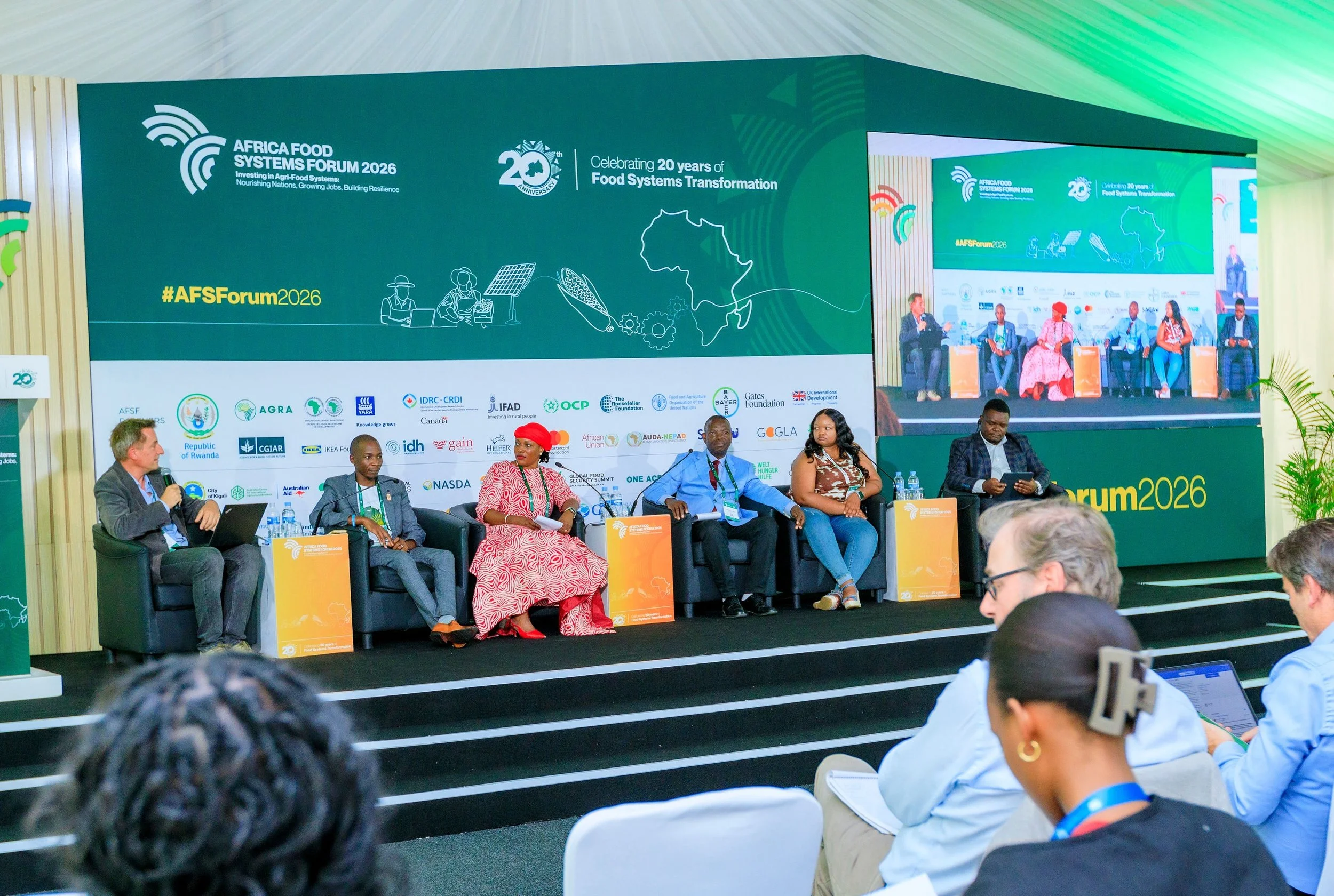
Food security is a collective effort, and at the Africa Food Systems Forum 2026 in Kigali, soil health was at the center of that conversation.
Across several sessions during the week, CA4SH and partners joined discussions about a question that underlies many of the challenges facing Africa’s food systems: how do we get better evidence, smarter investment and more effective support to the farmers and communities managing the continent’s soils?
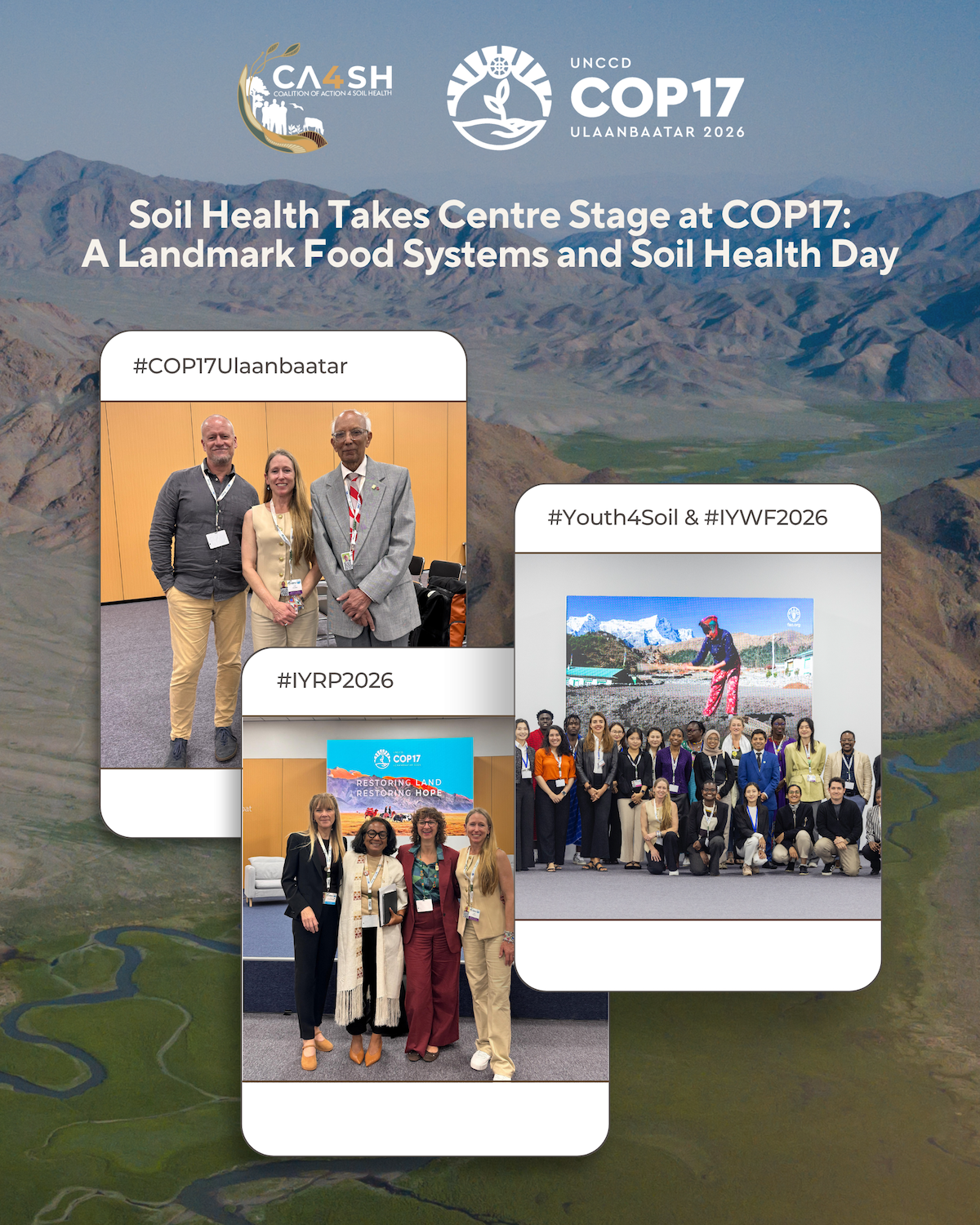
27 August 2026, Ulaanbaatar | At UNCCD COP17 Mongolia, soil health was at the center of the agenda. It was present across negotiations, ministerial dialogues, side events, and the Action Agenda. The numbers give a sense of its scale: the Coalition of Action 4 Soil Health (CA4SH) network held 72 events alongside 90+ partners across the two weeks.
Youth from across Africa, Europe, and Asia gathered for the "From Soil Data to Youth Action" #Youth4Soil Solutions Showcase, on Thursday, 15th October, 2026, organized by #Youth4Soil, an initiative of the Coalition of Action for Soil Health (CA4SH).
The virtual showcase explored a critical question: How are young people transforming soil data into real-world action? Through practical examples from Zambia, Botswana and Mongolia, participants demonstrated how soil data is shaping decisions, improving livelihoods, restoring landscapes and creating new opportunities for youth engagement.