
SoilHive Goes Open Source: Here's Why, and What's Next
By Ester Miglio, Varda Foundation
On 20 August 2026, SoilHive reached an important milestone: its code became fully open source.
Developed through the Norad-funded initiative Establishing an Ecosystem of Soil Data-Driven Services to Meet the Global Fertilizer and Soil Health Challenge, the new release is about more than opening up a piece of technology. It is part of a wider effort to rethink how soil data is shared, accessed and ultimately put to work.
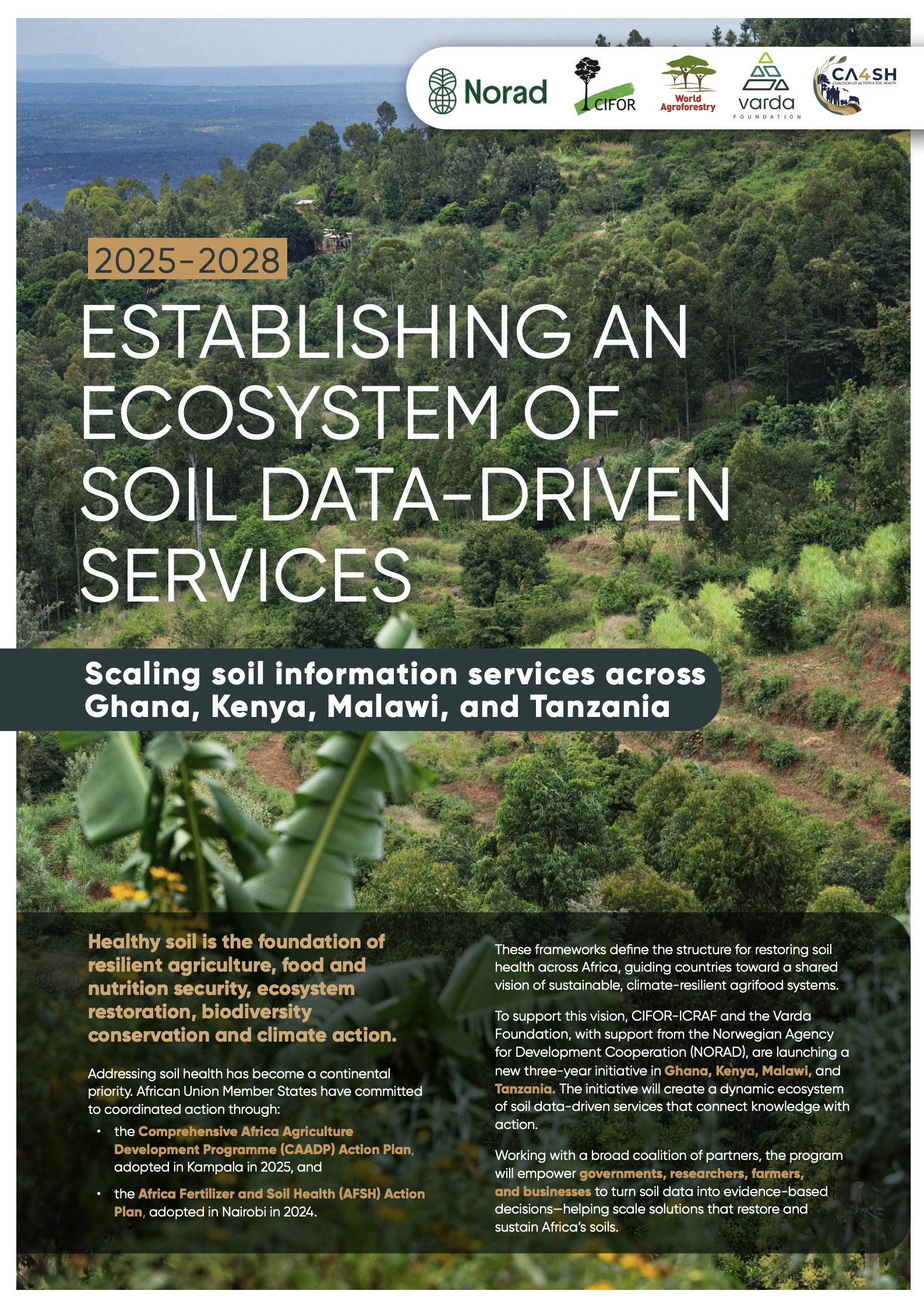
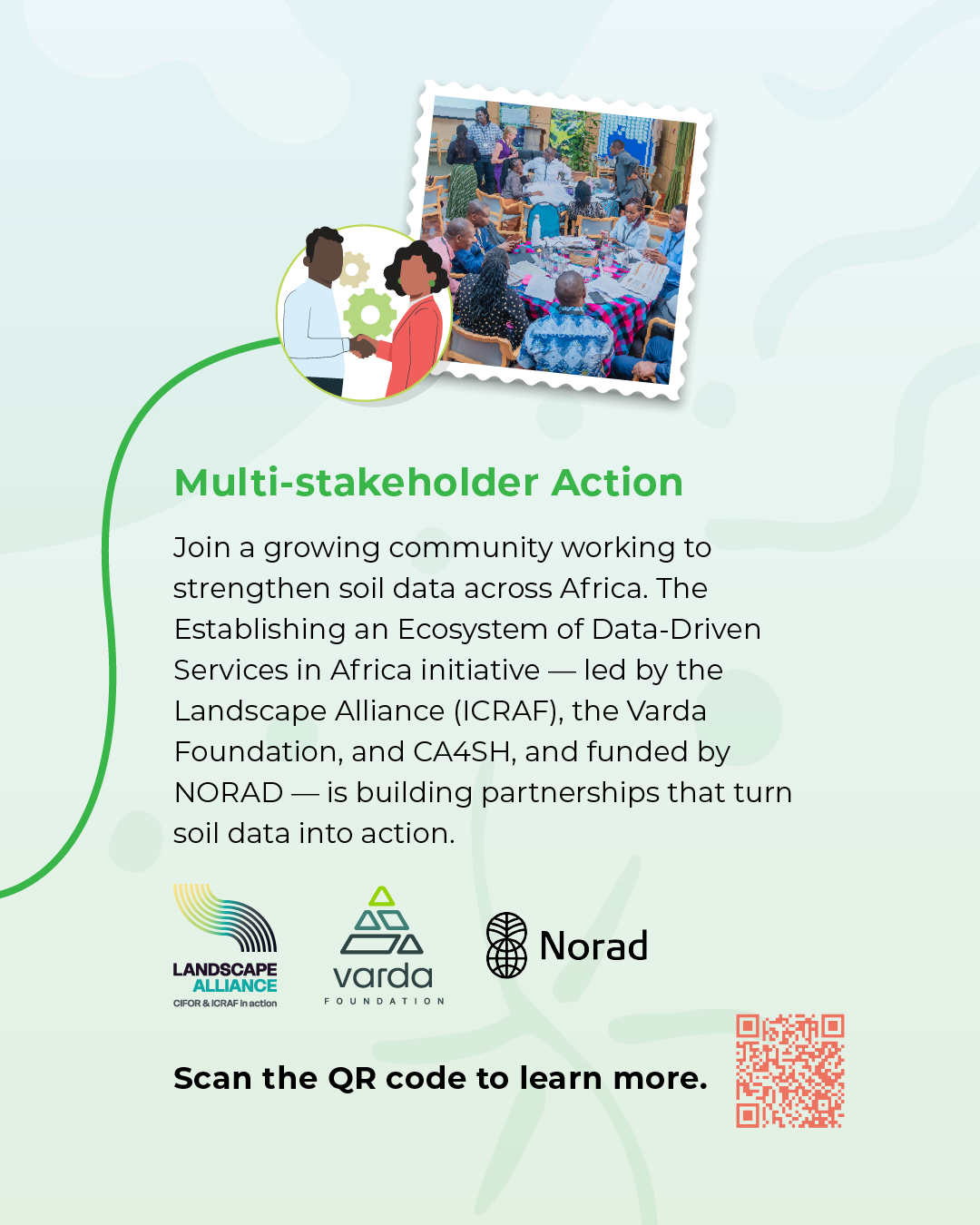
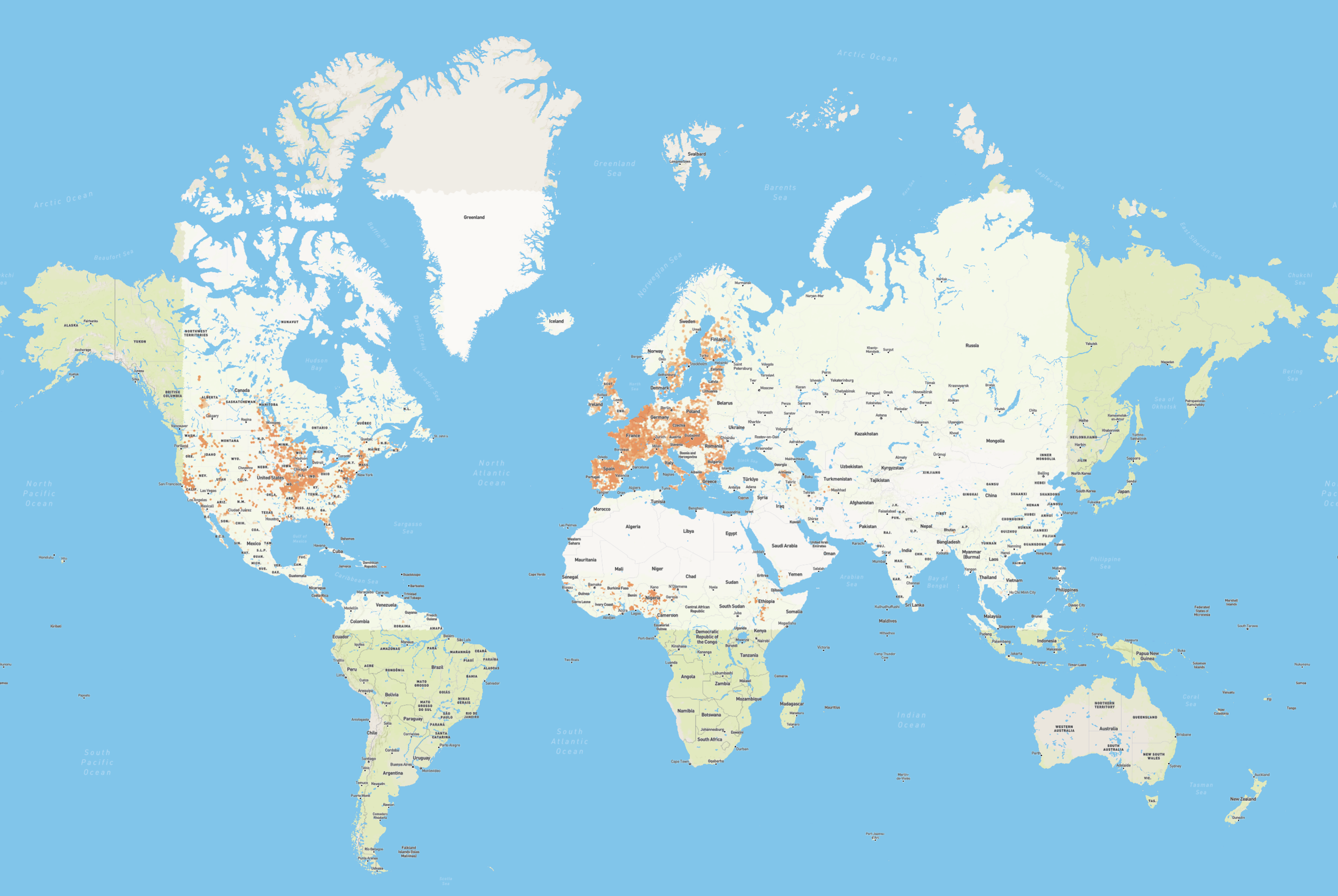
The three-year initiative brings together the Varda Foundation, Landscape Alliance (CIFOR-ICRAF), the Coalition of Action 4 Soil Health (CA4SH), NORAD and stakeholders across Kenya, Ghana, Malawi and Tanzania. At its heart is a challenge familiar across the soil community: large amounts of valuable soil information already exist, but datasets are often fragmented, difficult to discover or held within separate institutional systems.
It builds on insights from the Global Fertilizer and Soil Health Challenge project (funded by NORAD, Aug 2024–Jan 2025), which highlighted:
The urgent need for accurate soil data.
The importance of making this data accessible.
The role of soil information in guiding and monitoring land.
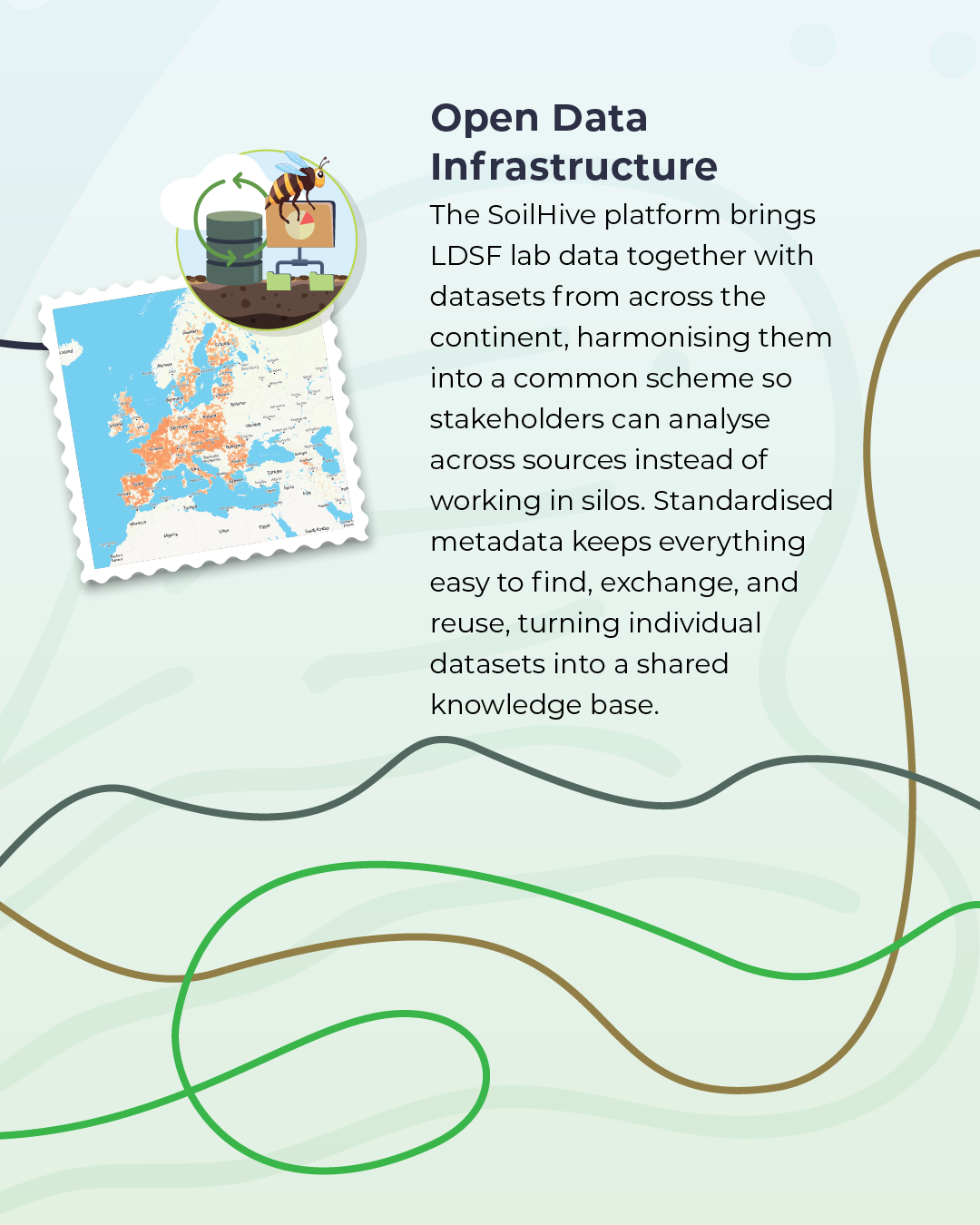
SoilHive is designed to help bridge those gaps. Its open-source release lays the foundation for a federated approach in which soil data can remain locally managed while becoming more discoverable and usable by those who need it — from researchers and policymakers to organisations developing new soil data-driven services.
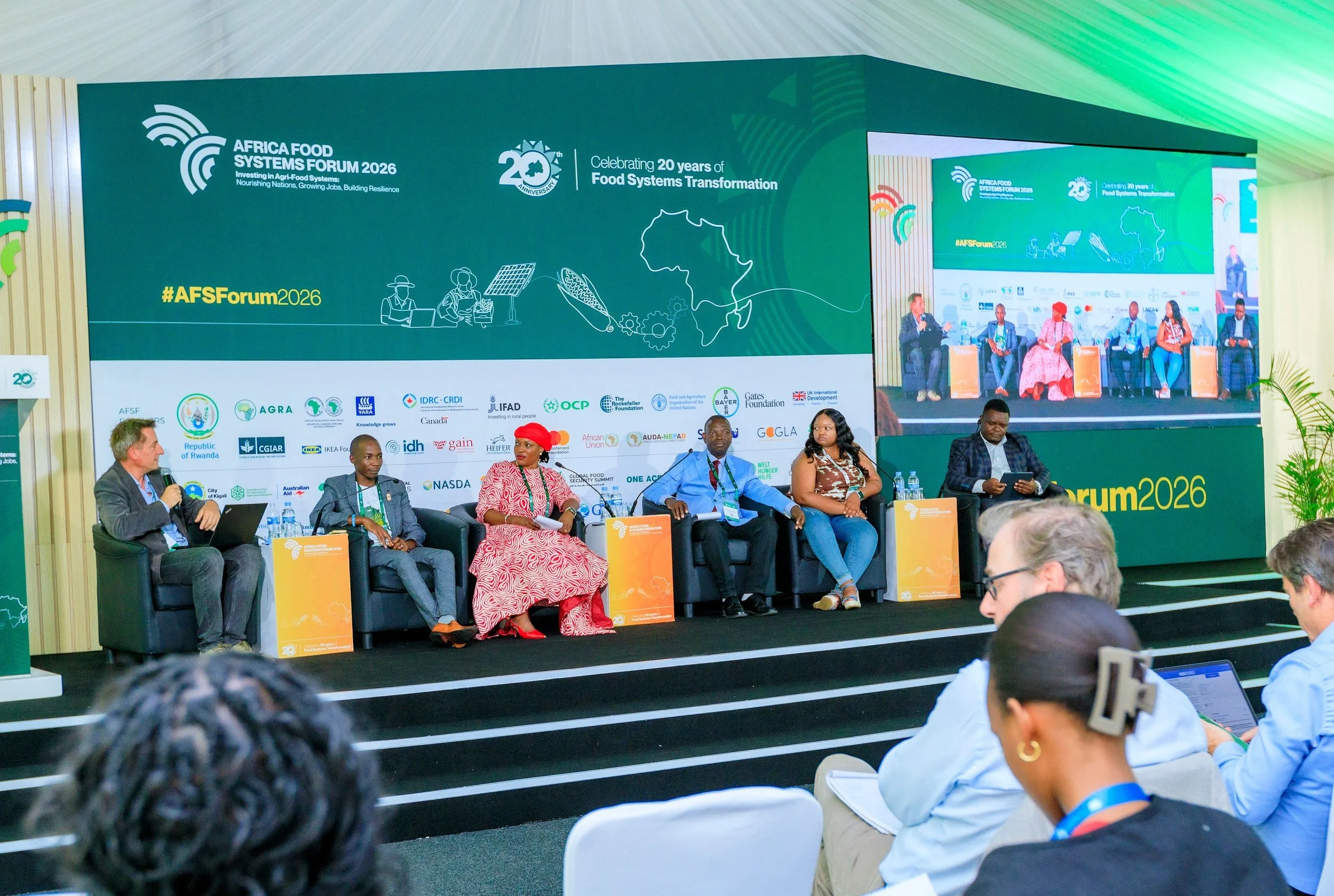
The online launch marking this milestone opened SoilHive to a much wider community and, importantly, invited people not simply to use the platform but to engage with how it develops. Over 200 people registered for the launch webinar, with speakers from NORAD, CIFOR-ICRAF, and key stakeholders from the national research and public institutions across Ghana, Kenya, Malawi and Tanzania, alongside voices from the World Bank, AUDA-NEPAD, the World Farmers' Organisation and private-sector partners.
Two recordings from the day are worth watching depending on what you're looking for:
Watch the Platform Demo For a general walkthrough of what SoilHive does:
For developers and technical teams, watch the GitHub repository walkthrough and self-hosting demo:
Why open source, and why now
The decision to open-source SoilHive started with what was learned during the 2024 pilot phase across Kenya and Tanzania, when the project team first sat down with governments, researchers and local organisations to understand what they actually needed from a shared soil data system.
A few things came through clearly and consistently. Countries and stakeholders had different priorities, and no single fixed system was going to serve them all equally well. There were some concerns about data residency, in particular organisations wanted their data to stay in-country, hosted and governed locally, not sitting on infrastructure they didn't control. There was a clear desire for transparency in how data would actually be managed, and for control over who could access it, and when. And alongside all of that, there was real interest in making the data easy-to-reach data, which in turn could support new tools and new ideas, rather than being locked away in one place, used for a project and never again.
Open-sourcing SoilHive was the project's direct response to what the pilot had surfaced. As Varda's Head of Engineering, Roberto Prato, said during the webinar the goal was to turn SoilHive into a piece of shared infrastructure that any organisation could adopt and run on its own terms. He pointed to four reasons this matters in practice:
Sovereignty: a government or research institution can host and manage its own soil data independently, without depending on any third party to operate the technology or control the data itself;
sustainability: because the code is public, the investment behind it keeps creating value well beyond the lifetime of any one project, and future initiatives can build on it rather than starting from zero;
adaptation: countries and organisations facing similar soil data challenges can each adopt SoilHive and shape it to their own context, rather than being forced into one fixed implementation;
and interoperability: improvements made by one institution become available, as a model, to every other institution running SoilHive, building a genuine community around the tool rather than a single centrally-controlled product. That same feedback loop from the pilot is also why SoilHive is cloud-agnostic today: local startups in Kenya and Tanzania asked directly whether they'd be able to self-host it without depending on a specific cloud provider, and that requirement was built in from the start.
Making the code open naturally raised questions about what that actually means in practice, starting with licensing. SoilHive's code is released under the MIT licence, chosen deliberately to give the widest possible freedom to reuse, adapt and build on it. Data is a separate matter entirely: each dataset carries whatever licence its provider chooses to attach, typically an open licence like CC-BY 4.0, but always at the provider's discretion.
One attendee pushed on this directly: with a licence this permissive, what's stopping someone from taking the work, building something better, and outcompeting SoilHive commercially? Simone Sala, Varda's Executive Director, answer was straightforward: "We made it open source exactly to allow people to build on top of it. If someone comes up with a derivative that's better, and people are willing to pay for it, then to some extent we're contributing to solving the problem, and it's happening in a way that's financially sustainable. We'll keep operating our own free version of SoilHive regardless."
That same openness extends to how the project relates to everyone else already working in this space. Another participant asked how the team plans to avoid duplicating the efforts of other open soil data platforms and initiatives across Africa. The answer shaped much of the platform's architecture: SoilHive was built as a federation layer, not a replacement for existing tools. Each organisation's data stays independently hosted and controlled; only harmonised, discoverable metadata is shared across the network, so global efforts can draw on it without requiring anyone to migrate onto a single centralised system. And it's a door that stays open to make sure SoilHive fits alongside existing tools and projects.
How countries are putting SoilHive to work
One of the clearest moments of the launch came from hearing directly from the national teams already shaping how SoilHive fits into their own soil health work.
In Ghana, CSIR's Dr. Alexander Owusu Ansah described a country where a lot of soil data already exists across different institutions and projects, but with no shared way to bring it together. SoilHive's approach to privacy was a key draw here: institutions can decide for themselves what to share and when, following FAIR data principles, which makes it easier to build the kind of large-scale, evidence-based picture needed to support land restoration and climate-focused decision-making, and to strengthen farmer advisory systems.
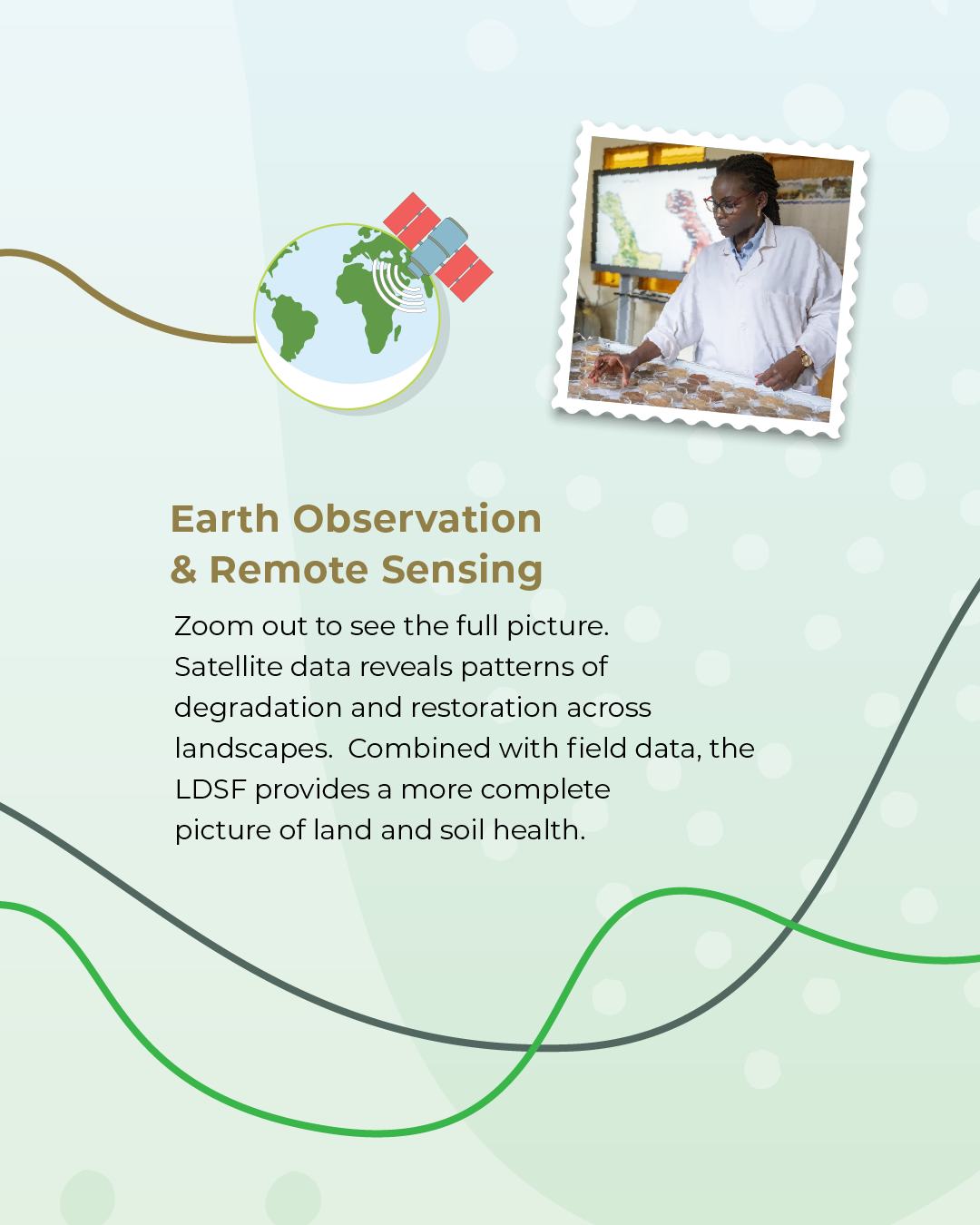
In Kenya, KALRO's Kevin Kiambe pointed to work already underway on national digital soil mapping, but like Ghana, held back by internal silos. Beyond breaking those down, he flagged two forward-looking possibilities: connecting Kenya's own data with complementary datasets from elsewhere, and positioning SoilHive as a future knowledge base for AI-driven tools. He also highlighted the potential for SoilHive's API to plug directly into KALRO's existing digital services, bringing soil health insight down to the level of an individual farm.
In Tanzania, the Ministry of Agriculture's Eng. Juma Mdeke shared that the country has just completed a full national soil data collection campaign and is now moving into analysis, fertility mapping, suitability, fertilizer recommendations. He framed SoilHive as a bridge from that raw digital soil mapping work to real decision support, and as a way to meaningfully cut the cost of spatial modelling by building on infrastructure that already exists rather than starting from scratch. He hopes that the next steps of the project would help advance national policies.
In Malawi, DARS's Dr. Moses Munthali described soil data currently split across government laboratories, academic institutions and research bodies. He sees SoilHive as a way to unify that into one standardised platform, strengthening fertilizer recommendations, climate-smart agriculture and evidence-based policy, and notably, as a foundation Malawi can build its own national soil information and decision-support system on top of, rather than starting that effort separately
Why this matters beyond this project
A second conversation during the launch brought together voices from public finance, regional policy, civil society and the private sector, each looking at open soil data through a different lens.
From the World Bank, Joshua Gill was candid that the Bank doesn't mandate which data standards its government partners adopt, that's a matter of national priority and capacity. But he pointed to a clearer role the Bank can play: building the case for open, interoperable systems through policy dialogue and technical assistance, and helping demonstrate that they work. For him, success in a few years' time looks less like data existing, and more like that data genuinely changing how governments plan, how farmers are advised, and how private-sector products are designed.
AUDA-NEPAD's Dr. Manyewu Mutamba connected the initiative directly to the African Union's Nairobi Declaration on Fertilizer and Soil Health, which calls for exactly this kind of interoperable infrastructure, and to the Union's ambition of getting 70% of smallholder farmers access to context-specific advisory support. He also raised a concrete opportunity: using a platform like SoilHive to help track progress of policy on the ground.
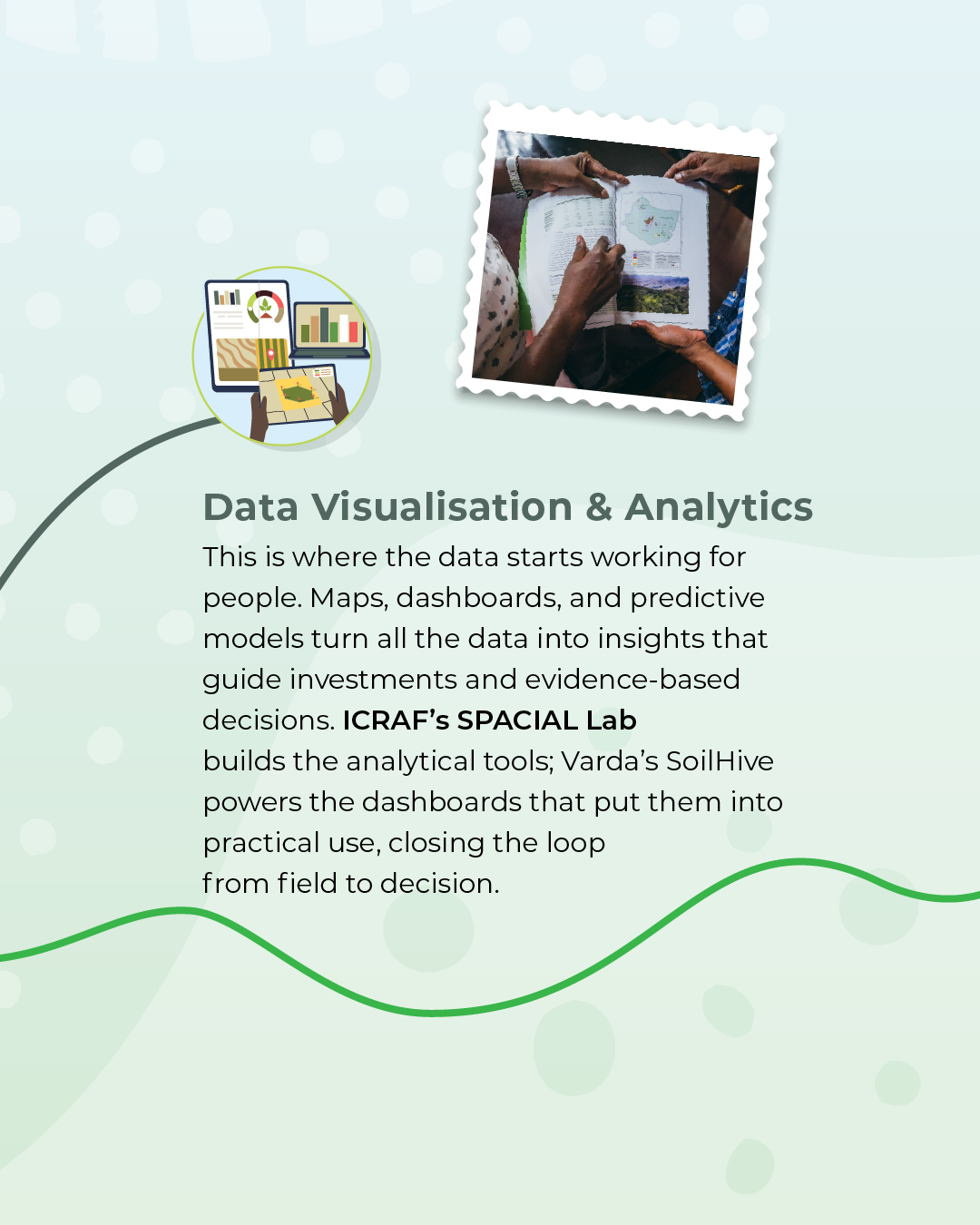
The World Farmers' Organisation's Dr. Andrea Porro, representing more than 85 national farmer organisations across 60 countries, framed the value in farmer-centric terms: interoperable data means farmers can combine soil, weather, market and yield information into one picture instead of paying for several disconnected tools. He also stressed that risk should be managed at the infrastructure level, through local processing that keeps raw farm data on the farm, and tiered access that lets farmers share aggregated insights without exposing sensitive operational detail, paired with real transparency about what's collected and for how long. He closed with a call for public and blended finance to treat farm data infrastructure as a public good, particularly in areas where poor connectivity risks locking smallholders out altogether.
From the private sector, three examples stood out. Pula, an insurance tech that has provided coverage to over 24 million smallholder farmers in Africa and Asia, explained that its products currently rely on weather and satellite data alone, with no soil information, farmers in the same area can appear identical on paper despite very different actual conditions, which erodes trust in the insurance itself. Integrating soil data through SoilHive is expected to make those products noticeably more accurate. ETG Climate Solutions described using soil suitability data to decide where agroforestry, biochar and enhanced rock weathering carbon projects make sense, and to calculate captured carbon more precisely. And Yara's Øystein Botillen traced the relationship back to a simple 2023 question, where exactly are Tanzania's acidic soils, so lime can be targeted more effectively, which has since grown into a broader effort to combine soil data with other commercial and public datasets to support wider rural transformation.
Taken together, the conversation made one thing clear: open soil data isn't only a scientific or technical resource. It's quickly becoming infrastructure that public institutions, farmer organisations and private companies are all building on, each for different reasons, but toward a similar goal.
From open data infrastructure to usable evidence
The next phase will focus not only on the continued development and application of SoilHive, but also on generating and sharing knowledge from the wider project.
A first review, Enhancing access to and use of reliable soil information through an interoperable soil data infrastructure, has already examined existing soil health initiatives and data across Ghana, Kenya, Malawi and Tanzania. Further research and knowledge products will help capture what the project is learning about interoperability, governance, country-level needs and the practical use of soil information.
“Soil organic carbon (SOC) is now a shared indicator across the three Rio Conventions. In addition, African Union member states will be reporting on changes in SOC every two years under the CAADP Kampala Agenda. That’s why interoperability of soil data right matters so much right now.: At UNCCD COP17, alongside national agricultural research partners in Ghana, Kenya, Malawi and Tanzania we launched a knowledge product on the role of interoperable soil information systems like SoilHive to support countries on their reporting commitments and decision making to bend the curve on soil degradation and build resilient landscapes and livelihoods.”
“If there’s one thing this launch reinforced for us, it’s that data becomes most valuable when it’s translated into action. That means it has to be accessible, understandable, and connected to real decisions, on land use, on restoration, on advisory services, on policy. Open source matters here because it supports sharing data, prevents duplication of work and hence more effective use of resources. It also opens for broader participation in use of data and build on what already exists, rather than starting over. The next chapter of this work isn’t just about the platform improving technically; it’s about whether more stakeholders are willing to share data and furthermore whether it changes how people plan, invest in, and manage soil health on the ground.”
The open-source launch was therefore not an end point. It was an invitation: to test, question, contribute and explore what becomes possible when soil information is easier to find and use.
The next chapter of SoilHive will be written not only in code, but through the people, institutions and countries putting that infrastructure to work.
Get involved:
General inquiries, partnerships: info@soilhive.ag
Contribute soil data: donate@soilhive.ag
Do you have any technical questions on setting up and running your own SoilHive instance? Get in touch with us here.
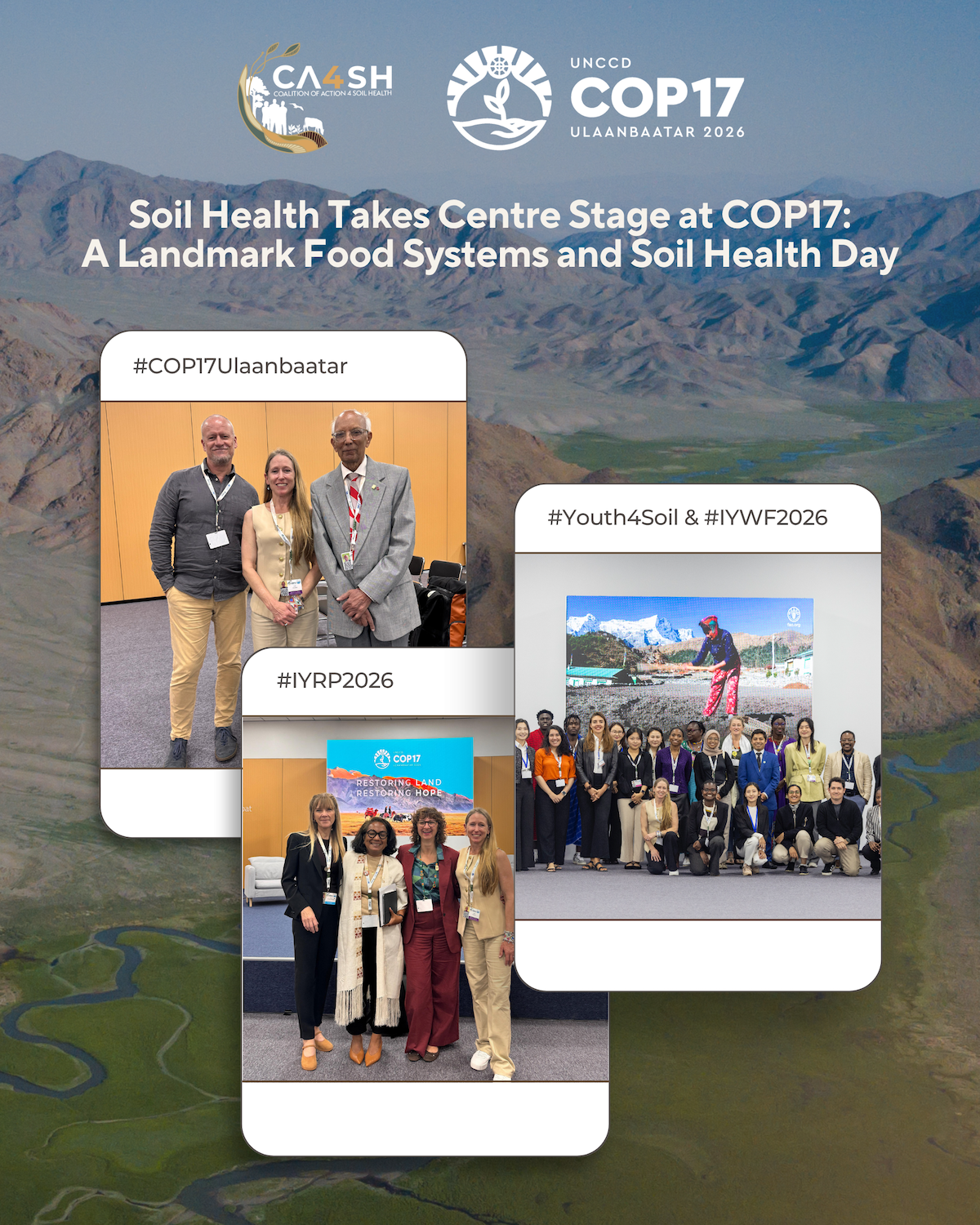
The Coalition of Action 4 Soil Health (CA4SH), Landscape Alliance (CIFOR-ICRAF), Deutsche Gesellschaft für Internationale Zusammenarbeit (GIZ) GmbH, the Norwegian Agency for Development Cooperation (Norad), CGIAR Multifunctional Landscapes Science Program, WWF, and partners, convened senior leaders and partners at UNCCD COP17 Mongolia for a high-level dinner focused on a simple but critical message: healthy soils are fundamental to resilient food systems, healthy ecosystems and a more climate-resilient future.