
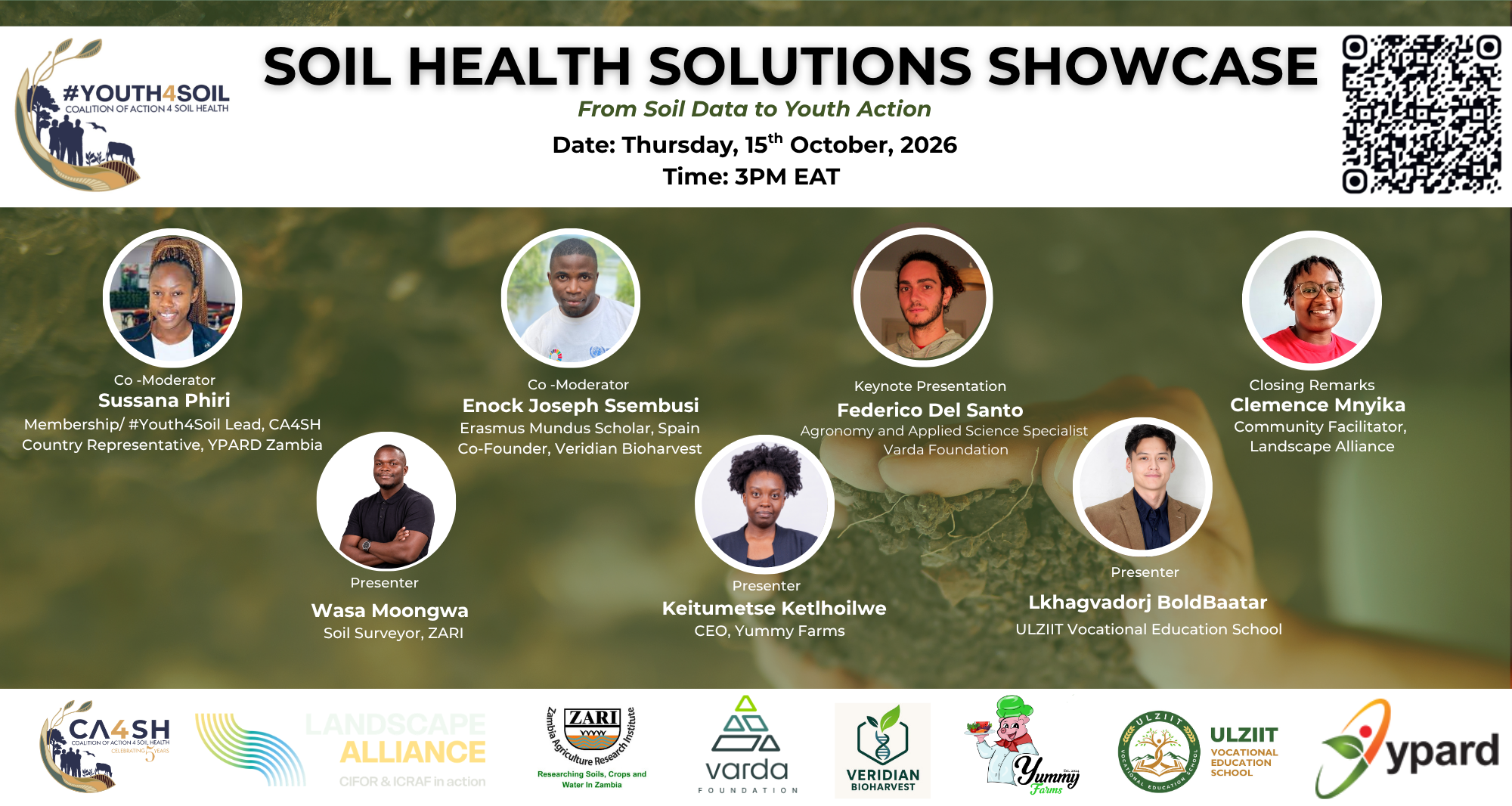
Youth from across Africa, Europe, and Asia gathered for the "From Soil Data to Youth Action" #Youth4Soil Solutions Showcase, on Thursday, 15th October, 2026, organized by #Youth4Soil, an initiative of the Coalition of Action for Soil Health (CA4SH).
The virtual showcase explored a critical question: How are young people transforming soil data into real-world action? Through practical examples from Zambia, Botswana and Mongolia, participants demonstrated how soil data is shaping decisions, improving livelihoods, restoring landscapes and creating new opportunities for youth engagement.
Setting the tone,moderator, Sussana Phiri, emphasized that while data is often described as the world's most valuable resource today, its true value lies in how it is interpreted and applied.
“Soil data only becomes meaningful when it informs decisions, inspires action and helps improve outcomes for people, landscapes and livelihoods”
#Youth4Soil at a Glance
Providing an overview of the initiative, Enock Joseph Ssembuusi, Erasmus Mundus Scholar and #Youth4Soil member, highlighted how the initiative brings together young farmers, researchers, innovators and advocates to advance soil health globally.
He described #Youth4Soil as a platform that champions awareness, innovation, policy advocacy, community engagement, education, and science while ensuring that youth are recognized not merely as beneficiaries but as active contributors to soil stewardship.
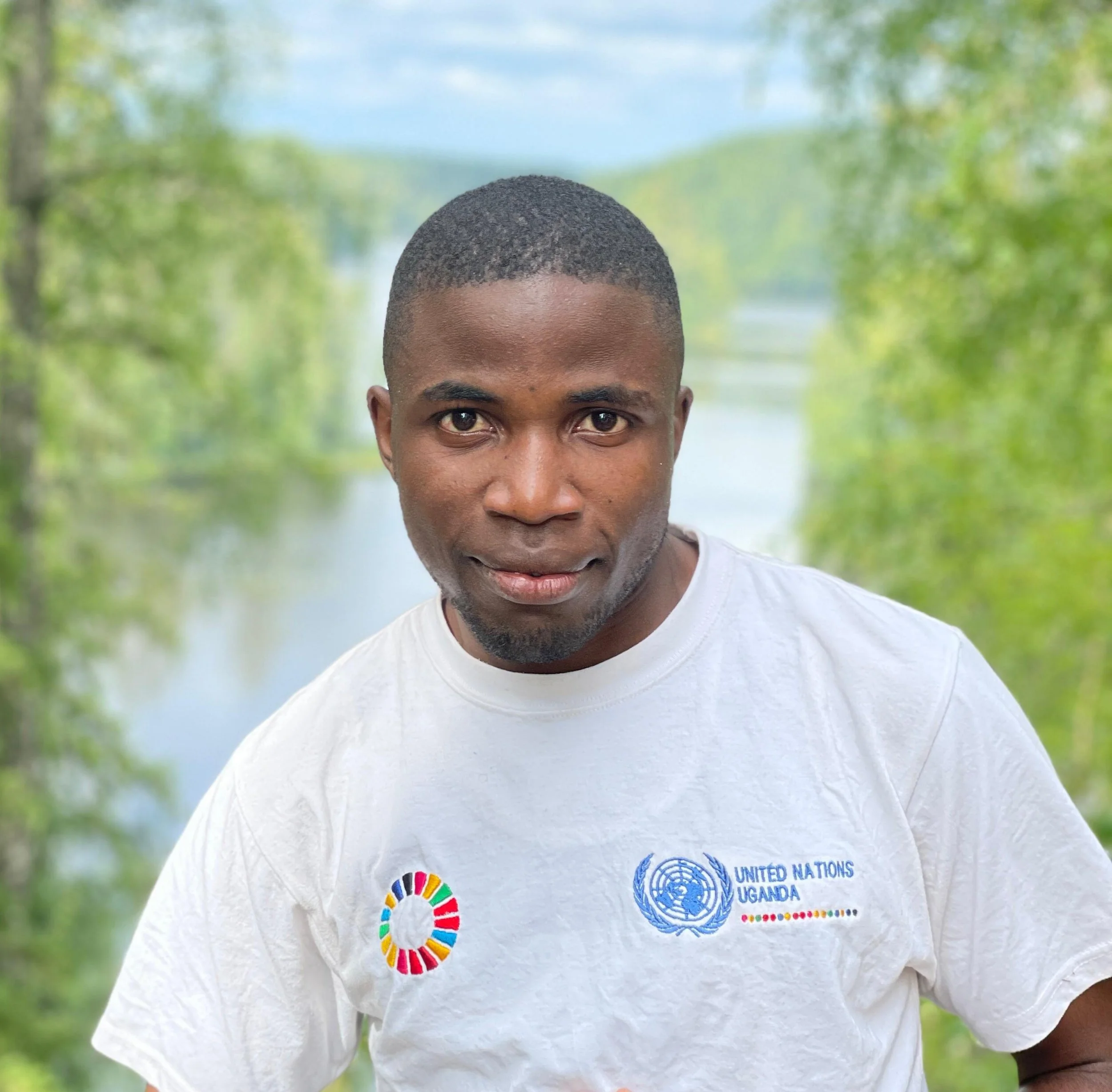
"Young people are generating evidence, developing innovations, influencing policy and connecting local action to global conversations on soil health"
— Enock Joseph Ssembusi, Erasmus Mundus Scholar, #Youth4Soil member
Keynote Presentation
The keynote presentation was delivered by Federico Del Santo, Agronomist and Applied Science Specialist at the Varda Foundation, who explored the challenges of accessing and utilizing soil data globally.
He highlighted persistent barriers including fragmented datasets, uneven geographical distribution of soil information, and limited data sharing frameworks. To address these challenges, he introduced SoilHive, an open-source platform designed to harmonize, organize, and democratize access to soil data.
SoilHive is a library for the world’s soil data that is making soil data more discoverable, accessible and interoperable and can empower farmers, researchers, developers, youth and policymakers to make informed decisions that advance sustainable land management.
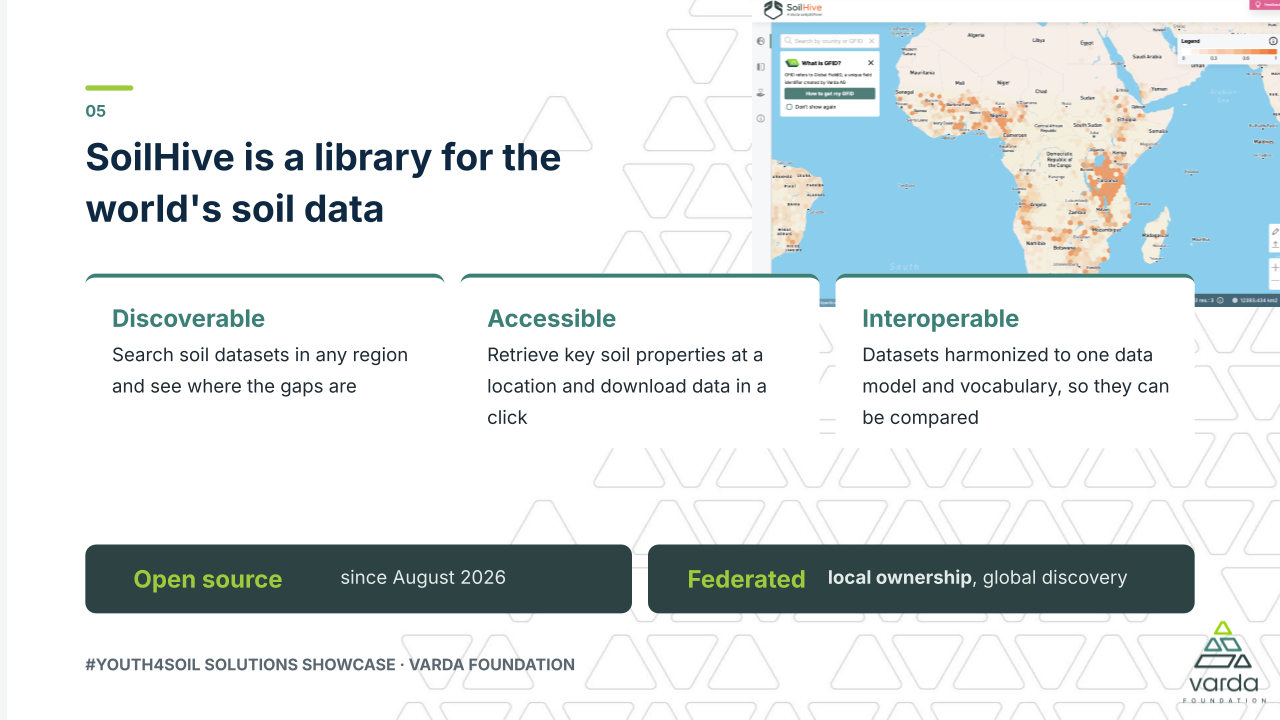
Slide from Federico’s presentation during the showcase
From Soil Surveys to National Policy
From the Zambia Agricultural Research Institute (ZARI), soil surveyor Wasa Moongwa appreciated how working in a team and building a career in soil data collection directly informs agricultural policy and farmer recommendations in Zambia.
Drawing from ongoing national soil mapping efforts, he demonstrated how thousands of soil samples are helping move Zambia away from blanket fertilizer recommendations toward more targeted, location-specific nutrient management strategies.
“The story is not simply about collecting soil samples, it is about turning measurements into evidence, evidence into decisions and decisions into better outcomes.”
He further emphasized the importance of integrating geospatial information, land-use data, livelihood data, and laboratory analysis to ensure soil information systems effectively serve governments, extension services, and individual farmers.
A Young and Female Pastoralist’s Perspective from Botswana
Keitumetse Ketlhoilwe, CEO of Yummy Farms and a young pastoralist from Botswana, brought a practical farming perspective to the discussion.
Operating in Botswana's semi-arid environment, she described how drought, declining soil fertility, water scarcity, and land degradation affect livestock production. She demonstrated how soil indicators such as pH, nutrient levels, soil moisture, ground cover, and organic matter can guide better farming decisions.
Ketlhoilwe stressed the value of combining scientific soil analysis with indigenous knowledge to strengthen resilience in pastoral systems.

"Soil data does not end with numbers and charts, it becomes powerful when it helps inform better livestock management decisions and delivers visible results."
Keitumetse Ketlhoilwe, Yummy Farms, CEO
She also spotlighted the importance of youth-led demonstration sites that allow young people to see firsthand how soil data interventions improve productivity and sustainability.
Innovation from Mongolia
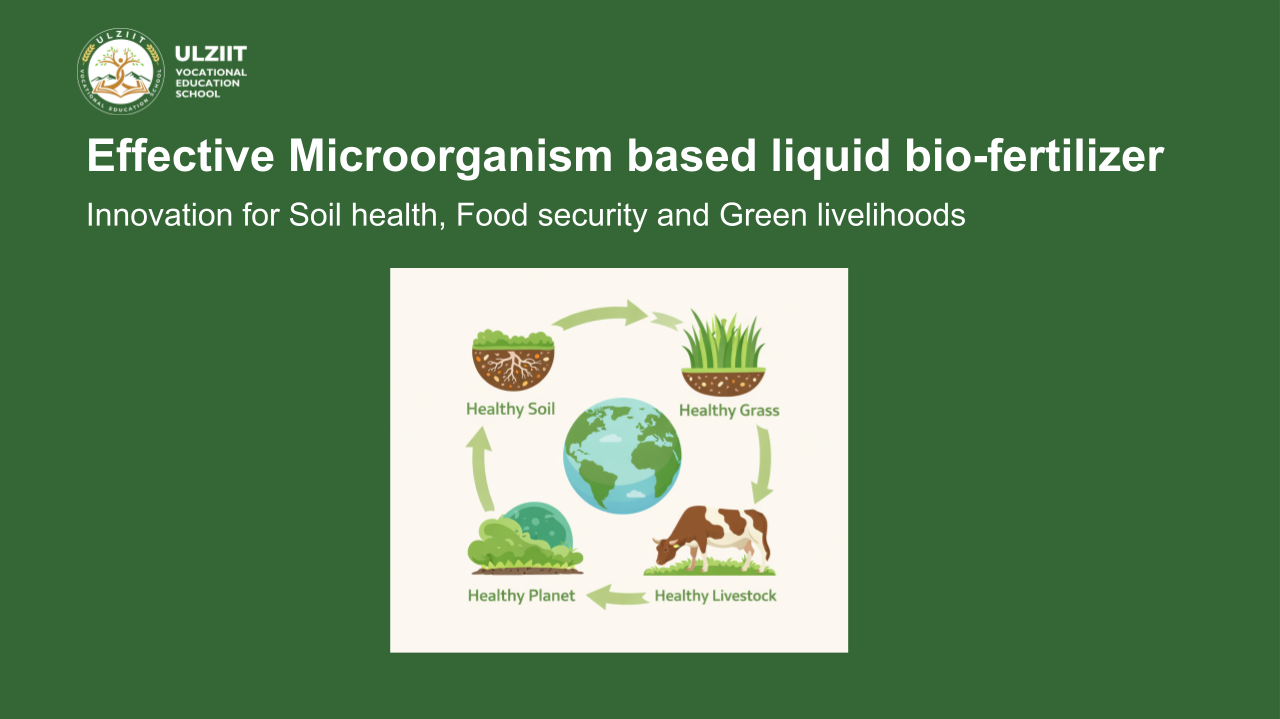
Slide from Lkhagvadorj’s presentation during the showcase
Joining from Mongolia, Lkhagvadorj Boldbaatar presented an innovative approach to improving soil health through microbial liquid biofertilizers and livestock supplements developed by his vocational education institution.
Working in Mongolia's dryland ecosystems, Boldbaatar and his team have spent years testing effective microorganism-based products designed to enhance soil fertility, support plant growth, improve livestock digestion, and recycle nutrients back into the landscape.
His presentation highlighted the interconnected relationship between soil health, livestock production, food security, and rural livelihoods.
“Healthy soil grows plants. Plants feed livestock. Livestock supports food security and food security supports rural incomes.”
The innovation has shown promising results in vegetable production, hydroponic fodder systems, and livestock productivity, while contributing to more sustainable nutrient cycling.
A Shared Call to Action
A recurring theme throughout the showcase was the need to make soil data more accessible, understandable and actionable for young people.
Participants were encouraged to utilise the newly launched "What Can You(th) Do with Soil Data?" brief, a youth-oriented resource developed to help young people translate soil data into practical action across research, farming, entrepreneurship, advocacy and restoration.
About the What Can You(th) Do with Soil Data Brief
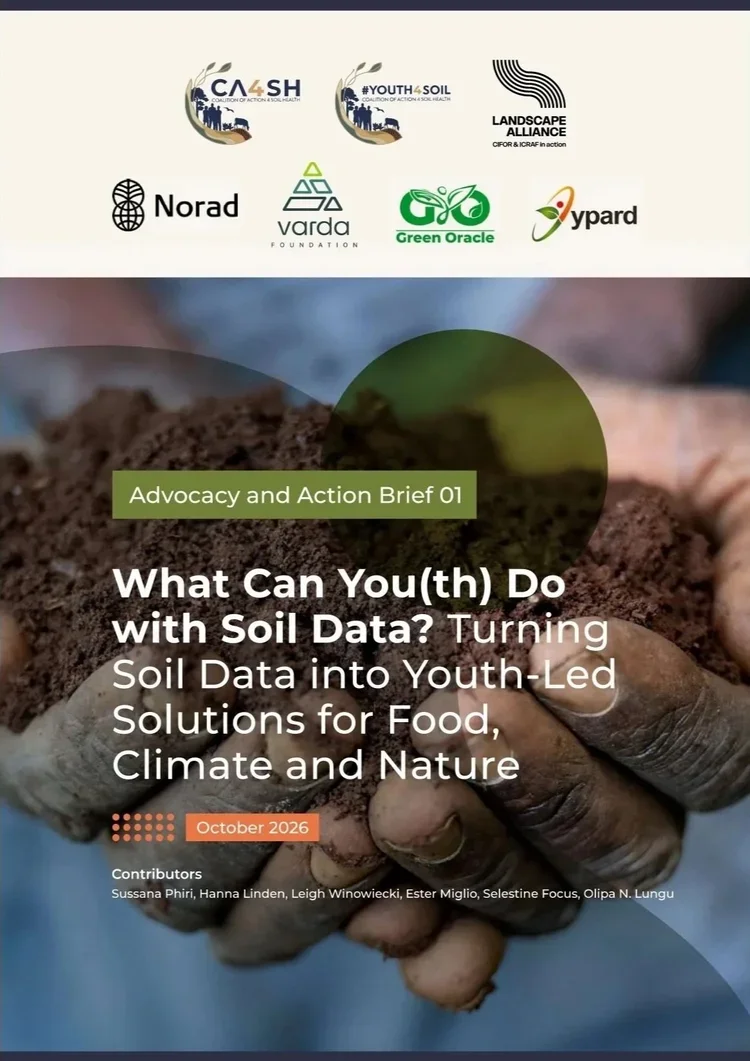
This youth-focused advocacy and action brief builds on insights from the January 2026 workshop on Establishing an Ecosystem of Soil Data-Driven Services. It is designed to demystify soil data and inspire youth to transform soil data into innovation, advocacy and sustainable action for food security, climate resilience, and ecosystem restoration.
The brief is a practical guide designed to equip you(th) to lead. Whether you are a young farmer, student, coder, activist or entrepreneur — this brief is your starting point and propeller in other cases.
Looking Ahead
Closing the event, Clemence Mnyika of the Landscape Alliance encouraged participants to continue translating ideas into action and to recognize the important role young people play in shaping the future of soil health. Reflecting on the rich diversity of experiences shared, she noted that solutions are emerging from many corners of the world, from scientific research and data platforms to farming enterprises and community-led innovations.
The showcase concluded with a renewed commitment to advancing the 8 priorities of the #Youth4Soil Manifesto and ensuring that soil health remains central to efforts addressing the goals of the three Rio Conventions.
As the conversation demonstrated, the journey from soil data to youth action is already underway, led by a growing generation of young changemakers determined to build healthier soil and a more resilient future.
