
OP-ED | Cover crops can pay, but we are asking the wrong question
By Olanrewaju E. Adeyemi, Ph.D. Student, Plant, Soils, and Climate Department, Utah State University
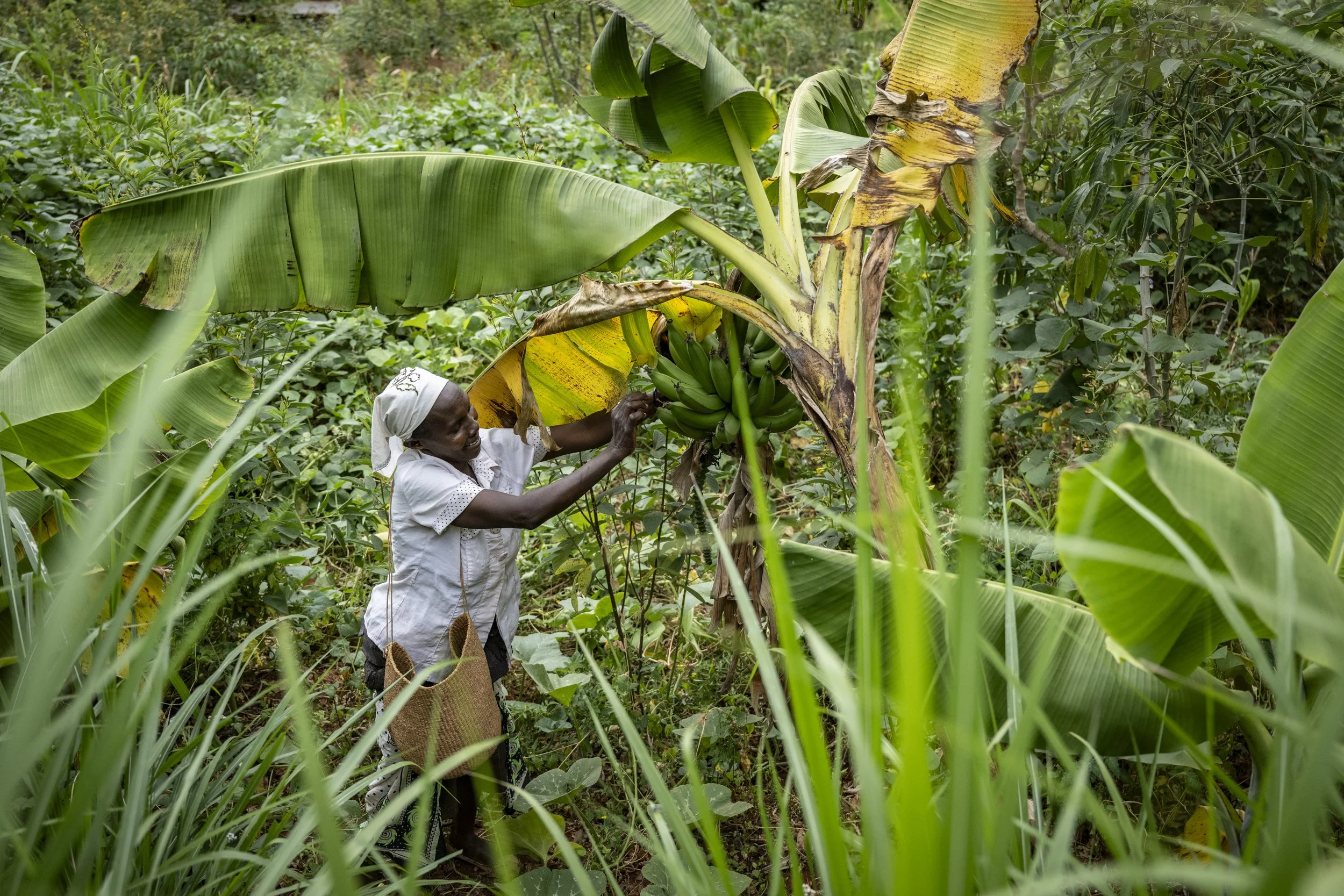
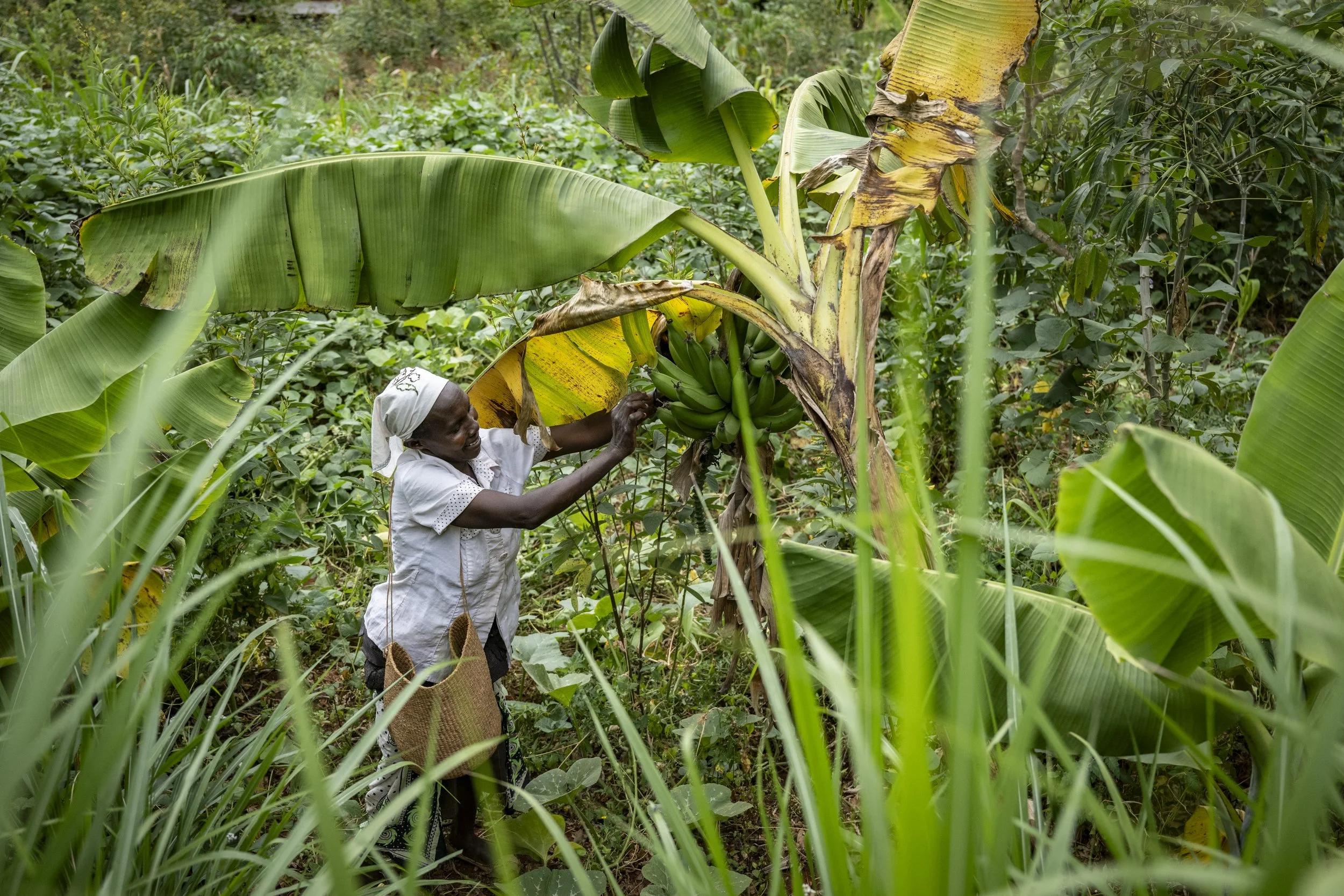
Photo: Kelvin Trautman (ICRAF)
Cover crops are often promoted as a win for soil health. They can reduce erosion and nutrient losses, improve water infiltration, contribute organic matter, suppress weeds, and provide other benefits that extend well beyond a single growing season. Yet despite these benefits, adoption remains limited in many agricultural regions. One reason is surprisingly straightforward: a practice can be good for the soil, good for water quality, and good for society without immediately benefiting a farmer’s bottom line. That distinction matters.
As part of an ongoing synthesis of the economics of cover cropping, I recently reviewed evidence spanning different crops, cover-crop species, production systems, management practices, and approaches to measuring economic performance. The results challenge both advocates who portray cover crops as an automatic financial win and skeptics who dismiss them as simply too expensive. The evidence instead points toward a more useful conclusion: there is no single economic return to cover cropping.
Farmers pay now. Many benefits arrive later, or elsewhere
The economic challenge begins with timing. Farmers generally pay for cover crops upfront. Seed must be purchased, and the crop must be planted and eventually terminated. Those decisions can require additional labor, machinery, fuel, herbicide, and management. Across studies, seed and establishment were among the recurring costs reported.
Many of the benefits we expect from healthier soils operate on a different timeline. For example, improvements in soil structure, nutrient cycling, water infiltration and retention, soil organic matter, and resilience may develop over multiple seasons. Some benefits may eventually reduce input requirements or protect productivity during unfavorable conditions, but they do not necessarily translate into additional cash in a farmer's account in the first year of adoption.
The ongoing review reflects this tension. Among 83 annual private-return estimates from six studies, the median return associated with cover cropping was approximately - $91 per hectare before adjusting monetary values across years. Yet that average masks substantial variation among systems. That variation may be the most important finding.
There Is No “Average Farm”
When sufficient statistical information was available, an exploratory meta-analysis of 34 economic estimates from three independent studies was conducted. After standardizing the values to 2025 U.S. dollars, the pooled estimate was positive, approximately $221 per hectare. It would be tempting to stop there and declare cover crops profitable, but we should not.
The estimate was highly uncertain and not statistically different from zero. More importantly, the predicted economic effect in a new production setting ranged from about a $987-per-hectare loss to a $ 1,428-per-hectare gain. That enormous range is not an inconvenience to be averaged away. It is the story.
A cover crop planted before corn in one production system is not economically equivalent to one used in a high-value specialty crop. A cover crop that is simply terminated is economically different from one that can be grazed or harvested. A farmer in the first few years of adoption may face different costs than an experienced producer who has refined planting and termination practices.
Even within the limited subset suitable for formal meta-analysis, outcomes differed dramatically among production systems: estimates from one corn study averaged about -$251 per hectare, compared with approximately +$353 per hectare for sweet corn and +$778 per hectare for processing tomato. These differences should not be interpreted as universal rankings of those crops, but they demonstrate why one profitability number cannot adequately represent cover cropping. The better question, then, is not, “Do cover crops pay?” It is, “Where, when, and how do they pay, and for whom?”
Soil health creates value that farm budgets may not capture
Another problem is how we discuss profitability. Farmers make decisions based largely on benefits and costs that affect their operations. Society, however, also has an economic interest in what happens beyond the farm boundary.
When a farmer plants a cover crop, the farmer pays the seed bill. But if that cover crop reduces soil erosion or nutrient losses, improves water quality, stores carbon, or provides other ecosystem services, some of that value accrues to the broader public rather than to farm revenue. That creates a mismatch between who pays and who benefits.
The review found that the overwhelming majority of reported economic outcomes focused on private farm profitability, whereas far fewer accounted for monetized ecosystem services or integrated crop-livestock value. This distinction should change how we think about soil-health incentives.
When society asks farmers to adopt practices that generate public environmental benefits yet leaves them to absorb most of the private costs, slow adoption should not surprise us. Well-designed conservation payments are not simply a way to make an “unprofitable” practice look profitable. They can compensate producers for environmental services that conventional markets do not reward.
At the same time, incentives must reflect actual production realities. The ongoing review found examples in which cost-share payments reduced losses but still did not make the practice profitable. A payment that works for one cropping system may be insufficient, or unnecessary, in another.
From promoting practices to creating conditions for success
The next generation of soil-health policy should therefore move beyond asking farmers simply to “adopt cover crops.” Instead, we should identify the conditions that make adoption economically durable. That means helping farmers reduce establishment and termination costs, identifying cover crops suited to specific cropping systems, creating opportunities to capture value through grazing or forage where appropriate, improving access to technical assistance, and designing incentives that recognize environmental benefits that markets currently overlook.
It also means being transparent about uncertainty. Cover crops should not be sold to producers with promises of guaranteed profitability. The ongoing review does not support that claim. But the evidence does not support dismissing cover crops as economically unworkable.
Their economic value is conditional: on the production system, management, time horizon, costs, additional uses, environmental benefits, and policy environment.
That conclusion may be less catchy than saying cover crops always pay. But it gives us something much more useful: a roadmap. If healthier soils generate benefits for farms, communities, watersheds, and the climate, then the goal should not be to convince every farmer that those benefits will automatically appear on next year's balance sheet. The goal should be to build agricultural markets, management systems, research programs, and public policies that allow more of the value created by healthy soils to reach the people responsible for creating it.
Until we do that, we will continue asking farmers to personally finance benefits that the rest of us also receive. And that may be the most important economic lesson from cover crops.

About the Author
Olanrewaju (Ola) Adeyemi is a Ph.D. student in Plant Science at Utah State University (USU), researching Kochia (Bassia scoparia) resistance to herbicides in Utah under the mentorship of Dr. Mirella Ortiz. He holds an M.S. in Plant Science from the University of Idaho, where he studied barley yield and protein response to nitrogen and sulphur fertilization, and a B.Agric in Horticulture from the Federal University of Agriculture, Abeokuta in Nigeria.
With expertise in weed science, soil health, and sustainable agriculture, he has contributed to peer-reviewed publications on soil fertility, crop production, and integrated weed management. Ola holds an Advanced Soil Health Training Certificate from Cornell University. He is actively involved in professional organizations, serving as the President of the Web of Nigerian Agricultural Scientists in Diaspora (ASA-CSSA-SSSA), Vice President of the USU Nigerian Students Association, and a member of the Utah State University Ecology Center Seminar Committee. Recently, Ola joined the #Youth4Soil Initiative as a mentor.
His research, leadership, and service reflect his dedication to sustainable weed management and agricultural resilience.


Five years ago, the Coalition of Action 4 Soil Health (CA4SH) was launched at the UN Food Systems Summit to advocate for healthy soil as central to food system transformation.
At that time, healthy soil was not formally recognized as a climate solution, despite it being the largest terrestrial carbon sink and having a central role in upholding food and nutrition security, combating land degradation and drought, hosting biodiverse ecosystems, and filtering and storing water, among a myriad of other co-benefits.
But momentum was growing.
Read the full op-ed by CA4SH co-Lead Dr Leigh Winowiecki