
Op-Ed | Soil health, global goals, and coordinating efforts: Reflections on five years of the Coalition of Action 4 Soil Health
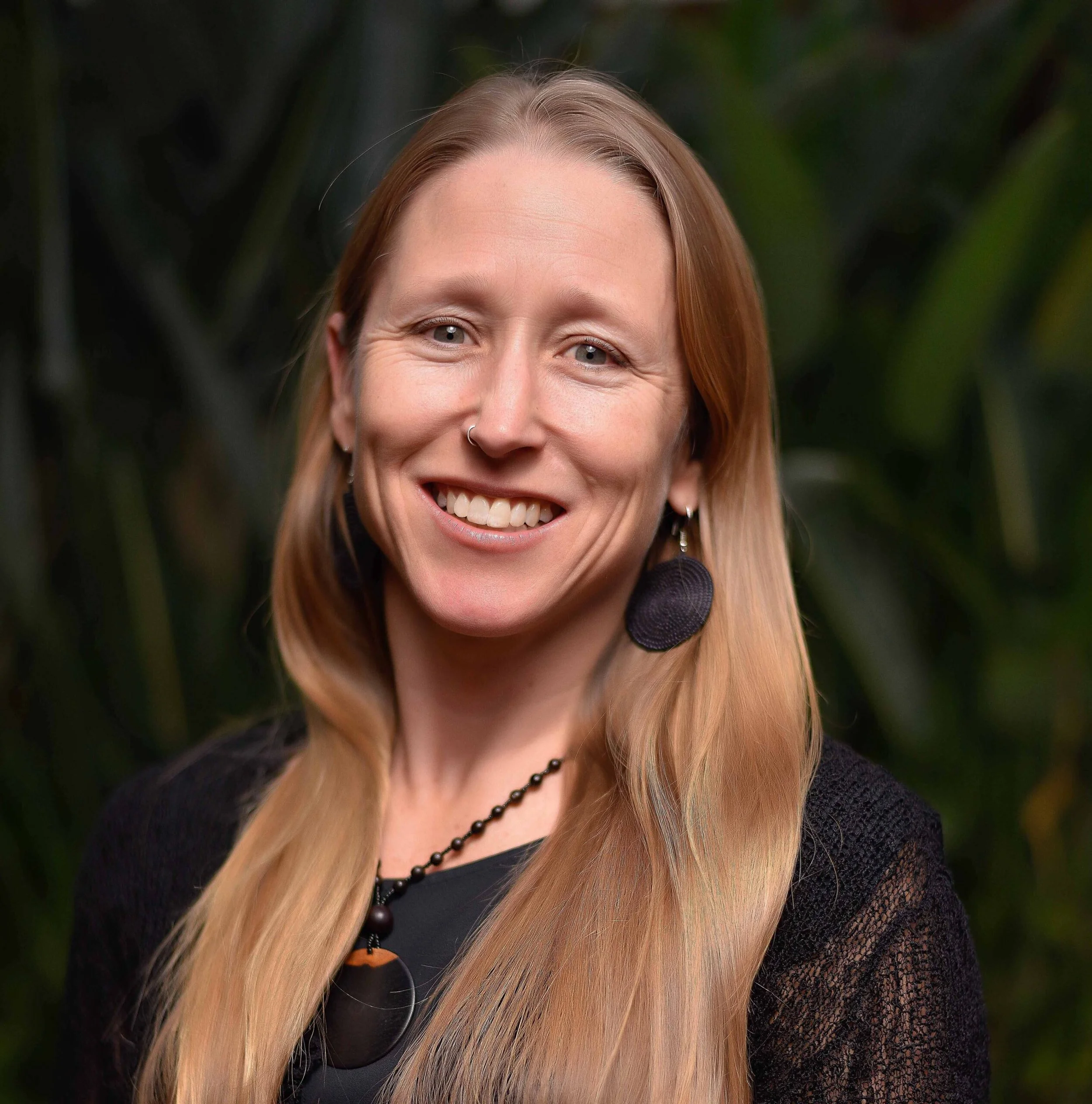
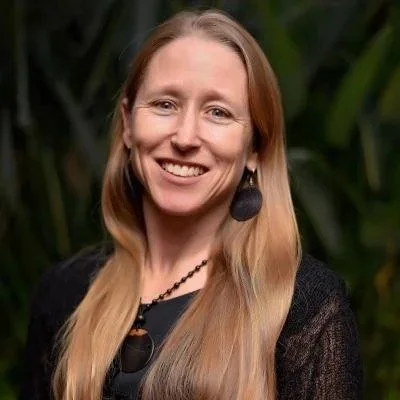
By Dr Leigh Ann Winowiecki, Global Research Lead, Soil and Land Health at the Landscape Alliance (ICRAF) and Co-Lead of the Coalition of Action 4 Soil Health (CA4SH)
Five years ago, the Coalition of Action 4 Soil Health (CA4SH) was launched at the UN Food Systems Summit to advocate for healthy soil as central to food system transformation.
At that time, healthy soil was not formally recognized as a climate solution, despite it being the largest terrestrial carbon sink and having a central role in upholding food and nutrition security, combating land degradation and drought, hosting biodiverse ecosystems, and filtering and storing water, among a myriad of other co-benefits.
But momentum was growing.
Key initiatives were paving the way to bring soil health on the agenda: the International 4p1000 Initiative which launched at UNFCCC in 2015 and are a founding member of CA4SH; the Global Soils Partnership which was launched in 2012 and are a key collaborator with CA4SH, including at the upcoming UNCCD COP17; and the World Economic Forum’s Global Future Council on Soil and Land Health, which several founding CA4SH members now sit on and even co-chair.
Now five years in, CA4SH has grown into a multi stakeholder coalition of over 350 members. With 2026 being the year of the three Rio Conventions: the UNFCCC COP31, UNCCD COP17 and UNCBD COP17, we have much to celebrate, reflect on, and look forward to.
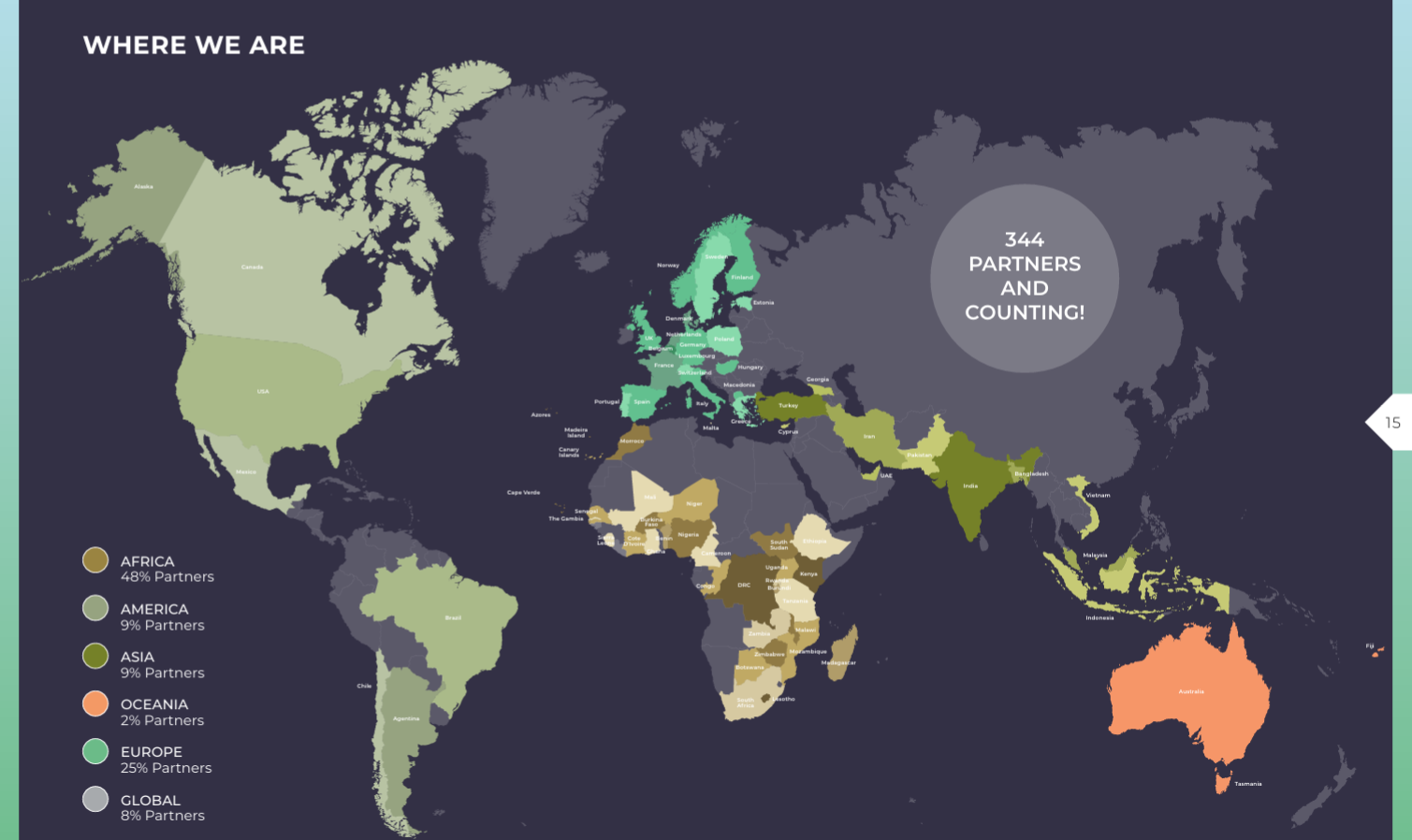
It is because of the coordinated action, dedicated partners and growing awareness of the monumental importance of healthy soil, that soil health now features prominently on global agendas such as the Rio Conventions, regional initiatives such as the CAADP Strategy and Action Plan (2026-2035) for Africa, and national initiatives including inquiry into the role soil carbon can play in delivering on Nationally Determined Contributions.
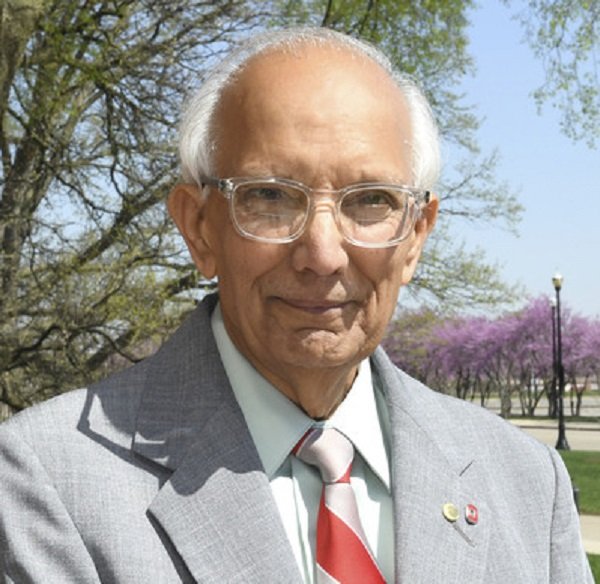
“The future of planet and humanity is hidden in the health of the soil beneath our feet”
- Dr Rattan Lal, distinguished professor of soil science at The Ohio State University, 2020 World Food Prize Laureate, winner of the 2019 Japan Prize, and co-Founder of CA4SH
A Coalition Rooted in Advocacy
Recognizing the central role that soil health plays in meeting global goals, CA4SH has been advocating for enhanced recognition of soil as a critical lever for meeting them in high-level fora since our inception. And our advocacy has evolved substantially over five years.
In 2022, we held our first ever event at UNCCD COP15 in Abidjan, Côte d’Ivoire, titled Multi-stakeholder action for scaling soil health globally through evidence-based public and private investment. This event was a defining moment for CA4SH as we demonstrated the need for multi stakeholder action to combat desertification and drought through soil-centric approaches. Despite having no air conditioning and no internet access, the room was packed and the excitement was palpable, showing us that this conversation was needed, anticipated, and that actors were ready to take on the challenge of scaling global soil health together.
In 2023, we hosted a Breakout Session at the AIM for Climate Summit in Washington, DC, titled Scaling healthy soil practices globally through innovative partnerships, financing and policy. The event was a precursor to the UNFCCC COP28, and we raised awareness of the need for a Soil Health Resolution, our flagship initiative which is a set of commitments for integrating soil health in the Rio Conventions. Ours was not a standalone call for increased attention to soil at AIM for Climate, as Al Gore, former Vice President of the U.S. asserted in his opening plenary to the Summit:
“Planting trees is a good way to pull some carbon, CO2 out of the atmosphere, but there’s three times as much carbon in the first metre of topsoil than in all the trees in all the vegetation combined.”
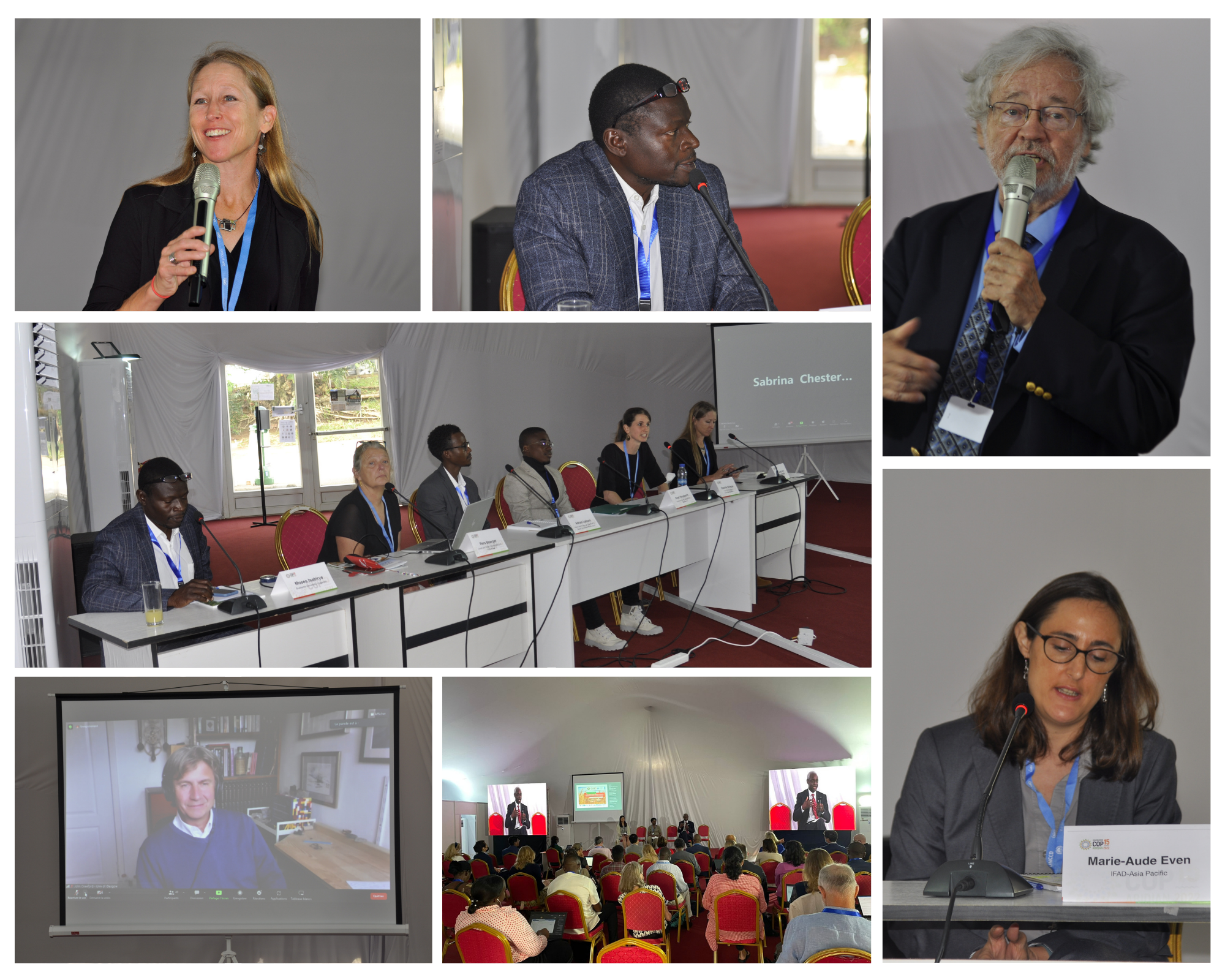
Images from the first-ever CA4SH event at UNCCD COP15.
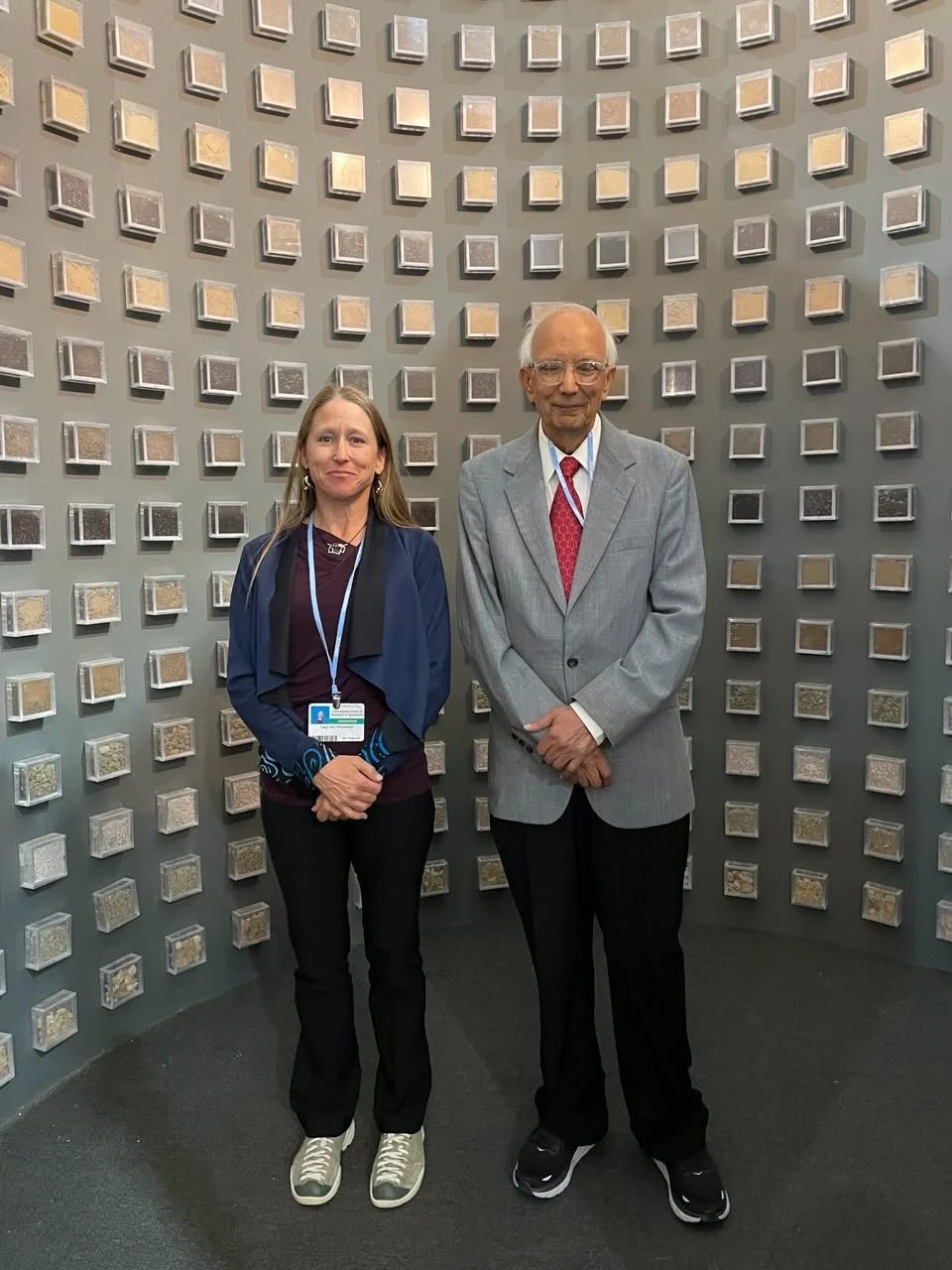
Leigh and Dr Rattan Lal standing with Ukraine soil at UNFCCC COP27.
At UNFCCC, we have four consecutive years of advocacy to celebrate.
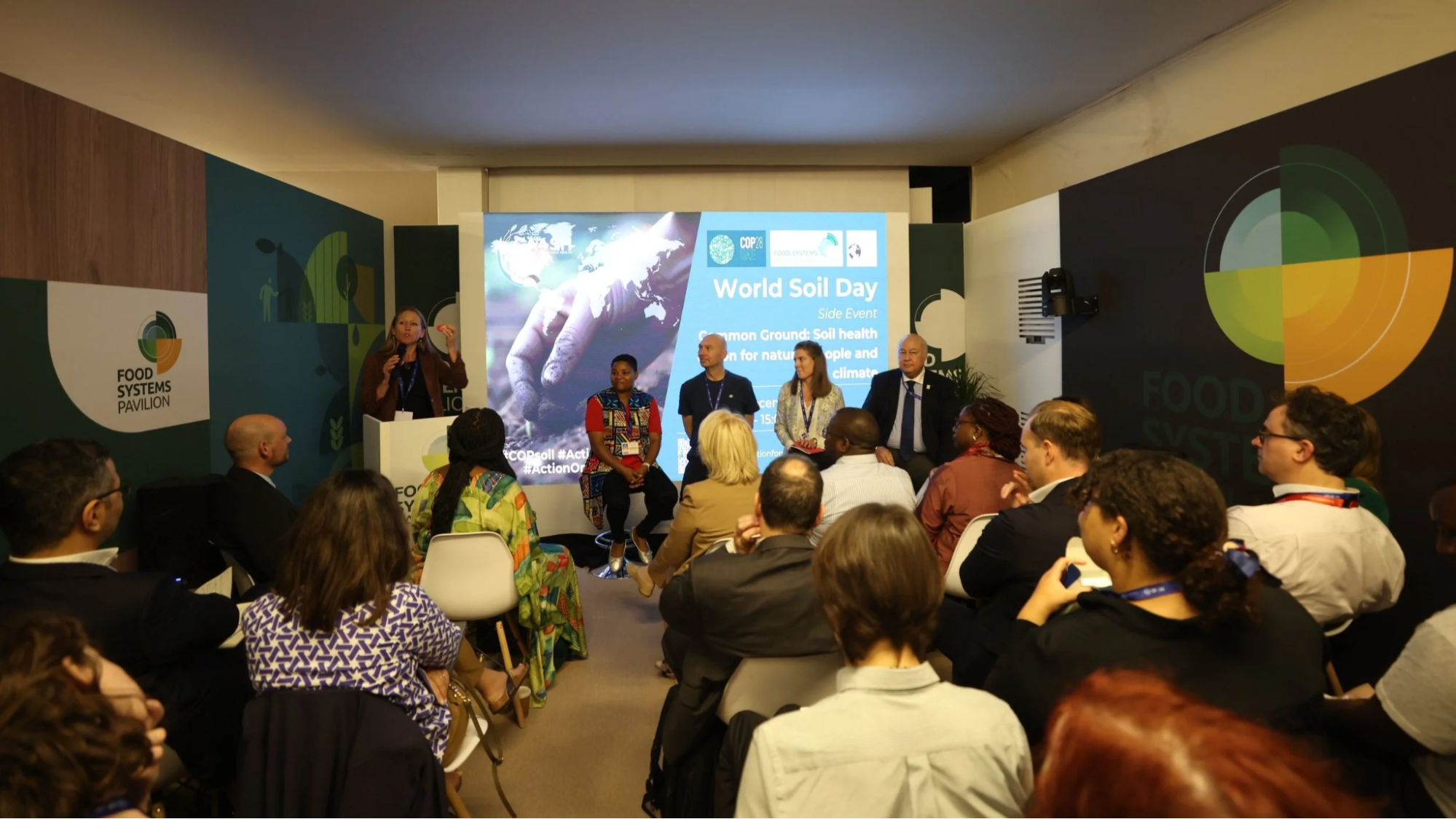
In 2022, CA4SH, with financial support from partners and the private sector guiding group co-hosted the first-ever Food Systems Pavilion (now the Action on Food Hub and Soil Health Day, who we continue to engage with annually) at the UNFCCC COP27, advocating for the Soil Health Resolution in a high-level plenary which contributed to the advancement of soil health in the Koronivia joint work on agriculture. In 2023, we again partnered with the Food Systems Pavilion and hosted World Soil Day on 5 December at COP28, calling for action toward collective mobilization of resources, technical support, and sustainable partnerships to restore and preserve soil health.
At COP29 in Azerbaijan in 2024, we reflected the theme of Solidarity for a Green World by co-hosting several events from across policy, finance, science and practice, demonstrating that soil health is a multisectoral and multiscalar solution. Most recently at COP30 in Brazil, we built upon all of our previous engagements, highlighting the importance of multi-stakeholder action, and underscoring the critical importance of science and evidence to drive informed decision making. We partnered with GIZ to consolidate the learnings from ten years of implementing the ProSoil and SoilMatters programmes globally, and with Norad on the critical need for enhanced soil data knowledge and sharing.
Stemming from these foundational engagements, we have grown to host more than 45 events with over 70 partners at the UNCCD COP16, and to transform our #COPSoil Initiative into a strategic hub for soil health at the Rio Conventions, bringing soil evidence to bear on policy and investment decisions and connecting the knowledge, advocacy, and engagement of partners across Coalition toward a shared goal: soil health at the center of every COP agenda. We have contributed to multiple outcomes from the COPs, including the COP 28 UAE Declaration on Food and Agriculture, the COP28 Food Systems Call to Action, the Global Climate Action Agenda at COP 30, the Breakthrough Agenda Report 2025 on Fertilisers, Decision 19/COP.16 on Avoiding, reducing and reversing land and soil degradation of agricultural lands and Decision 29/COP.16 on Rangelands and pastoralists.
Now, soil health is on the agenda.
But despite this progress, soil degradation is continuing to happen at alarming rates, and 2.3 billion people experience moderate or severe food insecurity, globally. The highest rates of food insecurity happen on the African continent, where soil and land degradation, desertification, and drought are at their highest on Earth. This is not a coincidence.
Embedded in every engagement over the last five years has been a spirit of continual learning, and we’ve made great effort to document this journey to culminate in this moment of reflection. We can see that many of our reflections and recommendations from previous engagements are still just as relevant as ever, for example, from our Lessons Learned from COP28 brief, where we highlighted the importance of planning early and with specific goals.
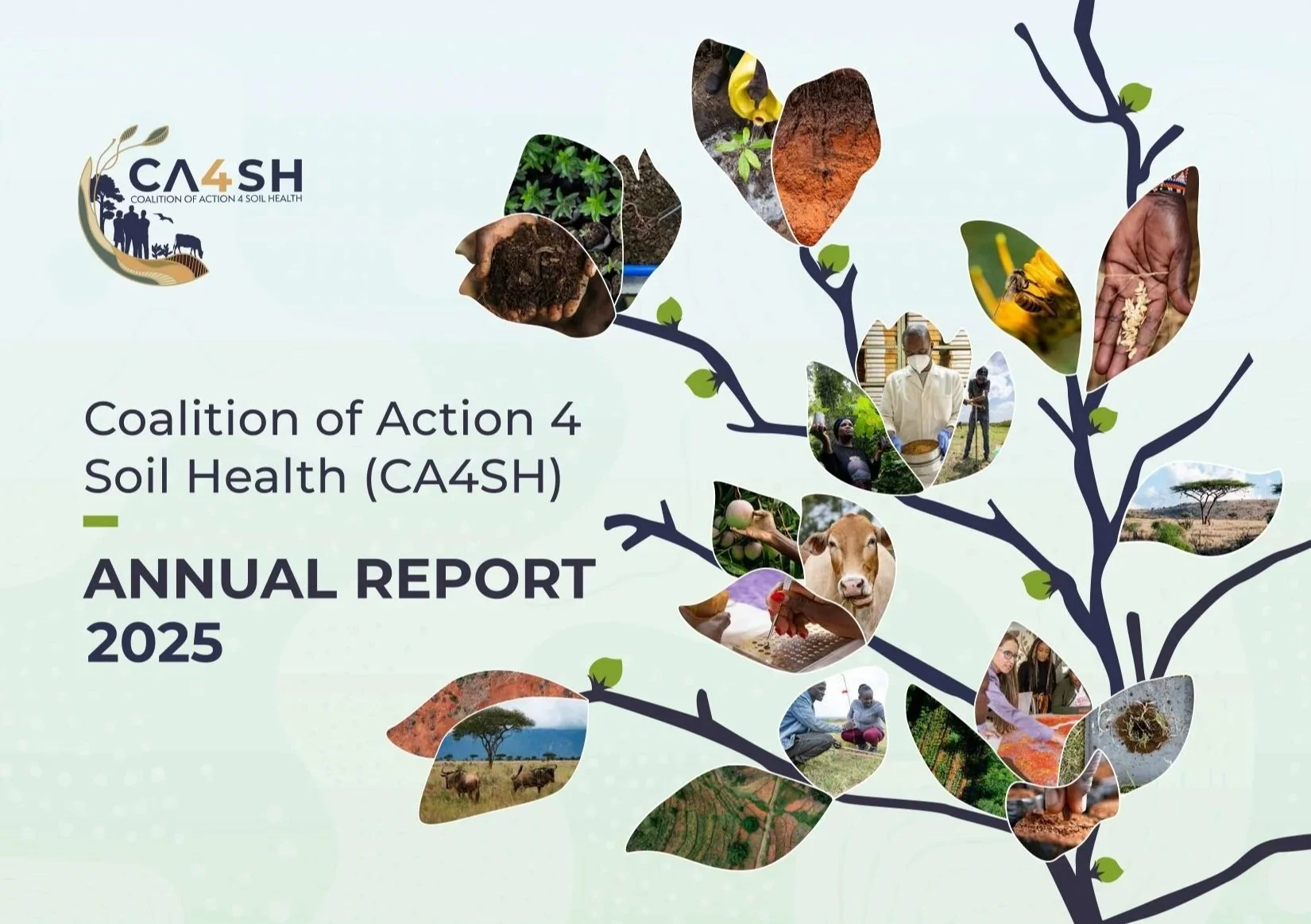
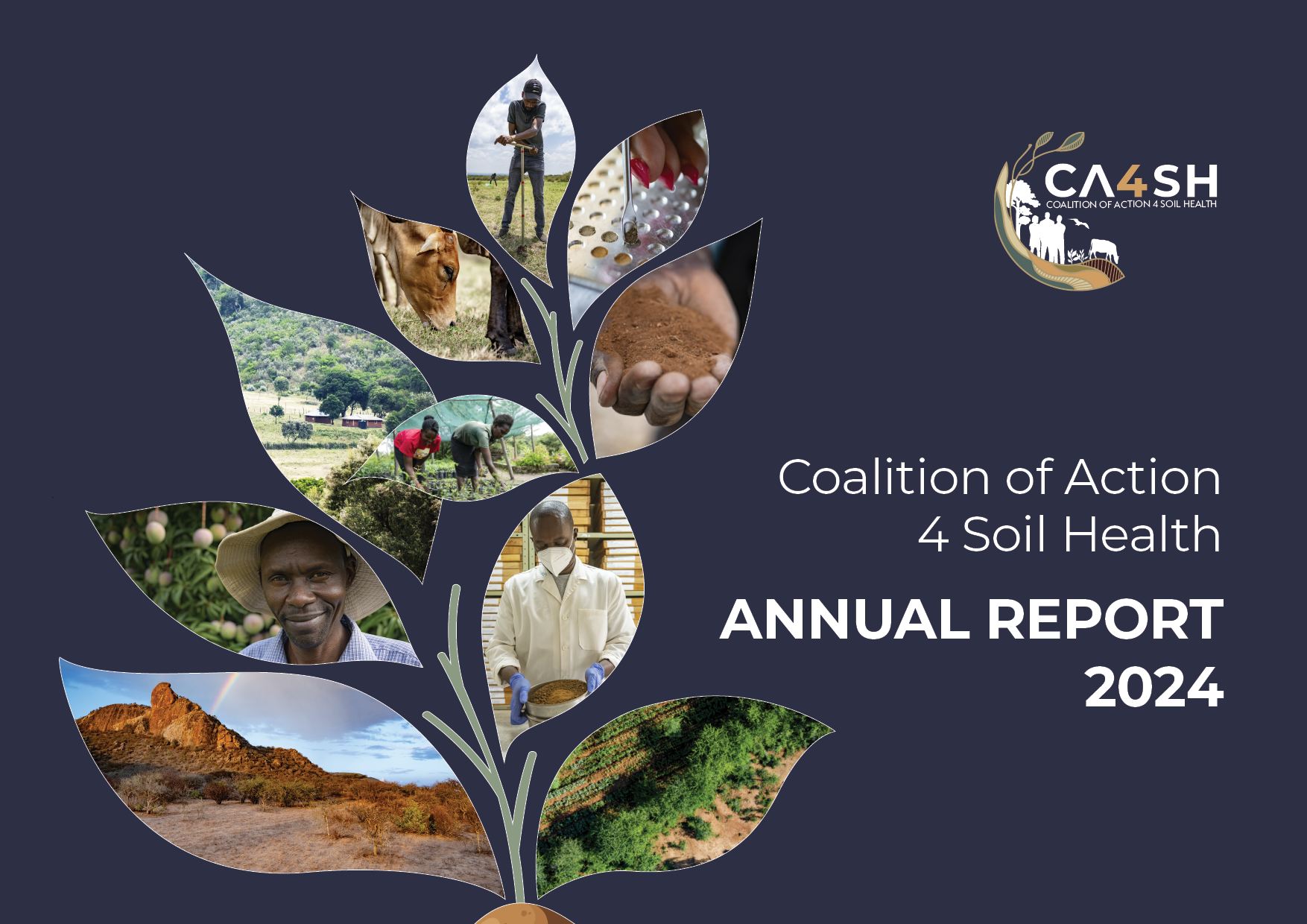
In 2024, our Monitoring, Research and Implementation Working Group produce a set of general recommendations for soil health monitoring, including offering a unique definition of soil health which we still refer to in our work today, and we have also produced three Annual Reports where we can see just how our collaboration has grown and just how much our partners are engaged. In the most recent report from 2025, for example, multiple partners co-produced the report with spaces dedicated to highlighting their work, such as flagship initiatives.
We are using these and many more reflections from the past five years to guide us in our next steps.
Toward the 2026 Rio Conventions
As we look to the next chapter of CA4SH, the COPs, and the global soil health agenda, we are more committed than ever to scaling soil health.
UNCCD COP17 is taking place in Mongolia, with a focus on rangelands. This is a key opportunity for the Coalition, not least since rangelands cover more than half of the Earth’s surface, yet more than half of rangelands are degraded. This makes rangelands ecosystems one where soil health is most critical and most neglected. This year is also the International Year of Rangelands and Pastoralists (IYRP), making rangelands a central ecosystem for the upcoming discussions. Moreover, we are looking forward to leveraging Decision 19/COP.16 on Avoiding, reducing and reversing land and soil degradation of agricultural lands and Decision 29/COP.16 on Rangelands and pastoralists to further the future of soil and rangeland health.
Rangelands are a key ecosystem for combatting the climate crisis, biodiversity loss, and pressure on rural livelihoods as they have been disproportionately degraded. Pastoralists and Indigenous communities have been their traditional stewards since time immemorial, but their practices are not being allowed to flourish under urban expansion, inequitable land governance, and unsustainable agricultural systems. Moreover, women, youth, and other marginalized groups face additional, intersecting layers of marginalization from having their voices heard in the conversation on rangeland health. Rangelands are uniquely positioned as the frontlines of the climate crisis, and sustaining their health is an urgent issue for safeguarding the people who live within them, as well as global ecosystem services that are needed to withstand climate change.
Additionally, with the three Rio Conventions taking place this year, we have an opportunity for greater coherence between the conventions, and to show that soil health aligns all three. There has been increasing momentum toward this end in recent years, for example, with the UAE Food Systems Declaration which culminated from the drive and collaboration of Member States and non-state actors.
But most importantly for 2026, we want to turn evidence-based policy commitments into action.
We need to make sure that soil health bends the curb on degradation, supports livelihoods, sustains biodiversity, and mitigates the climate crisis, and to do this we need to translate international commitments into farmers’ fields.
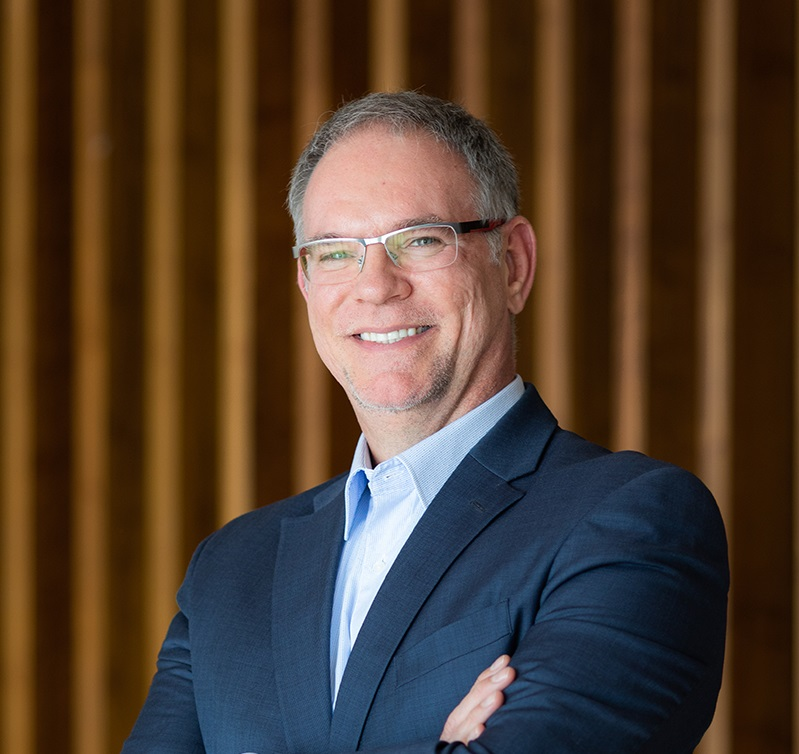
“The goals of the UN climate, biodiversity and land Conventions will not be achieved in isolation. Nature-positive agriculture and healthy soils offer a powerful opportunity to align the three Conventions through solutions that deliver multiple benefits for people, nature and climate at the same time. The challenge now is to turn policy ambition into action by supporting farmers and land managers to implement these approaches at scale. Through its unique coalition of partners, CA4SH has a unique role in to play In mobilising the science, advocacy and collaboration needed to accelerate action and impact.”
- Dr Joao Campari, Global Leader, Food & Agriculture, WWF International and Chair of Action Track 3 of the UN Food Systems Summit in which CA4SH finds its roots
The CA4SH partnership has shown that the evidence is there to support action, and that the way forward is rooted in evidence-based decision making. We need to break the status quo and invest in integrated, collaborative, and backed-by-science interventions that make the most of available time and resources to scale soil health and protect people and the planet.
We have four key asks for the 2026 COPs:
Integrate soil health in national strategies
Leverage soil data and evidence to inform policy, investment and practice decisions
Harmonize and strengthen soil information systems to fulfill commitments
Empower farmers, pastoralists, rangeland communities, women, youth, and Indigenous Peoples as leaders and decision-makers
Engage with Us
UNCCD COP17 is coming up from 17-28 August 2026, with UNFCCC and CBD in the months following. To align on our joint agenda for scaling soil health, CA4SH partners have prepared several knowledge products outlining the role of soil in aligning the conventions, as well as the importance of centering healthy rangeland ecosystems and soil information systems in our efforts to meet the goals of the Conventions and global agendas.
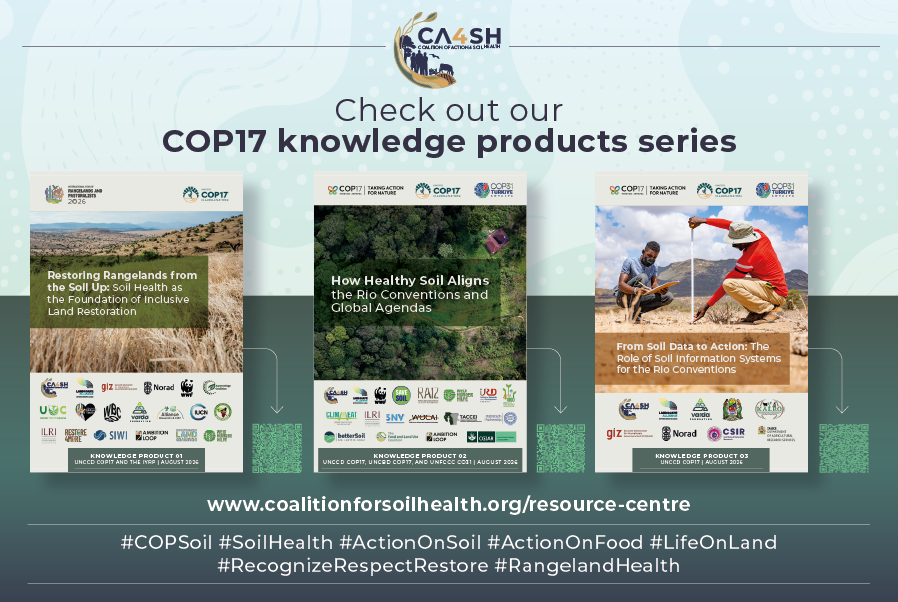
* Links to the final knowledge products are forthcoming!
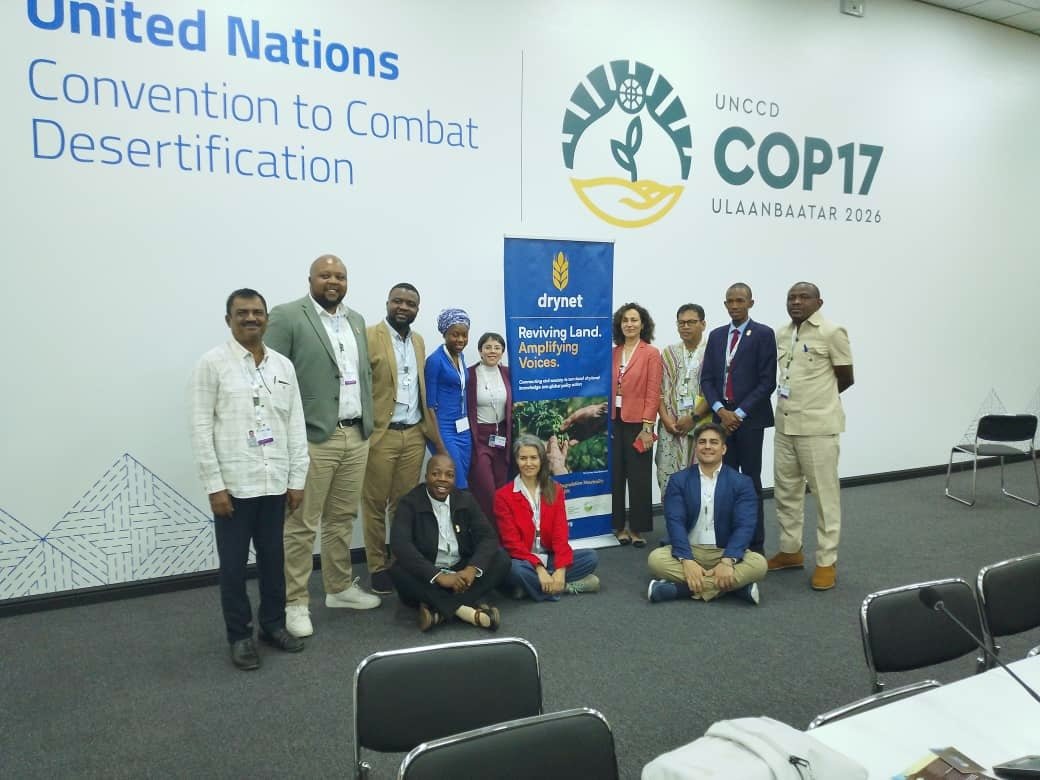
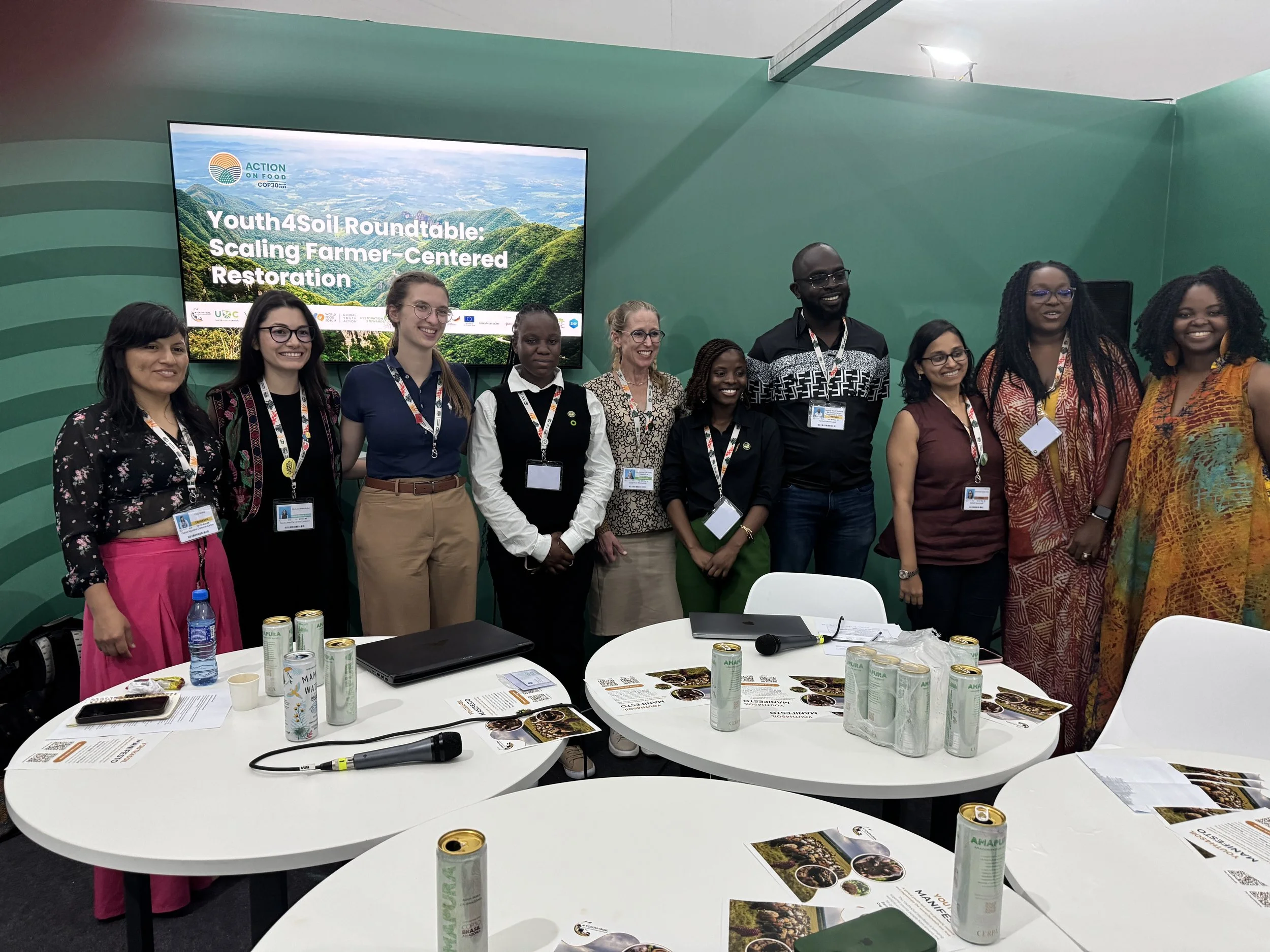
At UNCCD COP17, we are on the Steering Committee for designing the first-ever the Food Systems and Soil Health Day on 27 August, as well as co-leading several events, launching the Youth4Soil Manifesto Implementation Guide and celebrating the International Year of the Woman Farmer. We are also organizing 10+ side events with partners across the two weeks, including a mid-COP event with WWF and partners on A Nature Positive Global Agenda to Protect, Manage and Restore Grasslands, Savannahs and Rangelands, and hosting a high level dinner to foster multi-stakeholder collaboration and promote land and ecosystem restoration with healthy soil as the foundation. At UNFCCC COP31, we are advancing the COP30 Action Agenda Plan to Accelerate Regenerative Agriculture for Healthy Soil and Healthy Diets with partners. We are also looking to expand our collaboration toward CBD in advance of COP17.

Image from the first Soils Leadership Dinner at UNFCCC COP28.
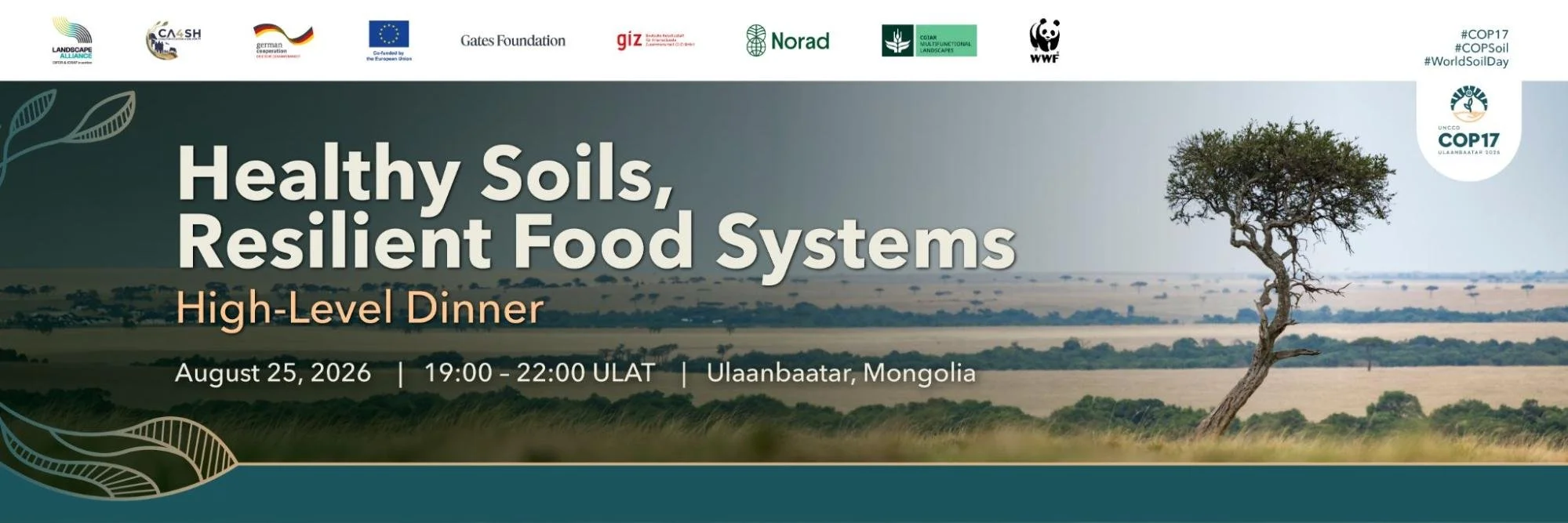
Flyer for the upcoming Soil Health dinner at UNCCD COP17.
Looking Ahead
When this Coalition was formed in 2021, we initially did it to fill a gap at UNFSS, and though we didn't really have a long-term vision for where we wanted to take it, we rode the wave of momentum, and we adapted to feedback and lessons we learned along the way.
As time wore on it became clear that we were really filling a gap on translating science into action, aligning the Rio Conventions,and supporting countries on their national policies, all through coordinated, collective action. We are committed to remaining dynamic to the needs of our partners and the global community, but we are more committed than ever to the mission of scaling soil health globally.
Now, we not only ride the wave of momentum, we drive it collectively.
We can’t predict the future, but we now know that soil health is a household name at global, regional, national and local levels. As our partnership continues to grow, so do our ambitions for a just and holistic agenda that meets global goals, with farmers and land managers uplifted to implement healthy soil solutions.
Reach out to engage at the Rio Conventions and more:
Five years ago, the Coalition of Action 4 Soil Health (CA4SH) was launched at the UN Food Systems Summit to advocate for healthy soil as central to food system transformation.
At that time, healthy soil was not formally recognized as a climate solution, despite it being the largest terrestrial carbon sink and having a central role in upholding food and nutrition security, combating land degradation and drought, hosting biodiverse ecosystems, and filtering and storing water, among a myriad of other co-benefits.
But momentum was growing.
Read the full op-ed by CA4SH co-Lead Dr Leigh Winowiecki