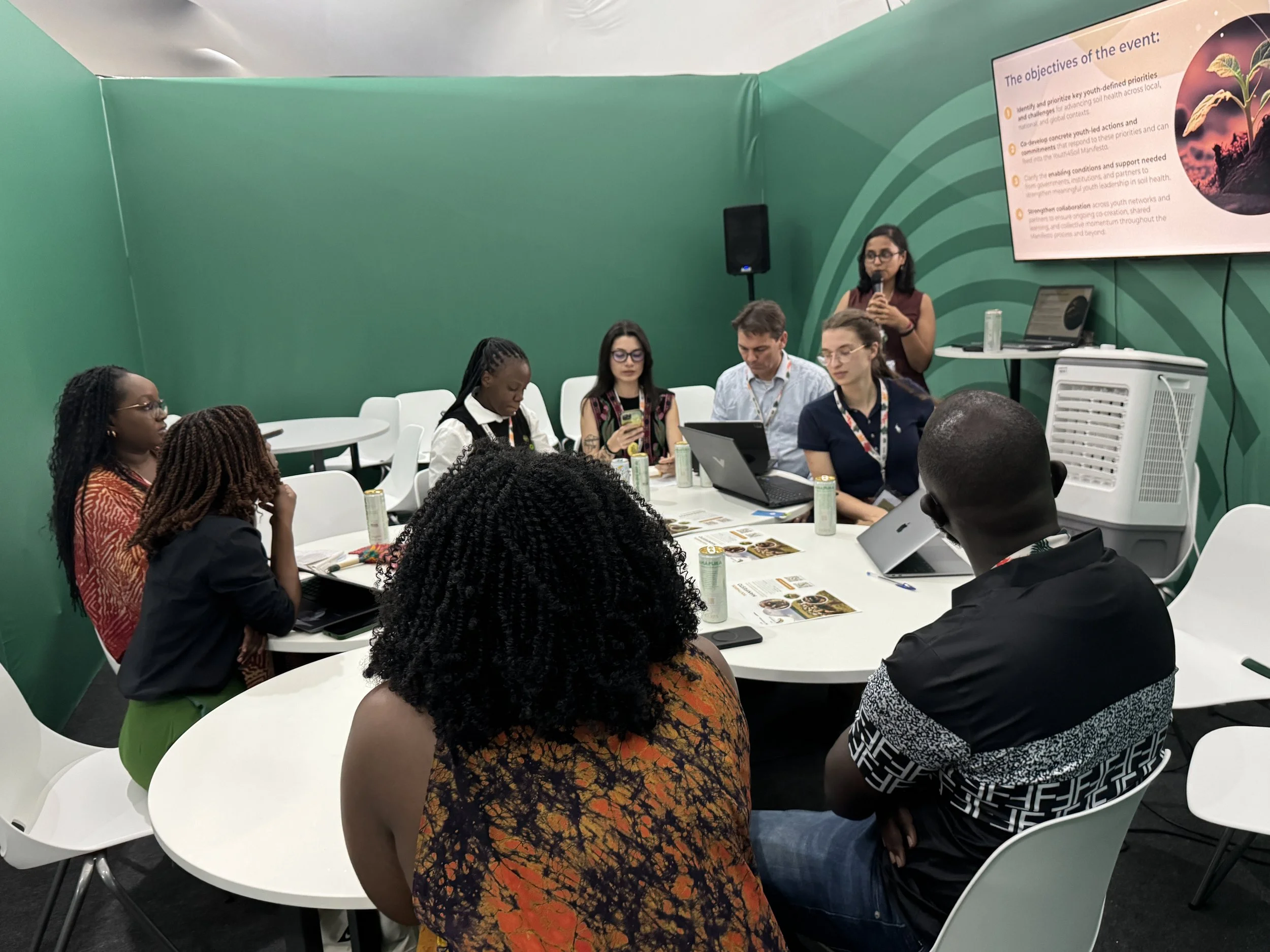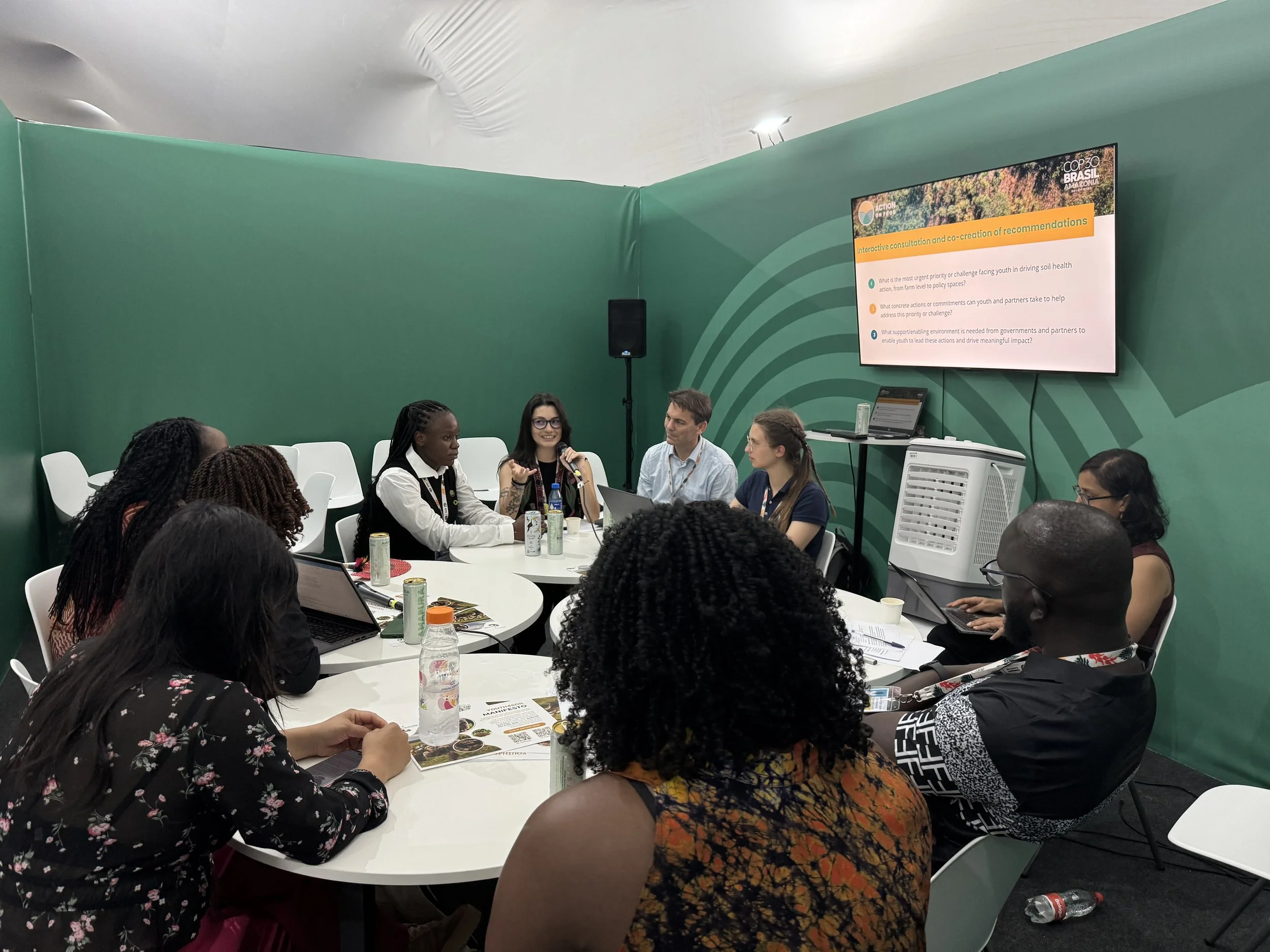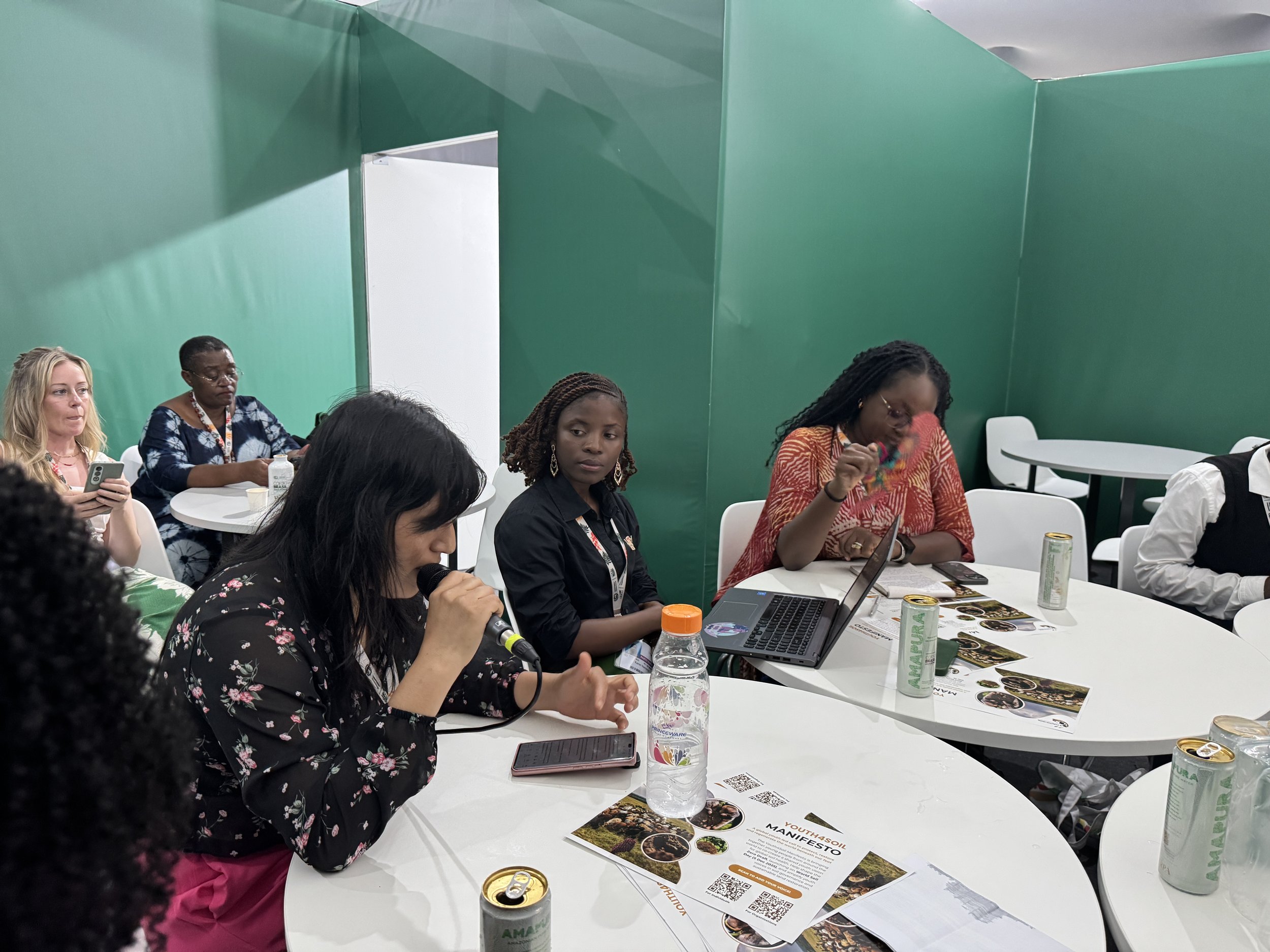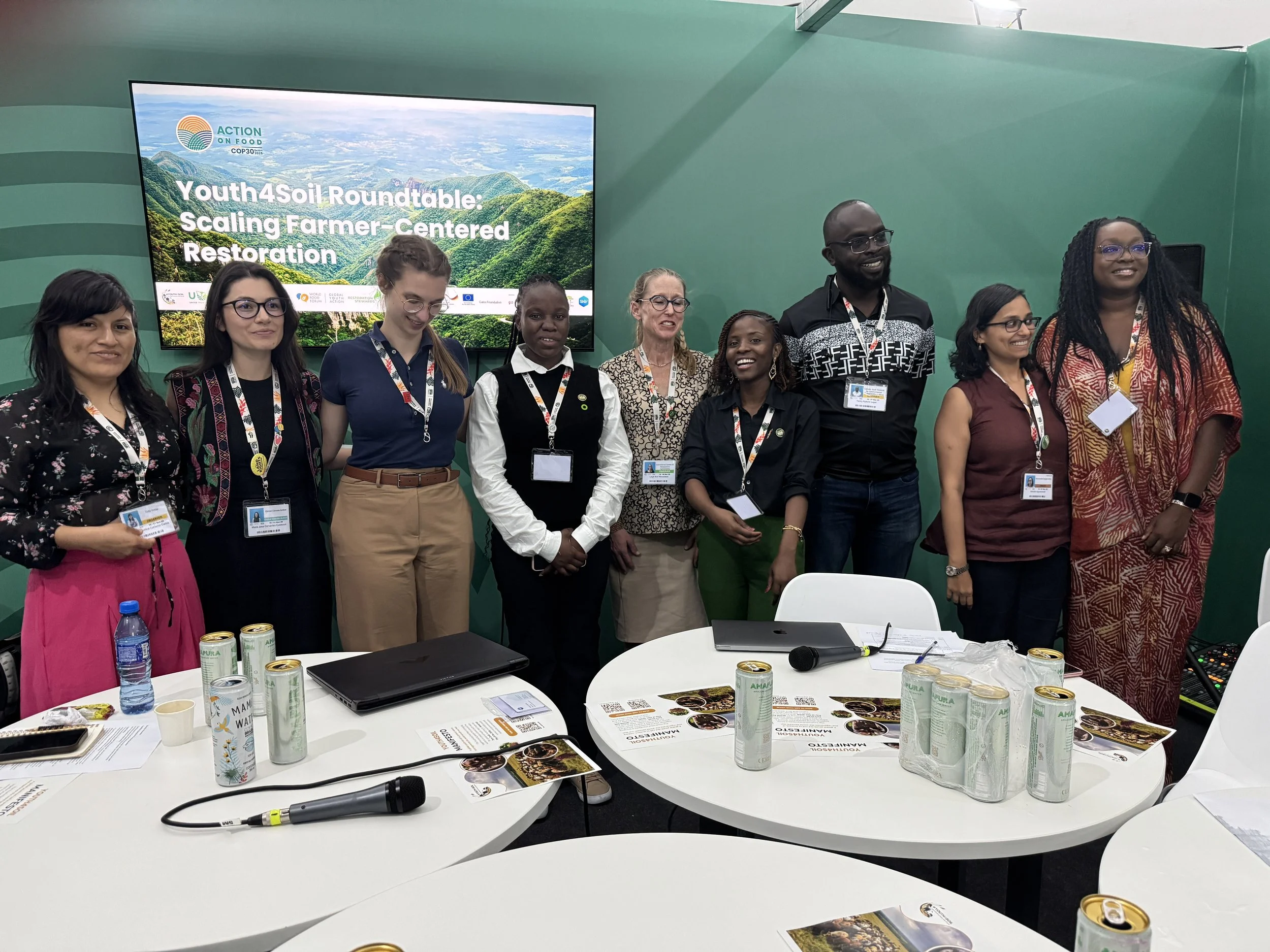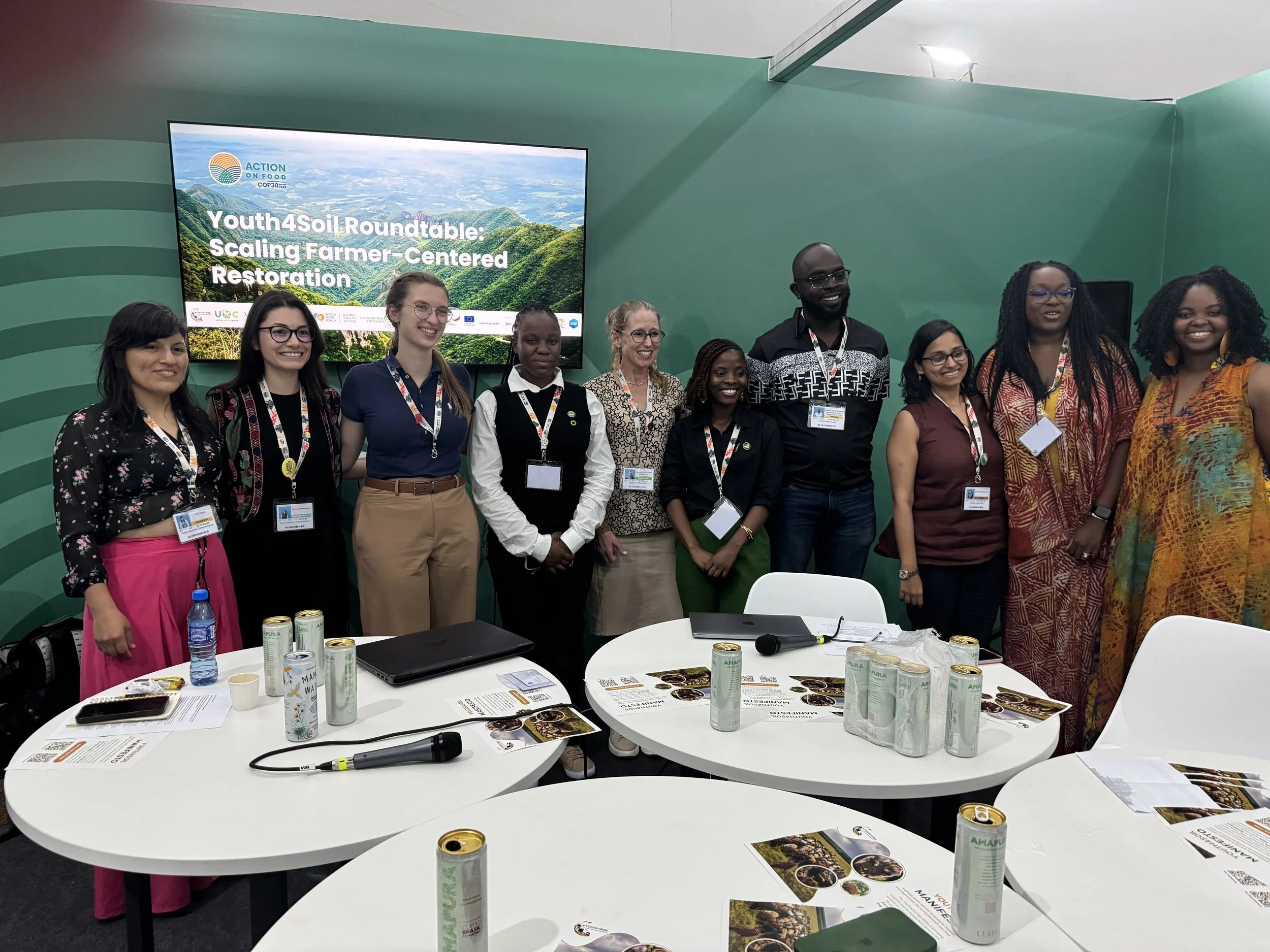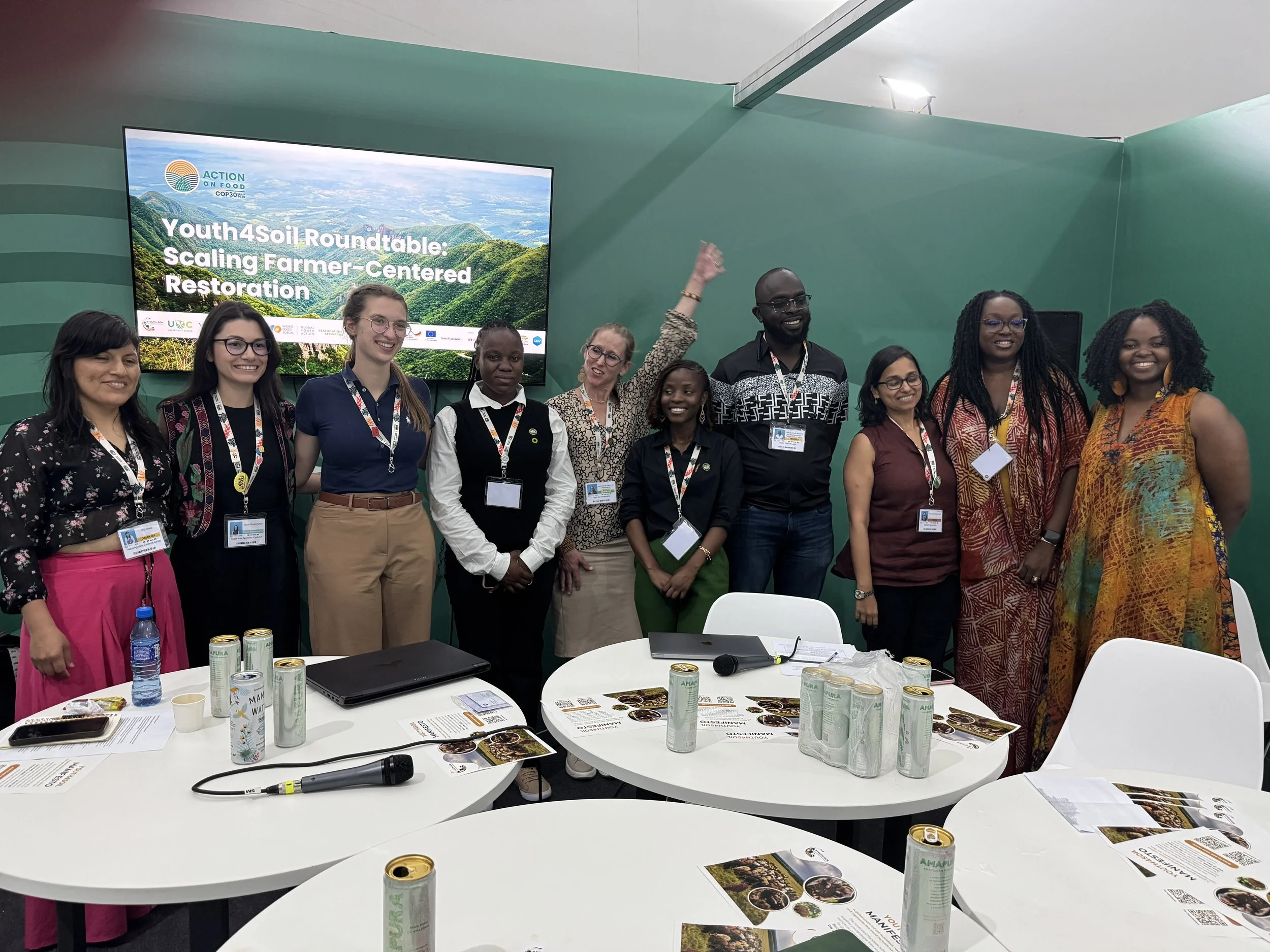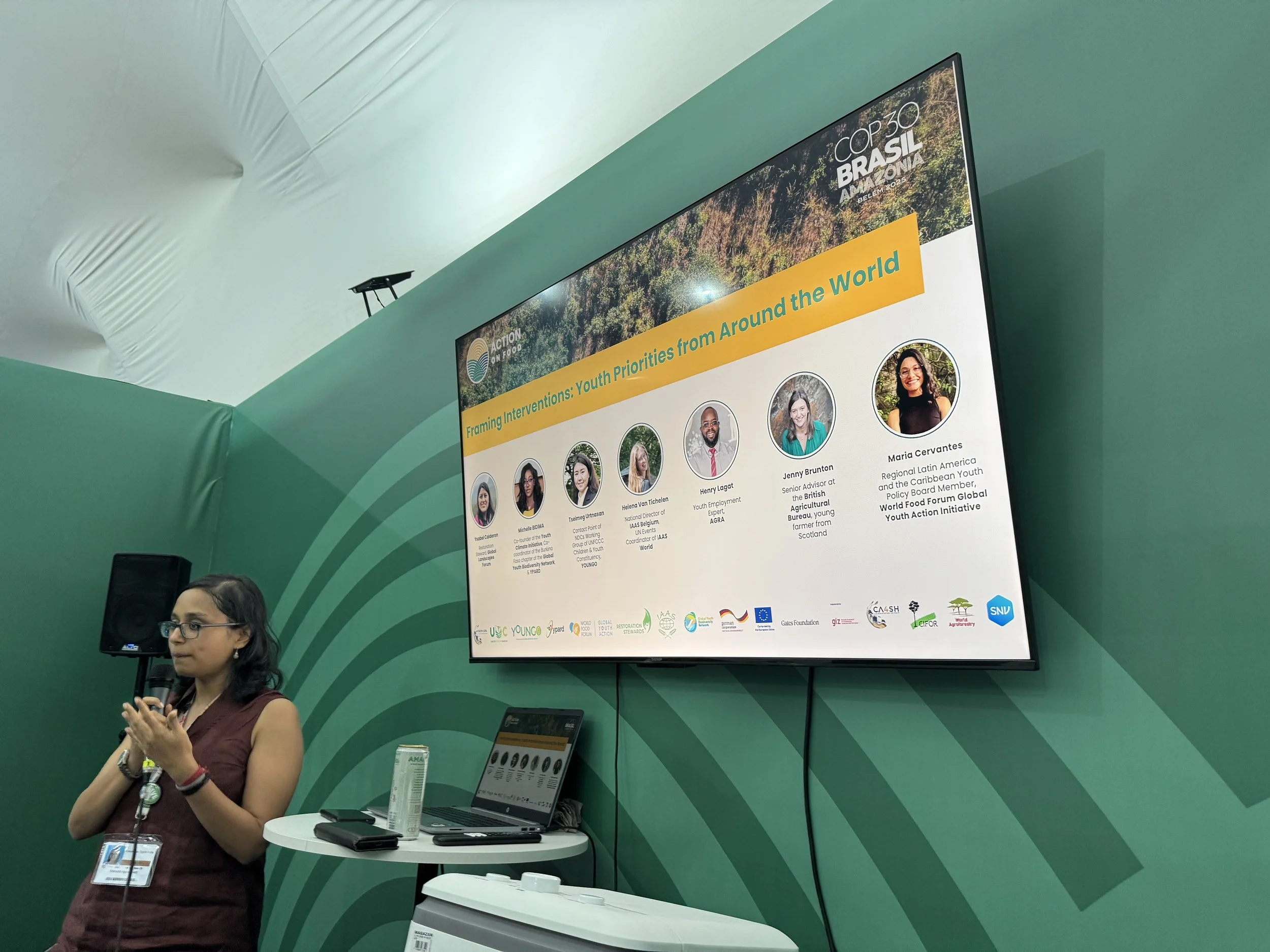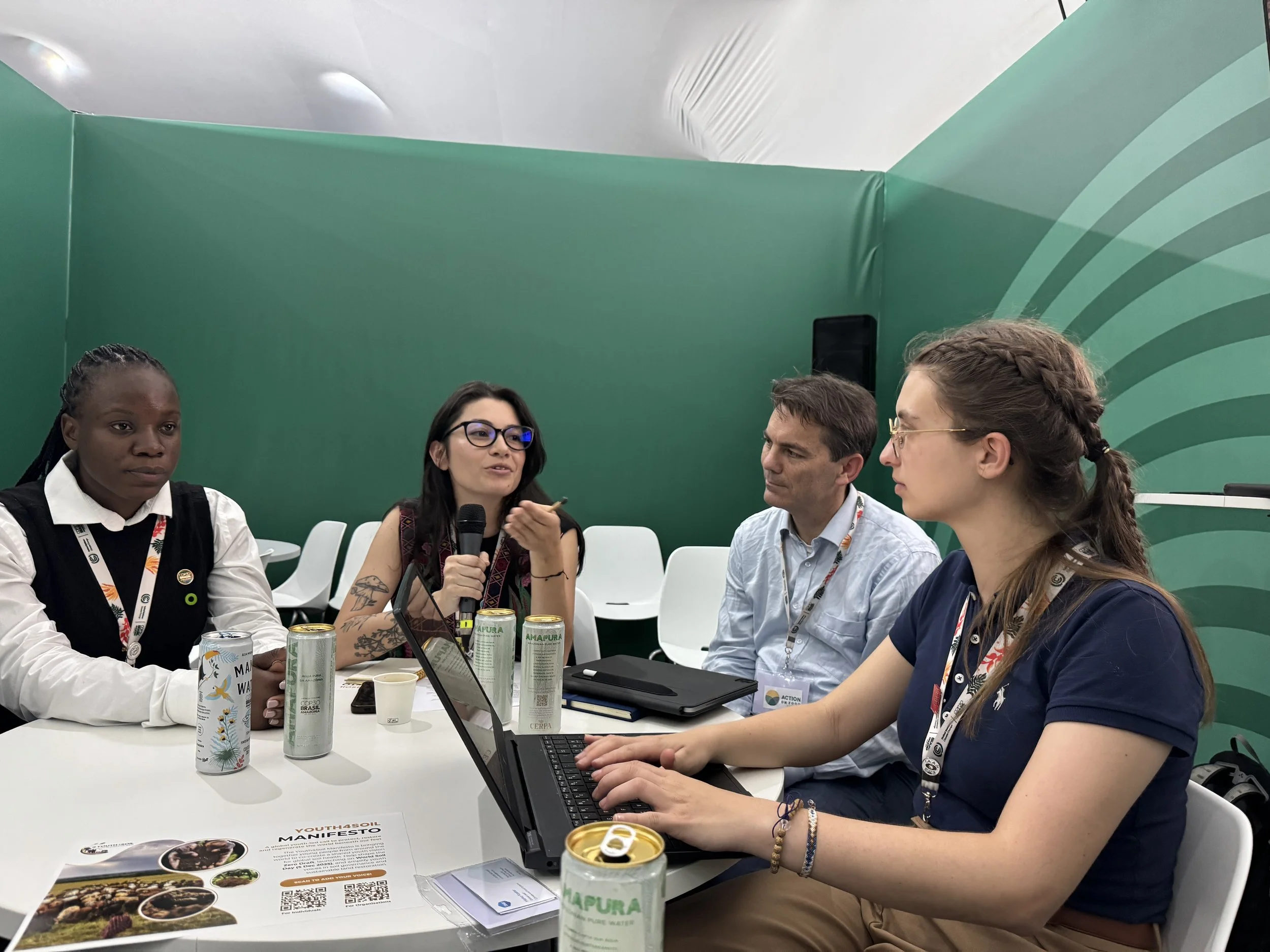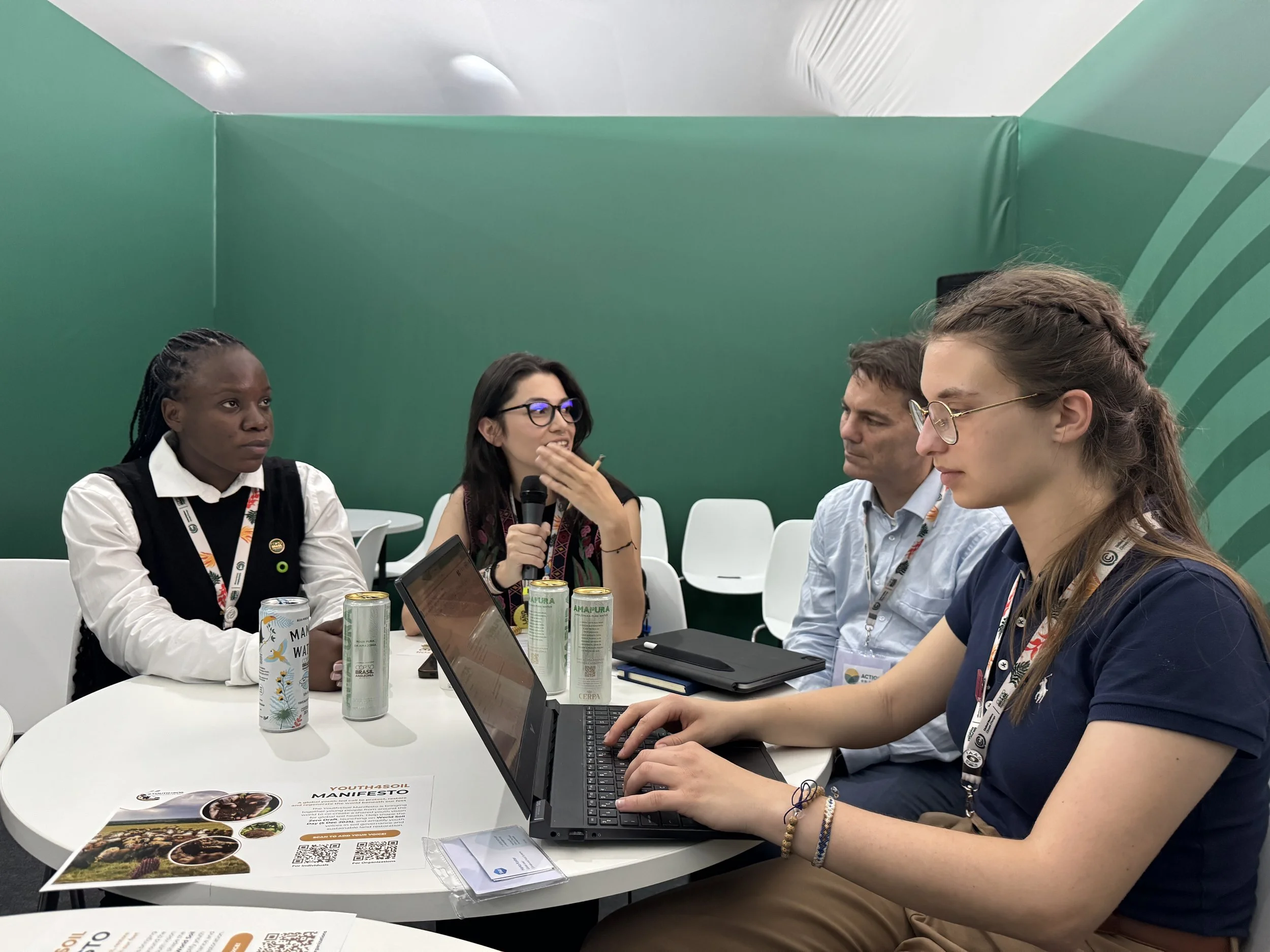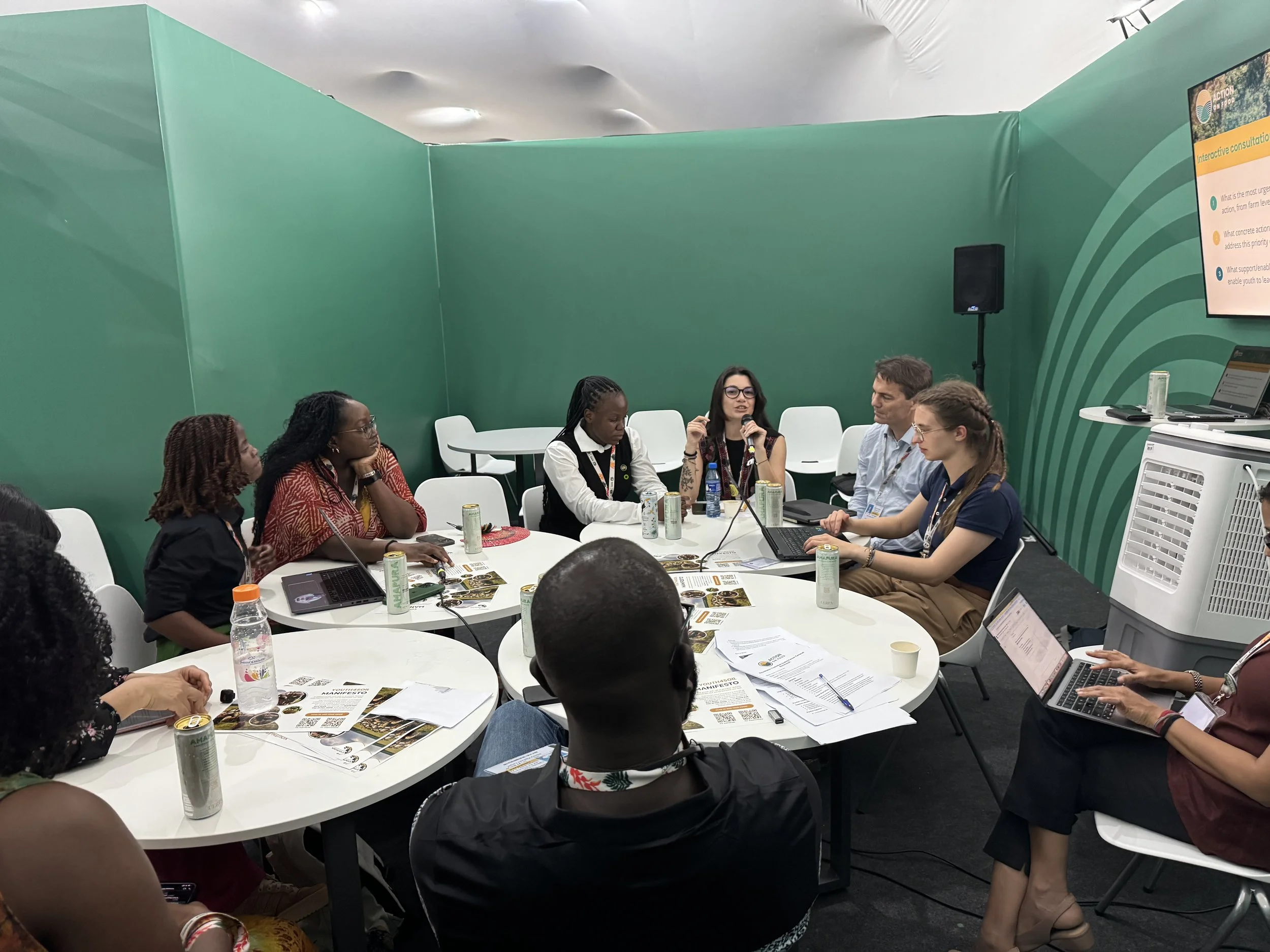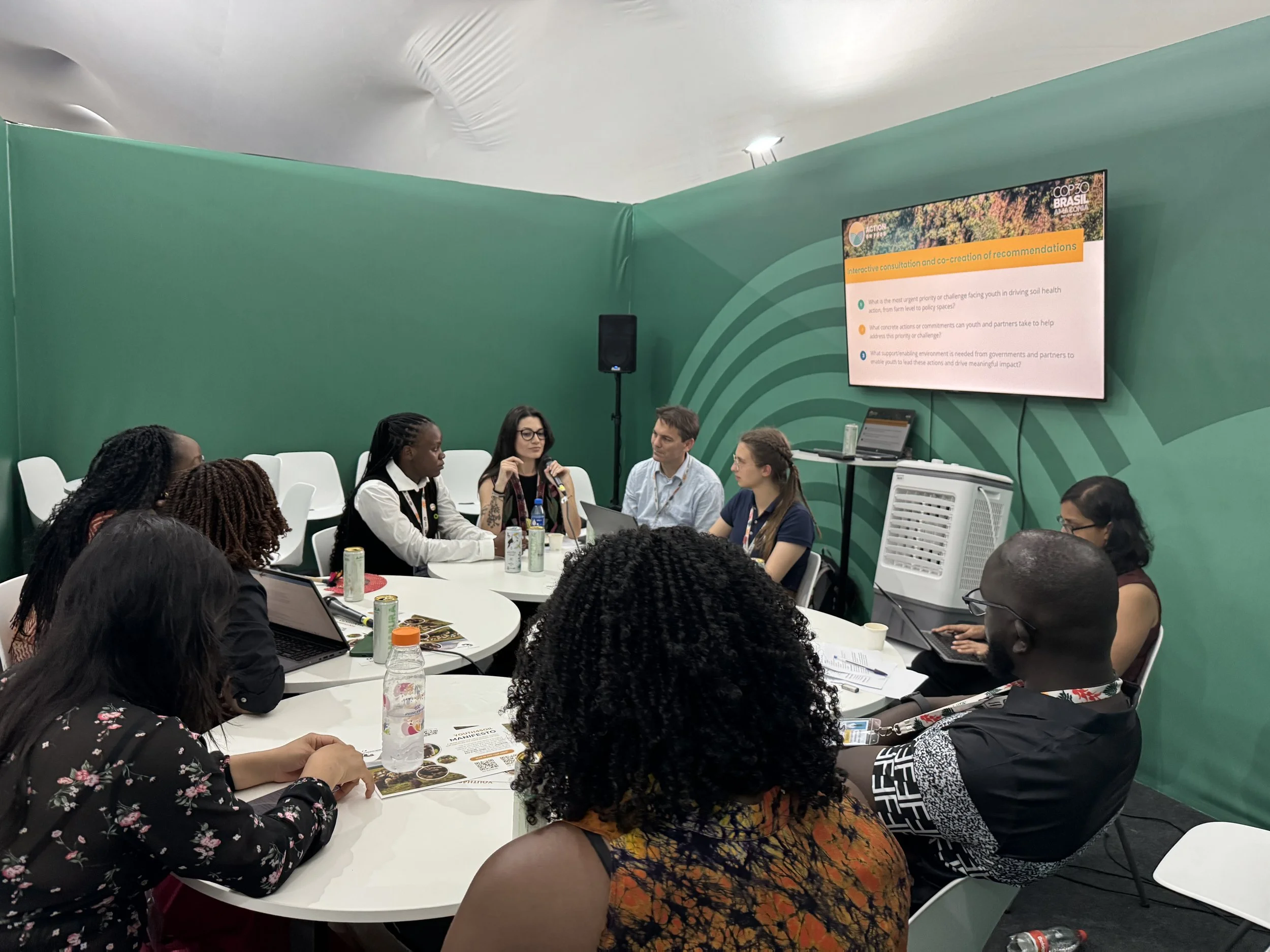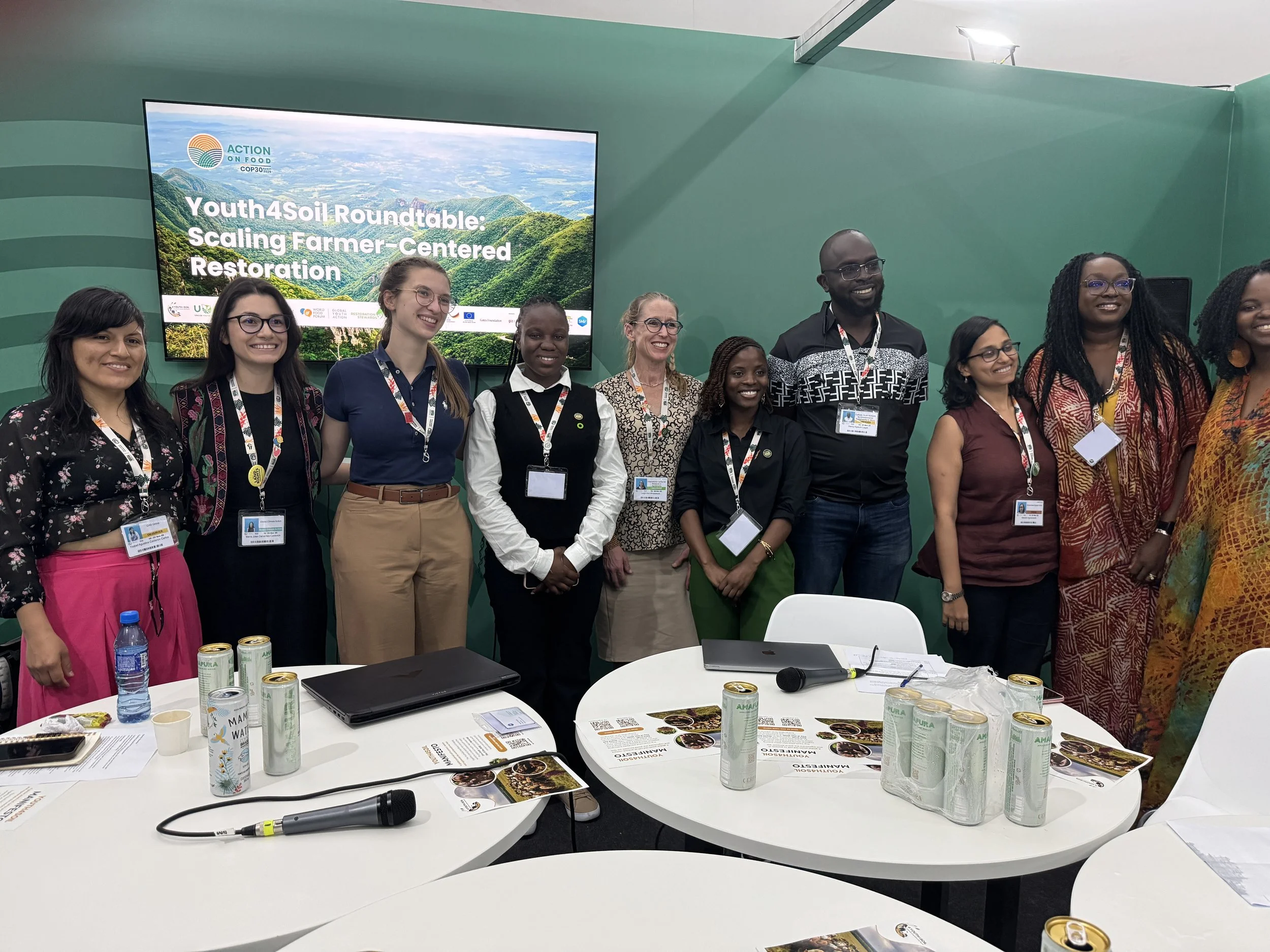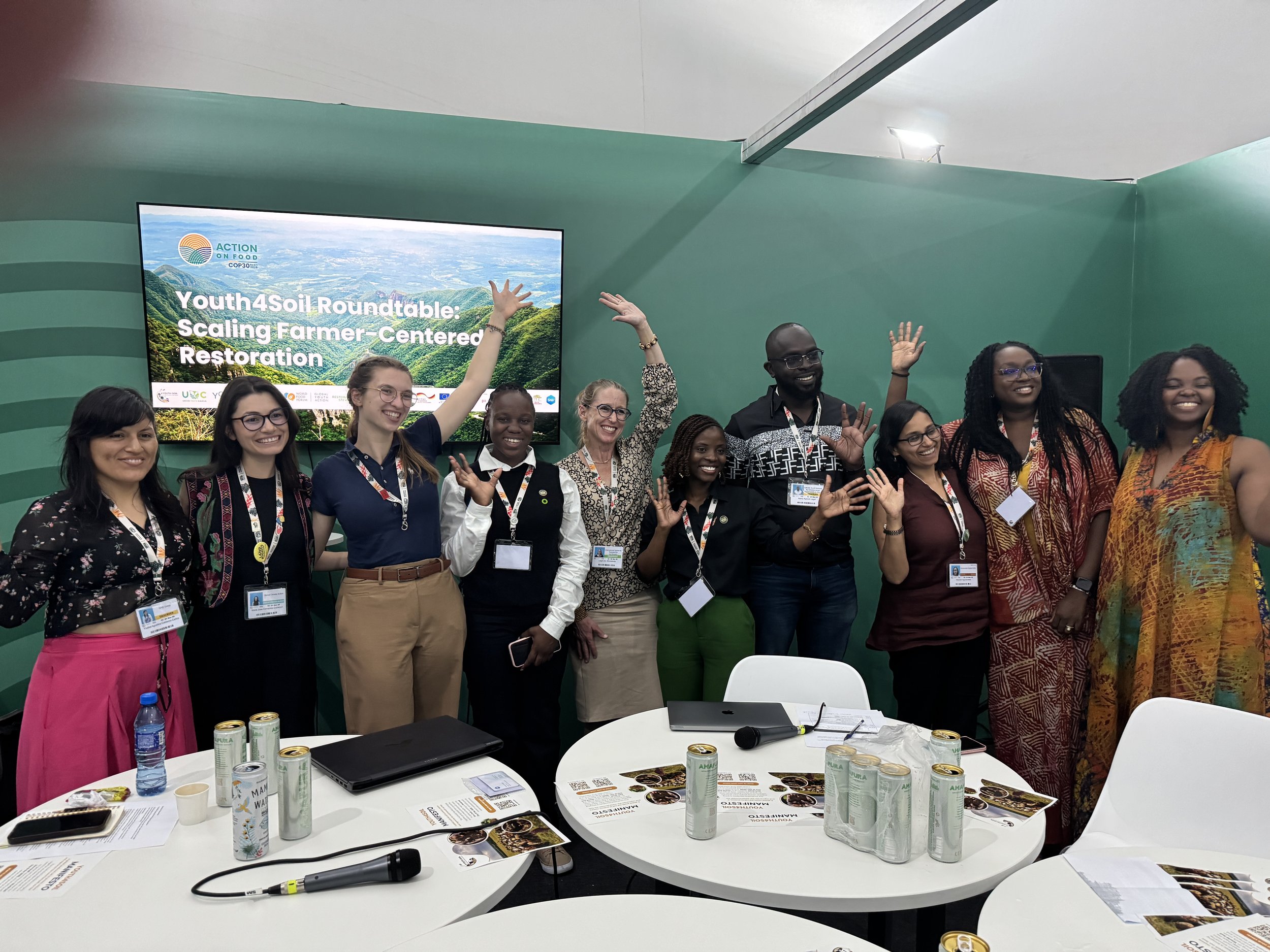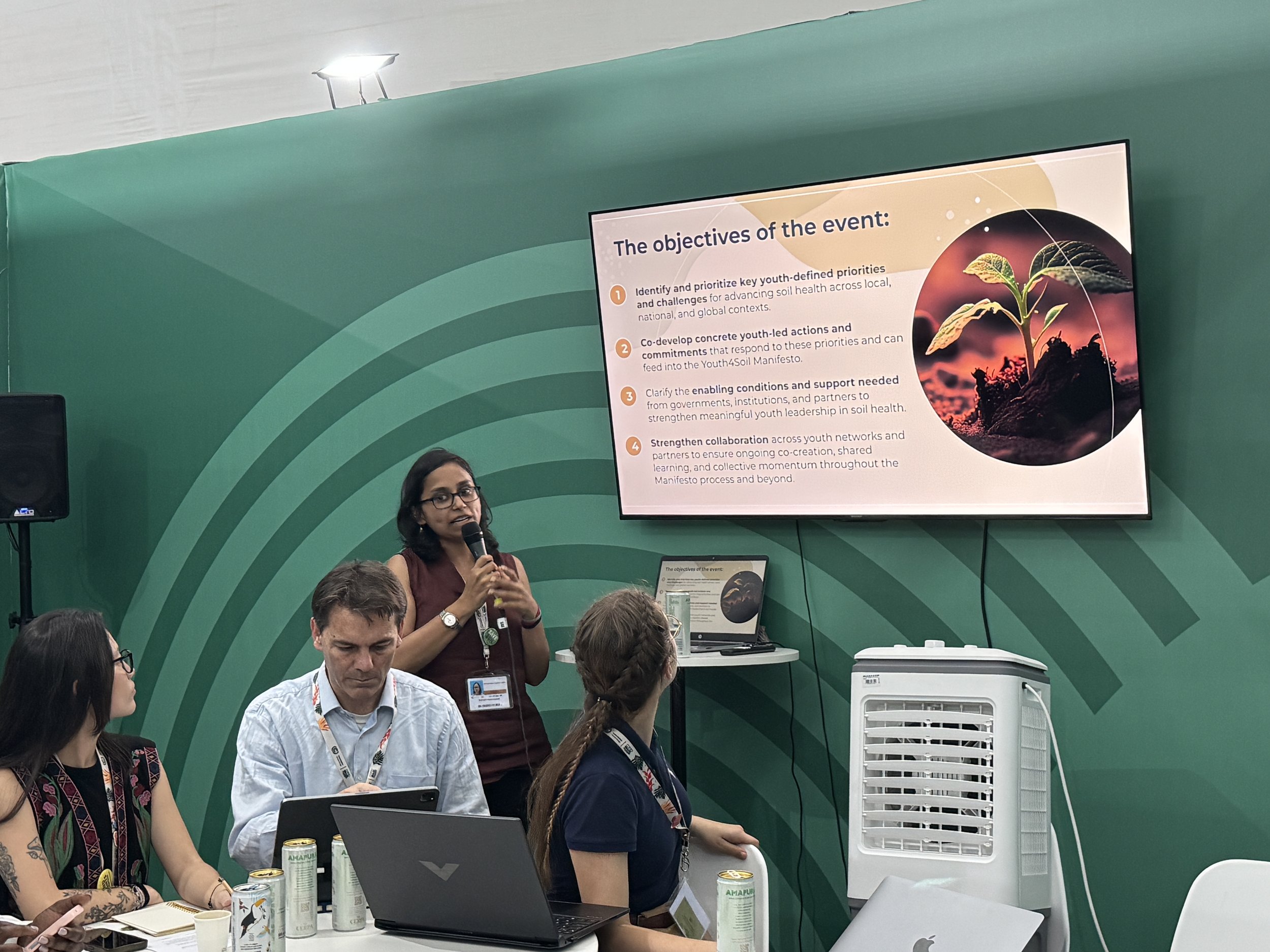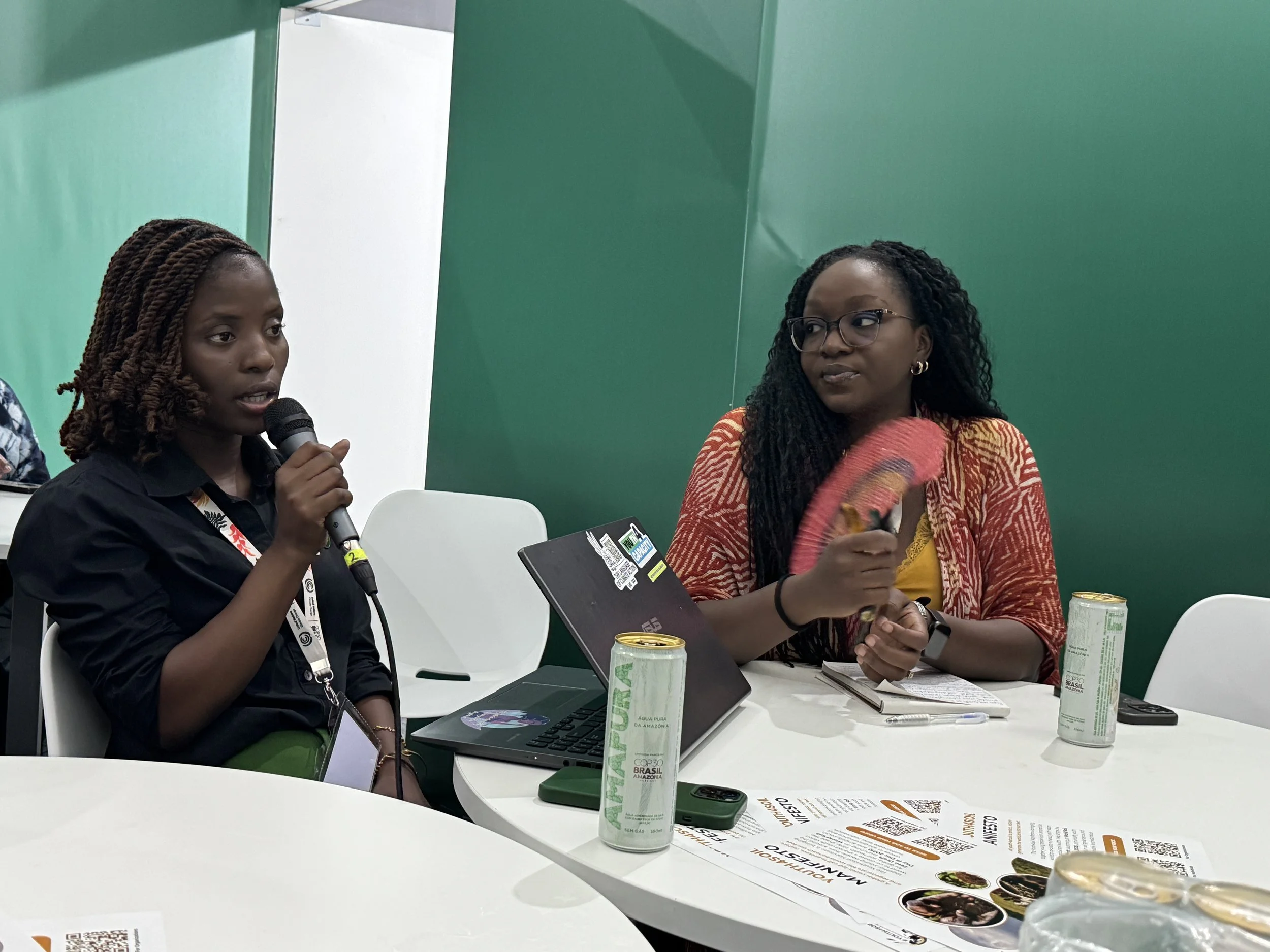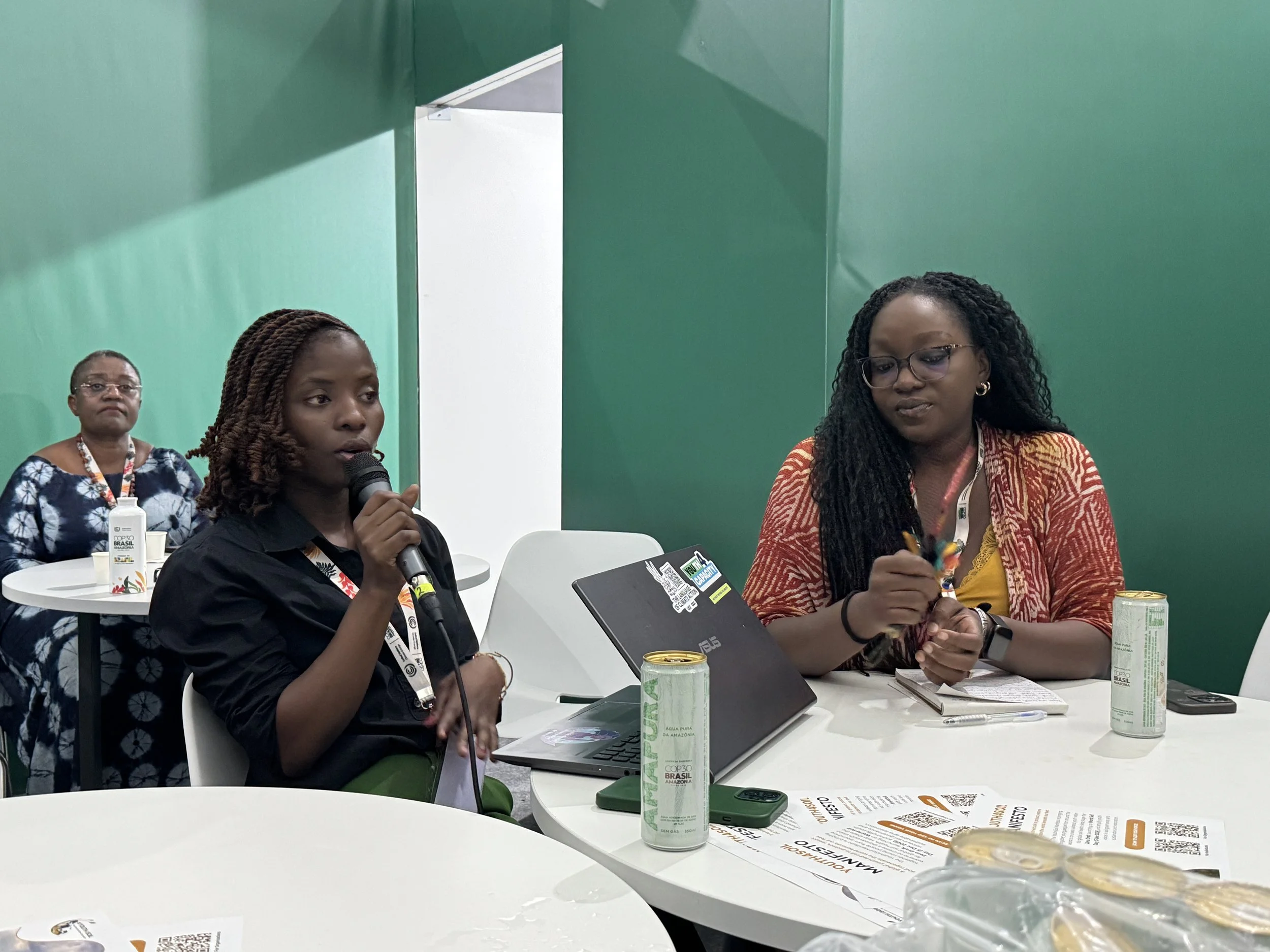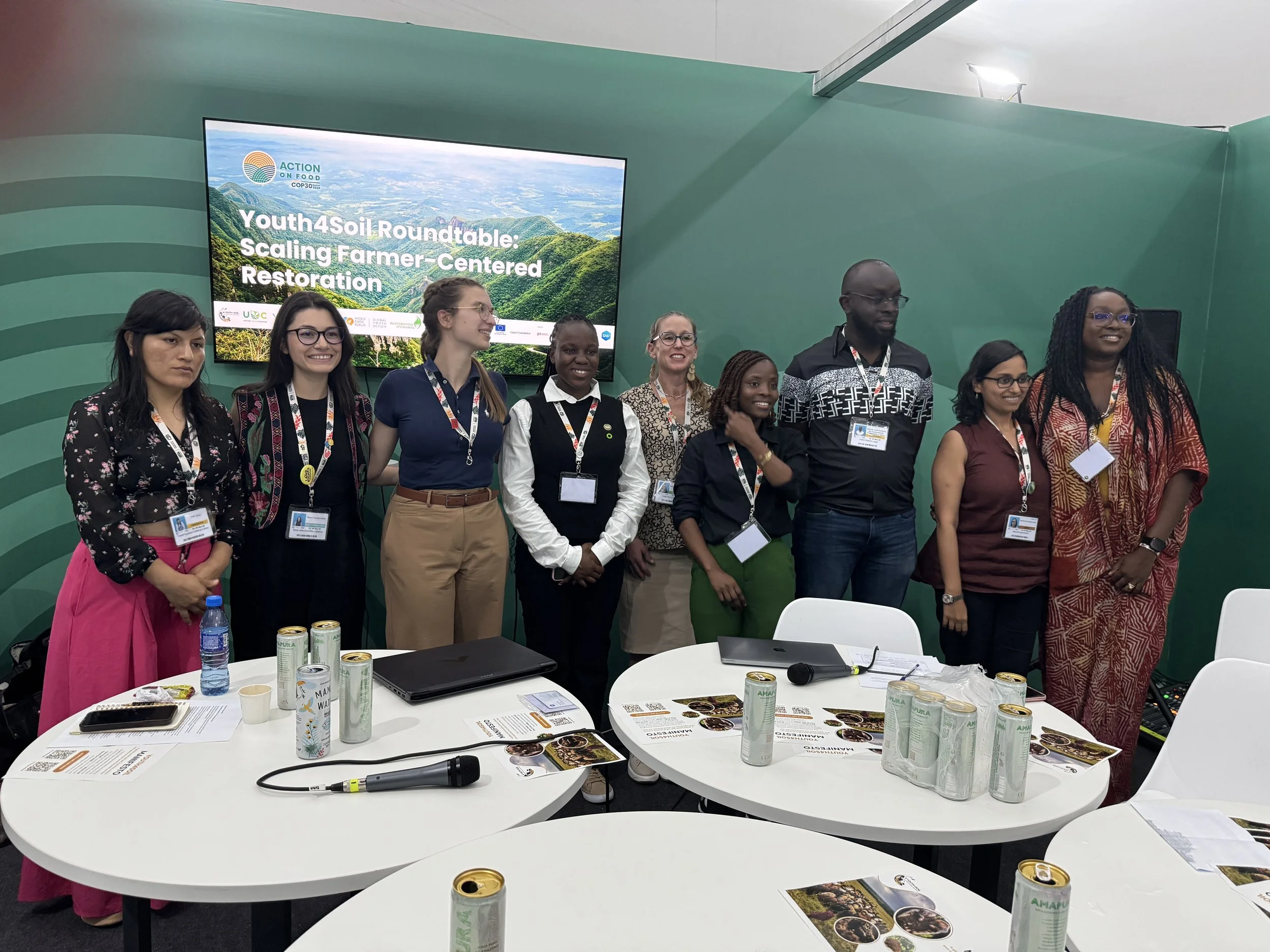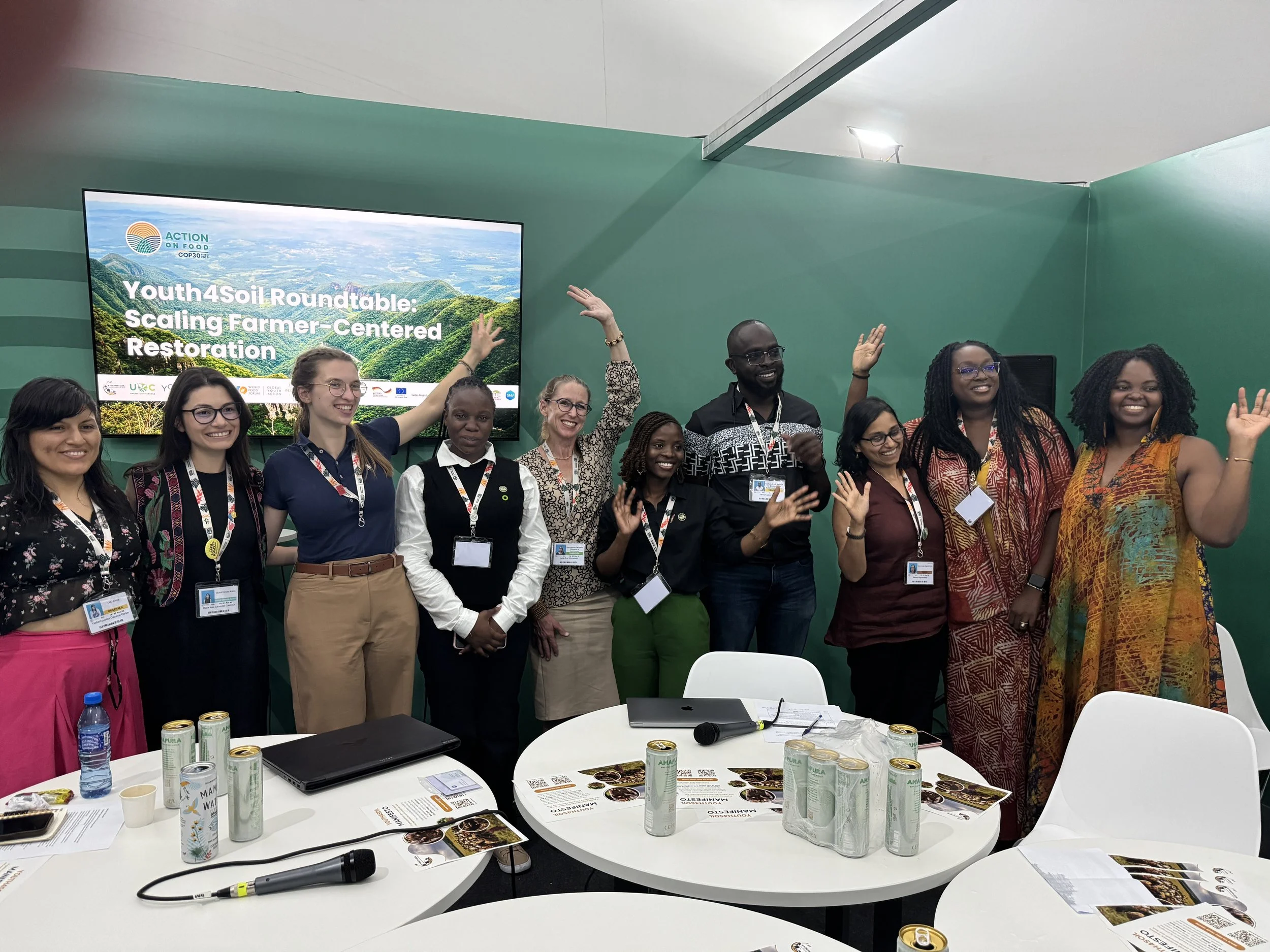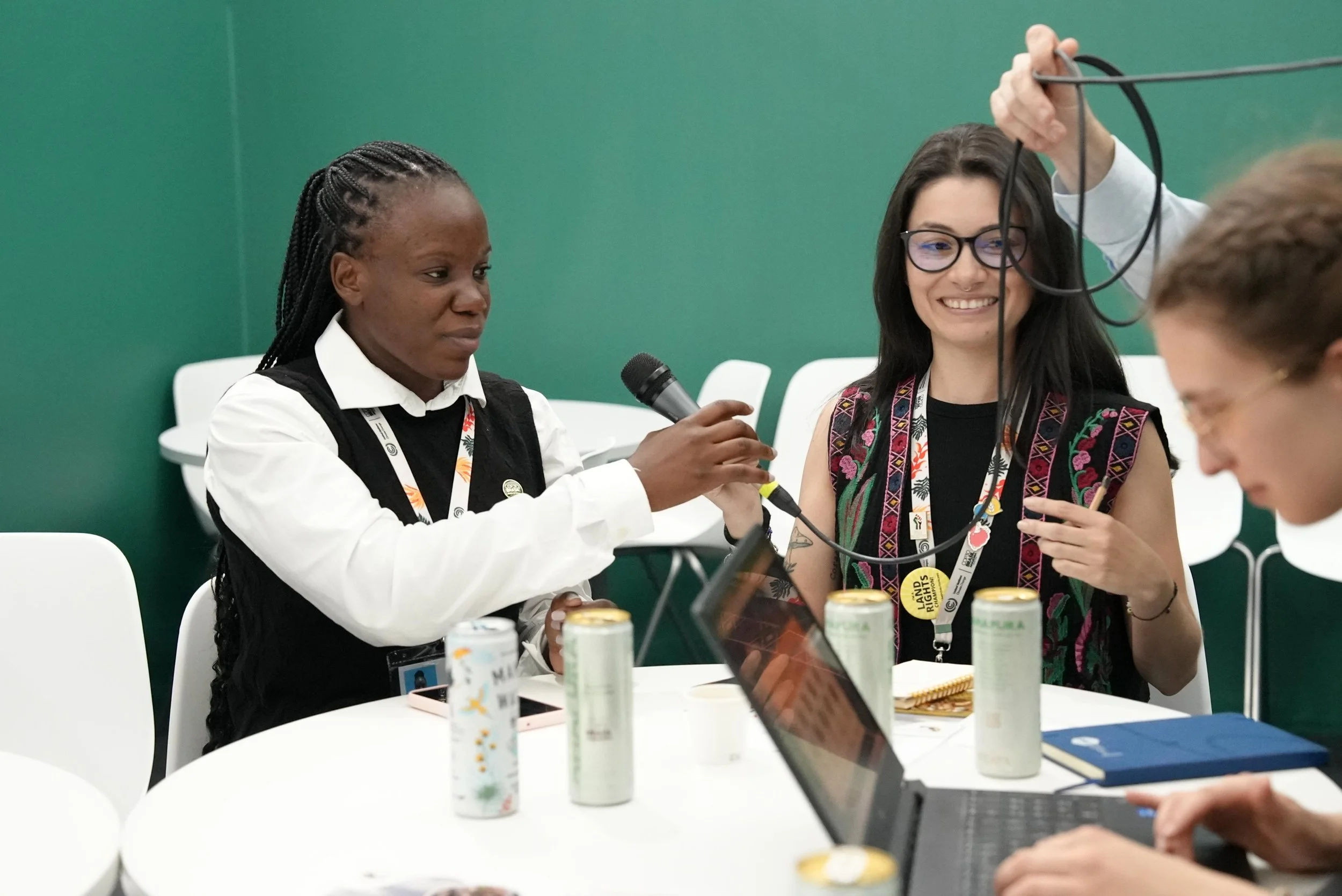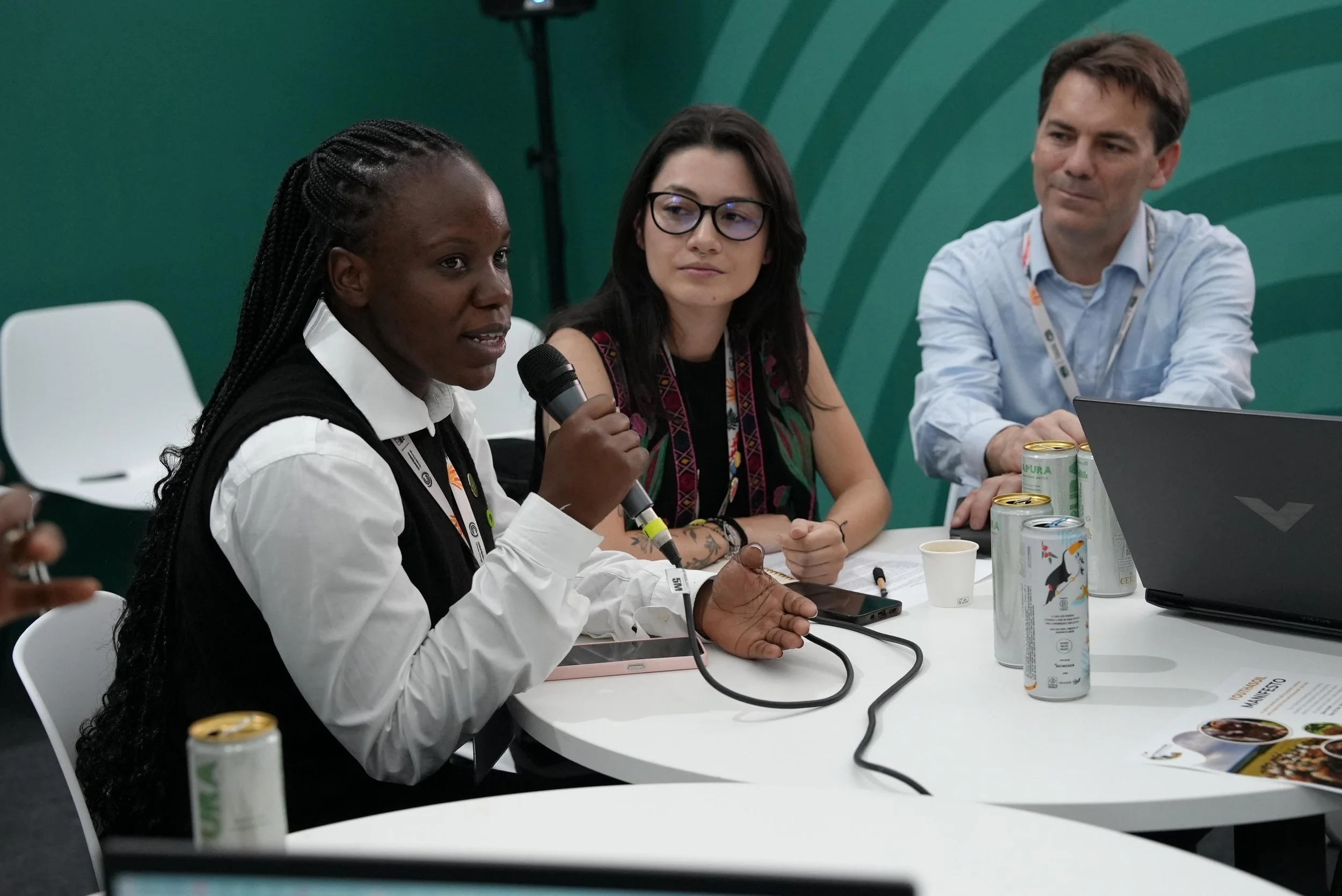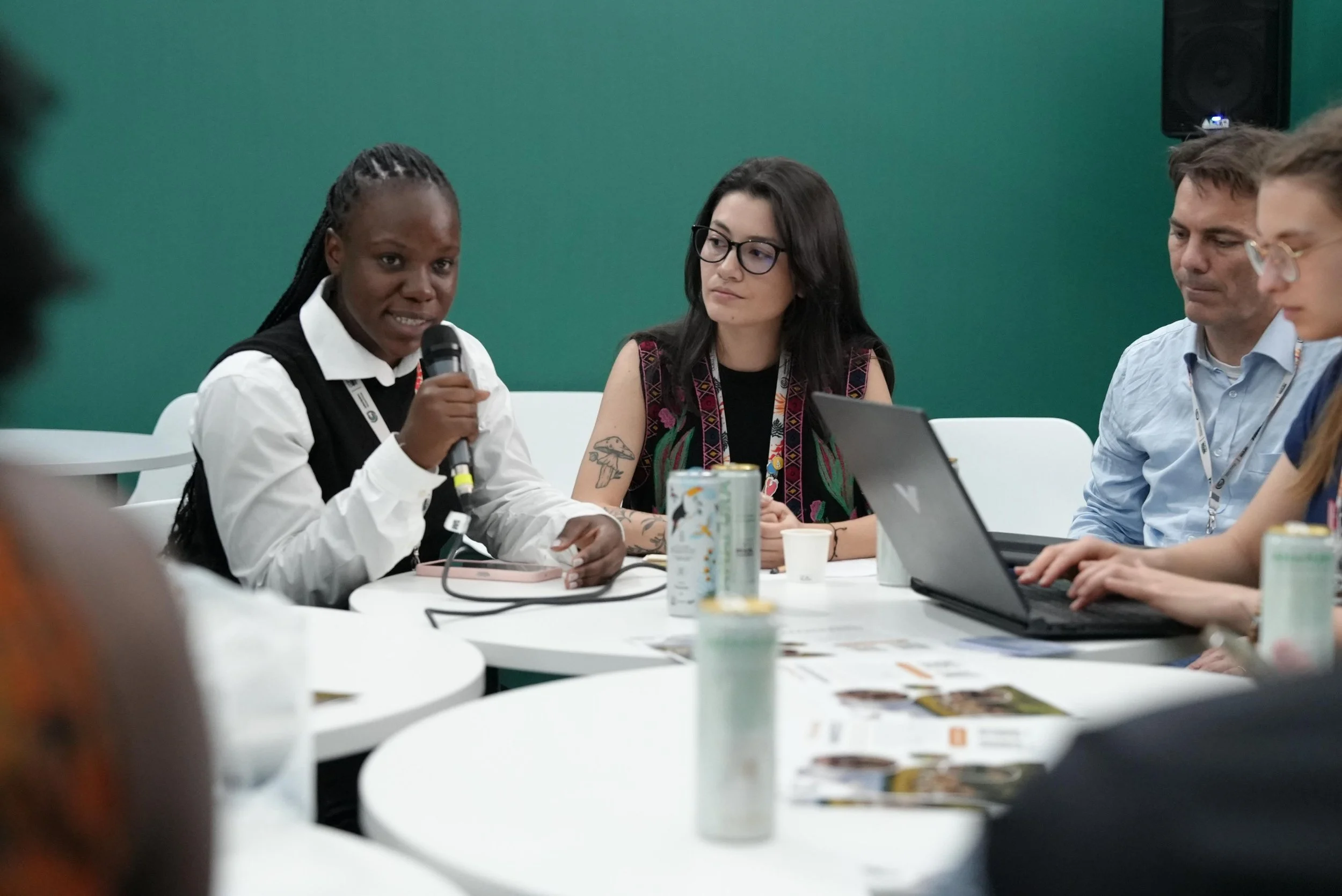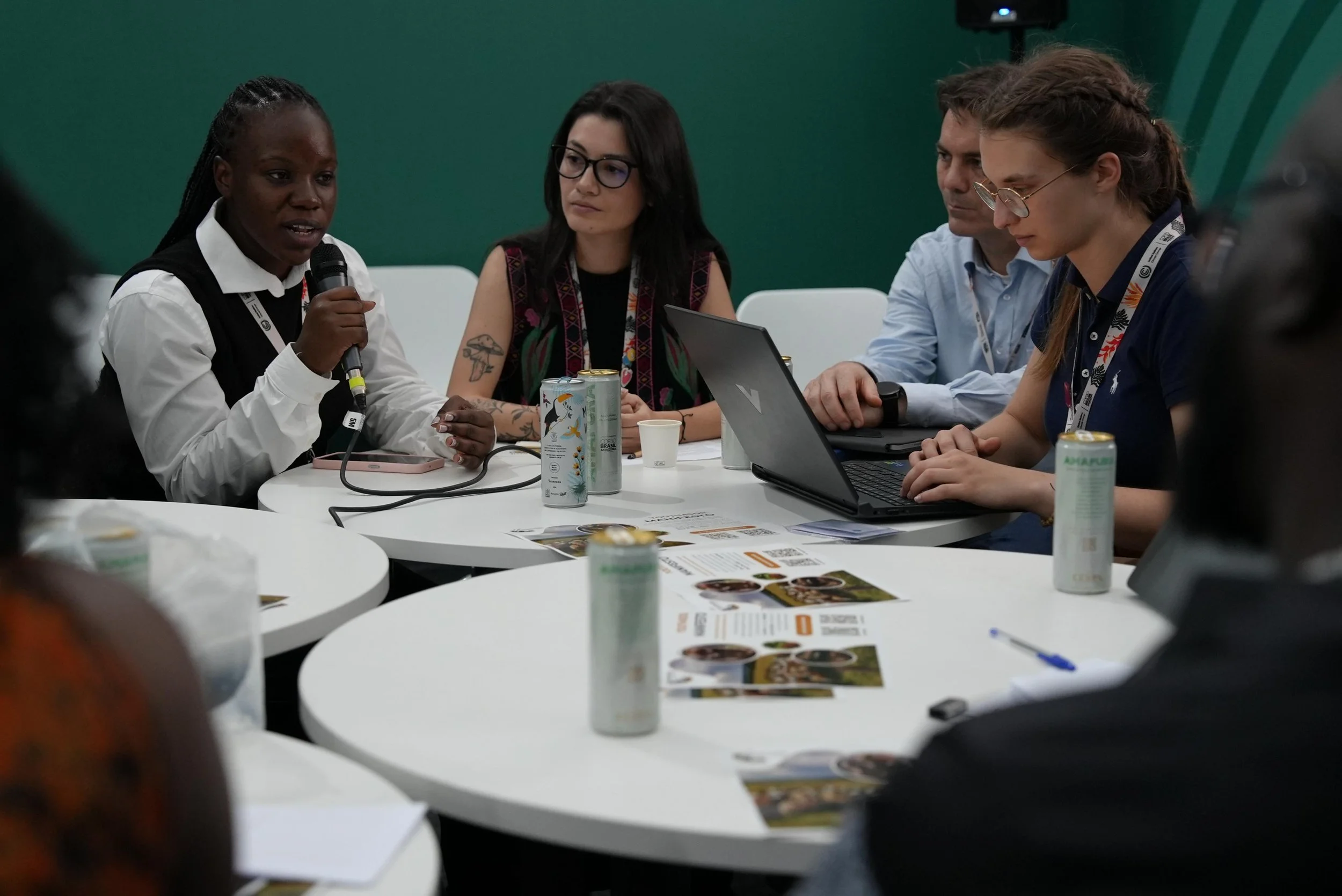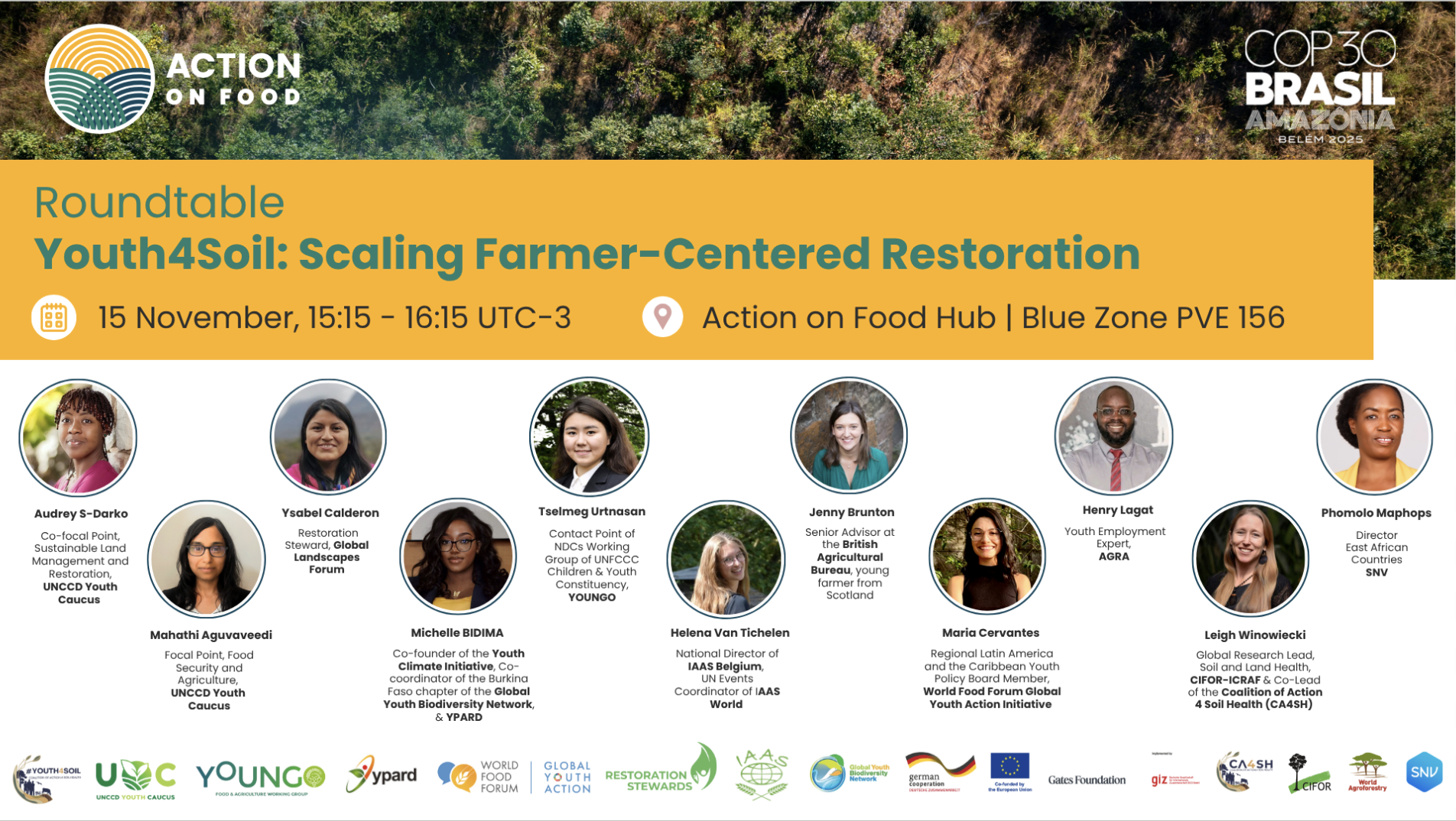
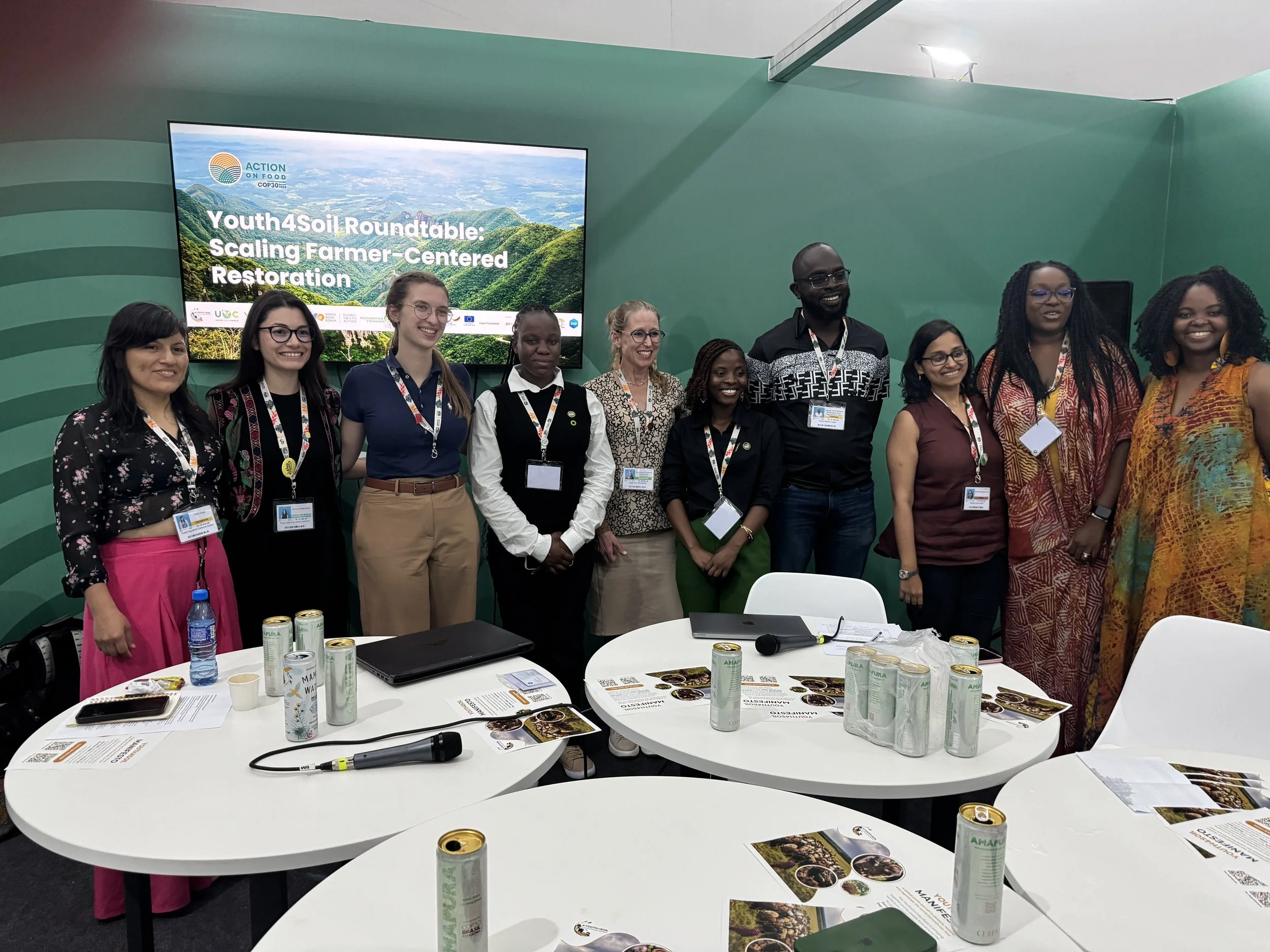
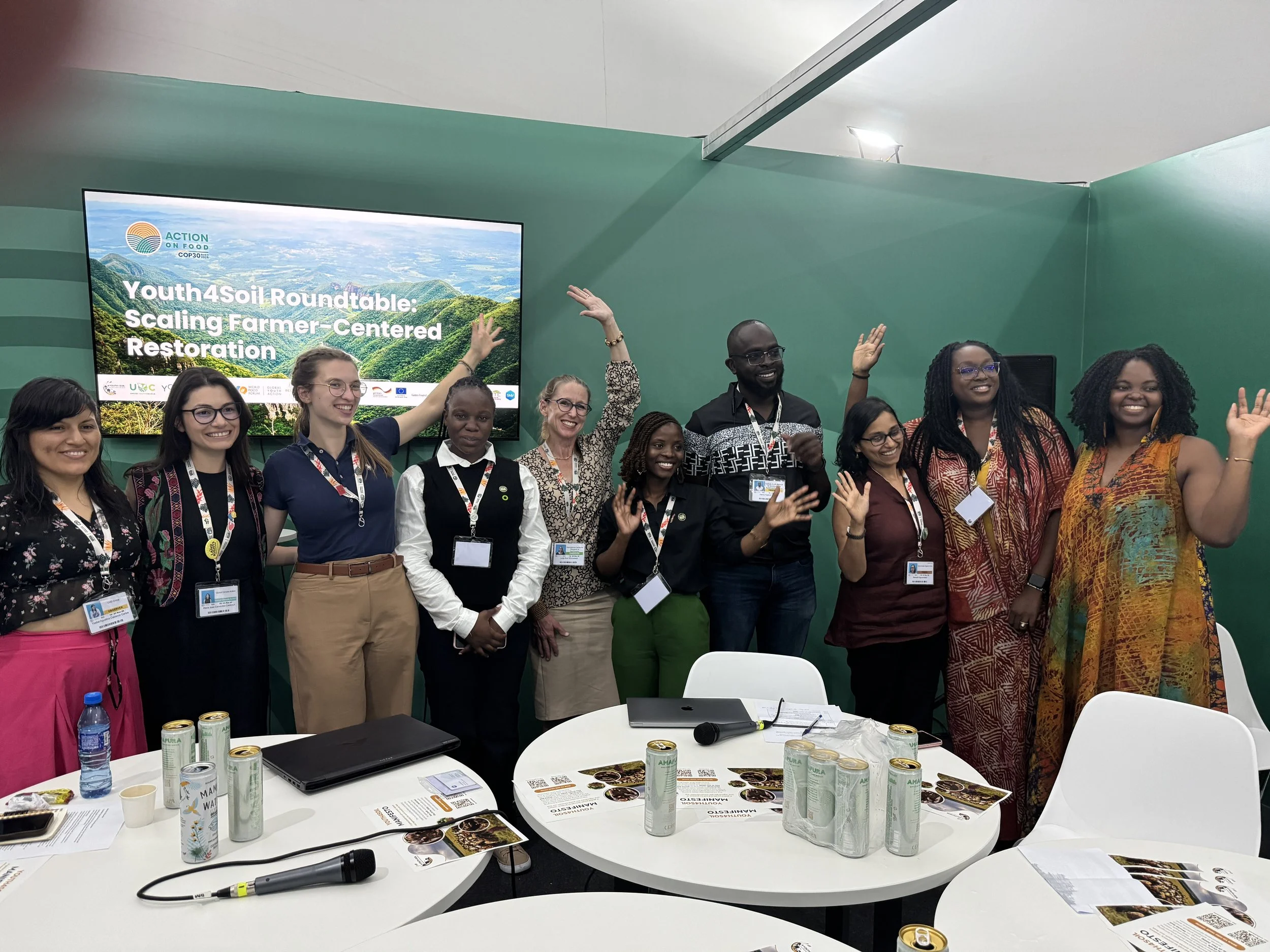
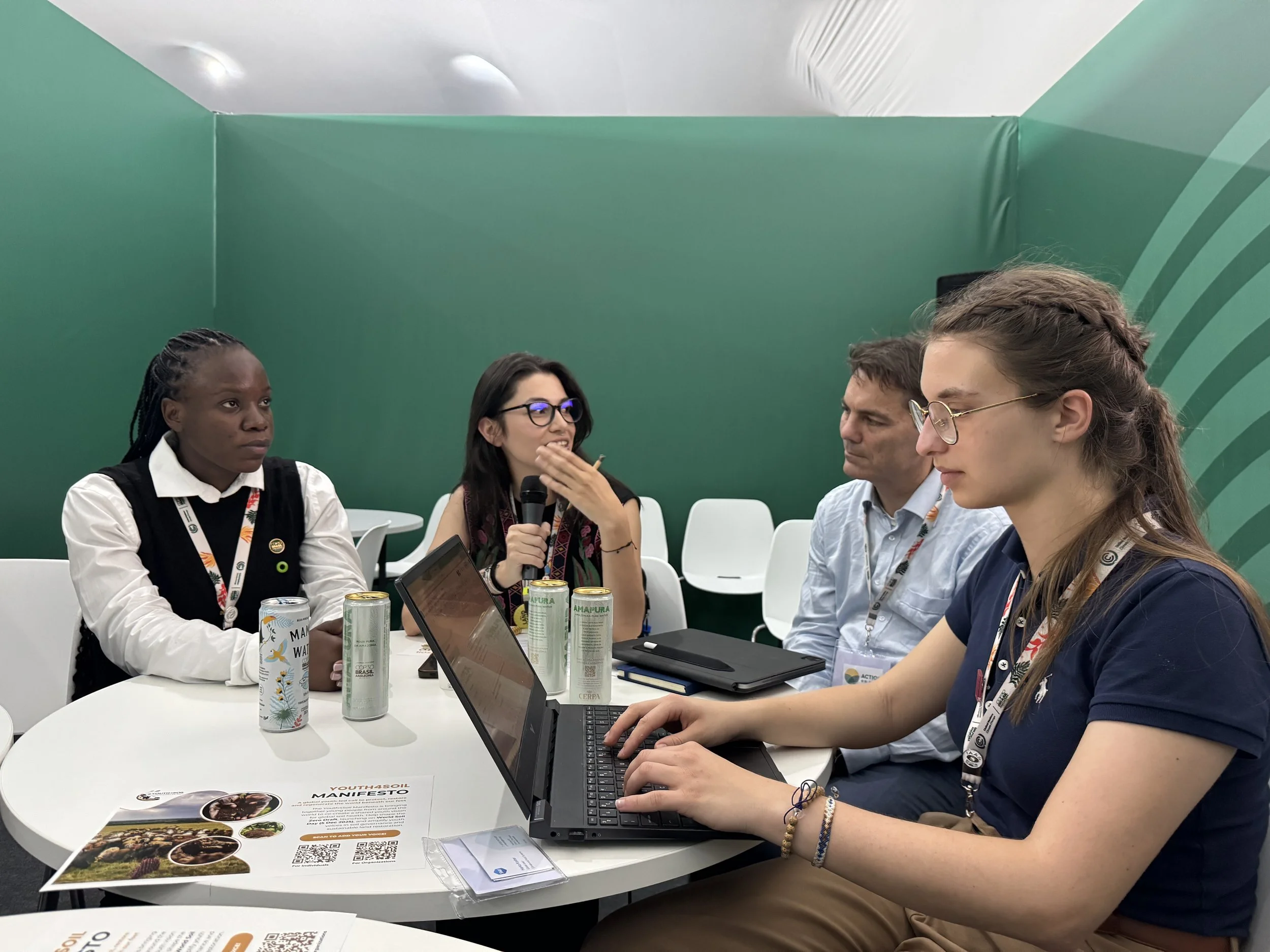
At the heart of COP30’s Blue Zone, the Action on Food Hub became a stage for one of the most urgent conversations of our time: How to scale farmer-centered restoration through the power of youth leadership. On Saturday, 15 November 2025, global voices converged to spotlight the role of young changemakers in driving soil health, food security and climate resilience.
The session was organized by the Coalition of Action 4 Soil Health (CA4SH) in partnership with leading youth networks—including the Youth4Soil Initiative, the UNCCD Youth Caucus, Global Landscapes Forum Restoration Stewards, World Food Forum, International Association for Agriculture Students (IAAS), YOUNGO, and the Young Professionals for Agriculture Development (YPARD). Participants represented a global population from India, Belgium, Netherlands, Costa Rica, Kenya, Burkina Faso, Zambia, Peru and more.
Purpose of the Roundtable session
The Youth4Soil Roundtable at COP30 served as a pivotal consultation in the co-creation of the Youth4Soil Manifesto, set to launch on World Soil Day (WSD - 5 December 2025). The session brought together youth leaders, researchers and policymakers to identify urgent challenges, co-develop youth-led solutions and define the support needed to scale soil restoration efforts globally.
Soil health is foundational to climate resilience, biodiversity, food security and livelihoods. Yet, youth remain underrepresented in soil governance and investment decisions. The Manifesto aims to close this gap by elevating youth voices and actions across local to global levels.
The Youth4Soil Manifesto targets key actors across the soil health ecosystem whose engagement is essential for policy influence, investment and implementation. The Manifesto is currently undergoing consultations and drafting in advance of the launch of the Zero Draft version on WSD. Make sure your voice is heard!
CA4SH Reaffirms Commitment to Youth‑Led Soil Health Initiatives through Youth4Soil
“No meaningful change can happen without youth.”
In an empowering keynote address, Leigh Winowiecki, Global Research Lead at CIFOR‑ICRAF and Co‑Lead of CA4SH, emphasized that real solutions to soil health challenges demand youth involvement at every stage—design, implementation, monitoring and review. She underscored that young people must be recognized not as passive beneficiaries but as active partners and decision‑makers.
To achieve this, enabling environments must move beyond consultation toward genuine co‑creation, creating spaces where youth can meaningfully shape and influence global processes.
Through the Youth4Soil initiative, CA4SH reaffirms its commitment to empowering young leaders, amplifying their voices and ensuring that youth‑led innovations drive sustainable soil health solutions worldwide.
Youth Priorities and Challenges in Soil Health Action
Participants in the COP30 session presented diverse priorities and perspectives; however, the topmost challenges identified reveal systemic barriers that youth face in driving soil health action. These include limited access to land and finance, as well as a lack of representation in policy spaces. The erosion of cultural ties to land and the growing allure of urban migration further weaken youth engagement in the soil health space, making it harder for young people to see farming and restoration as viable futures.
Key Themes Raised:
Soil degradation reflects a broken system; restoration must be holistic, addressing root causes rather than symptoms.
Youth-led systems and agroforestry provide scalable, sustainable solutions that combine innovation with traditional knowledge.
Communication is critical: science must be simplified, policy language localized and social media leveraged to reach and inspire youth.
Youth inclusion in national strategies (e.g., NBSAPs) and policy committees is essential to ensure their voices shape decisions.
Restoration is multidimensional: it is not only technical but also cultural, economic and ecological, requiring integrated approaches.
Youth-Led Actions and Commitments
The participants outlined bold actions and commitments to advance soil health, emphasizing their role as innovators, advocates and partners in restoration. These commitments reflect a growing recognition that youth are not only beneficiaries but also leaders in shaping sustainable futures.
Key Actions Proposed:
Discuss soil health in all forums, ensuring youth voices are heard globally.
Collaborate among youth networks and communities to build collective strength and shared solutions. Unified action can bring about more impact, addressing the current lack of unified voices in different youth quarters.
Prevent further degradation through education, awareness and innovative practices that inspire behavioural change.
Scale up youth-led restoration projects and secure investment to sustain long-term impact.
Promote community-based restoration and encourage cross-regional learning exchanges for shared knowledge.
Examples of Successful Youth-led initiatives
Regenerative Coffee Production by the Alliance Bioversity & CIAT
In Kenya and Uganda, youth are pioneering regenerative coffee production that integrates economic, ecological and social sustainability. By focusing on soil restoration, biodiversity conservation and fair trade practices, these initiatives not only improve soil fertility but also strengthen local economies.
Organic Fertilizer Enterprises such as Veridian Bioharvest and Ekolive
The use of organic fertilizers produced by youth-led enterprises demonstrates innovation and entrepreneurship, creating green jobs while reducing reliance on chemical inputs.
Globally, young people have established their own companies to produce and distribute organic fertilizers, turning waste into value. These enterprises embody circular economy principles, reduce environmental pollution and empower communities with affordable, sustainable alternatives. They also showcase how youth can transform local challenges into business opportunities that directly contribute to soil health.
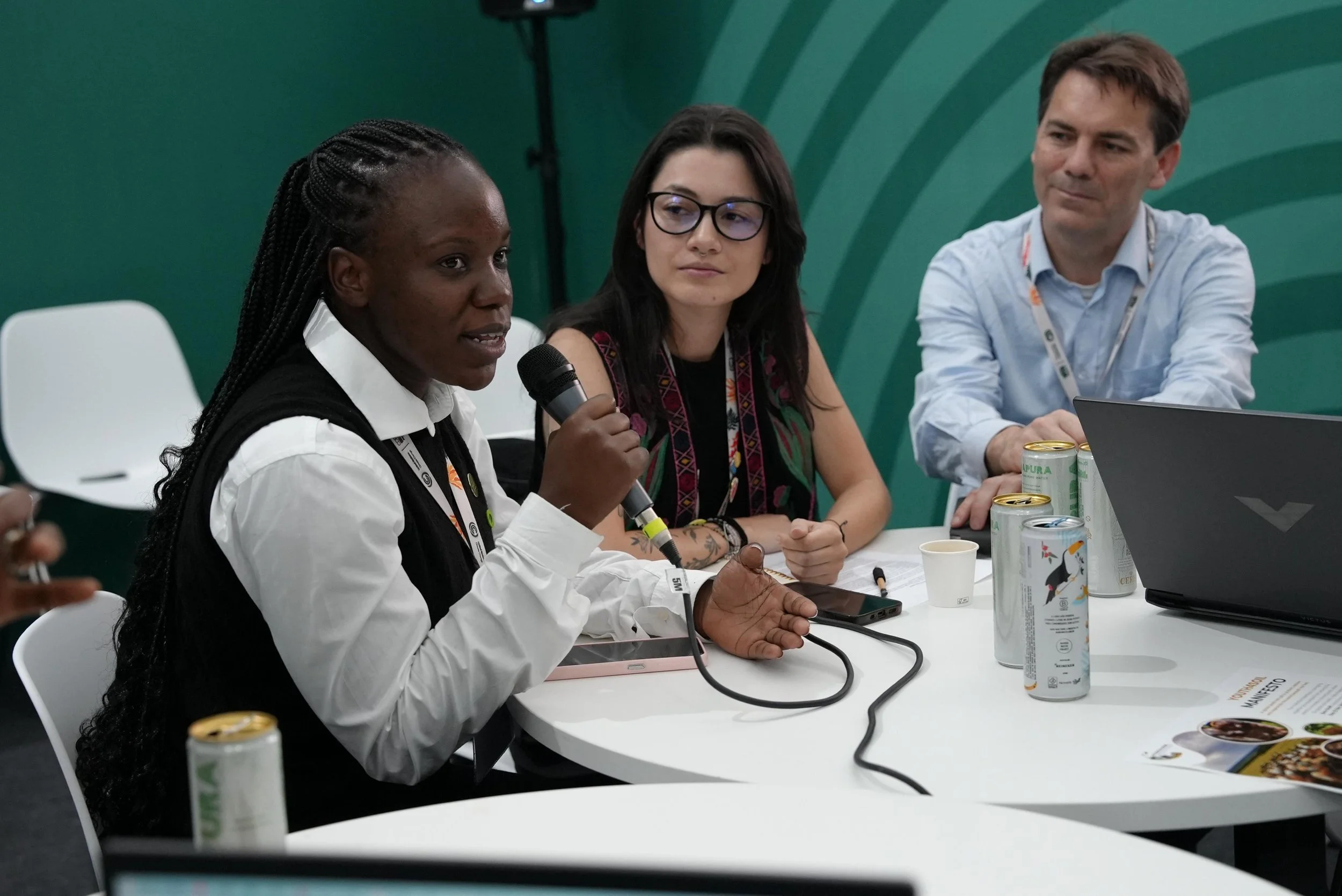
Burkina Faso Youth-Led Restoration highlighted by Michelle Bidima
In Burkina Faso, youth groups initiated restoration projects without initial external partners, proving that grassroots action can succeed even with limited resources. Their work highlights resilience, creativity and determination. Once established, these initiatives expressed the need for partnerships and support, showing a clear pathway from local innovation to national recognition.
Participation in National Biodiversity Strategies and Action Plans (NBSAPs)
Michelle Bidima shared how Youth in Burkina Faso have actively engaged in the NBSAPs, ensuring their perspectives are included in national policy frameworks. This participation demonstrates that youth are not only implementers but also policy influencers, shaping strategies that align with global biodiversity and soil health goals.
The emphasis was on initiating relationships with governments from the onset, ensuring youth initiatives are aligned with national priorities and gaining institutional support. This proactive approach builds trust, opens doors for funding and integrates youth-led projects into broader soil health and agricultural strategies. Country example
Mentorship: The #Youth4Soil Mentorship Initiative
Mentorship is a cornerstone of youth engagement. The CA4SH Youth4Soil mentorship initiative provides guidance, knowledge exchange and leadership development. By connecting young soil health enthusiasts with experienced mentors, the programme strengthens capacity, accelerates project impact and nurtures the next generation of soil health champions.
At the Roundtable discussion, mentorship stood out as an example of successful youth engagement initiatives. Clemence Mnyika, 2024/2025 mentee shared her mentorship journey in a blog post here. The programme is being restructured in 2026 from an open mentorship arrangement to a time-bound and guided mentorship programme with additional opportunities for sharing results and contributing to a wider cohort of youth advocates.
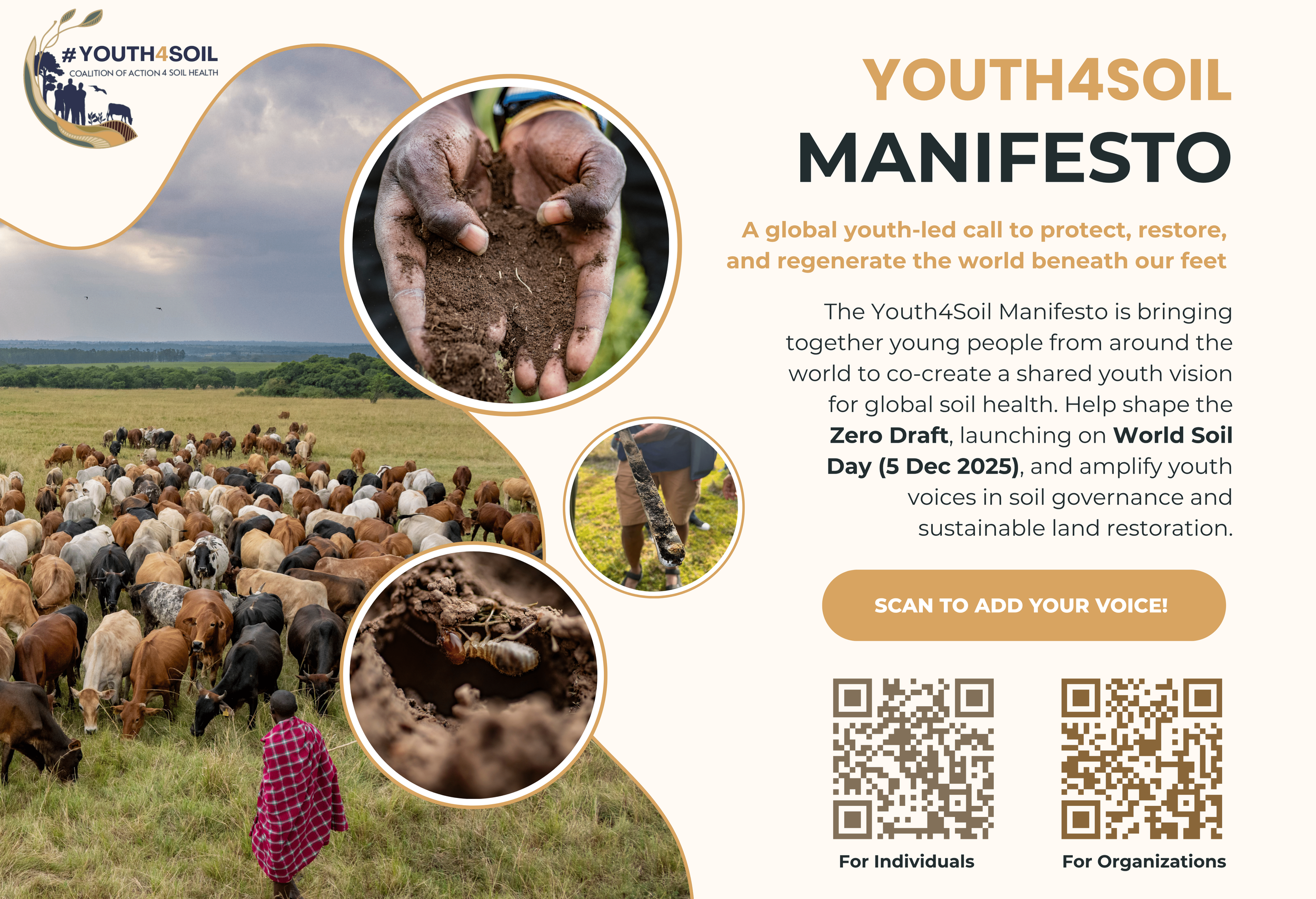
Contribute your voice to the Manifesto
Call to Action and Next Steps
The youth delegates issued a powerful call for urgent technical, financial, policy, and social support to scale farmer-centered soil restoration. They framed soil health as a cornerstone of global climate resilience, emphasizing that these measures are critical pillars to empower young people as leaders in advancing soil health, food security and climate action worldwide.
Since COP30 was considered a COP of implementation, the panelists agreed that while participation undoubtebly matters, what the world needs most now is action—and that action must be visible in the soil health space. Soil restoration is not just an environmental priority; it is a foundation for sustainable food systems and climate justice.
The Zero Draft of the Youth4Soil Manifesto will be launched on World Soil Day – 5th December 2025.