Resource Library
Any CA4SH partner can submit a resource to the Library, where we hope to increase visibility of diverse work related to improving soil health globally.
Please send a web link or a file to communications@coalitionforsoilhealth.org if you would like to submit a resource.
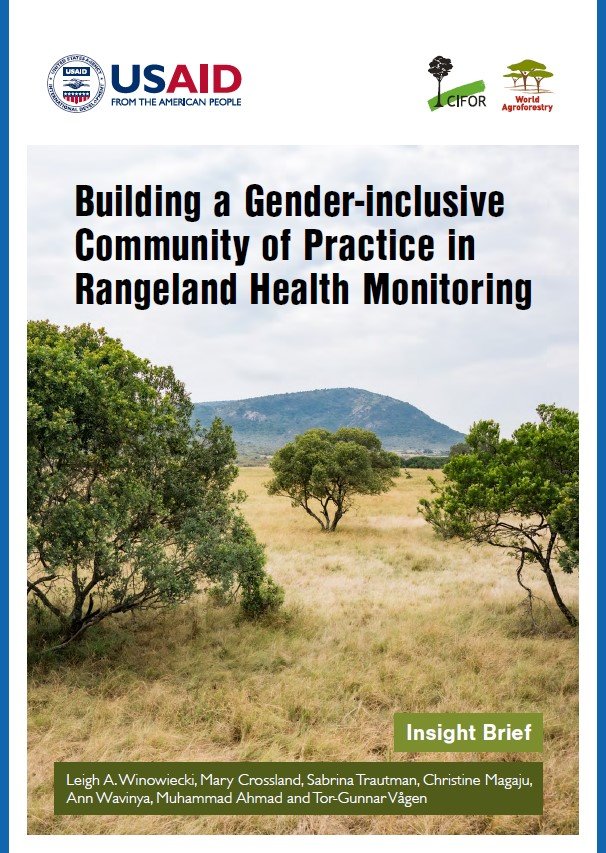
Building a Gender-inclusive Community of Practice in Rangeland Health Monitoring
This brief summarizes the capacity development activities undertaken by the project Restoration of Rangeland Carbon Sinks to build gender inclusive community of practice in rangeland health monitoring.
Specifically, the brief outlines the critical need to address gender inequalities in rangeland health monitoring and synthesises reflections from women and youth on skills they have built through capacity development activities. The brief also highlights the impact these activities are having not only in their own agency and development, but also the wider implications and impact they want to create in their communities as a result of the skills they have built and been exposed to.

BAIF Journal Special Issue: Water Stewardship Through Corporate Partnership
Read the latest edition of the BAIF Development Research Foundation's quarterly journal!

Production, Regeneration and Networking Innovation in Argentina: GoodPractices and Lessons Learned from Farmers in Argentina
The Carbon Gap Network or Red de Brechas de Carbono (RBC) project from the Argentine No-Till Farmers Association (Aapresid) takes localized information on climate and the environment and translates it into actionable recommendations for farmers on the ground to maximize their soil’s organic carbon, and foster overall healthier soils.
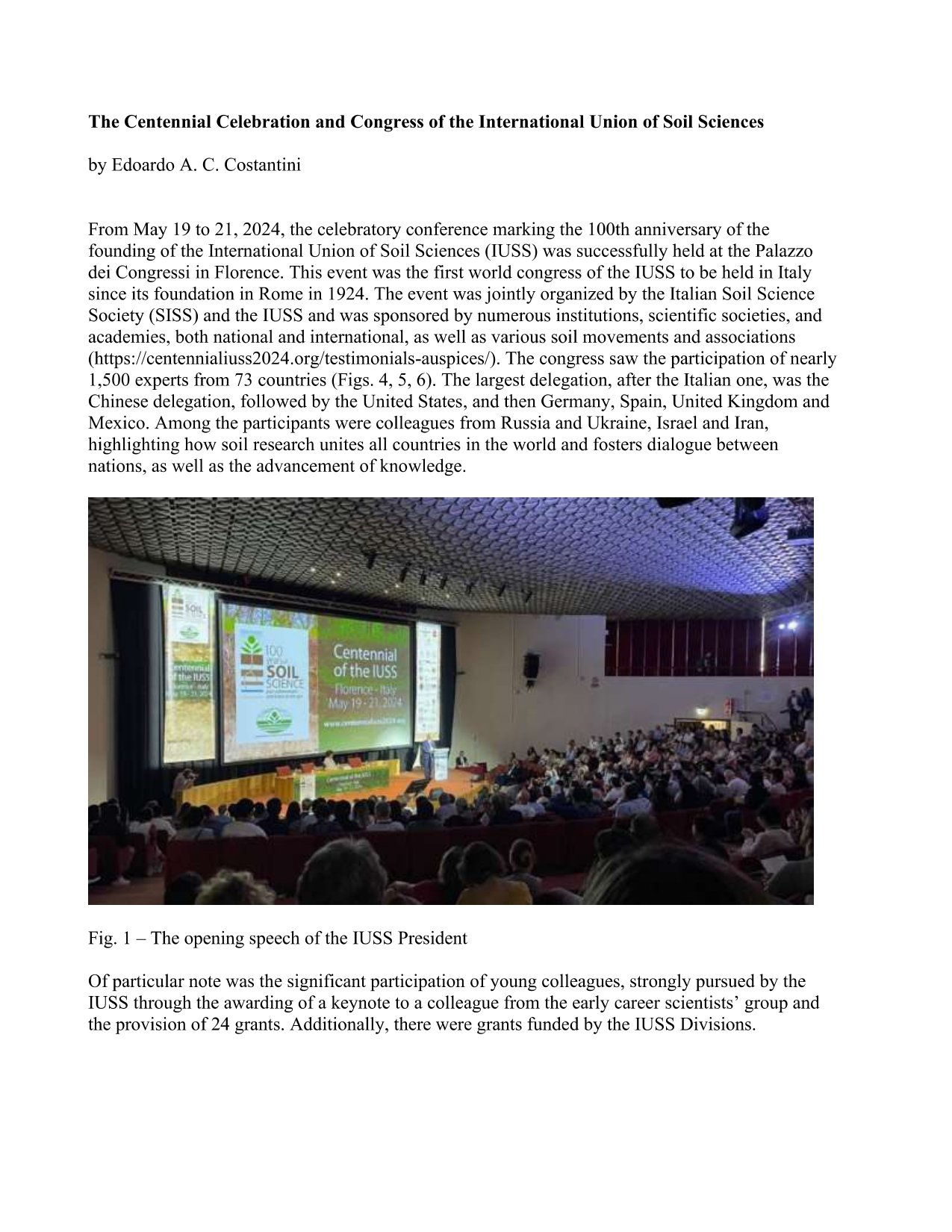
IUSS Centennial Celebration Report
From May 19 to 21, 2024, the celebratory conference marking the 100th anniversary of the founding of the International Union of Soil Sciences (IUSS) was successfully held at the Palazzo dei Congressi in Florence. This event was the first world congress of the IUSS to be held in Italy since its foundation in Rome in 1924. The event was jointly organized by the Italian Soil Science Society (SISS) and the IUSS and was sponsored by numerous institutions, scientific societies, and academies, both national and international, as well as various soil movements and associations. The congress saw the participation of nearly 1,500 experts from 73 countries (Figs. 4, 5, 6). The largest delegation, after the Italian one, was the Chinese delegation, followed by the United States, and then Germany, Spain, United Kingdom and Mexico. Among the participants were colleagues from Russia and Ukraine, Israel and Iran, highlighting how soil research unites all countries in the world and fosters dialogue between nations, as well as the advancement of knowledge.

Special Issue of the BAIF Journal: Carbon Offsetting and Neutrality
BAIF has been forging partnerships with global and national agencies for leveraging the strengths of the actors engaged in climate action. During the last couple of years, BAIF received accreditation as an Observer Organisation status for UNFCCC's COP as well as provisional status for UNCCD, BAIF has become a member of the Global EverGreening Alliance (GEA) Australia, Coalition of Action for Soil Health (CA4SH), International Biochar Initiative, United States and World Bioenergy Association, Sweden. Partnerships have also been developed within the country to share knowledge and undertake projects on climate change mitigation.
This issue, with its focus on the carbon offsetting and neutrality efforts of BAIF, serves as an eye opener for acceleration of voluntary action and working towards net-zero emissions, the most important goal of all responsible organisations.

Soil Health Industry Platform: Report and Priority Actions for 2024
The Sustainable Soils Alliance (SSA) has been tracking the food industry’s progress in regards to regenerative agriculture and soil health initiatives via its Soil Health Industry Platform (SHIP). The 2023 SHIP report highlights our key Observations, soil-related Business Initiatives and based on our analysis we’ve recommended six Priority Actions to take forward in 2024.

Healthy soils sustain foodsystem transformationsto contribute to the net zeroCO2emission target by 2050
Food system transformation is needed for "safeguarding food security and ending hunger, and the particular vulnerabilities of food production systems to adverse impact of climate change".
Read the full policy brief from 4p1000, CIRAD, and IRD
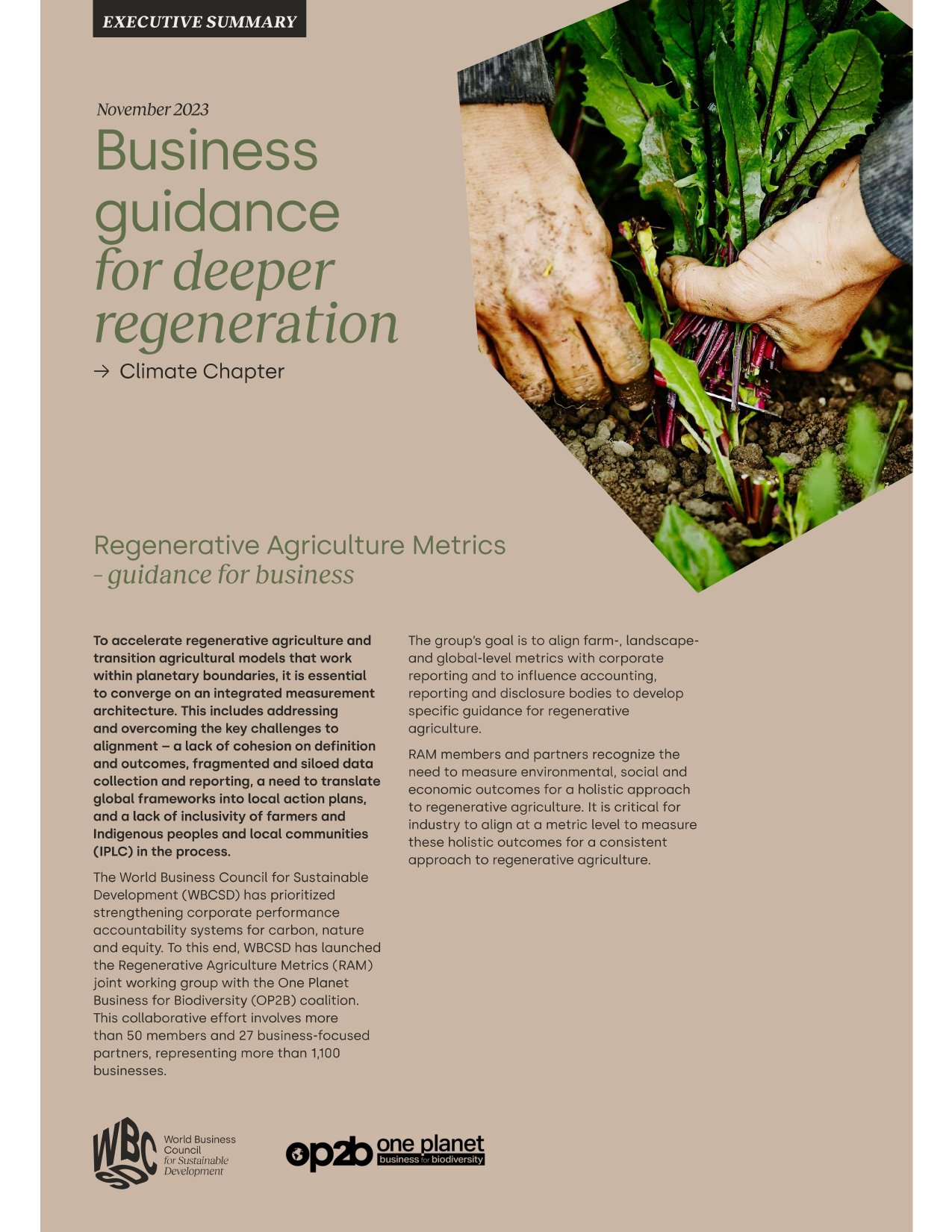
Regenerative Agriculture Metrics: Guidance for Business
To accelerate regenerative agriculture and transition agricultural models that work within planetary boundaries, it is essential to converge on an integrated measurement architecture. This includes addressing and overcoming the key challenges to alignment – a lack of cohesion on definition and outcomes, fragmented and siloed data collection and reporting, a need to translate global frameworks into local action plans, and a lack of inclusivity of farmers and Indigenous peoples and local communities (IPLC) in the process.
The World Business Council for Sustainable Development (WBCSD) has prioritized strengthening corporate performance accountability systems for carbon, nature and equity. To this end, WBCSD has launched the Regenerative Agriculture Metrics (RAM) joint working group with the One Planet Business for Biodiversity (OP2B) coalition. This collaborative effort involves more than 50 members and 27 business-focused partners, representing more than 1,100 businesses.

Soils and sustainable development goals of the United Nations: An International Union of Soil Sciences perspective
Abstract
Being critical to achieving Sustainable Development Goals (SDGs) of the United Nations, strengthening understanding of the properties and processes of soil at national and regional scales is imperative. The necessity to realize SDGs by 2030 also inspires a greater sense of responsibility and care for soils…

Natural Carbon Sequestation: Leveraging Soils for Mitigation, Storage & Biodiversity Benefits
This presentation was given in a side event from the British Society of Soil Science at the UNFCCC COP28 in Dubai.
Learn more and download the presentation

EU Mission Soil Week Event Material
The European Mission Soil Week is an annual event aimed at promoting the Mission Soil, raising awareness about the importance of soil health, and driving action to protect and restore our soils.
The EU Mission Soil Week website has compiled a library of event materials from the November 2023 event including presentations, recordings, graphics and more.

Food Forward NDCs: Guidance to enhance NDC ambition and implementation for agriculture and food systems transformation
FOOD FORWARD NDCs is a simple, interactive, web-based tool that presents users with tangible, evidence-backed policy options and measures, and available literature for transitioning to nature-positive, healthy, and resilient food systems through NDCs. The available policy options can be tailored to a country’s specific food system priorities and different intervention areas of the food system, such as food environment, food governance, food production, supply chain, and consumption. The guidance does not intend to prescribe solutions, but instead, presents a menu of policy options as a starting point for decision-makers to further develop and implement on-theground measures for food systems transformation based on national and local contexts.
Download the full primer document from WWF

SOIL the hidden part of the climate cycle
Excerpt:
“Soil is a natural resource which most of us either ignore or take for granted. Yet the thin layer of ‘dirt’ that covers much of the surface of the Earth is vital to the environment and invaluable to our societies.
However, soil quality is declining in many areas, meaning that it is less able to perform its essential functions. One area of concern is the effect of soil degradation on the climate, and vice versa.”
Read the full report from the European Commission (2011)

Policy Brief: Healthy soils sustain food system transformations to contribute to the net zero CO2 emission target by 2050
Business as usual strategies for agriculture, land use and land use changes will impede the contribution of the food systems to the net zero CO2 emission ambition.
Food system transformation is needed for "safeguarding food security and ending hunger, and the particular vulnerabilities of food production systems to adverse impact of climate change3".
Read the policy brief from 4p1000, CIRAD, and IRD

Global Food Systems Network Map
The Global Food Systems Network Map is an online tool designed to visually represent the relationships among stakeholders involved in food systems-related efforts worldwide.
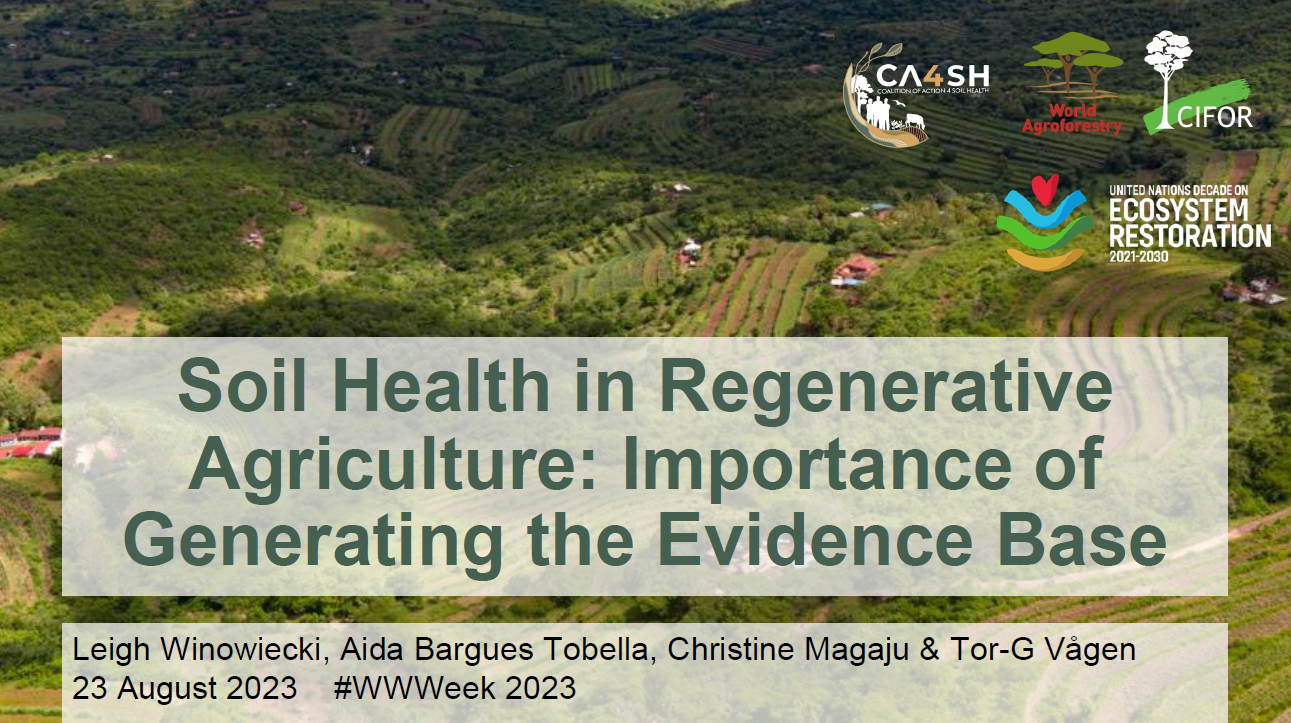
Measuring Water’s Contribution to Regenerative Agriculture
Download the presentation from Leigh Winowiecki, Aida Bargues Tobella, Christina Magaju and Tor-G Vagen in a joint side event at the Swidish International Water Institute’s World Water Week (SIWI WWW) in August 2023.
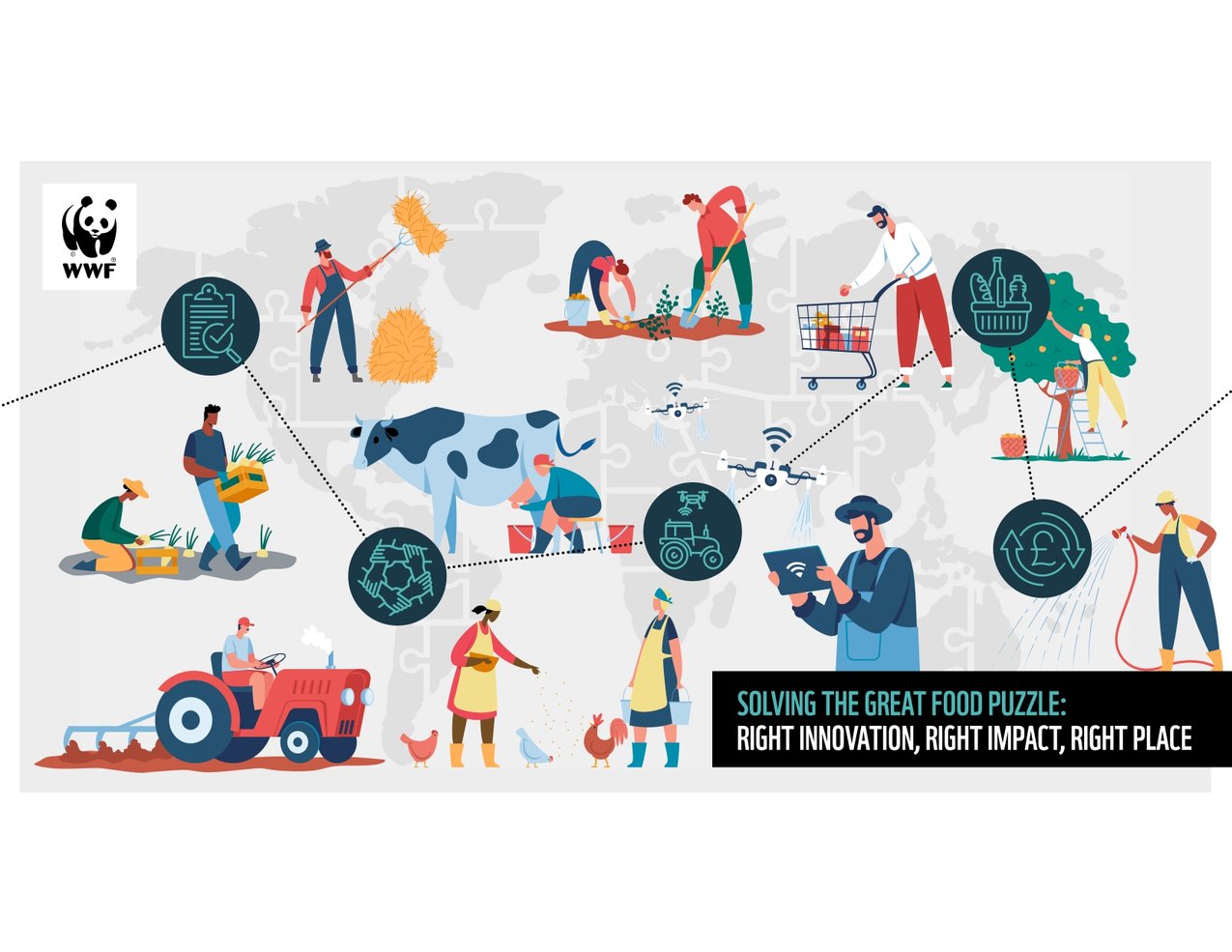
Solving the Great Food Puzzle: Right Innovation, Right Impact, Right Place
Innovations aren’t delivered by just a few people – everyone working within a food system can innovate. It is important that all stakeholders identify the actions that will deliver most impact in the shortest time – identifying new actions that can be applied, and scaling those that are already delivering success. Everyone must work to rapidly accelerate food systems transformation. Those investing money in food systems transformation (be they governments, banks, private investors, public donors or businesses) have a significant say in what innovations are implemented. Not only does the amount of funding for food systems innovation need to be increase, the direction of funds must become even more focused and context-specific.
There are already many innovations in our food systems and several are demonstrating their ability to deliver big impacts in short timeframes. Innovating doesn’t require developing completely new ways of doing things and decision-makers can learn from the approaches being applied in similar food systems round the world.

We dig it! (book)
44 illustrated pages simply explain the approach of betterSoil. Based on the scientific paper by Azadeh Farajpour it illustrates how better soils actively supports climate and environmental protection, promotes the sustainability goals of the United Nations (Agenda 2030), and shows what every single person can do right now.

Best4Soil Community of Practice Video Library
Best4Soil is building a community of practice network across Europe by interconnecting growers, advisers, educators and researchers. Click to view their library of videos providing information on applying healthy soil practices.
Best4Soil Community of Practice Factsheets
Best4Soil is building a community of practice network across Europe by interconnecting growers, advisers, educators and researchers. Click to view their library of factsheets providing information on applying healthy soil practices.