
Resource Library
Any CA4SH partner can submit a resource to the Library, where we hope to increase visibility of diverse work related to improving soil health globally.
Please send a web link or a file to communications@coalitionforsoilhealth.org if you would like to submit a resource.
Breakthrough Agenda Special Report 2026
Building on previous editions in the Breakthrough Agenda series, this year’s report identifies a set of near-term priorities aimed at improving conditions for investment, deployment and market development ahead of the next Global Stocktake in 2028.
Launched at COP26 in 2021, the Breakthrough Agenda provides a framework for strengthening international collaboration across major emitting sectors, with the aim of making clean technologies and sustainable solutions the most affordable, accessible and attractive option by 2030.

Review of existing Soil Information Systems (SISs): Understanding the landscape, challenges and opportunities to establish SISs in Ethiopia, Ghana, Kenya, Malawi, Rwanda, Tanzania
This review provides a stocktake of the status and maturity of SISs in six African countries: Ethiopia , Ghana , Kenya , Malawi, Rwanda , and Tanzania based on a desk review and stakeholder consultations. The assessment examined eight core dimensions:
Existence of an online portal;
Data Content and Spatial Extent/ Coverage;
Use of the Data;
Field Data Collection and Sampling Standards;
Sample Handling and Laboratory Quality Assurance;
Data Management and Infrastructure;
Data Analysis and Modelling Capacity;
Institutional Arrangements and Stakeholders
The findings reveal uneven progress across countries. Ethiopia and Rwanda have established online platforms, yet these systems are not fully leveraged for decision-making. Ghana and Tanzania made significant advances through the AfSIS Phase II project (GhaSIS and TanSIS), but progress slowed once project funding ended. Kenya and Malawi remain in the early stages of SIS development. Across all countries, the most consistent progress has been in building momentum on the importance of soil data and soil sample data collection, largely driven by externally funded projects.
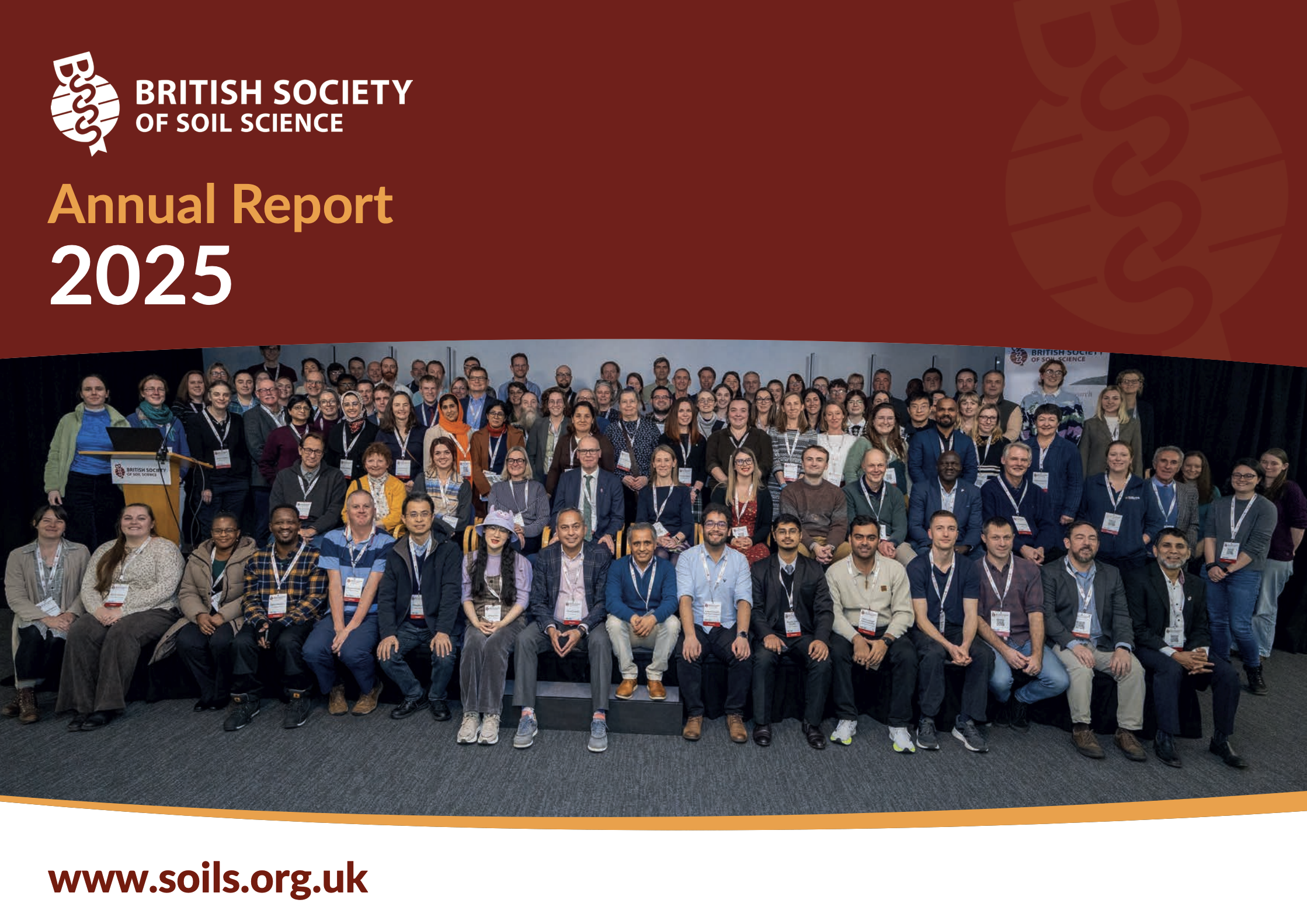
British Society of Soil Science 2025 Annual Report
The British Society of Soil Science is pleased to launch our Annual Report for 2025.
Read all about our impact and updates with the membership, as well as our strategy targets for 2026. The report features case studies and overviews of our main outputs such as our Annual Conference, Early Careers Conference, Working with Soil courses and our journals. The document starts with a foreword from our new Patron, Kate Humble, followed by introductions from President, Prof. Paul Hallett, and Executive Director, Andy Morris.
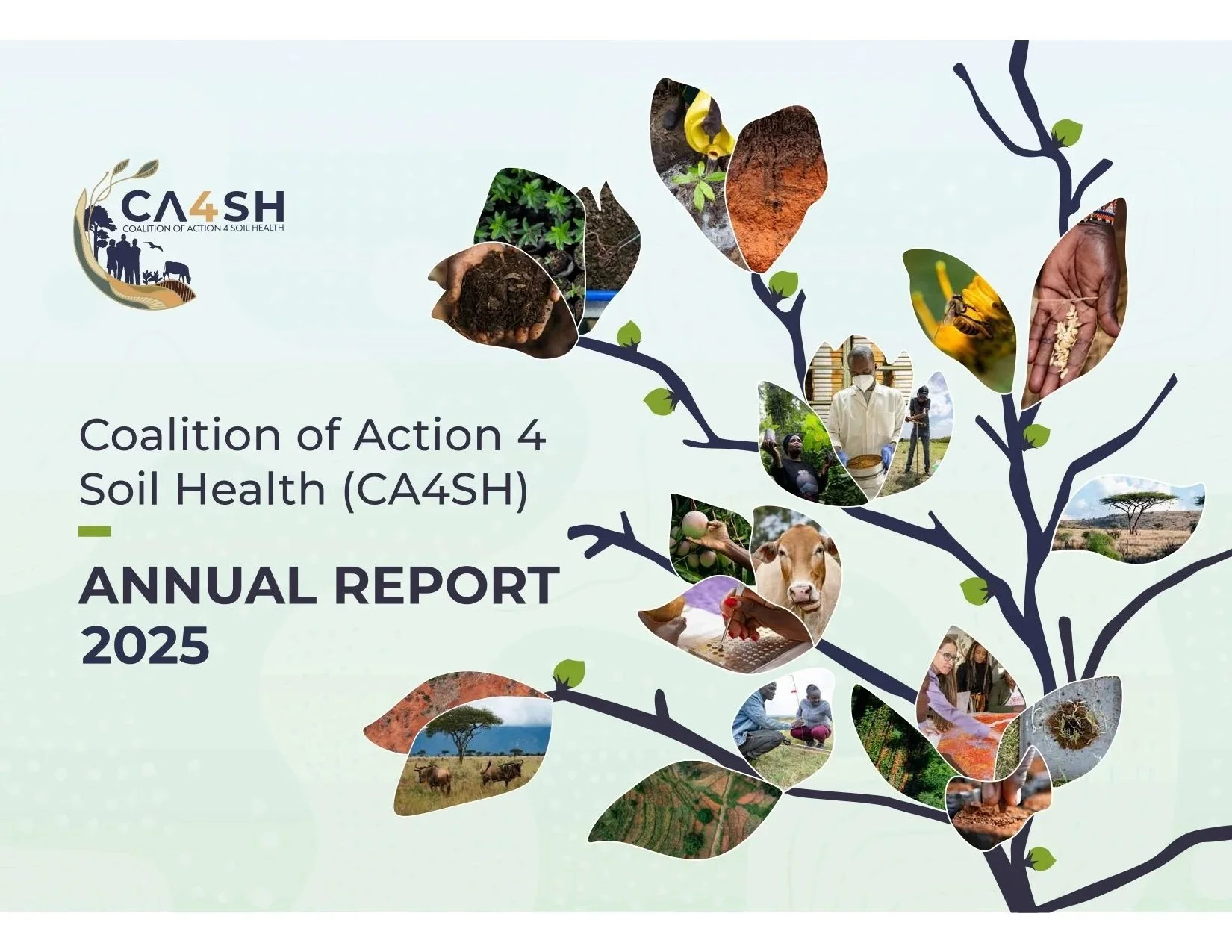
CA4SH 2025 Annual Report
CA4SH is now a multistakeholder Coalition of over 350 diverse organizations and individuals working together to scale global soil health through collective action. As the Coalition has grown over the years, so too has the need to adapt and refine our strategy to engage effectively with our partners.
2025 was marked by this spirit of continual learning, which we are operationalizing through an updated strategic framework. Key to the success of this model is strategic engagement in diverse fora, and in 2025, we did just that; CA4SH had a strong presence at global, national and regional events and has launched several unique initiatives to engage in these processes. For example, in 2025, we played a role in streamlining soil health in the Comprehensive African Agriculture Development Programme (CAADP) by engaging at the CAADP Partnership Platform in Kigali, Rwanda, and we launched a new joint initiative for establishing an ecosystem of soil data driven services in four African countries to support the CAADP implementation. Underpinning all of our work is youth engagement, and several youth partner initiatives engaged in these processes and implemented unique, context-specific projects on the ground.
CA4SH will celebrate its fifth anniversary in 2026, and we have much to look back on and learn from to chart the next five years and beyond.
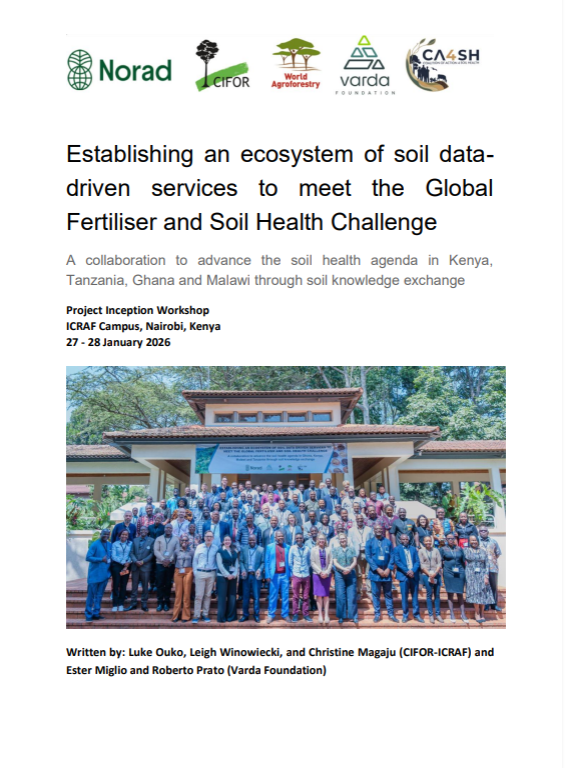
Project Inception Workshop Report: Establishing an ecosystem of soil data-driven services to meet the Global Fertiliser and Soil Health Challenge
In 2024, CIFOR-ICRAF and Varda Foundation piloted a soil knowledge exchange initiative in Kenya and Tanzania, funded by the Norwegian Agency for Development Cooperation (NORAD). The pilot focused on identifying barriers and opportunities for building a collaborative soil data ecosystem and directly shaped the project's design.
Building on the pilot initiative, CIFOR-ICRAF and the Varda Foundation, with support from NORAD, are now launching a new three-year initiative to create a dynamic ecosystem of soil data-driven services across Kenya, Ghana, Malawi, and Tanzania.
From 27 - 28 January 2026, the project consortium met at the CIFOR-ICRAF office in Nairobi for a project inception meeting.
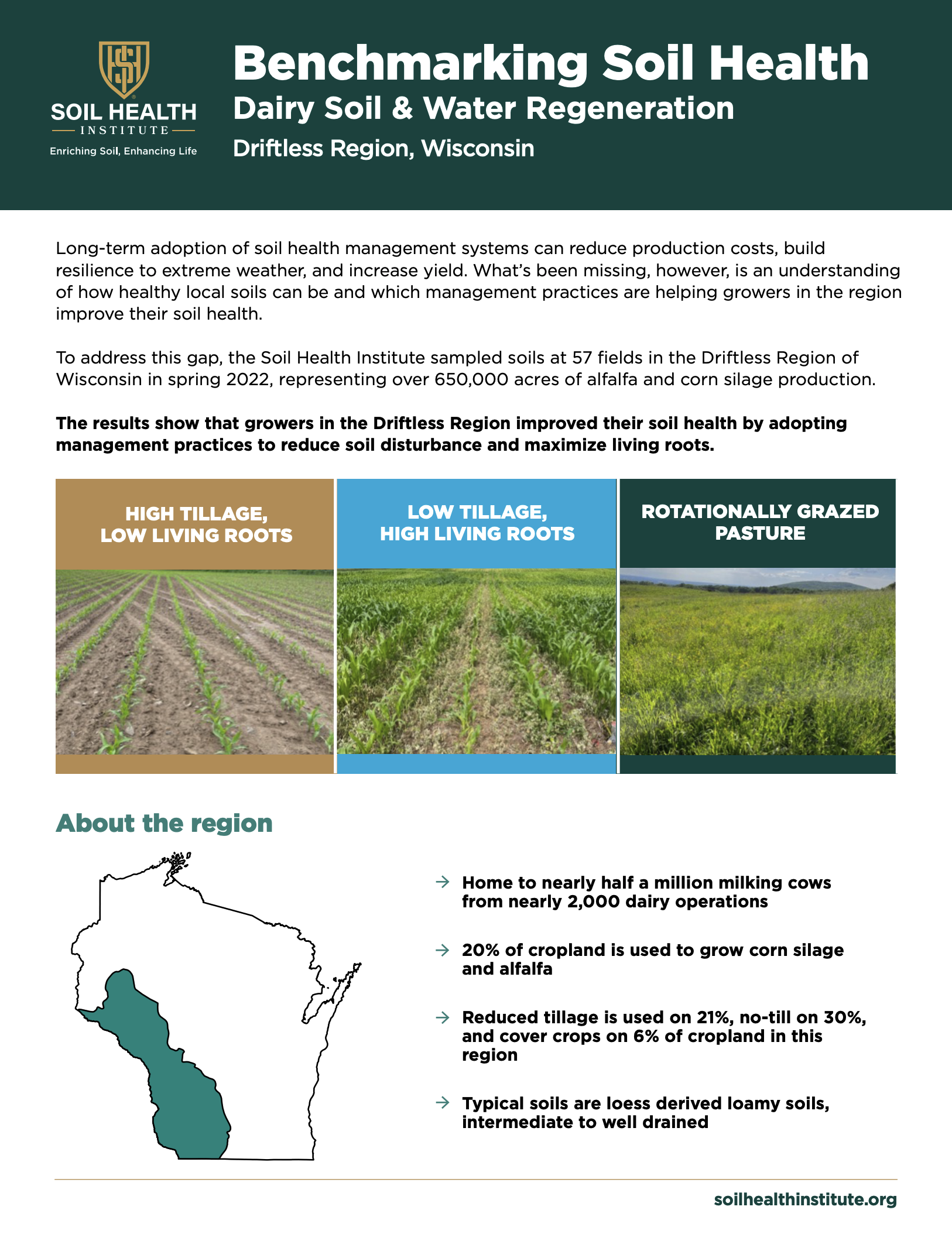
Benchmarking Soil Health Dairy Soil & Water Regeneration, Driftless Region, Wisconsin
Long-term adoption of soil health management systems can reduce production costs, build resilience to extreme weather, and increase yield. What’s been missing, however, is an understanding of how healthy local soils can be and which management practices are helping growers in the region improve their soil health.
To address this gap, the Soil Health Institute sampled soils at 57 fields in the Driftless Region of Wisconsin in spring 2022, representing over 650,000 acres of alfalfa and corn silage production.
The results show that growers in the Driftless Region improved their soil health by adopting management practices to reduce soil disturbance and maximize living roots.
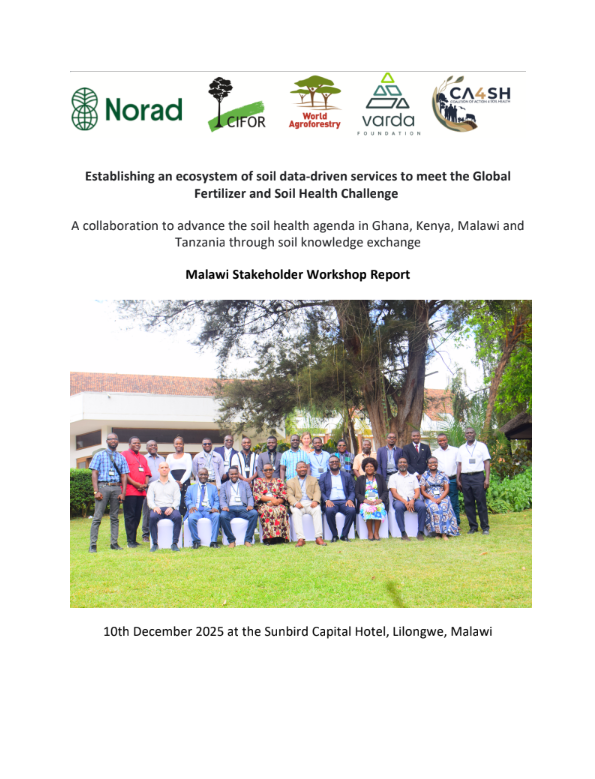
Malawi Stakeholder Workshop Report: Establishing an ecosystem of soil data-driven services
The World Agroforestry (ICRAF) and Varda Foundation organised a one-day stakeholder consultation workshop in Malawi on 10th December 2025. The workshop aimed to bring together key partners to understand the soil health ecosystem in Malawi, including mapping existing soil health initiatives in the country, identifying and prioritizing use cases for soil health data and introduce the Soil Hive Platform. The workshops brought together a diverse range of stakeholders from across Malawi with over 30 participants attending the workshop. Participants included representatives from Government ministries e.g. the ministry of agriculture, research, academia, NGOs, youth organisations including Young Professionals for Agricultural Development (YPARD). Department of Agricultural Research Services, the national agriculture research institute in Malawi was also represented.
International Biochar Initiative (IBI) | Updated Manual for Biochar Carbon Removal
The teams at International Biochar Initiative and HAMERKOP have been hard at work updating the guide with the latest information on the carbon removal market, standards and methodologies, and more since the first edition was released in 2024.
The digital guide provides a roadmap for biochar producers, investors, and stakeholders keen on understanding the intricacies of biochar carbon removal certification. Readers gain a clear overview of the various methodologies established by leading certification standards, with the goal of offering practical insights and comparisons to assist producers and investors in selecting the most appropriate approach for their specific biochar projects.
Some of the main 2025 updates include:

From Roots to Riches: Priority Policy and Investment Decisions for Grasslands and Savannahs
Clarifying and communicating the values of grasslands is essential to catalysing increased conservation, restoration and sustainable management. Grasslands and savannahs face significant and widespread threats from multiple fronts and are an underacknowledged ecosystem in the minds and imaginations of people around the world. The report reflects a growing recognition and commitment to grassland and savannah conservation within WWF and partners, due to their critical roles in food security, biodiversity, ecosystem services and human cultures. It contributes to momentum building towards the International Year of Rangelands and Pastoralists and the next Conference of the Parties of the UN Convention to Combat Desertification (UNCCD) in Mongolia, both in 2026. This report aims to help governments to develop ambitious yet realistic conservation strategies for these critical ecosystems and inform private sector initiatives and finance.

Breakthrough Agenda Report 2025: Accelerating sector transitions through stronger International collaboration
Since its launch at COP 26, the Breakthrough Agenda has become established as an annual collaborative process centred around the Conference of the Parties (COP) meetings of the United Nations Framework Convention on Climate Change (UNFCCC). It is currently supported by over 60 countries representing over 80% of global GDP, and by over 150 initiatives working to enhance collaboration within major emitting sectors. Countries can endorse Breakthrough goals to make clean technologies and sustainable practices more affordable, accessible and attractive than their alternatives by 2030 in the power, road transport, hydrogen, steel, cement and buildings sectors.
The Breakthrough Agenda establishes an annual cycle to track developments towards these goals, identify where further co-ordinated international action is urgently needed to accelerate progress and then galvanise public and private international action behind these specific priorities in order to make these transitions quicker, cheaper, and easier for all.
To initiate this cycle, world leaders tasked the IEA and the Climate High-Level Champions to develop an annual Breakthrough Agenda report to provide an independent evidence base and expert recommendations for where stronger international collaboration is needed. From 2022-2024, the reports contained a detailed assessment on the state of international collaboration across these sectors in areas such as definitions, standards and certification, demand creation and management, research and innovation, finance and investment, infrastructure, and trade conditions, among others.
The Breakthrough Agenda Report 2025 – the fourth in the annual series – takes a different approach to previous reports, in that it does not contain the same detailed sector-by-sector assessment. Instead, this year’s report focuses on enhancing the methodology behind the detailed progress assessments, provides practical examples of collaboration through deep dives, and introduces a new focus chapter on fertilisers.

Evidence in Ecosystem Restoration: Insights and Recommendations
In light of the increased political support, international attention, and financial investment in restoration, the question this ‘Insight Brief’ aims to address is: How is evidence being used and integrated into (ecosystem) restoration processes and how can it be better utilised to inform and improve restoration action at scale? This brief seeks to highlight current issues around evidence in restoration with a view to providing input for future restoration projects and programmes under the UN Decade on Ecosystem Restoration, but also the diverse plans identified above.

CA4SH 2024 Annual Report
2024 was a big year for soil health and for the Coalition of Action 4 Soil Health (CA4SH). We engaged global stakeholders in united advocacy to scale soil health through our priority areas of action, including science, policy, finance, youth engagement, and implementation on the ground. Scaling soil health can not happen in a vacuum; it requires the diverse perspectives, expertise, experience, and networks of the global community to come together. CA4SH is uniquely positioned to bring these voices together, offering a community and a meeting place for these partnerships to grow and bloom, and in 2024, we did just that in the name of healthy soil.
2024 World Living Soils Forum Report
The World Living Soils Forum (WLSF), created in 2022 by Moët Hennessy, and co-organized with ChangeNOW for its second edition in October 2024, convened stakeholders from diverse sectors - including farmers, scientists, NGOs, policymakers, startups and industry leaders - to tackle the urgent challenge of soil regeneration. The WLSF program was fully co-created with an external advisory board of fourteen experts from diverse backgrounds. Held across three locations—France, the USA, and China—the event brought together 600 attendees and featured 70 sessions with over 180 speakers. The forum presented innovative and impactful solutions to accelerate the adoption of regenerative agriculture, emphasizing collaboration, innovation, and education as levers for transformation.

2023 CA4SH Annual Report
For the Coalition of Action 4 Soil Health (CA4SH), 2023 was marked by continual learning and exponential growth, and we are celebrating by launching the inaugural Annual Report. Highlights include a reflection on our roots and growing the Coalition (which now has over 170 multistakeholder members and counting!), zooming in on key engagements, advocating for soil health in the climate agenda, achievements, lessons learned, and a look at what’s to come.

Soil Health Industry Platform: Report and Priority Actions for 2024
The Sustainable Soils Alliance (SSA) has been tracking the food industry’s progress in regards to regenerative agriculture and soil health initiatives via its Soil Health Industry Platform (SHIP). The 2023 SHIP report highlights our key Observations, soil-related Business Initiatives and based on our analysis we’ve recommended six Priority Actions to take forward in 2024.

Food Forward NDCs: Guidance to enhance NDC ambition and implementation for agriculture and food systems transformation
FOOD FORWARD NDCs is a simple, interactive, web-based tool that presents users with tangible, evidence-backed policy options and measures, and available literature for transitioning to nature-positive, healthy, and resilient food systems through NDCs. The available policy options can be tailored to a country’s specific food system priorities and different intervention areas of the food system, such as food environment, food governance, food production, supply chain, and consumption. The guidance does not intend to prescribe solutions, but instead, presents a menu of policy options as a starting point for decision-makers to further develop and implement on-theground measures for food systems transformation based on national and local contexts.
Download the full primer document from WWF

COP28 UAE Declaration on Sustainable Agriculture, Resilient Food Systems, and Climate Action
The COP28 Presidency today announced that 134 world leaders have signed up to its landmark agriculture, food and climate action declaration.
Download resources from the COP28 Presidency

SOIL the hidden part of the climate cycle
Excerpt:
“Soil is a natural resource which most of us either ignore or take for granted. Yet the thin layer of ‘dirt’ that covers much of the surface of the Earth is vital to the environment and invaluable to our societies.
However, soil quality is declining in many areas, meaning that it is less able to perform its essential functions. One area of concern is the effect of soil degradation on the climate, and vice versa.”
Read the full report from the European Commission (2011)
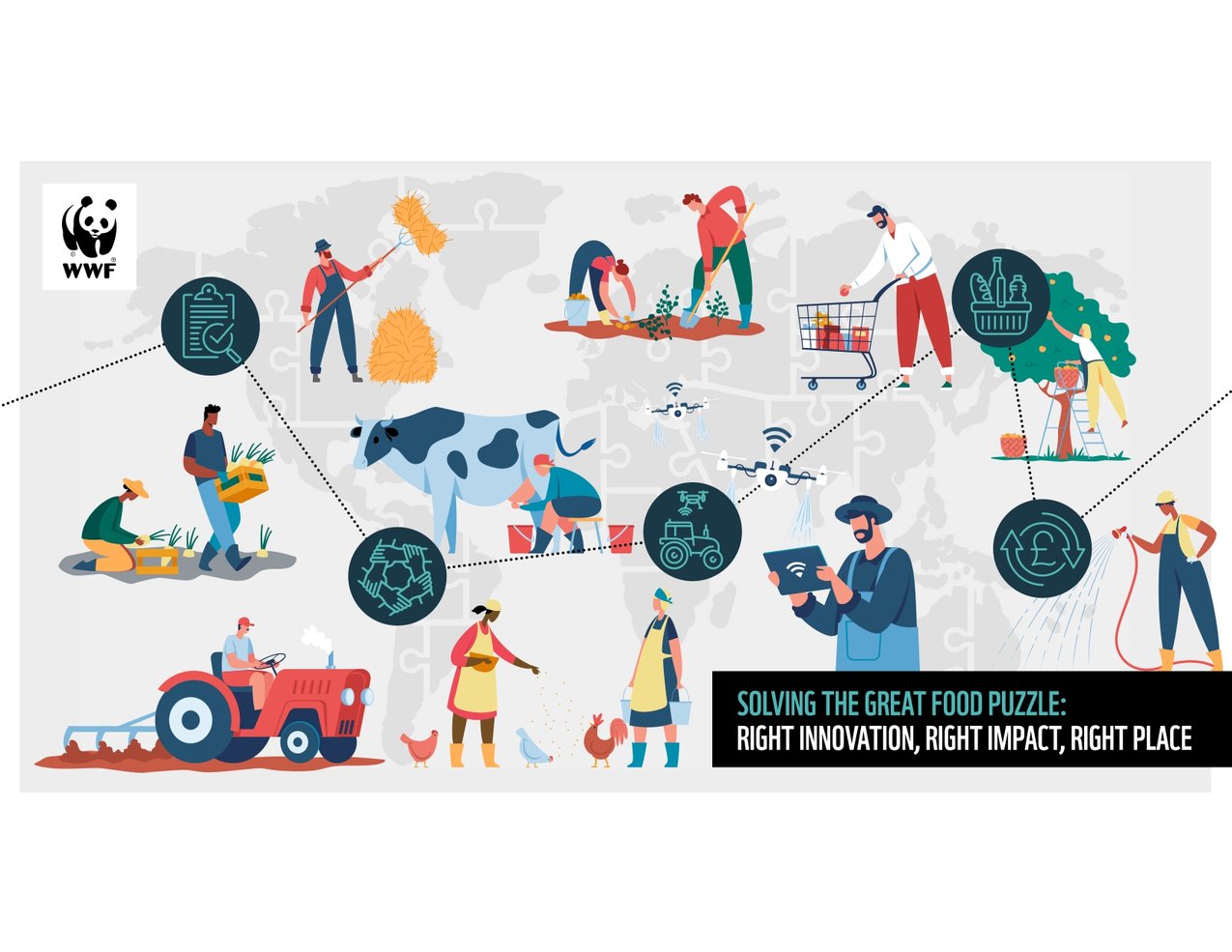
Solving the Great Food Puzzle: Right Innovation, Right Impact, Right Place
Innovations aren’t delivered by just a few people – everyone working within a food system can innovate. It is important that all stakeholders identify the actions that will deliver most impact in the shortest time – identifying new actions that can be applied, and scaling those that are already delivering success. Everyone must work to rapidly accelerate food systems transformation. Those investing money in food systems transformation (be they governments, banks, private investors, public donors or businesses) have a significant say in what innovations are implemented. Not only does the amount of funding for food systems innovation need to be increase, the direction of funds must become even more focused and context-specific.
There are already many innovations in our food systems and several are demonstrating their ability to deliver big impacts in short timeframes. Innovating doesn’t require developing completely new ways of doing things and decision-makers can learn from the approaches being applied in similar food systems round the world.
Shadow Report to the UNFSS+2 Stocktaking Moment
In preparation for the upcoming UNFSS+2 Stocktaking Moment, the UN Food Systems Coordination Hub invited stakeholders to participate in a survey in order to gather valuable insights regarding stakeholder experiences in implementing and supporting food systems transformations leading up to the UNFSS+2. The results of the survey were analyzed and a draft report was produced by an independent author. The draft report was peer-reviewed by the Hub’s Stakeholders Engagement and Networking Advisory Group (SENA Group) through a series of meetings. The SENA group provided revisions to the report and finalized the content. This report is submitted to the UNFSS+2 as the “Stakeholders Contribution Document” or “Shadow Report to the UNFSS+2”.