
Resource Library
Any CA4SH partner can submit a resource to the Library, where we hope to increase visibility of diverse work related to improving soil health globally.
Please send a web link or a file to communications@coalitionforsoilhealth.org if you would like to submit a resource.
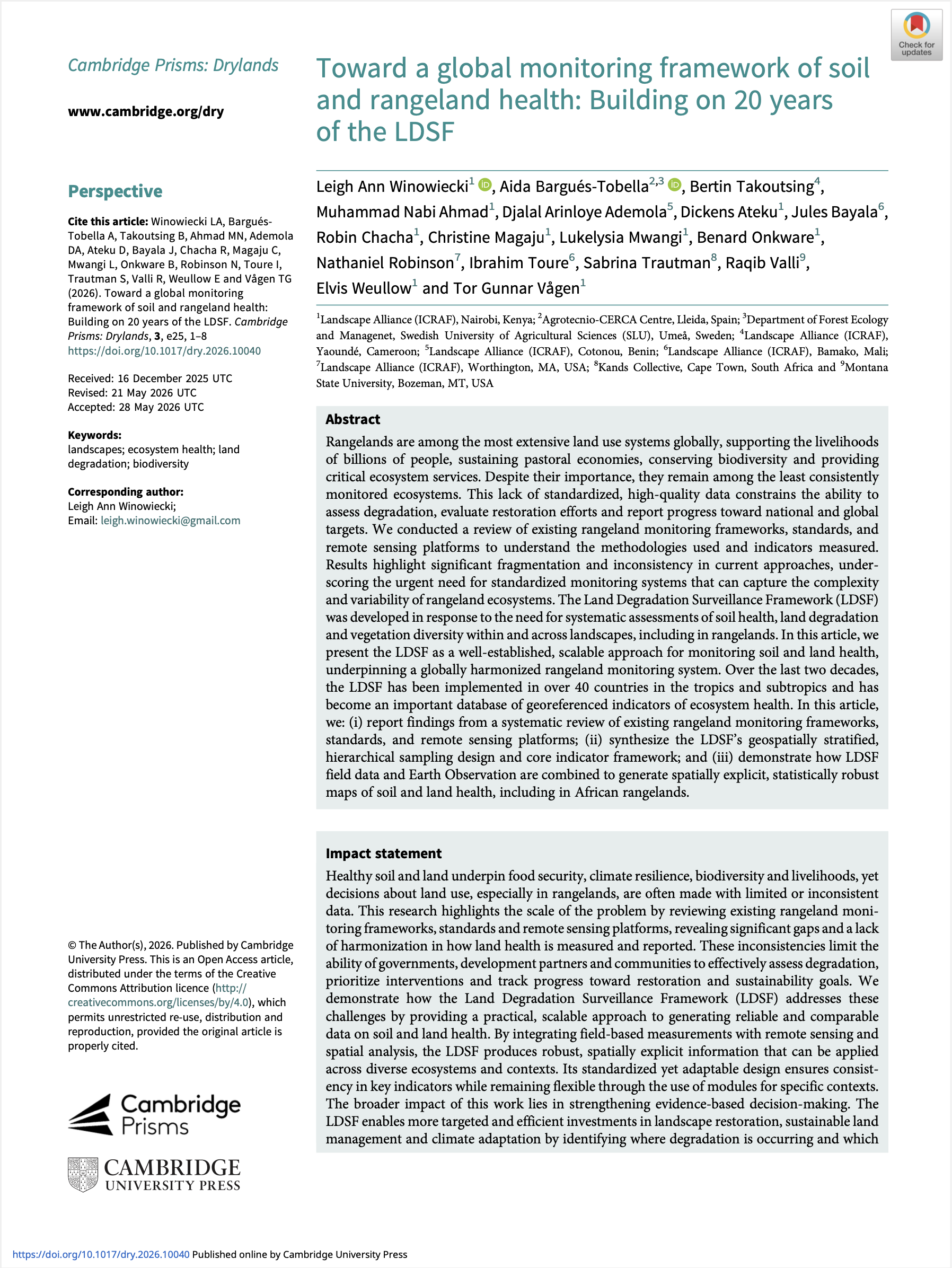
Toward a global monitoring framework of soil and rangeland health: Building on 20 years of the LDSF
Healthy soil and land underpin food security, climate resilience, biodiversity and livelihoods, yet decisions about land use, especially in rangelands, are often made with limited or inconsistent data. This research highlights the scale of the problem by reviewing existing rangeland monitoring frameworks, standards and remote sensing platforms, revealing significant gaps and a lack of harmonization in how land health is measured and reported.
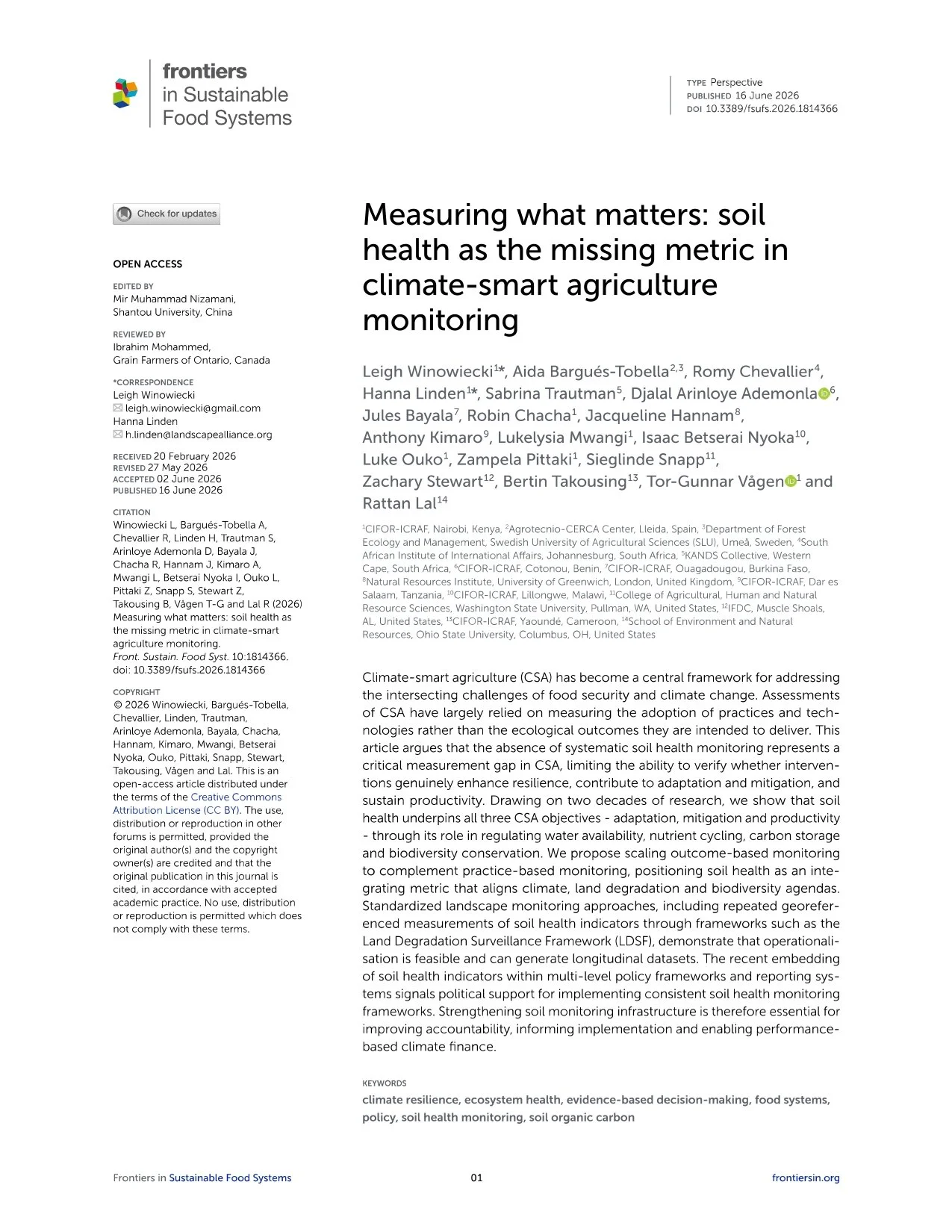
Measuring what matters: soil health as the missing metric in climate-smart agriculture monitoring
Frontiers in Sustainable Food Systems Special Feature on Climate-Smart Food Systems
Abstract
Climate-smart agriculture (CSA) has become a central framework for addressing the intersecting challenges of food security and climate change. Assessments of CSA have largely relied on measuring the adoption of practices and technologies rather than the ecological outcomes they are intended to deliver. This article argues that the absence of systematic soil health monitoring represents a critical measurement gap in CSA, limiting the ability to verify whether interventions genuinely enhance resilience, contribute to adaptation and mitigation, and sustain productivity. Drawing on two decades of research, we show that soil health underpins all three CSA objectives - adaptation, mitigation and productivity - through its role in regulating water availability, nutrient cycling, carbon storage and biodiversity conservation. We propose scaling outcome-based monitoring to complement practice-based monitoring, positioning soil health as an integrating metric that aligns climate, land degradation and biodiversity agendas. Standardized landscape monitoring approaches, including repeated georeferenced measurements of soil health indicators through frameworks such as the Land Degradation Surveillance Framework (LDSF), demonstrate that operationalisation is feasible and can generate longitudinal datasets. The recent embedding of soil health indicators within multi-level policy frameworks and reporting systems signals political support for implementing consistent soil health monitoring frameworks. Strengthening soil monitoring infrastructure is therefore essential for improving accountability, informing implementation and enabling performance-based climate finance.
Breakthrough Agenda Special Report 2026
Building on previous editions in the Breakthrough Agenda series, this year’s report identifies a set of near-term priorities aimed at improving conditions for investment, deployment and market development ahead of the next Global Stocktake in 2028.
Launched at COP26 in 2021, the Breakthrough Agenda provides a framework for strengthening international collaboration across major emitting sectors, with the aim of making clean technologies and sustainable solutions the most affordable, accessible and attractive option by 2030.

Breakthrough Agenda Report 2025: Accelerating sector transitions through stronger International collaboration
Since its launch at COP 26, the Breakthrough Agenda has become established as an annual collaborative process centred around the Conference of the Parties (COP) meetings of the United Nations Framework Convention on Climate Change (UNFCCC). It is currently supported by over 60 countries representing over 80% of global GDP, and by over 150 initiatives working to enhance collaboration within major emitting sectors. Countries can endorse Breakthrough goals to make clean technologies and sustainable practices more affordable, accessible and attractive than their alternatives by 2030 in the power, road transport, hydrogen, steel, cement and buildings sectors.
The Breakthrough Agenda establishes an annual cycle to track developments towards these goals, identify where further co-ordinated international action is urgently needed to accelerate progress and then galvanise public and private international action behind these specific priorities in order to make these transitions quicker, cheaper, and easier for all.
To initiate this cycle, world leaders tasked the IEA and the Climate High-Level Champions to develop an annual Breakthrough Agenda report to provide an independent evidence base and expert recommendations for where stronger international collaboration is needed. From 2022-2024, the reports contained a detailed assessment on the state of international collaboration across these sectors in areas such as definitions, standards and certification, demand creation and management, research and innovation, finance and investment, infrastructure, and trade conditions, among others.
The Breakthrough Agenda Report 2025 – the fourth in the annual series – takes a different approach to previous reports, in that it does not contain the same detailed sector-by-sector assessment. Instead, this year’s report focuses on enhancing the methodology behind the detailed progress assessments, provides practical examples of collaboration through deep dives, and introduces a new focus chapter on fertilisers.

One Earth Voices | Cell Press Journal | 17 Oct 2025, Volume 8, Issue 10
Toxic pollution on croplands—from pesticides, heavy metals, and industrial waste—poses a growing threat to soil health and the safety of crops for consumption. Addressing these contaminants is essential for food security, human well-being, and ecosystem resilience, yet significant challenges remain. In this Voices article, we ask, ‘‘What innovations and actions are needed to preserve croplands as a safe, sustainable foundation for the future of food?’’

Soil Health, Carbon, and Ecosystems – An Overview of Interdependencies that are Vital for the Planet
This new paper from IFDC outlines the role of soil in mitigating and adapting to the effects of climate change while also being influenced by these changes – a complex two-way relationship.
The authors first provide an understanding of this relationship before discussing the direct and indirect pathways through which soil health impacts carbon sequestration. Next, they highlight global evidence on soil health’s role in ecosystem services, including its ability to promote resilient, climate-adaptable systems.
Then, they discuss how these beneficial effects are under threat, as the increase in climate change-induced events limits the ability of soil to mitigate and manage climate change. Finally, they conclude by identifying areas where further action and research are needed.

Enhancing Soil Health for Sustainable Food Security: Achieving Zero Hunger
A new paper from IFDC seeks to elaborate on this theory of change and build the case for improving soil health as a pathway to food security.
The paper begins with an overview of how soil health is critical to multiple SDGs, including SDG 2: Zero Hunger. It then discusses the challenge of global hunger; including its persistence and rising trend in recent years.
Next, the authors delve into approaches that are critical to improving soil health so that crop systems can thrive. Next, is a look at not just overall food availability but the challenge of hidden hunger which is closely linked to levels of plant nutrition and healthy soils, before concluding with the caveats of the assessment.
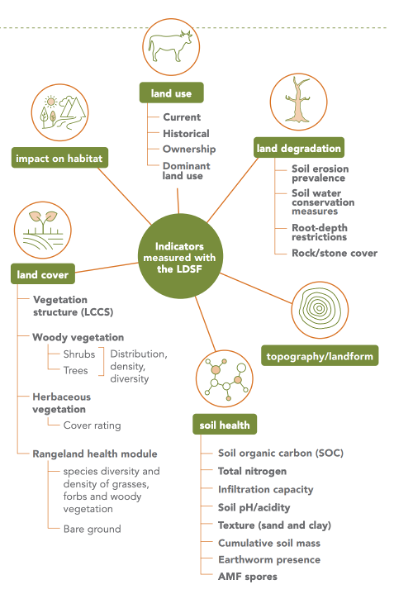
Land Health Monitoring in Kenya: Land Degradation Surveillance Framework
The Land Degradation Surveillance Framework (LDSF), a comprehensive method developed by World Agroforestry (ICRAF) scientists, provides a science-based field protocol for quantifying land and soil characteristics, vegetation composition and land degradation status over time. LDSF was developed as a response to a lack of methods for systematic landscape-level assessment of soil and ecosystem health, using a robust and consistent indicator framework.
Learn more from the University of British Columbia Virtual Soil Science Learning Resources Library

Digging Deeper: Soil Health as the Game Changer for Poverty Reduction
In his Nobel Prize acceptance lecture, economist Theodore Schultz (1979) remarked, “Most of the world’s poor people earn their living from agriculture, so if we knew the economics of agriculture, we would know much of the economics of being poor”. If agriculture, then, largely determines the fate of the world’s poor, soil health has a fundamental role to play, given its impact on agriculture. In this paper, we lay out the deep relationships between soil health, agriculture, and poverty, and their implications for policy making. We focus on the United Nations Sustainable Development Goal 1 (SDG 1): No Poverty (United Nations, n.d.- a), which seeks to end poverty in all its forms everywhere. Extreme poverty is defined as surviving on less than $2.15 per person per day, at 2017 prices. We use the Intergovernmental Technical Panel’s definition of soil health: “. . . the ability of the soil to sustain the productivity, diversity, and environmental services of terrestrial ecosystem” (FAO, 2020).

Restoration Monitoring Guide: A Field Technician’s Manual for Monitoring Restoration Across Watersheds
Despite its importance, many national restoration monitoring frameworks still lack robust systems for tracking management practices at finer scales. Most reporting focuses on broad targets such as tree cover increase or total hectares restored—yet these figures alone don’t tell us whether restoration efforts are truly improving ecosystem function. Without clear data on soil health, vegetation recovery, erosion reduction, or water availability, restoration risks being implemented without understanding its actual effectiveness on the ground.
This Restoration Monitoring Guide addresses that gap. It provides a hands-on, field-ready approach for monitoring restoration outcomes at both plot and watershed levels. Developed for district-level field agents, extension staff, and natural resource management officers, the guide supports locally grounded, scientifically robust monitoring that enhances decision-making, accountability, and adaptive management.

Multistakeholder Engagement to Scale Soil Health Globally: The Coalition of Action 4 Soil Health
Healthy soil is critical for ecosystem restoration, climate change mitigation and adaptation, biodiversity conservation, water cycling, farmer livelihoods, and food and nutrition security. Despite its importance, soil health has often been overlooked, but momentum is growing as evidenced by recent high-level initiatives such as the Nairobi Declaration as part of the Africa Fertiliser and Soil Health Action Plan and the European Union Soil Mission: A Soil Deal for Europe. The UN Decade on Ecosystem Restoration was launched on 5 June 2021 to galvanise local, national and global action to restore degraded ecosystems. In the same year, the UN Food Systems Summit (UNFSS) initiated a call for coalitions of action to champion integrated, systemic approaches to transform food systems. The Coalition of Action 4 Soil Health (CA4SH) was launched to bring soil health into focus with participation across sectors and scales to ultimately raise awareness about this critical ecosystem that we depend on, but which is being degraded at unprecedented rates. Since 2021, CA4SH has grown to include nearly 200 members (as of January 2025) representing the public and private sectors, research institutions, non-governmental organisations, farmer organisations and cooperatives, individuals, youth-led organisations, and indigenous organisations to mention some. The initiative has also had a strong focus on gender equity and social inclusion (GESI) in soil and landscape restoration. The Coalition promotes soil as a unifier across a diverse set of stakeholders, building partnerships to overcome critical economic, technical and institutional barriers to the adoption and scaling of healthy soil practices. Furthermore, CA4SH facilitates evidence-based policy and practice action for the scaling of restoration practices that improve soil health. The Private Sector Guiding Group, launched as part of the UNFSS, developed a call to action to support increased investments in healthy soil, and continues to support the actions of the Coalition. Its four working groups focus on communication, soil health monitoring and implementation, policy, and financial investment. In the first three years since its launch, the Coalition has engaged in multinational dialogues and contributed to the adoption of soil health in the outcomes from the UN Framework Convention of Climate Change (UNFCCC) 27th Conference of the Parties (COP27) through the Koronivia joint work on agriculture (now the Sharm El-Sheikh Declaration), the UNFCCC COP28 UAE Declaration on Food Systems and Agriculture, the UNCCD COP16 Riyadh Action Agenda and also launched the Soil Health Resolution. Leveraging on the enabling policy environment, the Coalition catalyses public and private sector action with outcomes for economic returns and growth, productivity and rural livelihoods, climate and nature. The positioning of the Coalition in the current global environmental transition is pivotal to drive the multifaceted benefits that soil health improvement offers to food systems transformation and global adaptation to and mitigation of climate change.

Rangeland Monitoring Framework To Assess Impact of Interventions
The project STELARR (Sustainable Investments in Large-Scale Rangeland Restoration) is supporting the development of a global rangelands monitoring framework as a component of a global rangelands standard that will be awarded to rangelands products produced sustainably and according to a set of ecological, environmental, social and animal welfare standards. This global rangelands standard development is being led by the Sustainable Fibre Alliance, and in future will be applied and overseen by a Rangelands Stewardship Council in establishment. The standard will incentivize good land management and investments (including private sector investments) in this. ICRAF is leading the development of the global rangelands monitoring framework working with the Sustainable Fibre Alliance and other partners.

BAIF Journal Special Issue: Water Stewardship Through Corporate Partnership
Read the latest edition of the BAIF Development Research Foundation's quarterly journal!

Special Issue of the BAIF Journal: Carbon Offsetting and Neutrality
BAIF has been forging partnerships with global and national agencies for leveraging the strengths of the actors engaged in climate action. During the last couple of years, BAIF received accreditation as an Observer Organisation status for UNFCCC's COP as well as provisional status for UNCCD, BAIF has become a member of the Global EverGreening Alliance (GEA) Australia, Coalition of Action for Soil Health (CA4SH), International Biochar Initiative, United States and World Bioenergy Association, Sweden. Partnerships have also been developed within the country to share knowledge and undertake projects on climate change mitigation.
This issue, with its focus on the carbon offsetting and neutrality efforts of BAIF, serves as an eye opener for acceleration of voluntary action and working towards net-zero emissions, the most important goal of all responsible organisations.
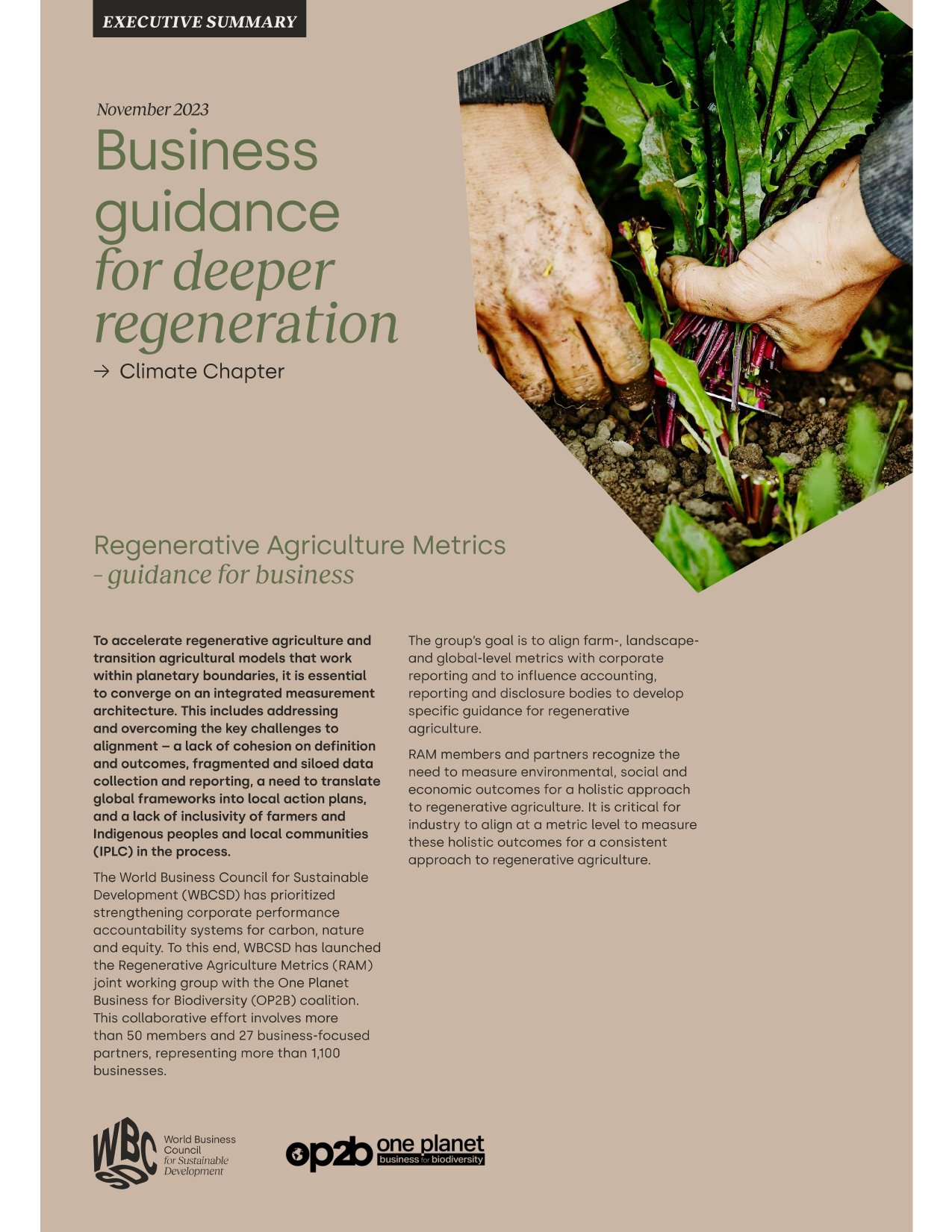
Regenerative Agriculture Metrics: Guidance for Business
To accelerate regenerative agriculture and transition agricultural models that work within planetary boundaries, it is essential to converge on an integrated measurement architecture. This includes addressing and overcoming the key challenges to alignment – a lack of cohesion on definition and outcomes, fragmented and siloed data collection and reporting, a need to translate global frameworks into local action plans, and a lack of inclusivity of farmers and Indigenous peoples and local communities (IPLC) in the process.
The World Business Council for Sustainable Development (WBCSD) has prioritized strengthening corporate performance accountability systems for carbon, nature and equity. To this end, WBCSD has launched the Regenerative Agriculture Metrics (RAM) joint working group with the One Planet Business for Biodiversity (OP2B) coalition. This collaborative effort involves more than 50 members and 27 business-focused partners, representing more than 1,100 businesses.

Soils and sustainable development goals of the United Nations: An International Union of Soil Sciences perspective
Abstract
Being critical to achieving Sustainable Development Goals (SDGs) of the United Nations, strengthening understanding of the properties and processes of soil at national and regional scales is imperative. The necessity to realize SDGs by 2030 also inspires a greater sense of responsibility and care for soils…
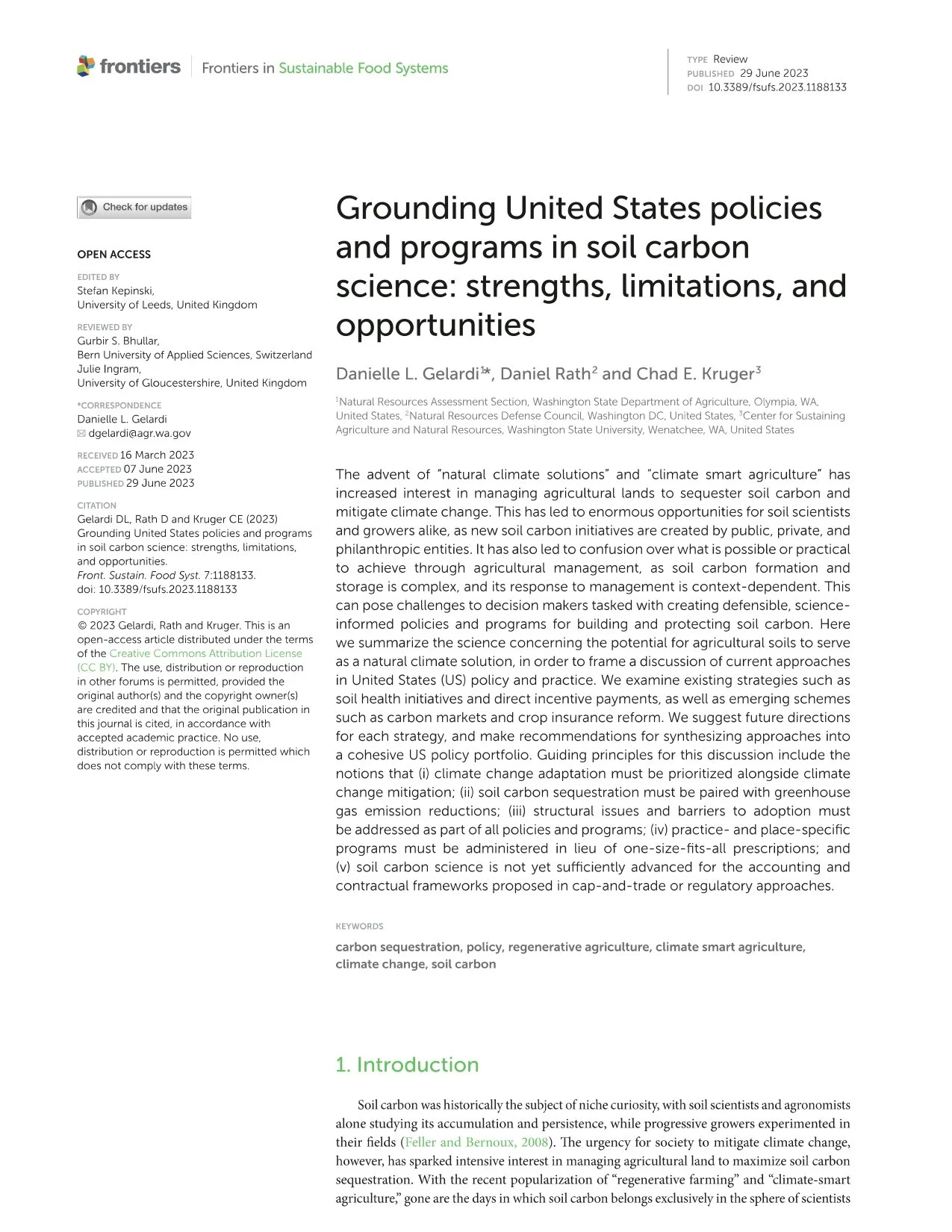
Grounding United States policies and programs in soil carbon science: strengths, limitations, and opportunities
Abstract
The advent of “natural climate solutions” and “climate smart agriculture” has increased interest in managing agricultural lands to sequester soil carbon and mitigate climate change. This has led to enormous opportunities for soil scientists and growers alike, as new soil carbon initiatives are created by public, private, and philanthropic entities. It has also led to confusion over what is possible or practical to achieve through agricultural management, as soil carbon formation and storage is complex, and its response to management is context-dependent… cont.

Fertilizer and Soil Health in Africa: The Role of Fertilizer in Building Soil Health to Sustain Farming and Address Climate Change
The new paper is a conceptual framework relating to fertilizer, crop productivity, and soil health. It features a number of key recommendations, generated from scientific information, which address soil health, climate change, farmer incentives, soil health investments, localization, and not only fertilizers but also auxiliary interventions.

Global Land Outlook 2
The second edition of the Global Land Outlook (GLO2), Land Restoration for Recovery and Resilience, sets out the rationale, enabling factors, and diverse pathways by which countries and communities can reduce and reverse land degradation.

"The private sector is keen to invest in soil"
CA4SH has set itself the goal of improving soil health globally. Co-Leader Leigh Ann Winowiecki explains the barriers which have to be cleared on the way there and why she is optimistic about achieving this goal.