
From Rangelands to Resilience: Why Pastoralism Matters for Soil Health and Climate Futures
The recent “Hooves of Hope!” webinar marked more than an Earth Day celebration - it became a powerful global conversation about the future of pastoralism, rangelands, and soil health in a rapidly changing climate.
Bringing together distinguished speakers from science, policy, pastoralist communities, and regenerative agriculture, the event was hosted by Soil4Climate in partnership with the Food and Agriculture Organisation of the United Nations, the Coalition of Action for Soil Health (CA4SH), and collaborators from around the world. Timed alongside Earth Day and within the context of the International Year of Rangelands and Pastoralists, the webinar the webinar drew strong global engagement, with over 100 viewers. Together, participants explored an urgent question: how do we better recognise the communities and ecosystems already demonstrating resilience in the face of climate uncertainty?
Opening the session, Badi Besbes, PhD (UN FAO) reminded participants that “caring for our planet goes hand in hand with caring for people,” setting the tone for a discussion rooted not only in science, but in livelihoods, culture, and stewardship.
Throughout the dialogue, one message emerged repeatedly: rangelands matter far more than global systems currently acknowledge.
“Rangelands remain among the most undervalued and underinvested ecosystems,” said Besbes. Yet these landscapes support biodiversity, store carbon, sustain livelihoods, and underpin food systems across vast regions of the planet. He emphasized that “soil health, rangelands management and pastoralists are interconnected,” adding that “rangelands deserve greater attention and investment as a centerpoint of food management systems.”
That importance was reinforced by Siboniso Moyo, PhD of the International Livestock Research Institute (ILRI), who noted that “over 50% of the world’s terrestrial surface is rangelands,” while pastoral systems support more than 250 million people across Africa and generate over half of the continent’s meat supply.
For many speakers, however, the discussion extended beyond economics or production systems. It became a conversation about adaptation, mobility, and living within the rhythms of climate variability rather than attempting to control it.
Saverio Krätli, PhD described pastoralism as “climate adaptation in action,” explaining that pastoralist systems are uniquely designed to work with changing environmental conditions. “Instead of introducing stability and control as industrial livestock systems do, pastoralist systems thrive on variability and are designed to adapt to a changing climate,” he said.
He also challenged simplistic narratives surrounding livestock emissions and climate policy, warning against treating all emissions as identical regardless of ecological context. “One of the biggest misunderstandings in climate policy today is assuming that all emissions are equal,” he explained, stressing the need to distinguish between living biological cycles and extractive industrial systems.
This perspective was echoed by speakers working directly within pastoralist communities. Dalmas Tiampati reflected that “pastoralism is often misunderstood as an economic activity, but in reality it is a system that carries knowledge for thriving in times of climate uncertainty.” His work in Kenya focuses on restoring “the relationship between people, livestock and landscapes.”
Similarly, N’ding’a Orkeyaroi spoke about growing up within pastoralist systems in Tanzania, where mobility and adaptation have always been central to daily life. “We believe that pastoralism is not just about economics, it is a whole system of living,” she shared.
From a research perspective, Dr Leigh Winowiecki of CIFOR-ICRAF and CA4SH highlighted how dramatically underrepresented rangelands remain in scientific literature and restoration agendas. Referencing a review of more than 6,000 publications, she noted that forests accounted for 68% of research focus, while grasslands and rangelands received disproportionately little attention despite their enormous ecological importance and carbon storage potential.
“There is an urgency to invest in rangeland restoration and soil health,” she said.
The webinar also highlighted the growing body of evidence linking regenerative grazing and soil restoration. Jason Rowntree, PhD discussed his transition from industrial agricultural systems toward regenerative management practices, emphasizing adaptive management over rigid formulas.
“We want to be led by principle and driven by outcome,” he said. “A textbook approach simply doesn’t work.”
By managing land with adequate rest and recovery for soils, Rowntree’s team has reduced greenhouse gas emissions while maintaining productive livestock systems - illustrating how soil-centered management can deliver both environmental and economic benefits.
The conversation repeatedly returned to the idea that pastoralists are not relics of the past, but guides for the future.
“Pastoralists are not part of the problem, they are part of the solution,” Besbes reminded attendees.
That sentiment was captured powerfully in reflections shared by Seth Itzkan following the webinar, describing Hooves of Hope! as a threshold moment in the evolution of the world’s understanding of pastoralism as an essential for food security, climate resilience, and equitable livelihoods over much of the planet.
As the International Year of Rangelands and Pastoralists continues, the webinar underscored a growing global recognition: healthy soils cannot be separated from healthy rangelands, and resilient landscapes cannot be built without the knowledge and stewardship of the people who have long cared for them.
“How we support pastoralist communities today,” said Besbes, “will shape our landscapes for years and generations to come.”
Related Articles
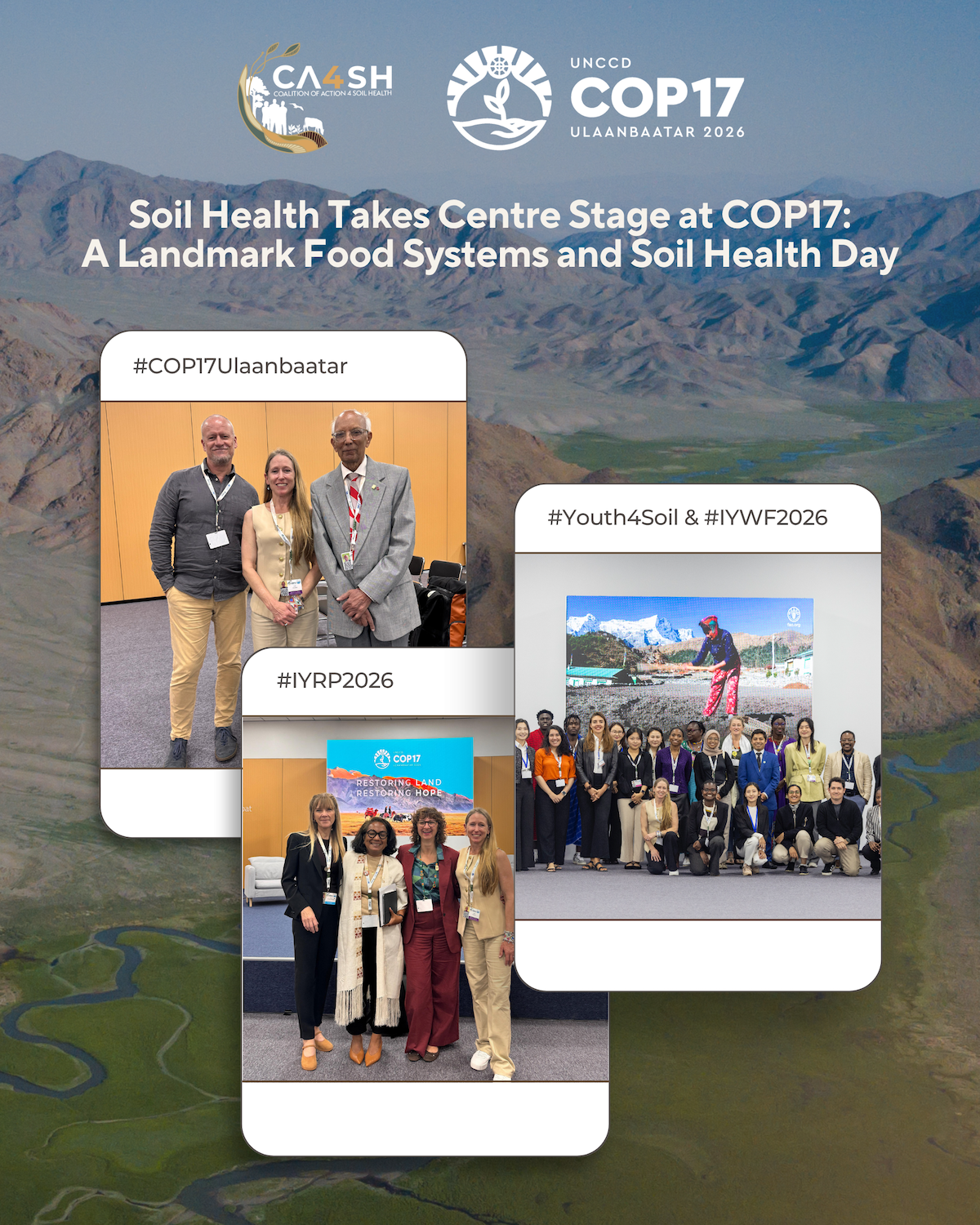
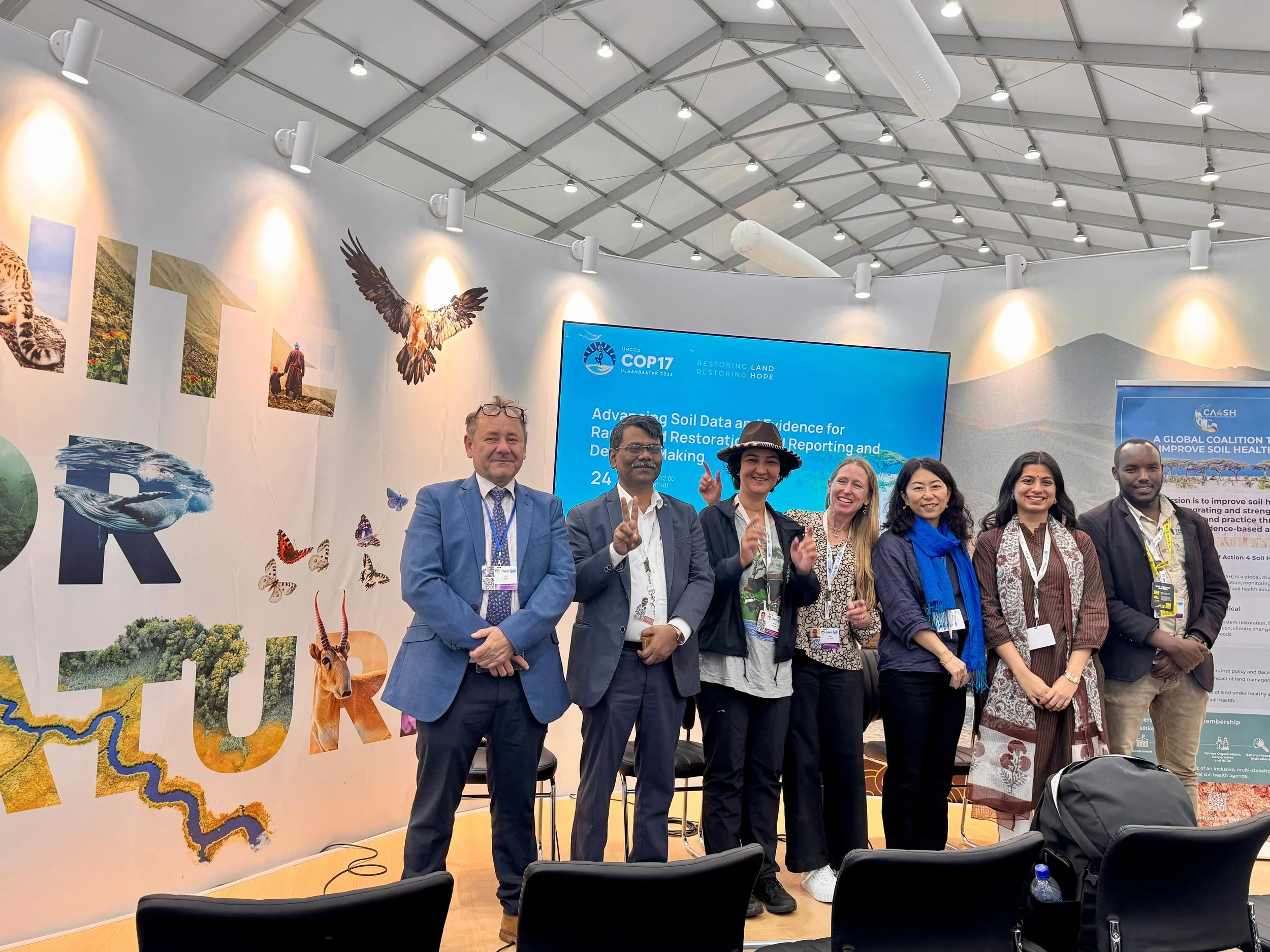

The Coalition of Action 4 Soil Health (CA4SH), Landscape Alliance (CIFOR-ICRAF), Deutsche Gesellschaft für Internationale Zusammenarbeit (GIZ) GmbH, the Norwegian Agency for Development Cooperation (Norad), CGIAR Multifunctional Landscapes Science Program, WWF, and partners, convened senior leaders and partners at UNCCD COP17 Mongolia for a high-level dinner focused on a simple but critical message: healthy soils are fundamental to resilient food systems, healthy ecosystems and a more climate-resilient future.