A Culture of Stewardship on the Spotlight at the Soil Health Solutions Showcase by #Youth4Soil
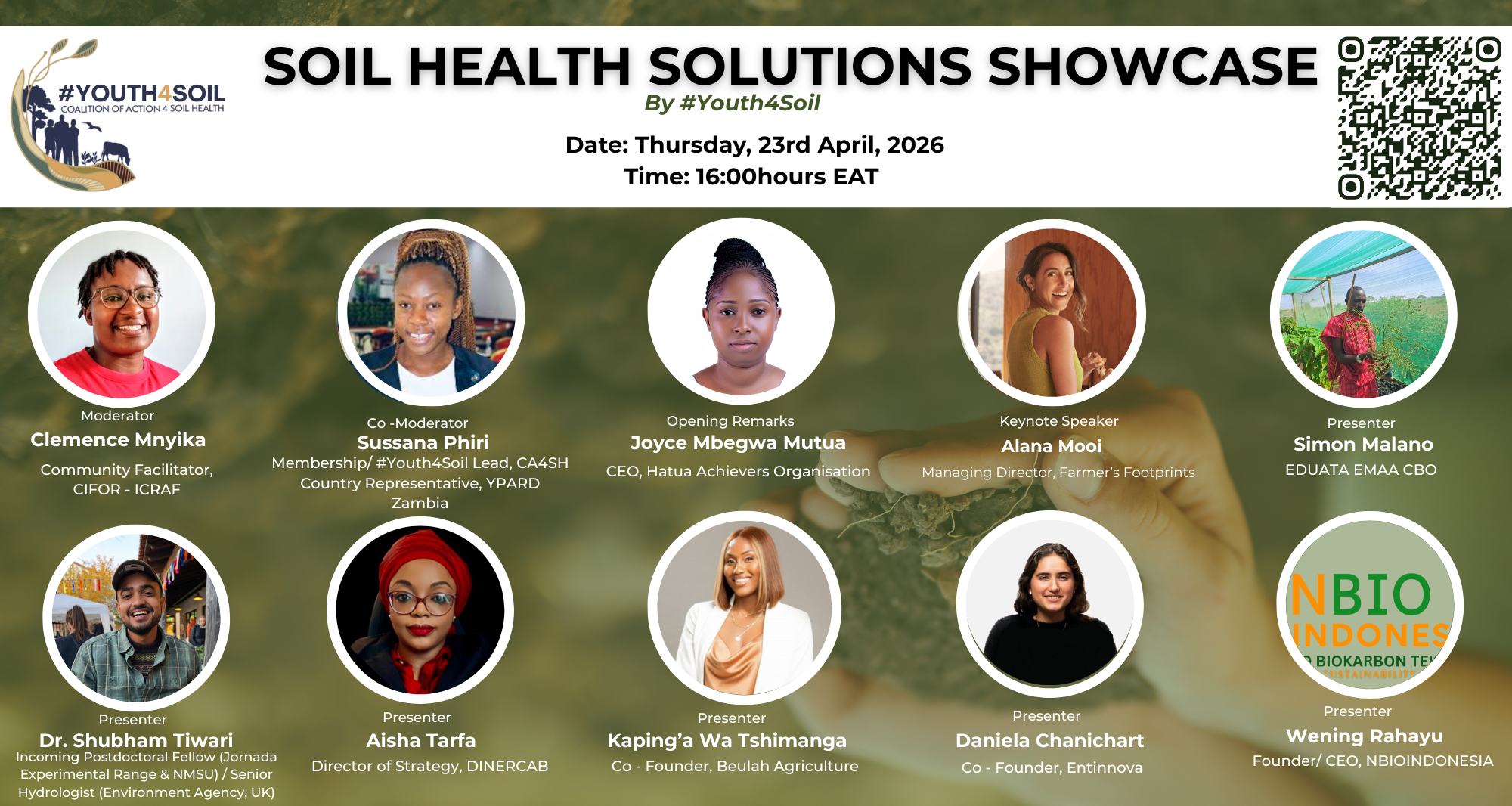
The fifth Soil Health Solutions Showcase by #Youth4Soil, convened under the Coalition of Action 4 Soil Health (CA4SH), on Thursday 23rd April, 2026, brought together young leaders, scientists and advocates to spotlight practical solutions for soil restoration and sustainable land use. The event featured innovators, researchers and community leaders presenting groundbreaking approaches to restoring degraded land and strengthening food systems.
Moderator Clemence Mnyika, Community Facilitator at CIFOR-ICRAF opened the session by welcoming participants from across the globe, emphasizing the central role of youth leadership in soil health.
In her opening remarks, Joyce Mutua, CEO of Hatua Achievers Organization, reminded participants of the essence of soil health, the neglect it has experienced over time and the importance of the Soil Health Solutions Showcase by #Youth4Soil. She urged attendees to engage actively, stressing that the future of soil health will be shaped not only in boardrooms but also in communities, farms, rangelands and startups led by bold young innovators.

“Everything we eat, everything we grow, everything we depend on begins with soil. And yet, soil remains one of the most overlooked resources in our entire food system. That's why #Youth4Soil matters.”
— Joyce Mbegwa Mutua, CEO, Hatua Achievers Organisation
Keynote speaker Alana Mooi, Managing Director of Farmer’s Footprint, challenged youth to rethink cultural narratives around soil health. She emphasized that while science and data are critical, culture drives behavior that guarantees adoption and sustainability. True transformation, she explained, requires embedding stewardship, resilience and biodiversity into everyday choices. Underscoring that cultural shifts are essential for youth to lead scalable solutions that transform land into a foundation for resilience and opportunity.

“Change comes from culture change and culture is created by our everyday choices and actions.”
— Alana Mooi, Managing Director, Farmer's Footprint
SHOWCASE PRESENTATIONS
The showcase featured five(5) powerful youth-led soil health solutions
REWIRING THE DRYLANDS, A CONNECTIVITY SCIENCE FRAMEWORK TO PREDICT, PAUSE AND REVERSE LAND DEGRADATION
Dr. Shubham Tiwari, an Incoming Postdoctoral Fellow (Jornada Experimental Range & NMSU) & Senior Hydrologist (Environment Agency, UK) unveiled a connectivity science framework to predict and reverse dryland degradation. He explained that drylands are dynamic networks and degradation occurs when connectivity pathways for water, wind and grazing become disorganized. Tools such as berms, ConMOD barriers, and GPS‑guided virtual fencing — validated in Arizona and New Mexico — show how connectivity science can predict, pause and reverse degradation, redirecting destructive flows and restoring balance. He likened connectivity management to blocking harmful content online: if a flow is damaging, it can be managed or blocked.
“The whole concept of managing connectivity is like blocking some content on social media, so if a content is causing harm to you, you can block it. Similarly, if some sort of connectivity is not good for your ecosystem, you can manage it or block it.”
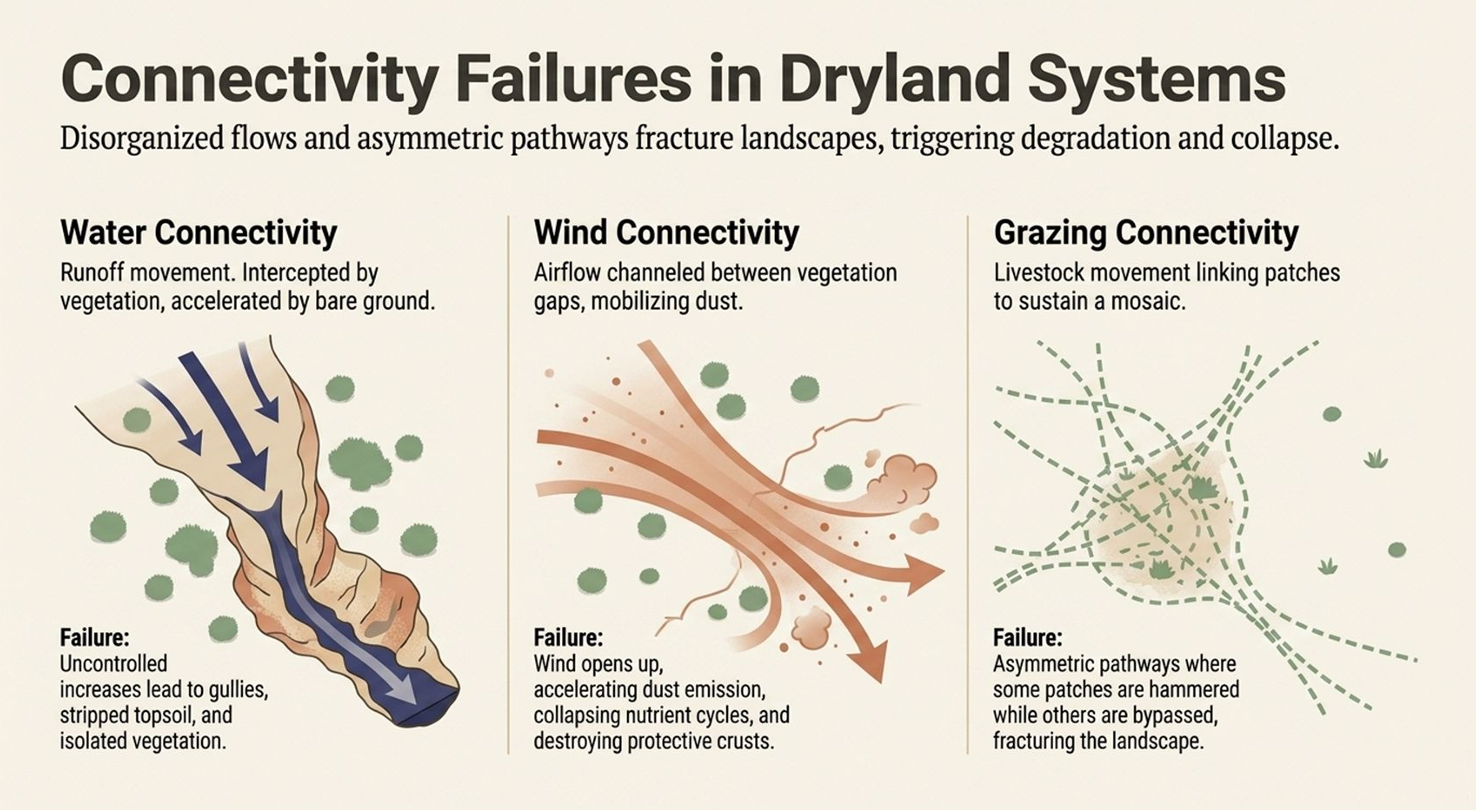
Slide off Dr. Shubham Tiwari’s Presentation
Dr. Shubham is looking forward to building open‑source toolkits for land managers and linking connectivity solutions to public health, since reducing dust emissions protects both ecosystems and human well‑being. He will be actively engaging at the UNCCD COP in Mongolia and looks forward to sharing more of his work there.
ECOSYSTEM RESTORATION THROUGH COMMUNITY LED ACTION
Aisha Tarfa, Director of Strategy for Dryland Initiative for Ecosystem Restoration and Capacity Building (DINERCAB) highlighted community-led restoration projects in Nigeria, mobilizing youth and women to restore fertility and biodiversity. Projects such as the Goya Landscape Restoration, Scouts Training and youth‑led tree planting demonstrate that community-driven action restores productivity and resilience. DINERCAB has recorded progress since 2017 and looks forward to achieving more.
DINERCAB’s community driven approach fosters;
Community leadership
Heightened Ownership
Continuity and sustainability of restoration
She emphasized that with strategic funding, technical expertise and policy support, DINERCAB could expand to new communities and transform soil into a foundation for sustainable food systems.
LEADING AFRICA’S AGRICULTURE RENAISSANCE
Kaping’a Wa Tshimanga Maina Co-founder of Beulah Agriculture introduced an organic input production formula she learned at the Sungai Centre of Excellence in Benin, now being scaled in Kenya. These inputs are designed to improve soil health and stabilize yields. By using natural materials, beneficial microorganisms, and molasses to energize soil life, Beulah Agriculture has already demonstrated early results — reducing pest pressure and increasing yields by 25–30%.
To illustrate the importance of beneficial microorganisms, Kaping’a offered a vivid analogy:
“Soil is like an organization and the microorganisms are its employees. Just as in any successful organization, the performance of employees determines the quality of the output. These microorganisms break down nutrients for plants to absorb, improve soil structure and water retention, fix nitrogen from the air, protect plants from harmful pathogens, and even produce natural antibiotics. But like any workforce, they need energy to perform — and that’s where labile carbon comes in.”
Beulah Agriculture’s Bloc Model clusters farmers by production type, supports them with extension services and aims to improve 500–800 acres in its first year. Maina emphasized that climate change is no longer a distant threat but a present reality already affecting farms and livelihoods.
Restoring soil health, she stressed, is a shared responsibility and a cornerstone of Africa’s agricultural renaissance.
FOOD SAFETY WITH THE LOWEST POSSIBLE WATER CONSUMPTION
Daniela Charnichart Co - Founder of Entinnova presented the Responsive Drip Irrigation (RDI) system, which reduces water use by up to 50% while protecting soil microbiology and boosting crop yields. In Mexico, where 76% of freshwater goes to agriculture and 60% is wasted, RDI enables plants to self‑regulate water supply. Case studies show water savings of over 70% and yield increases of more than 25%. With ISO certifications, low maintenance, and compatibility across all crops and soils, RDI is a breakthrough for food safety, soil health and farmer resilience.
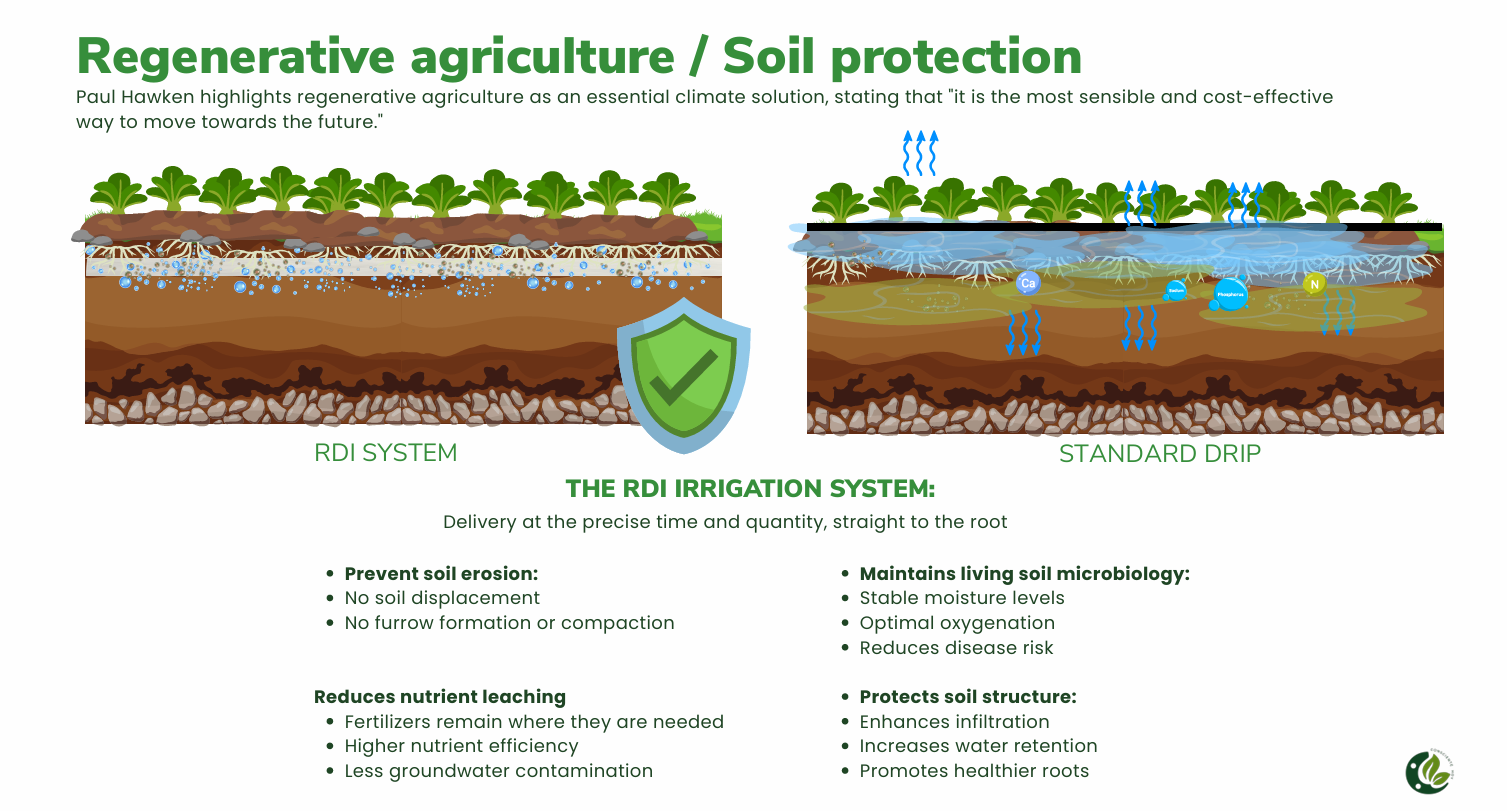
Slide from Daniela Chanichart’s Presentation
Key Benefits of RDI System
Saves 30–50% water compared to drip irrigation
Increases yields by up to 30%
Protects soil from erosion and compaction
Reduces nutrient leaching and groundwater contamination
Maintains healthy soil microbiology and nutrient cycles
Prevents soil diseases linked to poor irrigation
Achieves near‑100% efficiency in water and fertilizer use
Certified under ISO 9001, 14001, 45001 standards
Low maintenance, long lifespan (+8 years), and low energy use
Works across all crops, soils and water types
RESTORING SOIL HEALTH THROUGH PASTORALIST KNOWLEDGE AND YOUTH ACTION
To shine a light on the International Year for Rangelands and Pastoralists, Simon Malano Co - Founder of Enduata Emaa Community Based Organisation(CBO) linked soil health to community survival in Kenya’s arid lands, emphasizing the role of youth in pastoralist soil restoration.
Enduata Emaa CBO promotes conservation practices, kitchen gardens and education programs for children, while training Maasai women through entrepreneurship initiatives and equipping them with advanced technologies to strengthen livelihoods.
He described the challenges pastoralists face, particularly drought, unpredictable rainfall and competition for grazing with wildlife. While Indigenous knowledge is vital, communities are also embracing new approaches to manage land and water.
Youth mobilization is central to their work, promoting sustainable grazing, soil restoration and reseeding grasses to bring ecosystems back to life. Simon also highlighted efforts to set aside land seasonally, preserve water for drinking and livestock and recognize soil as the basis of resilience.
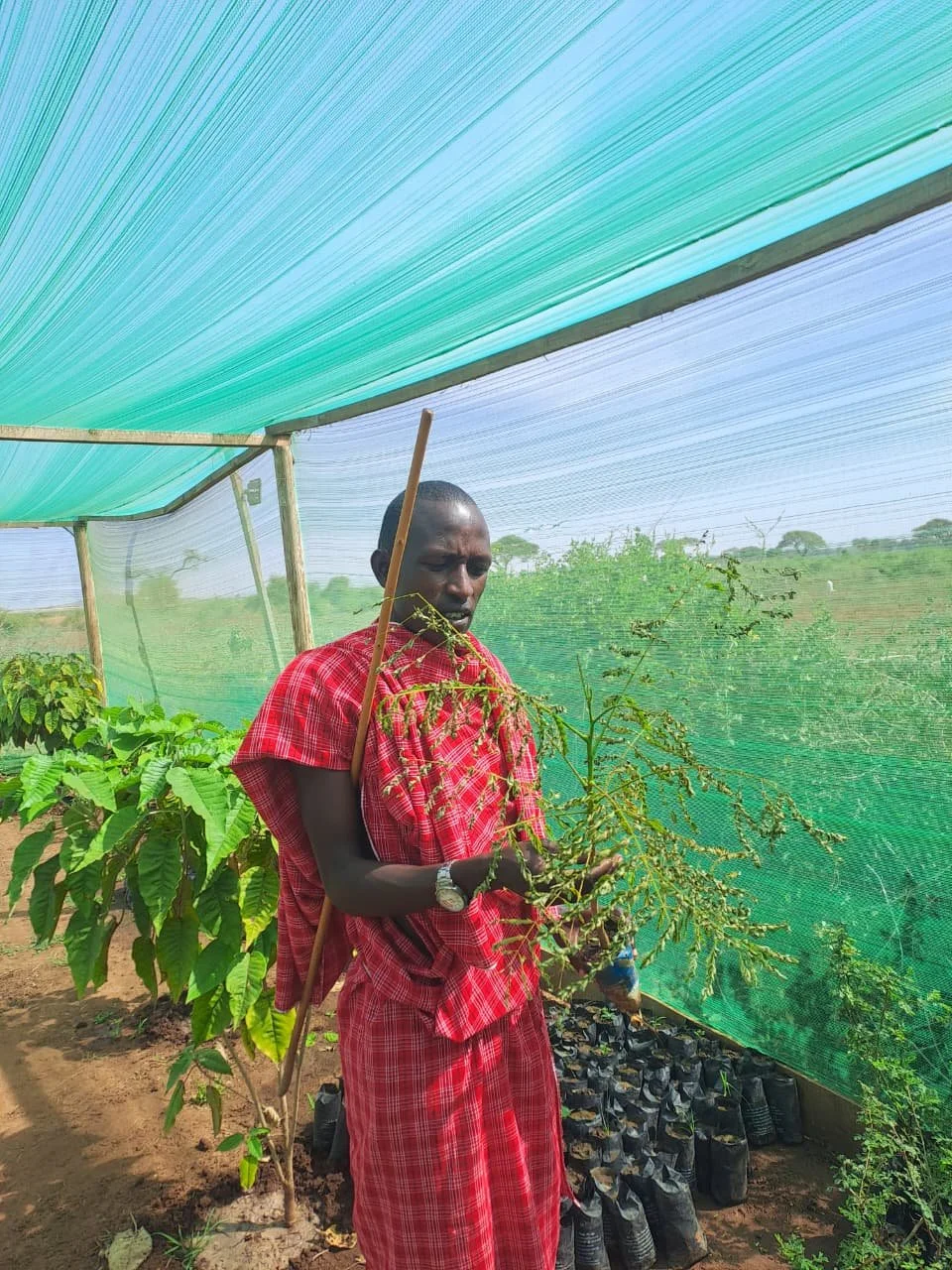
“Pastoralism is the foundation of our community life — livestock grazing the land, healthy animals and strong communities sustained by milk and meat therefore, Soil Health is not just an environmental goal but a matter of survival for our community, safeguarding our cultural identity, preventing forced migration and building resilience against climate change.”
— Simon Malano, Co - Founder of Enduata Emaa Community Based Organisation(CBO)
Key Takeaways from Interactive Q&A
Soil Carbon Knowledge: Communities need capacity‑building on soil carbon, carbon removal and tree species selection to avoid invasive species. Soil carbon integration could provide new income streams for farmers and pastoralists.
Youth Engagement: Planting trees and learning about carbon markets and carbon calculations can empower youth to contribute to climate solutions.
Agro‑Silvo‑Pastoralism: Potentially viable but challenging for pastoralist communities managing large herds.
Connectivity Science: Viewing land as a connected system helps identify resilience strategies.
Resilience Building: Managing soil, water, and vegetation connections strengthens smallholder systems.
Knowledge Sharing: Requests for expert speakers highlight the importance of continuous learning.
Tree Species Selection: Guidance is needed to identify species that sequester carbon without being invasive.
Pastoralist Realities: Solutions must be adapted to pastoralist practices to avoid unintended consequences.
Systems Thinking: Soil, water, vegetation and livelihoods are interconnected, requiring holistic management.
Call to Action
In her rallying call, Sussana Phiri, Membership and #Youth4Soil Lead at CA4SH And YPARD Zambia Country Representative applauded the courage and commitment of the presenters, noting that their work has inspired others to rise to the soil health challenge. She emphasized that the magnitude of the soil crisis demands immediate action, urging everyone to implement their own soil health solutions relevant to the needs of the communities they serve. Addressing stakeholders, she called for stronger belief and investment in the power of youth, describing them as “fearless, tireless, limitless and boundless.”
“The best time to take bold action for soil health was yesterday. The next best time is now”
She urged young people to continue building a culture of stewardship, protecting the soil that sustains food, ecosystems and livelihoods, and bringing more youth on board to collaborate. She concluded by affirming that at #Youth4Soil, every effort is seen, heard, and valued for its contribution to soil health.
The Soil Health Solutions Showcase by #Youth4Soil presented soil health not only as an environmental issue but also as a cultural, economic and public health priority. Youth-led soil health solutions — from organic input businesses to community initiatives, regenerative farming practices and innovative research — are emerging as a cornerstone of sustainable food systems, climate resilience, ecosystem restoration and economic stability.
About #Youth4Soil
#Youth4Soil is an initiative of the Coalition of Action for Soil Health(CA4SH), amplifying youth voices in soil health, climate resilience and sustainable food systems. Through showcases, advocacy and community action. Read the #Youth4Soil Manifesto to learn more about the collective commitments and demands of youth for global soil health.