Resource Library

Any CA4SH partner can submit a resource to the Library, where we hope to increase visibility of diverse work related to improving soil health globally.

Please send a web link or a file to communications@coalitionforsoilhealth.org if you would like to submit a resource.
GIZ SOILutions Colleen Knox GIZ SOILutions Colleen Knox

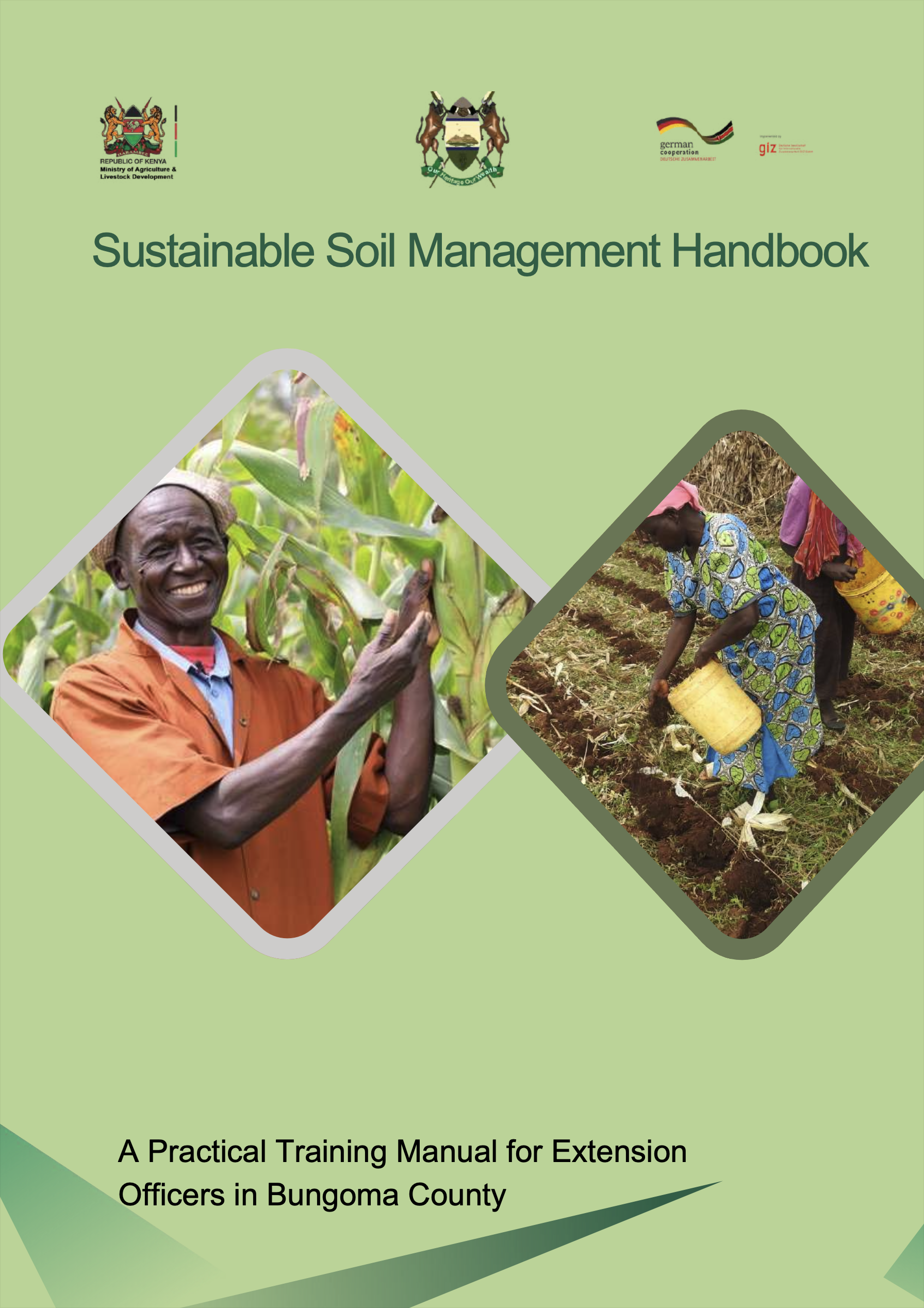
CA Tools Training Manual - Kenya 

Conservation agriculture (CA) is an increasingly adopted production system to meet the goals of sustainable crop production intensification in feeding a growing world population whilst conserving natural resources. Mechanisation (especially power units, seeders, rippers and sprayers) is a key input for CA and smallholder farmers often have difficulties in making the necessary investments. The German Ministry for Economic Cooperation and Development (BMZ) through GIZ is implementing a global soil program “Soil protection and rehabilitation for food security” in seven countries, Kenya being one of them. This project aimed to facilitate the implementation of sustainable approaches for the inclusive promotion of soil conservation and for the rehabilitation of degraded soils.

Read More
GIZ SOILutions Colleen Knox GIZ SOILutions Colleen Knox

SOILution: A stepwise approach to advancing the agroecological transition - Ethiopia

The approach to the agroecological transition offers a practical and scalable pathway to transform farming systems into resilient, integrated production landscapes. Originally presented in a CIAT publication

(Sanginga and Woolmer, 2019), the approach was adapted to and tested in Ethiopia’s Highlands by the ProSoil programme, responding to severe soil degradation that undermines food security and rural livelihoods.

Read More
GIZ SOILutions Colleen Knox GIZ SOILutions Colleen Knox

SOILution: Dry Valley Rehabilitation and Productive Use (DVRPU) - Ethiopia

The “Dry Valley Rehabilitation and Productive Use (DVRPU)” approach supported within the framework of the global programme Soil Protection and Rehabilitation for Food Security (ProSoil) implemented by GIZ offers a comprehensive and innovative solution to address the root causes of land degradation, drought, famine, and poverty. Across Afar, Oromia, and Somali, where communities face increasing challenges, the ProSoil Ethiopia Lowland Soil Rehabilitation Project has played a pivotal role in promoting and implementing sustainable land management (SLM) practices. This publication compiles and documents three core SLM practices implemented under the project, serving as a knowledge repository to support continued learning, replication, and evidence-based decision-making.

Read More
GIZ SOILutions Colleen Knox GIZ SOILutions Colleen Knox

SOLution: Des initiatives spontanées pour un développement territorial au service d’une gestion durable des ressources naturelles - Tunisie

En Tunisie, les régions rurales à vocation agricole, comme d’autres territoires de l’intérieur et des côtes font face aux défis croissants liés à la dégradation des sols, avec près de 47 % des terres menacées par l'érosion, et à l’épuisement des ressources naturelles. La Stratégie ACTA 2050, portée par l’institution publique dédiée à la conservation du sol, a mis en avant les PADIT : Projets d’Aménagement et de Développement Intégré des Territoires, afin d’engager les populations et faire émerger un travail collectif et de co-construction à travers des initiatives spontanées. Ces initiatives sont amenées à être intégrées dans un cadre d’intervention cohérent pour assurer leur viabilité et leur alignement avec les politiques de conservation des ressources naturelles. Il est ambitionné de promouvoir près de 30 PADIT par gouvernorat (région, total 24) sur une période de 10 ans.

Read More
GIZ SOILutions Colleen Knox GIZ SOILutions Colleen Knox

The Mandla Model | Promotion of landscape-based natural farming in forest fringe areas: A Case Study

Derived from decades of learnings from on-ground interventions in Madhya Pradesh, ProSoil project has created an integrated landscape approach called the ‘The Mandla Model’ to scale up Natural Farming. This document details the evolution of this approach and learnings that can be applicable in scaling up on Natural Farming practices in other locations within the country.

Read More
GIZ SOILutions Partner Contributor GIZ SOILutions Partner Contributor

The e-Prakriti App use manual

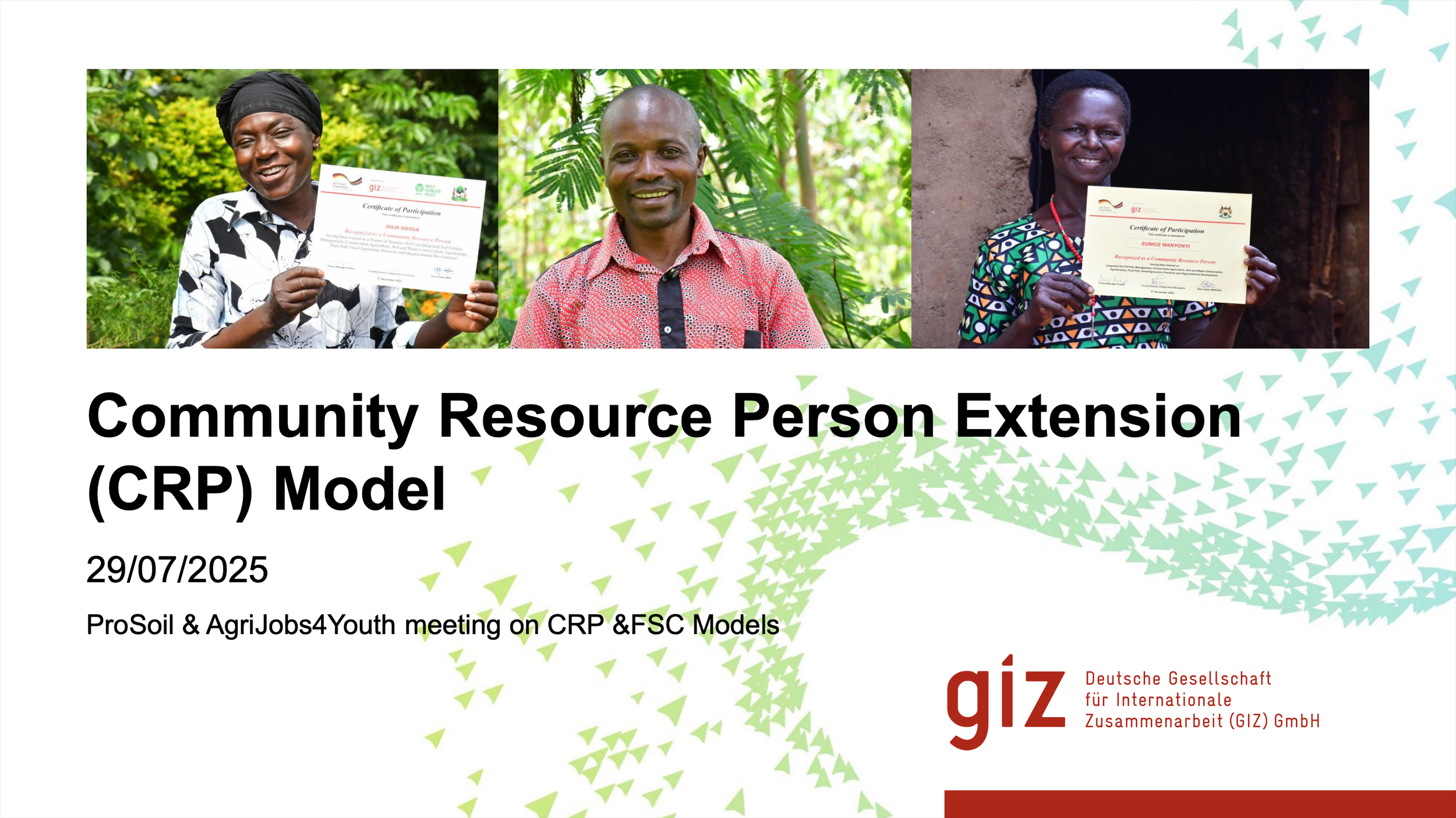
The ProSoil project together with the Madhya Pradesh State Rural Livelihood Mission has developed e-Prakriti, a GIS-based planning tool to facilitate efficient and timely planning of scientific based-natural farming practices.

The e-Prakriti app is a planning, monitoring, evaluation, and learning application designed for seamless implementation of natural farming practices.

It aims to enhance the effectiveness of agricultural initiatives through advanced monitoring and learning mechanisms.

It is available as an easy-to-use mobile app for community resource persons (CRPs) in the field. It also features a comprehensive dashboard for managers and executives.

Read More
SDGs and soil health, GIZ SOILutions Partner Contributor SDGs and soil health, GIZ SOILutions Partner Contributor

Economic Impact of Integrated Soil FertilityManagement on Smallholder Farmers' Income

ISFM significantly increases farm income, with an average net income increase of 80%, and wheat being the most profitable crop. However, income variability persists as some farmers face low or negative net return when labour costs are accounted for. Adoption is also hindered by limited input access, credit constraints and labour shortage. Methodological limitations, including data issues and spillover effects, suggest caution in generalizing findings. Further research is needed to refine insights in regional and crop-specific dynamics. The findings highlight ISFM’s significant impact on smallholder income, reinforcing its potential for sustainable agricultural development in the Ethiopian highlands.

Read More
SDGs and soil health, GIZ SOILutions Partner Contributor SDGs and soil health, GIZ SOILutions Partner Contributor

CoMADI | Community Managed Agricultural Development Initiative forSustainability and Community Empowerment

The local government's efforts in the Amhara region to combat land degradation and food insecurity are commendable, especially with the positive outcomes seen in rehabilitated lands and increased agricultural productivity. However, the challenges you've highlighted regarding the government's top-down approach are significant. The high staff turnover, understaffing, and limited functionality of key committees hinder effective project management and slow down implementation. Moreover, issues with the delivery of inputs, as well as reduced community participation and ownership, raise important questions about transparency and accountability.

Read More
SDGs and soil health, GIZ SOILutions Partner Contributor SDGs and soil health, GIZ SOILutions Partner Contributor

Small Scale Mechanisation in Tigray: Gender Sensitive Approaches for Climate Change Mitigation

In the Tigray region of Ethiopia, agriculture is transformed through small-scale mechanization. In the Emba Alaje district, the Dellet Agricultural Mechanization Youth Group has been providing Mechanization services with twowheel tractors to the local community. Since 2021, the group has been supported by the Integrated Soil Fertility Management Project and CIMMYT through trainings and the provision of accessories for their tractors. By modernizing traditional farming methods, which relied on animal and human power, they help local farmers increase productivity, reduce labour, and adapt to climate change. This shift not only boosts agricultural output but also contributes to higher incomes and better livelihoods for smallholder farmers in the region.

Read More
SDGs and soil health, GIZ SOILutions Partner Contributor SDGs and soil health, GIZ SOILutions Partner Contributor

Application of ISFM Technologies Survey Report

Agriculture is the primary economic activity in Ethiopia, with the majority of the population engaged in farming. However, food security remains a significant challenge, largely due to issues such as soil degradation and low fertility. Addressing soil fertility is essential for improving the livelihoods of Ethiopian farmers.To tackle this issue, the Integrated Soil Fertility Management (ISFM+) project promotes a set of integrated soil fertility management (ISFM) technologies and emphasizes peer learning and participatory approaches to enhance the effectiveness of these interventions. This report presents the findings of a 2024 survey aimed at tracking the dissemination, application, and adoption of ISFM technologies by smallholder farmers in the project’s intervention areas.

Read More
SDGs and soil health, GIZ SOILutions Partner Contributor SDGs and soil health, GIZ SOILutions Partner Contributor

Integrated Soil Fertility Management: Yield Productivity Gains

The Integrated Soil Fertility Management project (ISFM+) is part of the Special Initiative ‘’Transformation of Agricultural and Food Systems’’ of the German Government. The project aims at improving soil fertility and productivity in the Highland regions of Ethiopia (Amhara, Oromia, Tigray, Sidama, Southern and Central-Ethiopia) through promoting integrated soil fertility management (ISFM) technologies.

Read More
SDGs and soil health, GIZ SOILutions Partner Contributor SDGs and soil health, GIZ SOILutions Partner Contributor

Mechanization | Beating time poverty of rural women in Ethiopia as enabler for equitable development

Women suffer disproportionally from time poverty, often spending 16 h a day working. This severely limits their possibilities to participate in capacity building (reach) or to implement measures (benefit) as well as their ability to participate and advocate in decision-making processes (empower).

An anthropological study revealed that farm work such as planting, processing, threshing/shelling and weeding consume much of their time. Also fetching water is a huge challenge. Women headed households are also unable to plough their fields without support by male relative and are therefore often disowned of their property or its economic use. Moreover, unequal access to resources exacerbates these challenges, hindering women from realizing their full potential in the agricultural sector.

Some of these constrains can be addressed by the broad deployment of small-scale mechanization options. Two-wheel tractors operated by local service providers have been shown to be in great demand especially by women.

Read More

Analyses des effets socio-économiques etenvironnementaux des pratiques agroécologiques

Le guide méthodologique fournit un aperçu des analyses économiques et environnementales les plus récentes, répondant au besoin de ProSol et pertinents pour des contextes de développement plus larges. Il explique les méthodologies proposées, leurs indicateurs et résultats clés ainsi que les besoins en données et fournit des informations sur le contexte d’application. Le guide comprend également des conseils et des astuces sur ce qu’il faut prendre en compte avant d’entreprendre une étude. Des idées pratiques sur la façon d’impliquer les parties prenantes concernées dans les différentes étapes d’une analyse permettent d’adapter les études aux besoins du groupe cible et d’assurer que les résultats sont utiles aux parties prenantes. Grâce à ce produit, les collègues des pays partenaires de ProSol devraient être en mesure d’identifier leurs principales questions de recherche et le but de telles analyses, et de formuler à l’avance le type de résultats qu’ils souhaiteraient obtenir. Ils devraient avoir une compréhension de base des méthodologies d’analyse économique et écologique existantes et savoir quelle méthodologie pourrait convenir à leurs besoins spécifiques. Ils devraient se sentir en mesure de monter un dossier d’analyse et lancer un appel d’offres et sélectionner un partenaire de recherche compétent pour éventuellement se lancer dans une étude personnalisée.

Read More

Benin country report on Measuring Agroecology and its Performance (MAP): TAPE application in the context of the Global Programme “Soil Protection and Rehabilitation for Food Security” (ProSoil)

Since 2015, ProSoil has been empowering communities to address environmental and food-security challenges by implementing interventions, such as agroforestry, conservation agriculture, soil and water management, integrated pest management, and policy advice. Through effective collaboration with smallholder farmers, experts and decision makers, ProSoil has fostered a landscape transition towards sustainable farming practices. TAPE results from 120 farms that actively participated in ProSoil activities were compared with 120 farms that had not participated in ProSoil activities. To specifically assess the contribution of agroecology to improved soil health within ProSoil farms, as opposed to the comparison farms, TAPE was complemented with the Land Degradation Surveillance Framework (LDSF) methodology to gain more detailed insights into the contribution of agroecological integration to physiochemical soil characteristics.

Read More

Ethiopia country report on Measuring Agroecology and its Performance (MAP): TAPE application in the context of the Global Programme “Soil Protection and Rehabilitation for Food Security” (ProSoil)

Environmental deterioration, ill health, and premature mortality are interrelated, and all are significantly influenced by global food systems. Currently, there is growing interest in switching to a sustainable system that ensures the production of diversified food products while ensuring the regenerative use of natural resources and addressing societal needs. Agroecology – a transdisciplinary approach simultaneously applying ecological and social concepts and promoting sustainable agriculture and food systems – addresses these needs and has therefore received global attention. In widely promoting agroecology, there is also a need to assess its level of integration and effectiveness. To this end, the Tool for Agroecology Performance Evaluation (TAPE) – a global analytical framework developed with contributions from numerous international organizations and with the Food and Agriculture Organization of the United Nations (FAO) serving as the host – is widely employed to assess the multidimensional performance of agroecology and to generate evidence.

Read More

Completing the integrated soil fertility management equation: Latest trends in research and scaling for organic and auxiliary inputs

Snapshot of content in technology profiles as related to potential for sustainable intensification, enhanced profitability, emission reduction, and policy mechanisms to promote access and use.

Read More

Kenya country report on Measuring Agroecology and its Performance (MAP): TAPE application in the context of the Global Programme “Soil Protection and Rehabilitation for Food Security” (ProSoil)

As agroecology is increasingly viewed as a promising approach to render agricultural and food systems more sustainable, there is growing interest in assessing both the level of agroecological integration and the contribution of agroecology to achieving societal goals. To address both points of interest, the FAO’s Tool for Agroecology Performance Evaluation (TAPE) was applied in the context of the Global Programme “Soil Protection and Rehabilitation for Food Security” (ProSoil) in three Kenyan counties (Bungoma, Kakamega and Siaya). Since 2015, ProSoil has been building community capacity to implement agroecological farming practices. The application of TAPE aimed at assessing the degree to which ProSoil’s interventions contributed to agroecological transitions among beneficiary households, and how the degree of agroecological integration correlates with multidimensional performance. TAPE results from 101 farms that have actively participated in ProSoil activities were compared with 100 farms that had not actively participated in ProSoil activities, serving as a comparison group. These comparison farms were selected from households targeted for the DeSIRA (EU initiative “Development Smart Innovation through Research in Agriculture”) project “Enhancing soils and agroecology for resilient agri-food systems in Sub-Saharan Africa” (ProSilience), co-funded by the EU and BMZ and embedded within ProSoil.

Read More

Avantages économiquesdes pratiques agroécologiques en matière de sol : Données produites par ProSol

Cette compilation de données économiques examine les études et les rapports sur les activités de ProSol qui ont été menées entre 2014 et 2023, dont beaucoup ont été réalisées en partenariat avec l’Initiative sur l’économie de la dégradation des terres (ELD) (www.eld-initiative.org). Elles ont été analysées en fonction de leurs avantages sociaux, environnementaux et économiques.

Read More