Economic Impact of Integrated Soil FertilityManagement on Smallholder Farmers' Income
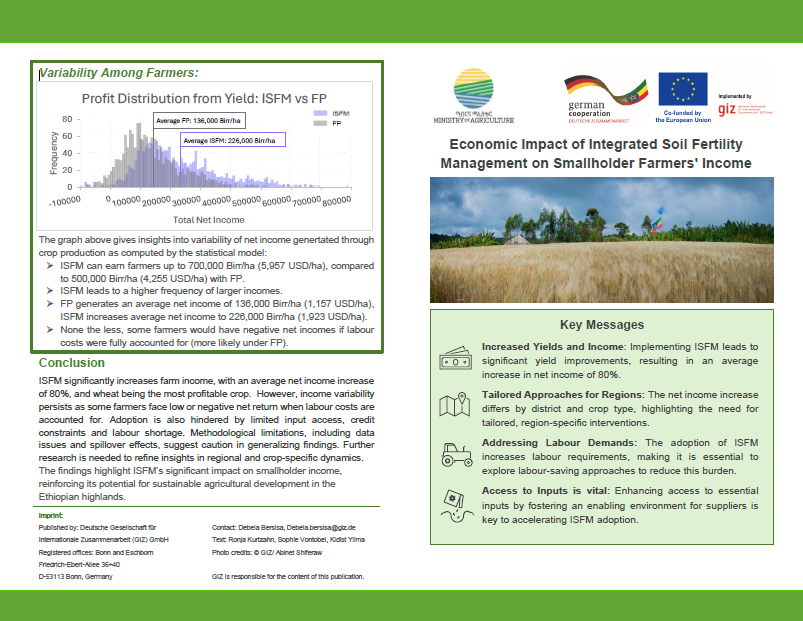
ISFM significantly increases farm income, with an average net income increase of 80%, and wheat being the most profitable crop. However, income variability persists as some farmers face low or negative net return when labour costs are accounted for. Adoption is also hindered by limited input access, credit constraints and labour shortage. Methodological limitations, including data issues and spillover effects, suggest caution in generalizing findings. Further research is needed to refine insights in regional and crop-specific dynamics. The findings highlight ISFM’s significant impact on smallholder income, reinforcing its potential for sustainable agricultural development in the Ethiopian highlands.