Resource Library
Any CA4SH partner can submit a resource to the Library, where we hope to increase visibility of diverse work related to improving soil health globally.
Please send a web link or a file to communications@coalitionforsoilhealth.org if you would like to submit a resource.
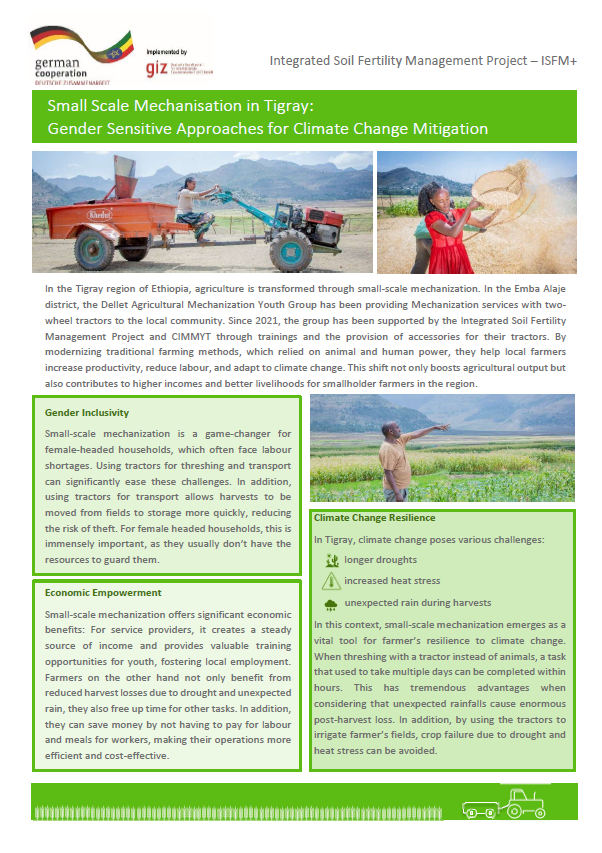
Small Scale Mechanisation in Tigray: Gender Sensitive Approaches for Climate Change Mitigation
In the Tigray region of Ethiopia, agriculture is transformed through small-scale mechanization. In the Emba Alaje district, the Dellet Agricultural Mechanization Youth Group has been providing Mechanization services with twowheel tractors to the local community. Since 2021, the group has been supported by the Integrated Soil Fertility Management Project and CIMMYT through trainings and the provision of accessories for their tractors. By modernizing traditional farming methods, which relied on animal and human power, they help local farmers increase productivity, reduce labour, and adapt to climate change. This shift not only boosts agricultural output but also contributes to higher incomes and better livelihoods for smallholder farmers in the region.
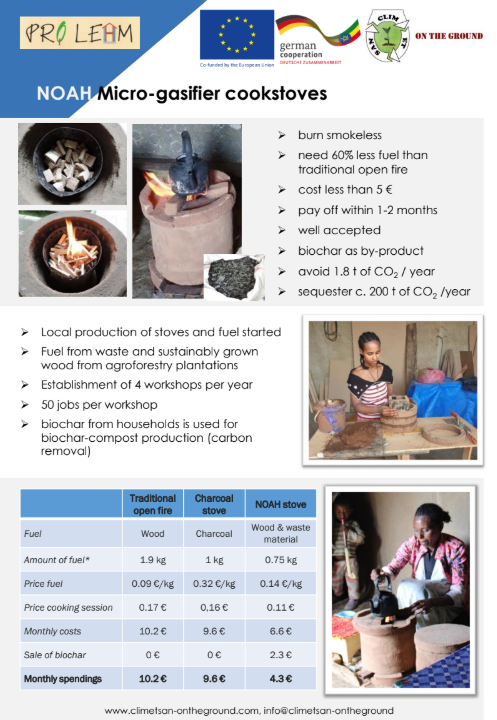
NOAH | Micro-gasifier cookstoves
➢ Local production of stoves and fuel started
➢ Fuel from waste and sustainably grown wood from agroforestry plantations
➢ Establishment of 4 workshops per year
➢ 50 jobs per workshop
➢ biochar from households is used for biochar-compost production (carbon removal)
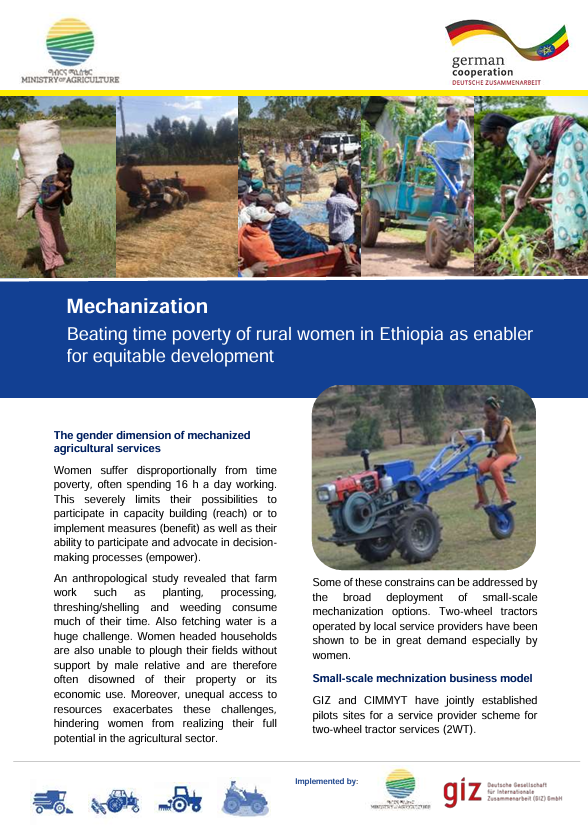
Mechanization | Beating time poverty of rural women in Ethiopia as enabler for equitable development
Women suffer disproportionally from time poverty, often spending 16 h a day working. This severely limits their possibilities to participate in capacity building (reach) or to implement measures (benefit) as well as their ability to participate and advocate in decision-making processes (empower).
An anthropological study revealed that farm work such as planting, processing, threshing/shelling and weeding consume much of their time. Also fetching water is a huge challenge. Women headed households are also unable to plough their fields without support by male relative and are therefore often disowned of their property or its economic use. Moreover, unequal access to resources exacerbates these challenges, hindering women from realizing their full potential in the agricultural sector.
Some of these constrains can be addressed by the broad deployment of small-scale mechanization options. Two-wheel tractors operated by local service providers have been shown to be in great demand especially by women.

Gender in Soil Matters: Comparative Insights from Multi-Country Gender Analyses
This synthesis report examines how gender is implicated in soil health interventions across diverse country contexts, and how Soil Matters as a global programme can respond with both gender-responsive and gender-transformative approaches. It draws on national gender analyses conducted between 2024–2025, offering cross-country insights, strategic recommendations, and key entry points to ensure that gender equality is not only acknowledged but actively pursued within the programme’s design, delivery, and scaling pathways.nger. Depending on the climate scenario, up to 80 million additional people could be at risk of hunger due to climate change (IPCC 2022).

Femmes et Sol au Benin | Les Femmes - Atrices Cles dans la Protection des Sols
Les actions Genre du projet sont orientées par la stratégie Genre de la GIZ qui vise l'égalité des sexes en son sein et dans ses activités dans les pays partenaires. Elles contribuent également à la Stratégie Nationale Genre du Secteur Agricole (SNGSA) libellée "La vision a besoin d'attitude: l'attitude rencontre l'action" du Bénin de 2021, dont l'objectif général est de réduire durablement les inégalités liées au genre dans le secteur agricole à travers le renforcement de la coordination des interventions en matière de genre, des capacités des femmes et autres groupes vulnérables ainsi que l'adoption des comportements sensibles au genre par tous les acteurs.
Ce document constitue une ressource précieuse pour tous ceux qui sont engagés dans la préservation et la valorisation des terres en Tunisie. Sa mise à disposition vise à encourager l’adoption de pratiques durables, contribuant ainsi à un avenir plus prometteur pour notre environnement et nos communautés.

STORIES OF IMPАСТ MAGAZINE | The Power of the People: Driving Africa's Food Agenda
This document, encompassing various success stories and strategic insights, highlights the diverse contributions of Non-State Actors in advancing agricultural development. It features case studies such as Pambana Enterprise in Zambia, which exemplifies youth-led initiatives in reducing post-harvest losses and promoting food security and climate resilience. The role of media, as demonstrated by Sydney Katunga Phiri, is underscored as crucial for translating complex agricultural policies, fostering public accountability, and building a continental narrative around key themes like youth agripreneurship, gender inclusion, and climate-smart agriculture.
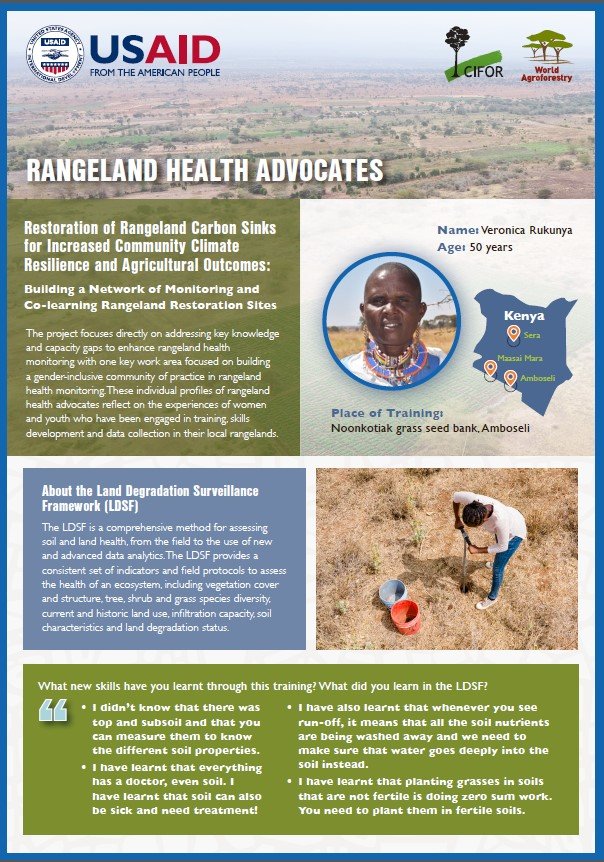
Advocate Briefs: Restoration of Rangeland Carbon Sinks for Increased Community Climate Resilience and Agricultural Outcomes
The Restoration of Rangeland Carbon Sinks focuses directly on addressing key knowledge and capacity gaps to enhance rangeland health monitoring with one key work area focused on building a gender-inclusive community of practice in rangeland health monitoring.
These individual profiles of rangeland health advocates reflect on the experiences of women and youth who have been engaged in training, skills development and data collection in their local rangelands.
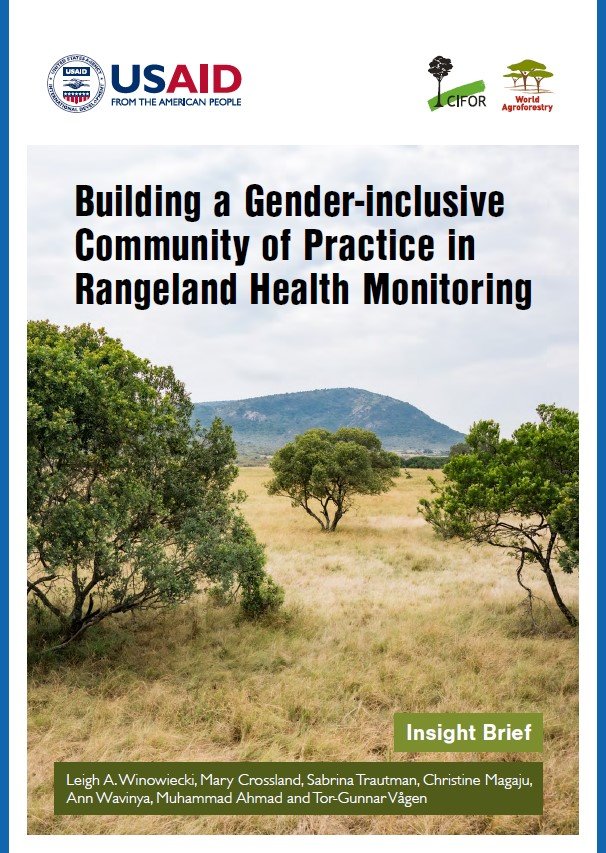
Building a Gender-inclusive Community of Practice in Rangeland Health Monitoring
This brief summarizes the capacity development activities undertaken by the project Restoration of Rangeland Carbon Sinks to build gender inclusive community of practice in rangeland health monitoring.
Specifically, the brief outlines the critical need to address gender inequalities in rangeland health monitoring and synthesises reflections from women and youth on skills they have built through capacity development activities. The brief also highlights the impact these activities are having not only in their own agency and development, but also the wider implications and impact they want to create in their communities as a result of the skills they have built and been exposed to.