
Resource Library
Any CA4SH partner can submit a resource to the Library, where we hope to increase visibility of diverse work related to improving soil health globally.
Please send a web link or a file to communications@coalitionforsoilhealth.org if you would like to submit a resource.
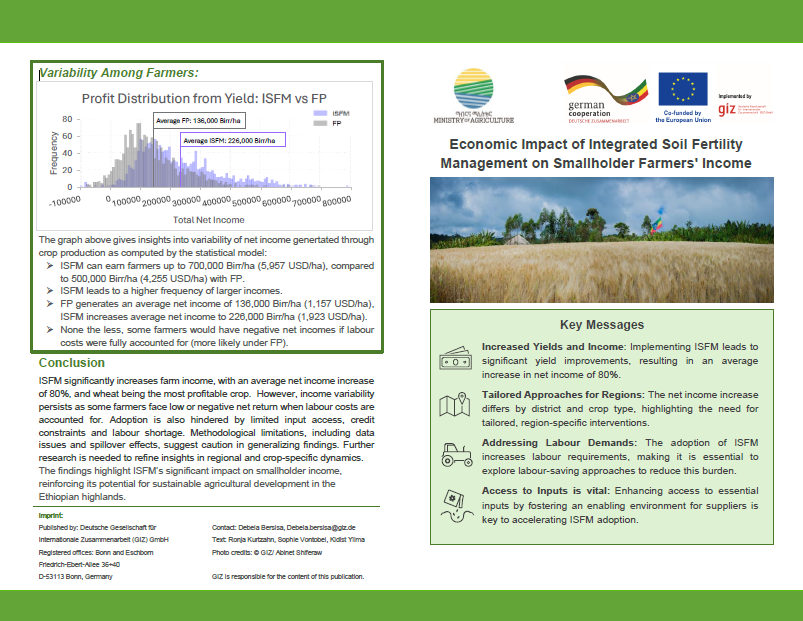
Economic Impact of Integrated Soil FertilityManagement on Smallholder Farmers' Income
ISFM significantly increases farm income, with an average net income increase of 80%, and wheat being the most profitable crop. However, income variability persists as some farmers face low or negative net return when labour costs are accounted for. Adoption is also hindered by limited input access, credit constraints and labour shortage. Methodological limitations, including data issues and spillover effects, suggest caution in generalizing findings. Further research is needed to refine insights in regional and crop-specific dynamics. The findings highlight ISFM’s significant impact on smallholder income, reinforcing its potential for sustainable agricultural development in the Ethiopian highlands.
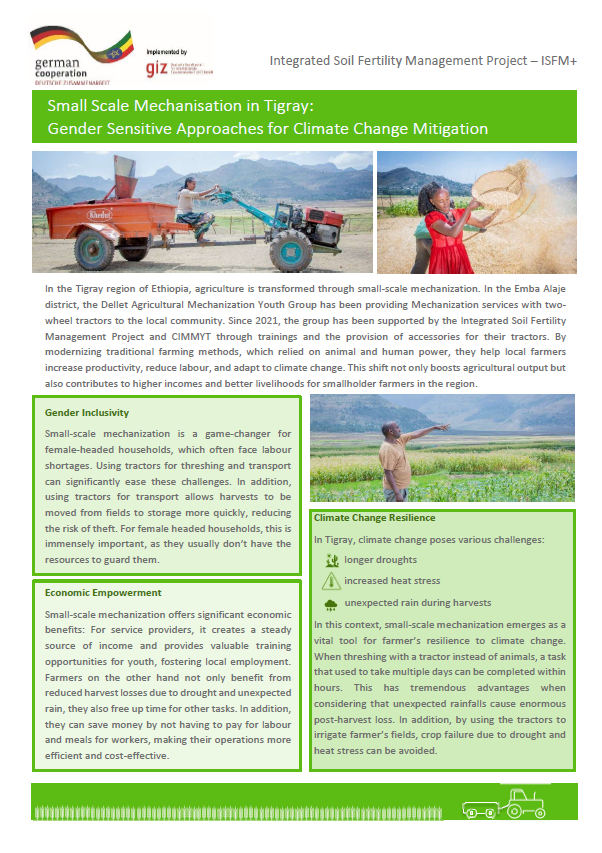
Small Scale Mechanisation in Tigray: Gender Sensitive Approaches for Climate Change Mitigation
In the Tigray region of Ethiopia, agriculture is transformed through small-scale mechanization. In the Emba Alaje district, the Dellet Agricultural Mechanization Youth Group has been providing Mechanization services with twowheel tractors to the local community. Since 2021, the group has been supported by the Integrated Soil Fertility Management Project and CIMMYT through trainings and the provision of accessories for their tractors. By modernizing traditional farming methods, which relied on animal and human power, they help local farmers increase productivity, reduce labour, and adapt to climate change. This shift not only boosts agricultural output but also contributes to higher incomes and better livelihoods for smallholder farmers in the region.
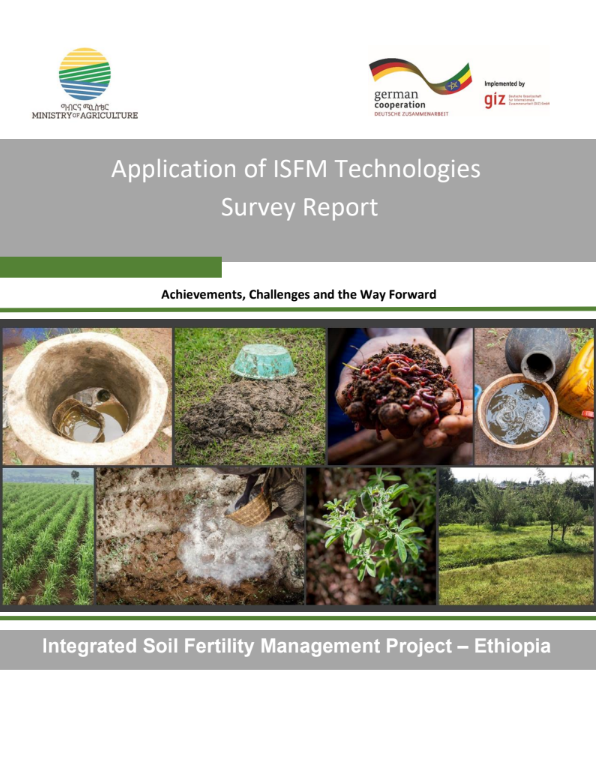
Application of ISFM Technologies Survey Report
Agriculture is the primary economic activity in Ethiopia, with the majority of the population engaged in farming. However, food security remains a significant challenge, largely due to issues such as soil degradation and low fertility. Addressing soil fertility is essential for improving the livelihoods of Ethiopian farmers.To tackle this issue, the Integrated Soil Fertility Management (ISFM+) project promotes a set of integrated soil fertility management (ISFM) technologies and emphasizes peer learning and participatory approaches to enhance the effectiveness of these interventions. This report presents the findings of a 2024 survey aimed at tracking the dissemination, application, and adoption of ISFM technologies by smallholder farmers in the project’s intervention areas.