Benchmarking Soil Health Dairy Soil & Water Regeneration, Driftless Region, Wisconsin
Soil Health Institute
Long-term adoption of soil health management systems can reduce production costs, build resilience to extreme weather, and increase yield.
What’s been missing, however, is an understanding of how healthy local soils can be and which management practices are helping growers in the region improve their soil health.
To address this gap, the Soil Health Institute sampled soils at 57 fields in the Driftless Region of Wisconsin in spring 2022, representing over 650,000 acres of alfalfa and corn silage production.
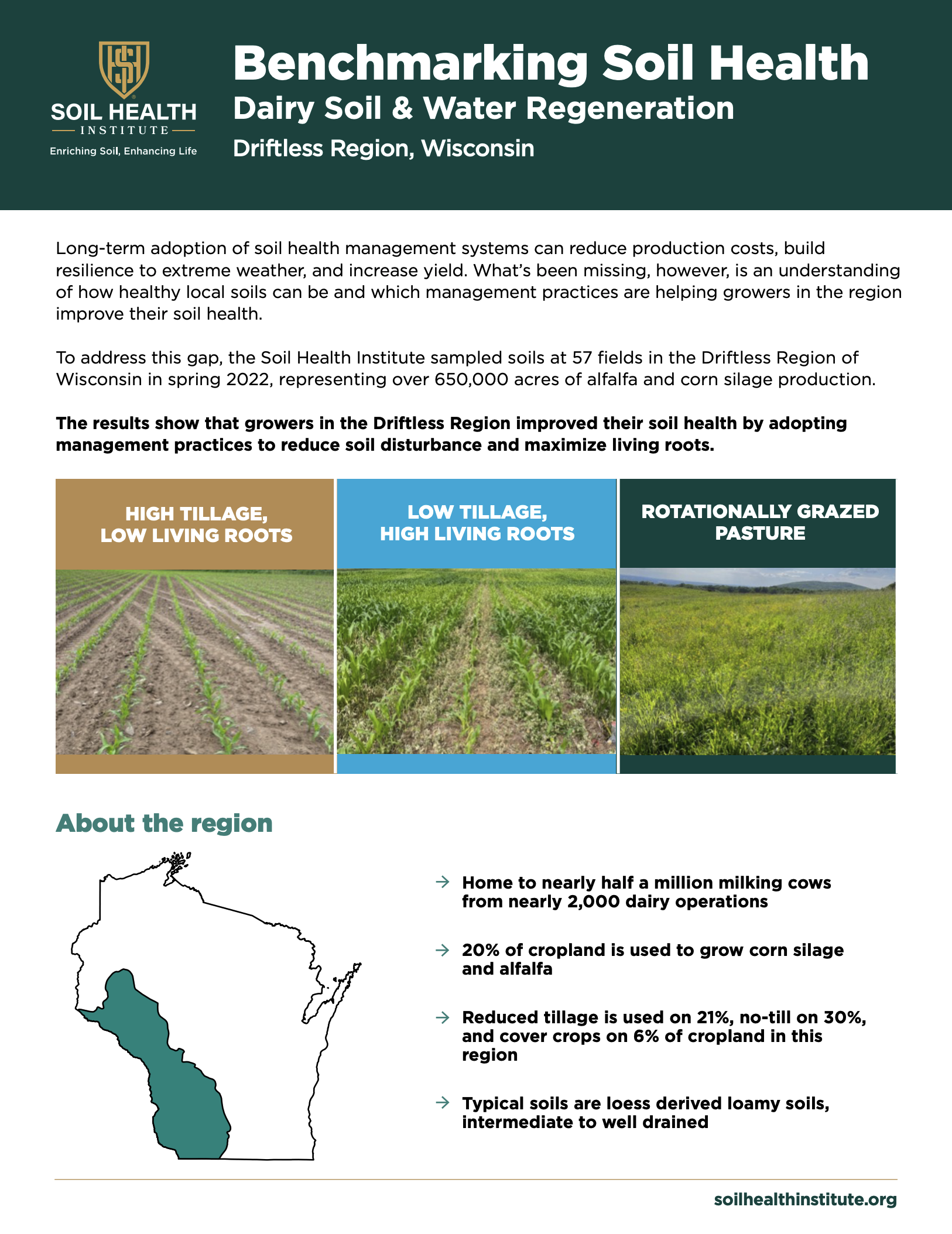
The results show that growers in the Driftless Region improved their soil health by adopting management practices to reduce soil disturbance and maximize living roots.