Story by Mercy Musyoka & Eugene Mbogholi
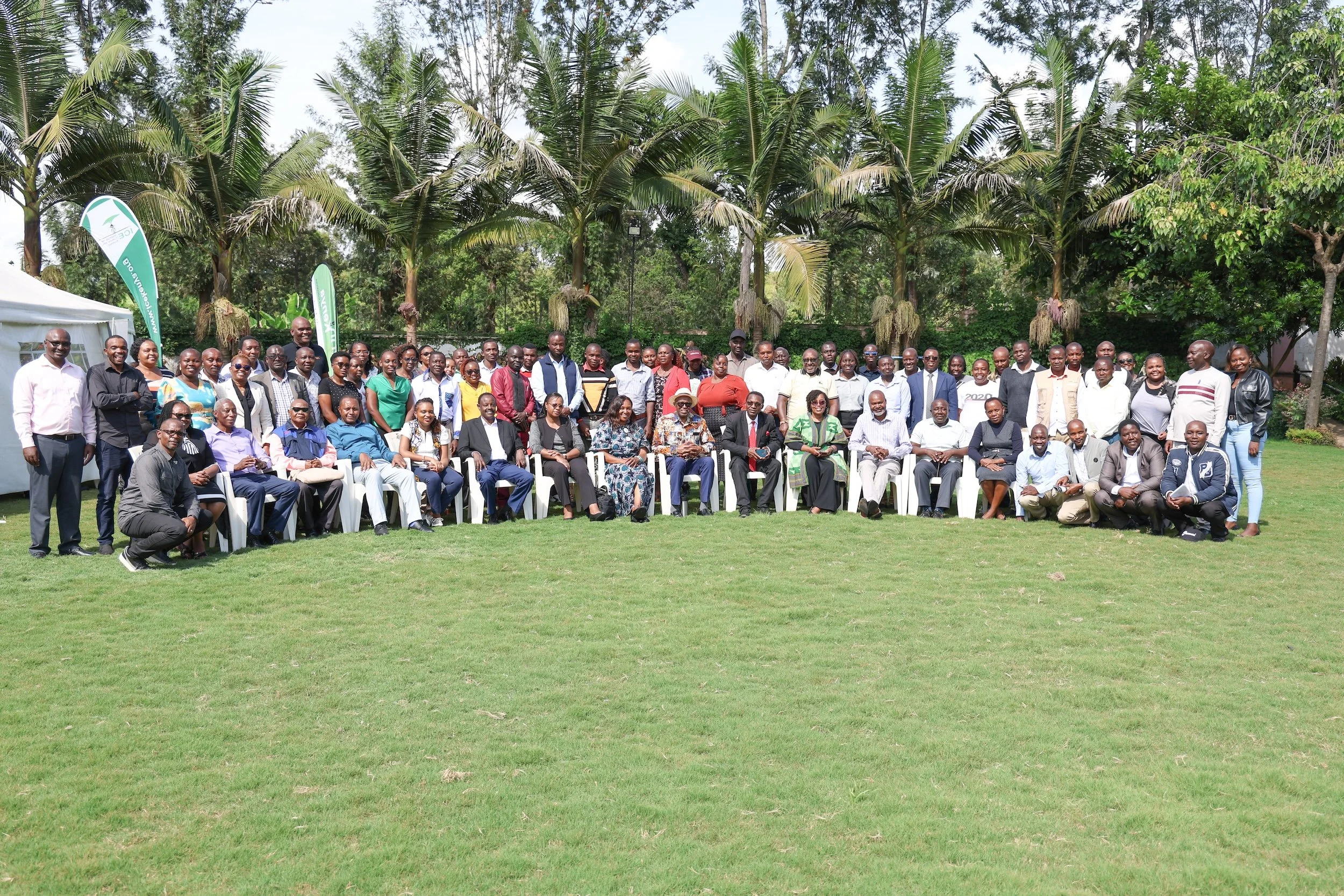
Participants group photo
On a cool morning at Mima Gardens in Murang’a County, more than 70 people gathered around a shared idea: that healthy soils can help shape healthier futures for children.
Farmers, researchers, government representatives, and practitioners — over 15 stakeholder groups in total — came together on 1 April 2026 for the joint inception of the Agroecology and School Feeding Initiative. What could have been just another meeting quickly revealed itself as something more: the beginning of a collective effort to reconnect food, learning, and land.
At its heart, the initiative is grounded in a simple but powerful premise: children learn better when they are nourished — and that nourishment can come from the land around them.
Over the next four years, with support from the Rockefeller Foundation, the project will take root in 30 schools across Murang’a County. Each school will establish its own kitchen garden and 4K Club, creating spaces where students can grow, learn, and engage directly with food systems.
Beyond the school gates, local smallholder farmers will play a central role. Some farms will become demonstration sites for agroecology, linking classrooms to communities, and production to plate.
Why schools — and why now?
Two realities shaped the conversations in Murang’a.
The first is immediate: in many parts of Kenya, children struggle to attend or focus in school due to lack of food. Strengthening school feeding programmes is not just about nutrition — it’s about enabling learning.
The second is systemic: the way food is grown matters. By embedding agroecological practices into school systems, the initiative supports not only healthier meals, but healthier landscapes and communities.
Together, these threads form a bigger picture — one where food security, education, and environmental stewardship are deeply intertwined.
A county ready to lead
Murang’a was not chosen by chance.
It is the first county in Kenya to adopt an agroecology food systems policy. It already has a well-established school feeding programme. And perhaps most importantly, it has a strong network of farmers, institutions, and leaders willing to make this work.
This combination — policy, practice, and people — creates fertile ground for innovation.
Marking a milestone, planting for the future
To mark its 112th anniversary, the Rockefeller Foundation planted 112 trees across the target schools — a symbolic gesture, but also a practical one.
Trees, like this initiative, represent long-term thinking: investing today for benefits that will unfold over years.
As shared during the meeting, the Foundation’s support for school meals goes beyond nutrition. It is about improving learning outcomes, reducing poverty, building climate resilience, and strengthening local economies by linking smallholder farmers to markets.
But success, as one speaker noted, will depend on something deeper: continuous learning, strong collaboration, and sustained investment.
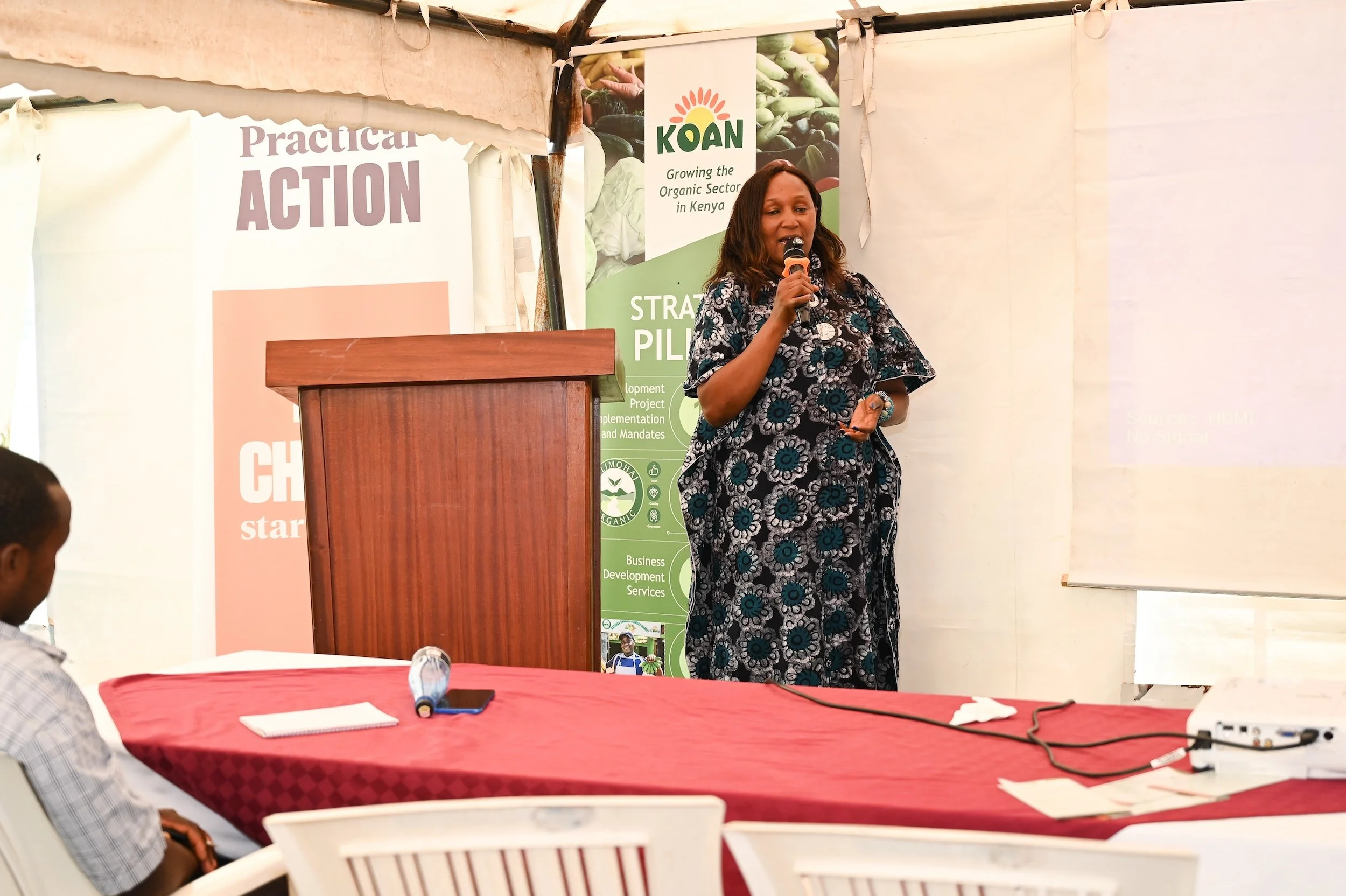
Madam Betty from the Rockefeller Foundation
Where soil meets data
While the initiative is rooted in the soil, it is also powered by data.
CIFOR-ICRAF will support implementation through tools like the Regreening App — enabling real-time monitoring of farms supplying school meals. Even in areas with limited connectivity, the app works offline, ensuring accessibility for farmers and communities.
Alongside it, Digital Green’s AI-assisted Farmer Chat application will offer farmers timely advice on crops, livestock, weather, and markets — helping translate knowledge into better decisions on the ground.
Together, these tools bring a new dimension to agroecology: one where local knowledge and digital innovation reinforce each other.
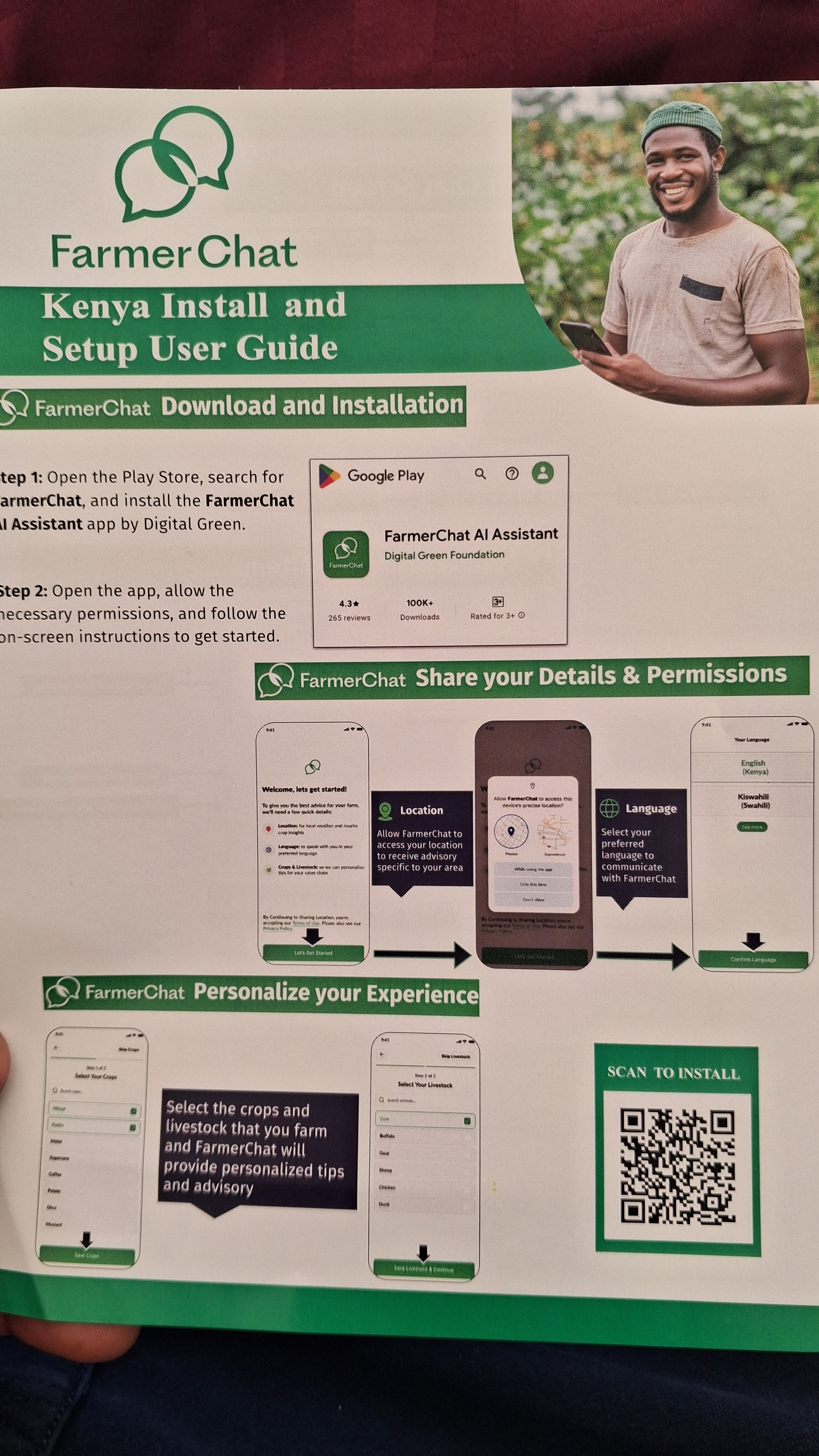
Farmer Chat App installation procedure
Building something that lasts
As the day unfolded, one theme kept resurfacing: this is not a project that can succeed in isolation.
Participants called for:
Regular moments to reflect and learn together
Greater support for farmers, including access to mobile tools
Stronger engagement with education authorities
Deeper community involvement to foster ownership
And crucially, new ways to think about long-term investment
Because ultimately, this is about more than delivering meals or planting gardens. It is about building systems that can sustain themselves — socially, economically, and ecologically.
A living example of collective action
For the Coalition of Action 4 Soil Health (CA4SH), initiatives like this reflect what becomes possible when diverse partners come together around a shared goal.
In Murang’a, that goal is taking shape — in school gardens, in farmers’ fields, and in the connections being built between them.
It is still early days. But already, the seeds have been planted.