
13 November 2026
At COP31 in Türkiye, CA4SH and partners brought together researchers, policymakers, investors, farmers and youth to explore how stronger evidence can unlock climate finance and accelerate the transformation of agricultural and food systems.
Climate finance has the potential to catalyse the widespread transformation of agricultural systems, strengthen food security for all and build global resilience to climate change. But how can we ensure that investments are informed by reliable evidence, respond to farmers' needs, and deliver measurable results?
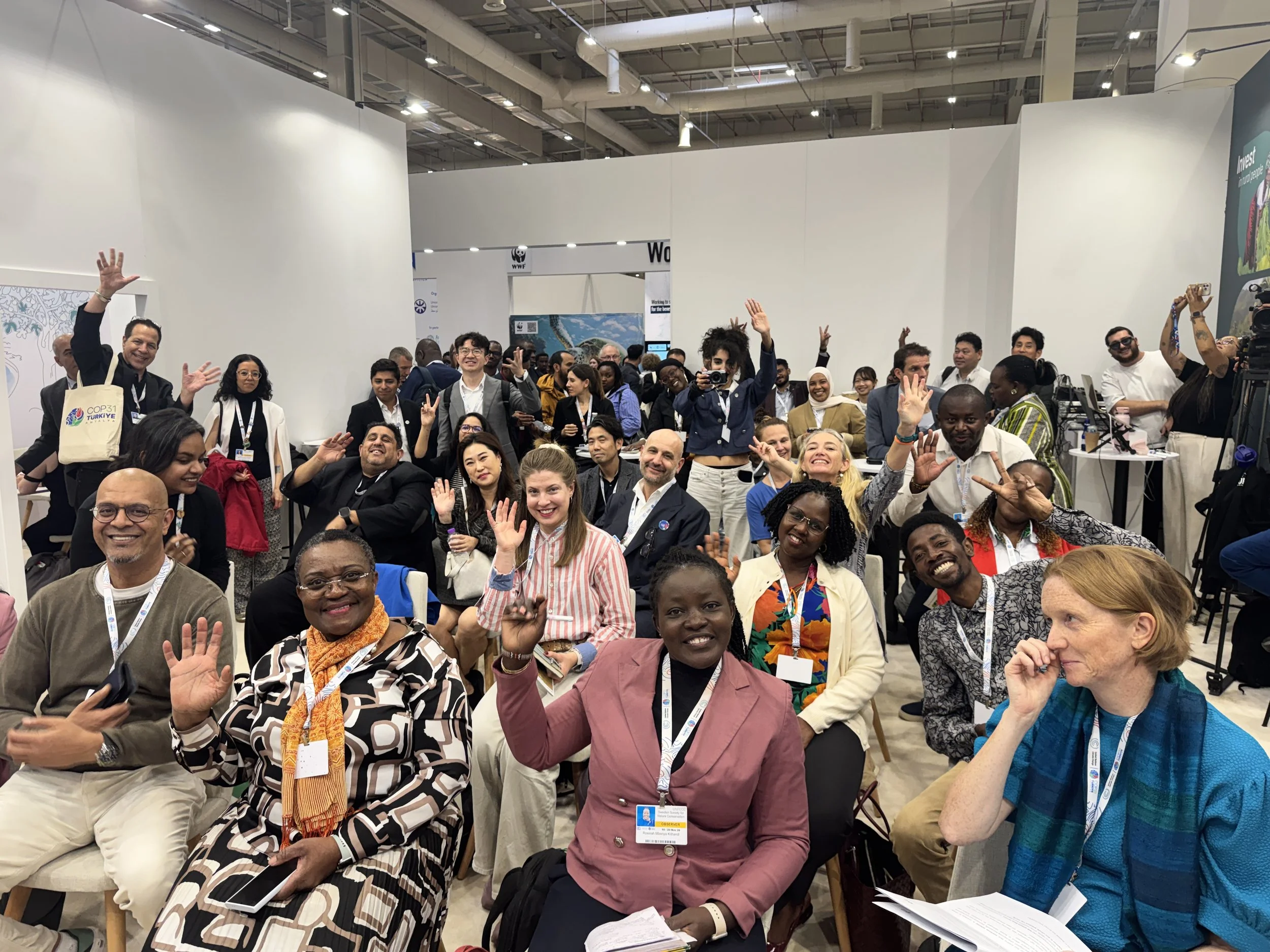
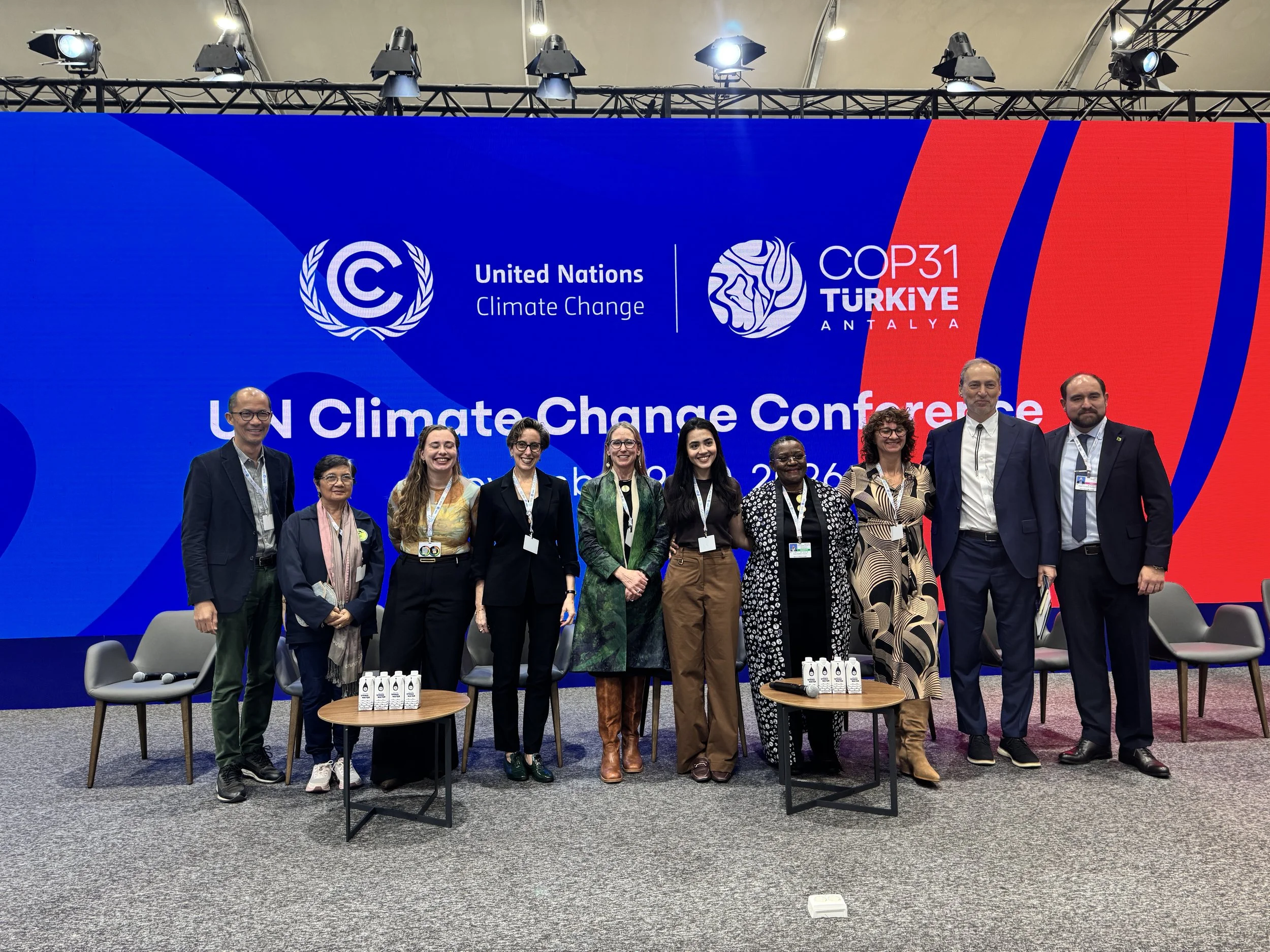
This question was at the heart of Evidence-based Climate Finance for Resilient Agri-food Systems, a session held on 13 November at the COP31 Food & Agriculture Pavilion in Antalya, Türkiye.
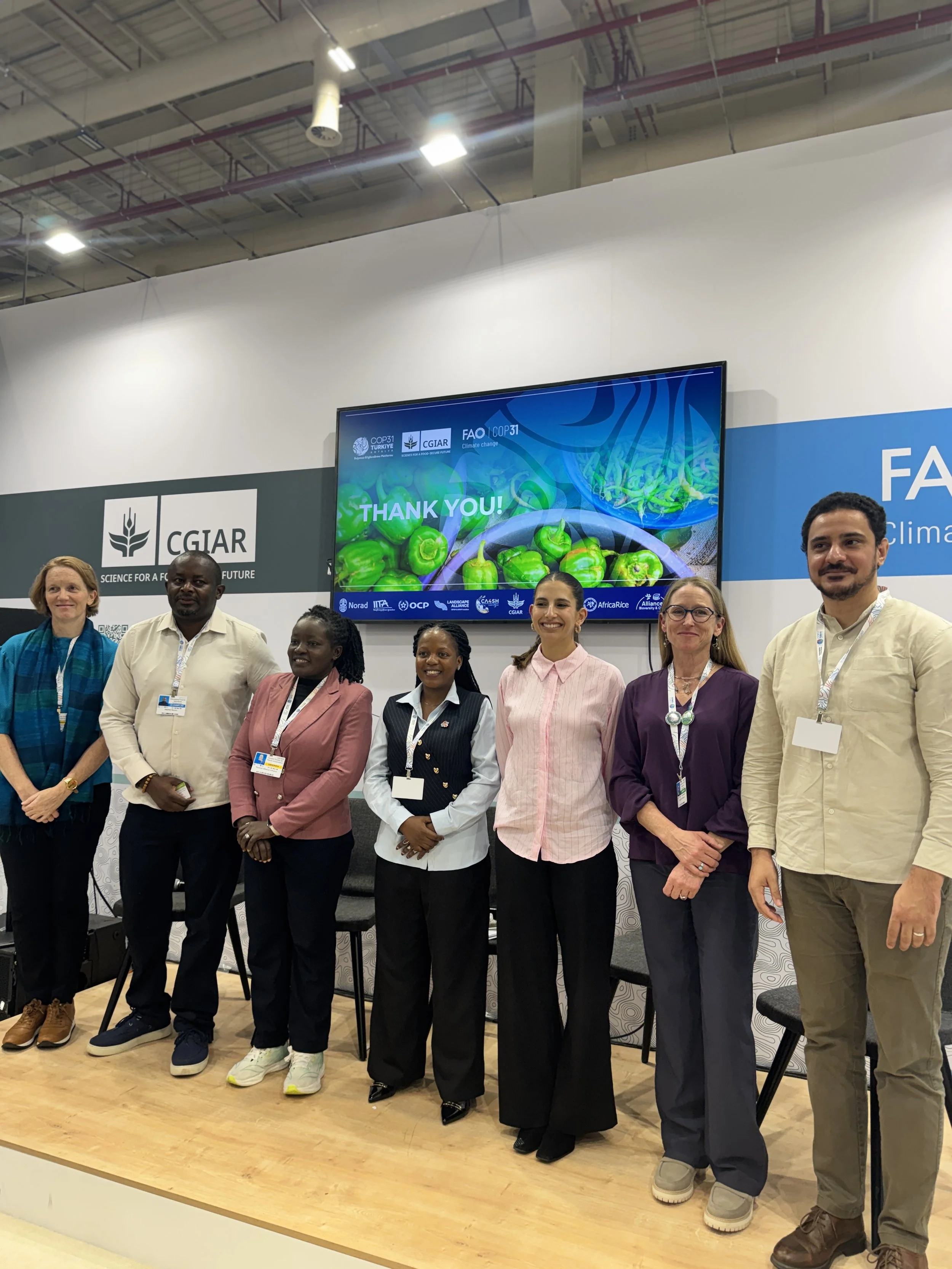
Image: Narges Maddahi, Landscape Alliance
Co-organised by the Landscape Alliance (CIFOR & ICRAF), Coalition of Action 4 Soil Health (CA4SH), Deutsche Gesellschaft für Internationale Zusammenarbeit (GIZ), Norwegian Agency for Development Cooperation (Norad), UM6P-J-PAL Applied Lab for Agriculture, OCP Nutricrops, CGIAR, Africa Rice Center (AfricaRice), International Institute of Tropical Agriculture (IITA), Alliance of Bioversity International and CIAT, and other partners, the session explored how research, soil data, and practical experience can inform climate finance decisions and strengthen national implementation.
Moderated by Dr Leigh Winowiecki, CA4SH Co-lead and Global Research Lead for Soil and Land Health at Landscape Alliance, the discussion connected evidence generation with the policies, partnerships and investments needed to deliver meaningful change.
“Investment in agriculture and food systems delivers some of the highest-value climate adaptation outcomes, but only when grounded in robust evidence that reaches those who can act on it.”
Connecting evidence with investment
A central theme was the need to bridge the gap between generating scientific evidence and using it to guide decisions.
The session examined how rigorous impact evaluations, strong baseline assessments and on-going monitoring can help identify effective agricultural interventions, reduce investment uncertainty and direct resources towards solutions that deliver targeted, measurable benefits for farmers.
The discussion also highlighted CGIAR's Enhancing Sustainable Land Management and Climate-Resilient Agri-food Systems in Côte d'Ivoire (LARACI) initiative. Approved in July 2026, this USD 50 million Green Climate Fund investment offers a model for translating research into bankable climate action through innovative financing mechanisms and national partnerships.
“I think something that is really essential when it comes to LARACI is that it is a direct translation of the CGIAR science into investment.”
Building the foundations for soil data-driven solutions
For CA4SH and the Landscape Alliance, strengthening the evidence base is already central to ongoing work with partners.
The Norad-funded project, Establishing an Ecosystem of Soil Data-Driven Services, is working across Kenya, Tanzania, Ghana and Malawi to strengthen soil information systems and make soil data more accessible, interoperable and useful for decision-making.
By connecting research institutions, governments and other stakeholders, the initiative aims to ensure that soil data informs agricultural planning, land restoration and investment, while supporting practical services that respond to local needs.
The COP31 discussion reinforced the importance of translating this evidence into tools and services that governments, investors and farmers can use to make informed decisions.
The initiative reached a significant milestone on 20 August 2026 with the open-source launch of SoilHive, a platform designed to make soil data more accessible, interoperable and useful for decision-making.
Developed in partnership with the Varda Foundation, Landscape Alliance (CIFOR-ICRAF), CA4SH and national stakeholders in Kenya, Ghana, Malawi and Tanzania, SoilHive enables institutions to retain ownership and control of their data while making information easier to discover and share.
The launch attracted more than 200 registrations and highlighted progress across the four participating countries, from national digital soil mapping and improved fertiliser recommendations to strengthening agricultural advisory services and evidence-based policy.
The initiative also contributed a knowledge product launched at UNCCD COP17, exploring how interoperable soil information systems can support national reporting commitments across the Rio Conventions. Together, these milestones represent an important step towards translating soil data into practical solutions for land restoration, climate resilience and sustainable agriculture.
From Soil Data to Action: The Role of Soil Information Systems for the Rio Conventions
Turning soil knowledge into implementation
The session also drew on more than ten years of experience from GIZ's ProSoil and Soil Matters programmes, highlighting the importance of connecting scientific evidence with practical implementation and national policy frameworks.
Through GIZ SOILutions, these experiences offer valuable insights into how research, local knowledge and institutional partnerships can support sustainable soil management and strengthen agricultural resilience.
Examples from across the GIZ portfolio are available in this dedicated library
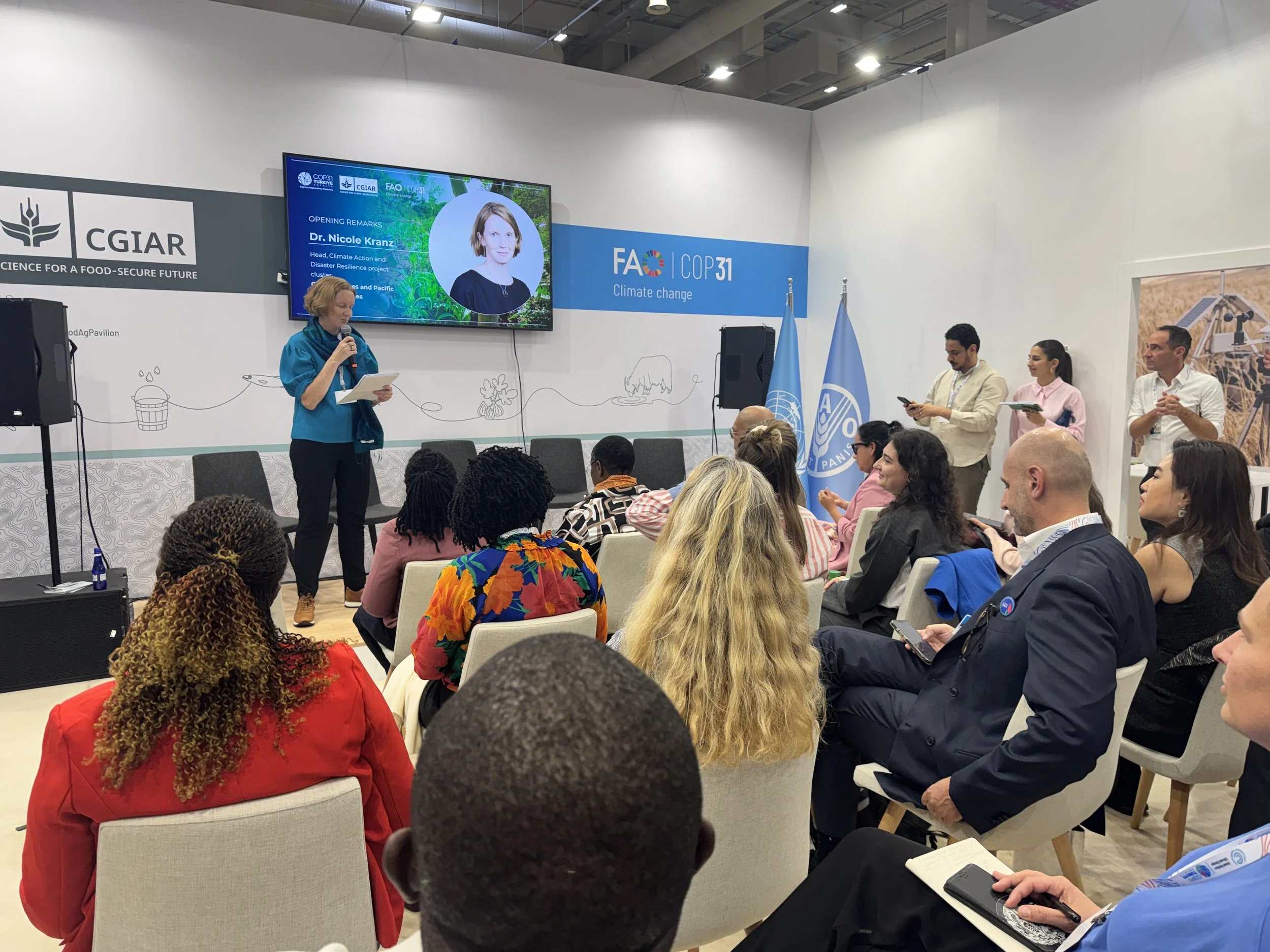
Image: Narges Maddahi, Landscape Alliance
“We increasingly know what works in making agriculture more sustainable and climate resilient, yet translating this evidence into climate finance and investment at scale remains difficult.”
Dr. Nicole Kranz, Head of the Climate Action and Disaster Resilience project cluster at GIZ Philippines and Pacific Island Countries, highlighted the growing body of evidence on effective approaches to sustainable, climate-resilient agriculture, while acknowledging the persistent challenge of translating this knowledge into investment at scale. Despite the significant potential of agriculture and food systems to support climate adaptation, mitigation, biodiversity and rural livelihoods, access to finance remains a major barrier, particularly for smallholder farmers and sustainable land management initiatives.
Bringing youth perspectives into climate finance
Young people have an important role in generating, interpreting and applying evidence to address agricultural and environmental challenges.
Youth perspectives formed an important part of the discussion, particularly around barriers to accessing finance, influencing investment decisions and ensuring that young people have meaningful opportunities to contribute to agricultural transformation.
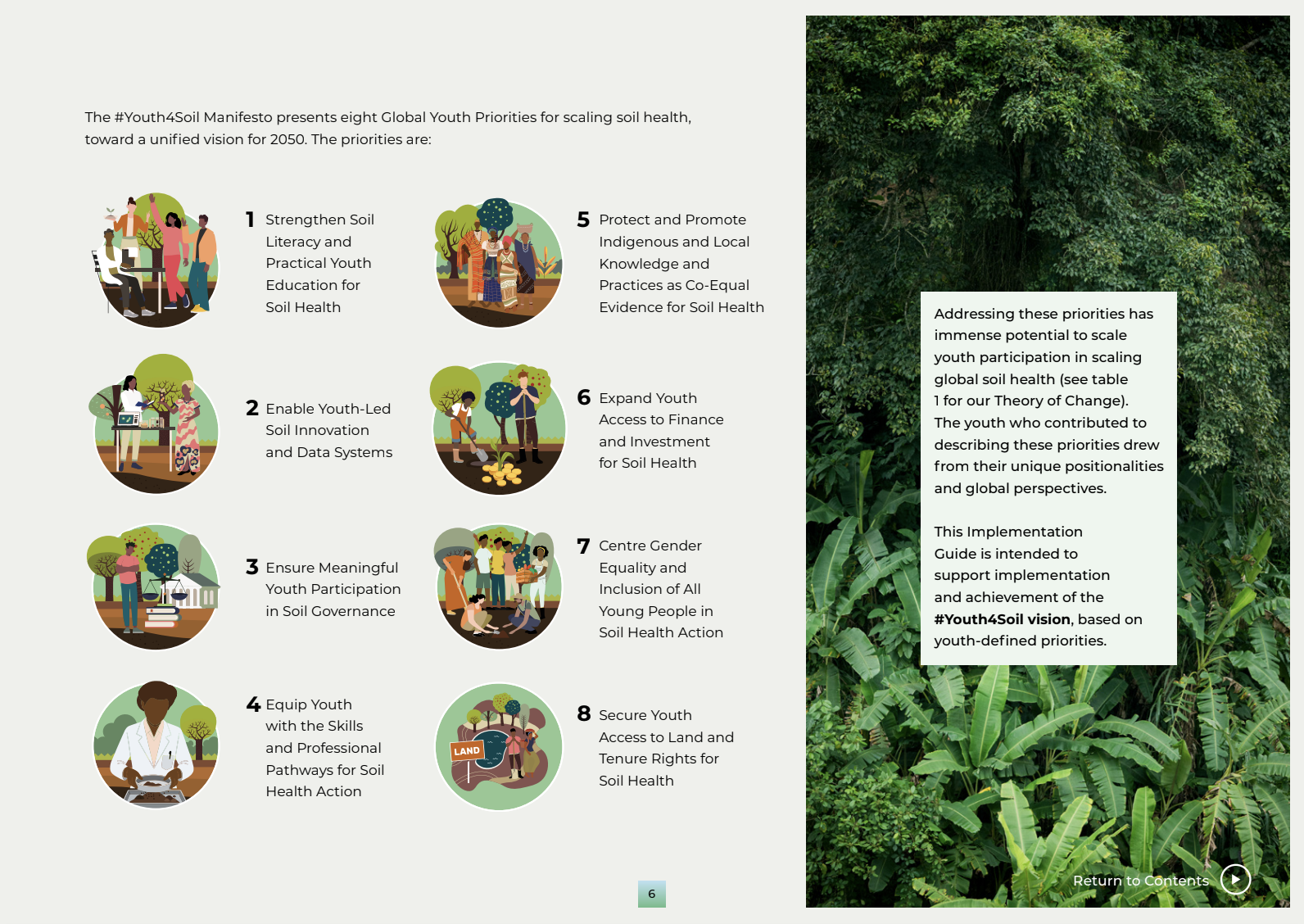
These themes connect directly with CA4SH's #Youth4Soil initiative and the #Youth4Soil Manifesto Implementation Guide, launched at UNCCD COP17 in Mongolia.
Developed to help translate young people's priorities into practical action, the Guide provides a framework for strengthening youth engagement in soil health research, policy and implementation.
Rita Lousa, Partnerships, Knowledge and Community Facilitator at YOUNGO, called for a rethink of climate finance to make funding more accessible to young entrepreneurs and youth-led initiatives.
Highlighting examples of projects launched with personal savings and small grants, including a solar drip irrigation initiative that began with just US$2,500, she emphasised that even modest amounts of funding can deliver meaningful results.
Of the 100 youth-led projects showcased, more than half require US$10,000 or less to scale up solutions already being implemented on the ground. Lousa stressed the need for more flexible, accessible financing mechanisms that recognise the potential of small-scale, youth-driven climate action.
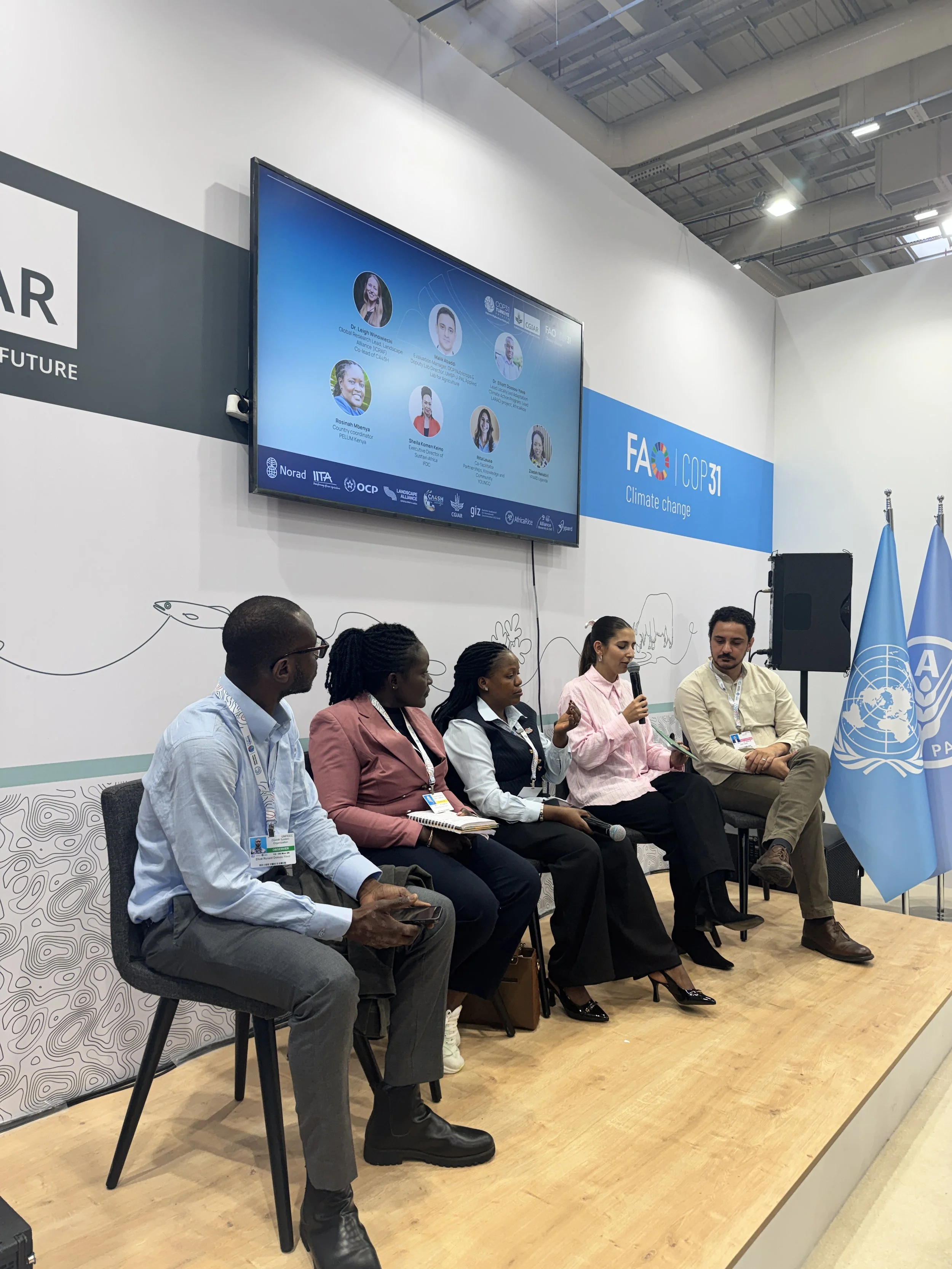
Image: Narges Maddahi, Landscape Alliance
“I think it’s really important to think about accessibility of finance in a totally different way than we are used to.”
From commitments to delivery
Beyond scientific evidence, the session examined the financing mechanisms, institutional arrangements and policy frameworks needed to support smallholder farmers.
Contributions from organisations representing agricultural development, finance and farmer interests brought attention to the practical realities of financing agricultural transitions, including how investments can better reach farmers and support sustainable livelihoods.
The discussion also explored how stronger alignment between Nationally Determined Contributions (NDCs), National Adaptation Plans (NAPs), National Biodiversity Strategies and Action Plans (NBSAPs), and Land Degradation Neutrality (LDN) targets could accelerate coordinated investment.
Stephen Muchiri, CEO of the Eastern Africa Farmers Federation (EAFF), highlighted the longstanding neglect of soil health, attributing it partly to limited awareness and the perception that investing in soils delivers slow returns. He noted that public institutions have also contributed to this underinvestment, with insufficient public resources directed towards soil health despite its fundamental importance to agriculture. His remarks underscored the need to rethink investment priorities and recognise soil health as a long-term investment rather than an immediate financial return.
“I think it’s very clear that evidence must precede investment. We have to generate evidence. We have to co-design this. We have to work together with researchers so that we can be able to attract these investments.”
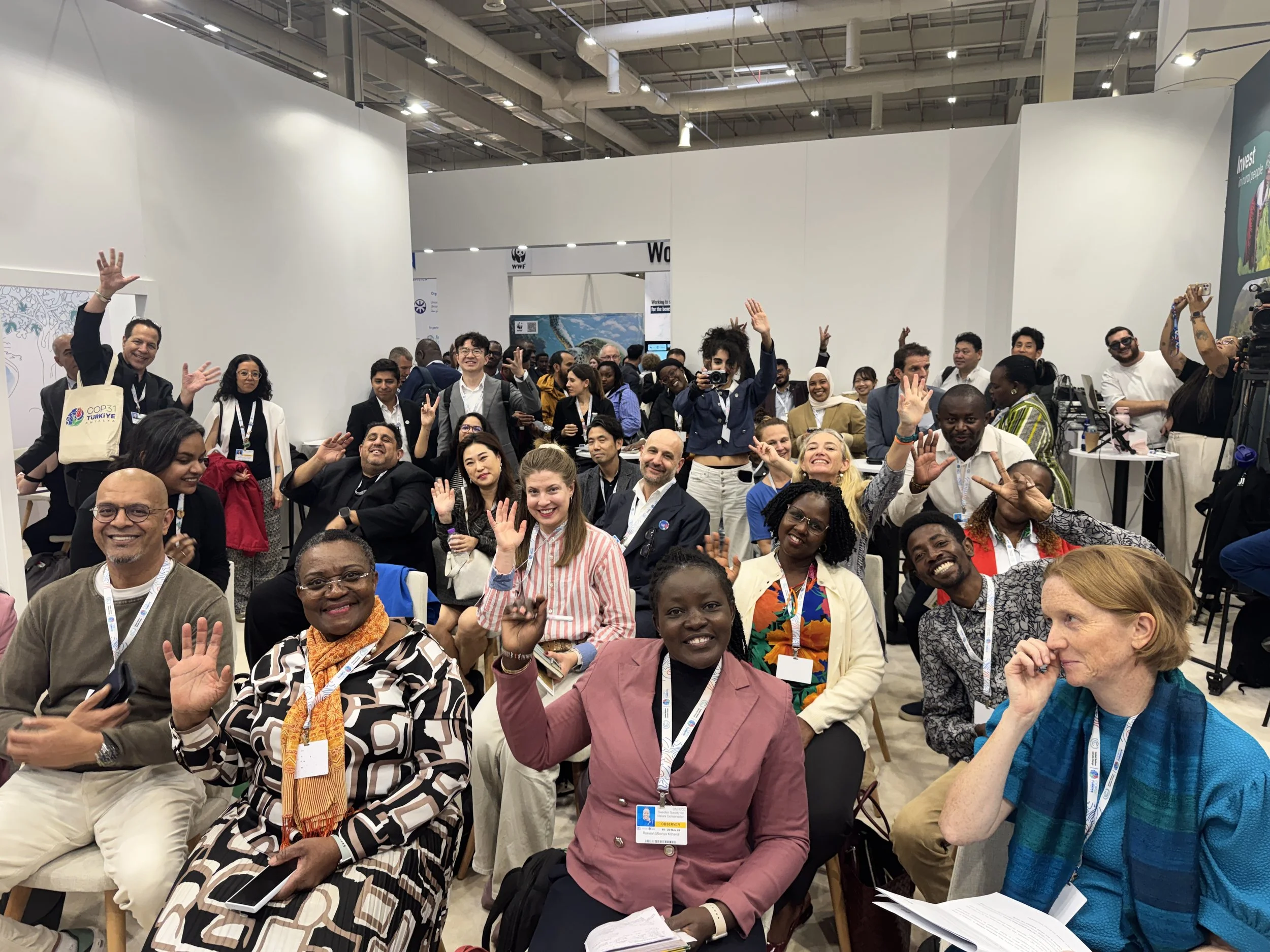
Image: Narges Maddahi, Landscape Alliance
For CA4SH and its partners, the opportunity lies in connecting these efforts: strengthening soil evidence, building institutional capacity, supporting young people and farmers, and creating financing pathways that turn knowledge into action.
As COP31 advances the global conversation from climate commitments to implementation, healthy soils offer a powerful starting point for investments that deliver across food security, climate resilience, biodiversity and land restoration.
The challenge now is to ensure that evidence reaches those who can act on it — and that finance follows.

Youth from across Africa, Europe, and Asia gathered for the "From Soil Data to Youth Action" #Youth4Soil Solutions Showcase, on Thursday, 15th October, 2026, organized by #Youth4Soil, an initiative of the Coalition of Action for Soil Health (CA4SH).
The virtual showcase explored a critical question: How are young people transforming soil data into real-world action? Through practical examples from Zambia, Botswana and Mongolia, participants demonstrated how soil data is shaping decisions, improving livelihoods, restoring landscapes and creating new opportunities for youth engagement.