From Data to Decisions: CA4SH Showcases Global Soil Action at the 14th Global Soil Partnership General Assembly
On the 19th of June 2026, Daniela Solis addressed the 14th Global Soil Partnership (GSP) General Assembly on behalf of the Coalition of Action for Soil Health (CA4SH) and the Landscape Alliance (CIFOR-ICRAF), delivering a clear message: the future of food systems, climate resilience, and ecosystem restoration depends on translating soil evidence into policy and investment decisions.
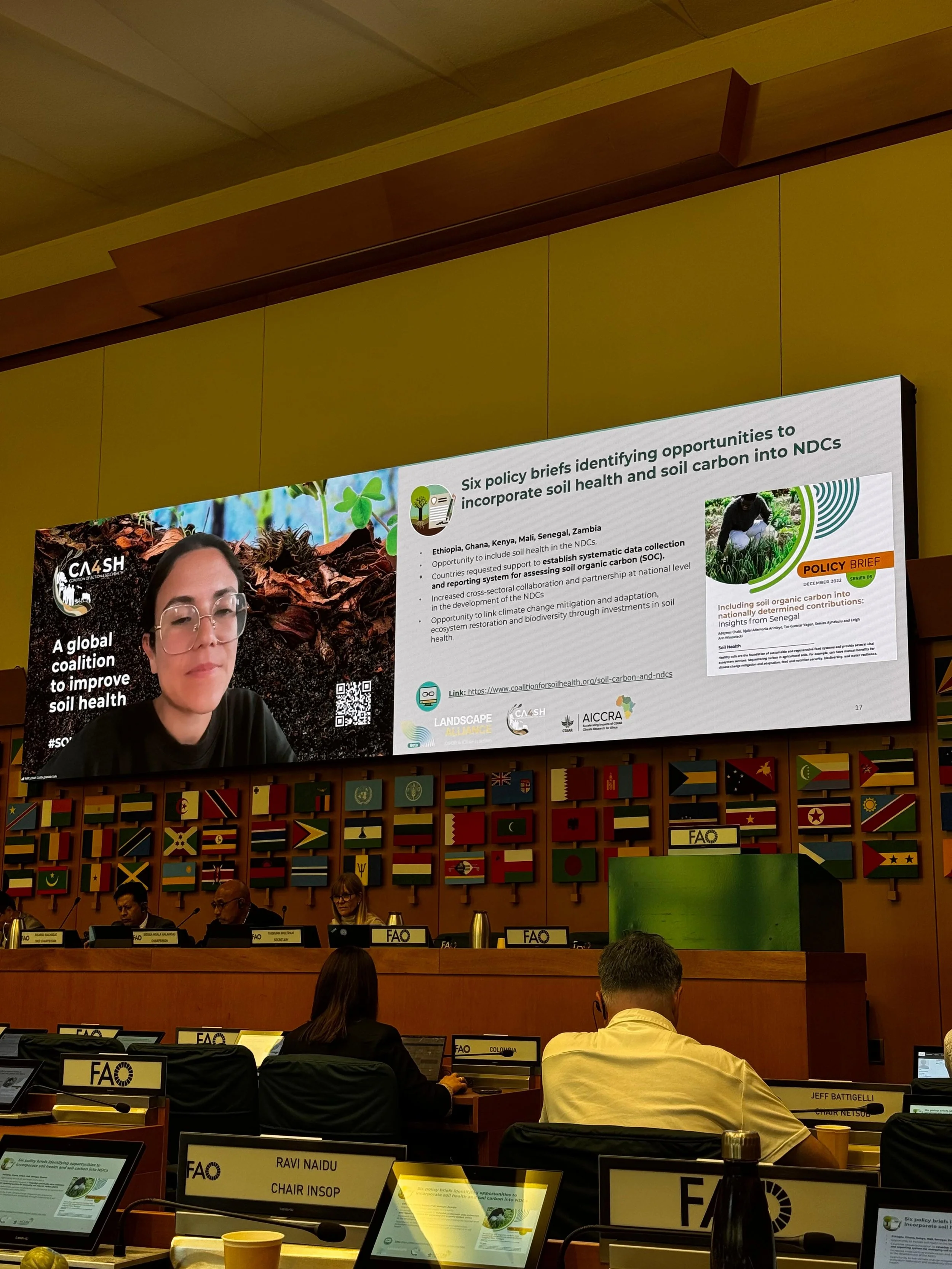
CA4SH Coordinator Daniela Solis presents at the 14th Global Soil Partnership General Assembly
The presentation highlighted both the urgency of the challenge and the growing momentum behind global soil action.
Healthy soils underpin 95% of the food we eat and have the potential to increase food production significantly through sustainable management. Yet soil erosion remains the most widespread form of land degradation, threatening livelihoods, biodiversity, and progress toward the Sustainable Development Goals.
“Business as usual is not an option,” she emphasised, pointing to the need for robust, open, and harmonised soil data systems that enable governments and stakeholders to make informed decisions. While soil data has expanded rapidly in recent years, fragmentation and limited capacity to translate information into action continue to present major barriers.
At the international level, CA4SH has championed initiatives such as the Soil Health Resolution and the #COPSoil campaign, helping ensure soil health remains firmly on the agenda at major climate, biodiversity, and desertification negotiations. These collective advocacy efforts have contributed to significant milestones, including the inclusion of soil health commitments in the COP28 UAE Declaration and the Riyadh Action Agenda adopted at UNCCD COP16.
Across Africa, CA4SH is collaborating with AUDA-NEPAD, the African Union, and partners to strengthen soil health monitoring and policy implementation under the Africa Fertilizer and Soil Health Action Plan. This includes co-leading the African Union Soil Health Monitoring Taskforce, which is developing harmonised indicators and supporting their integration into continental reporting frameworks.
The presentation also showcased practical implementation through a three-year initiative supported by the Norwegian Agency for Development Cooperation (NORAD). Operating across Kenya, Ghana, Malawi, and Tanzania, the project is building dynamic, user-centred soil data services that support national decision-making while contributing to regional harmonisation and knowledge sharing.
Early lessons reinforce the importance of interoperable data systems, diverse knowledge sources, and multi-stakeholder collaboration. They also highlight the need to make soil information more accessible and relevant for farmers, policymakers, and young people alike.
Looking ahead, CA4SH is helping advance regenerative agriculture through the COP30 Action Agenda’s Plan to Accelerate Regenerative Agriculture for Healthy Soil and Healthy Diets. The initiative seeks to strengthen the evidence linking healthy soils to nutrition outcomes while promoting farmer-centred practices, innovative financing models, and supportive public policy.
Underlying all of this work is collaboration. Since its launch at the 2021 UN Food Systems Summit, CA4SH has grown into a global coalition of more than 350 members committed to translating science into action. Through initiatives such as #Youth4Soil and engagement across international policy processes, the Coalition continues to amplify diverse voices and build momentum for healthier soils worldwide.
As the presentation concluded, the call to action was clear: by aligning evidence, policy, investment, and partnerships, the global community can accelerate the transition to healthier soils and more resilient food systems. The challenge now is not simply generating data, but ensuring it informs the decisions that shape our collective future.