CA4SH Supports Global Fertiliser Breakthrough to Advance Soil Health, Climate Action and Food Security
The Coalition of Action for Soil Health (CA4SH) joined governments, international organisations, research institutions, and industry leaders in backing a renewed global commitment to transform fertiliser systems. This collective effort recognises the essential role fertilisers play in sustaining agricultural productivity and food security, while also addressing the urgent need to reduce their environmental and climate impacts.
Fertilisers are critical for supplying nutrients to crops and supporting livelihoods worldwide. Yet current production and use patterns contribute significantly to greenhouse gas emissions, biodiversity loss, and economic inefficiencies. A coordinated transition towards more sustainable nutrient management is therefore vital to protect ecosystems, strengthen soil health, and build resilient food systems for future generations.
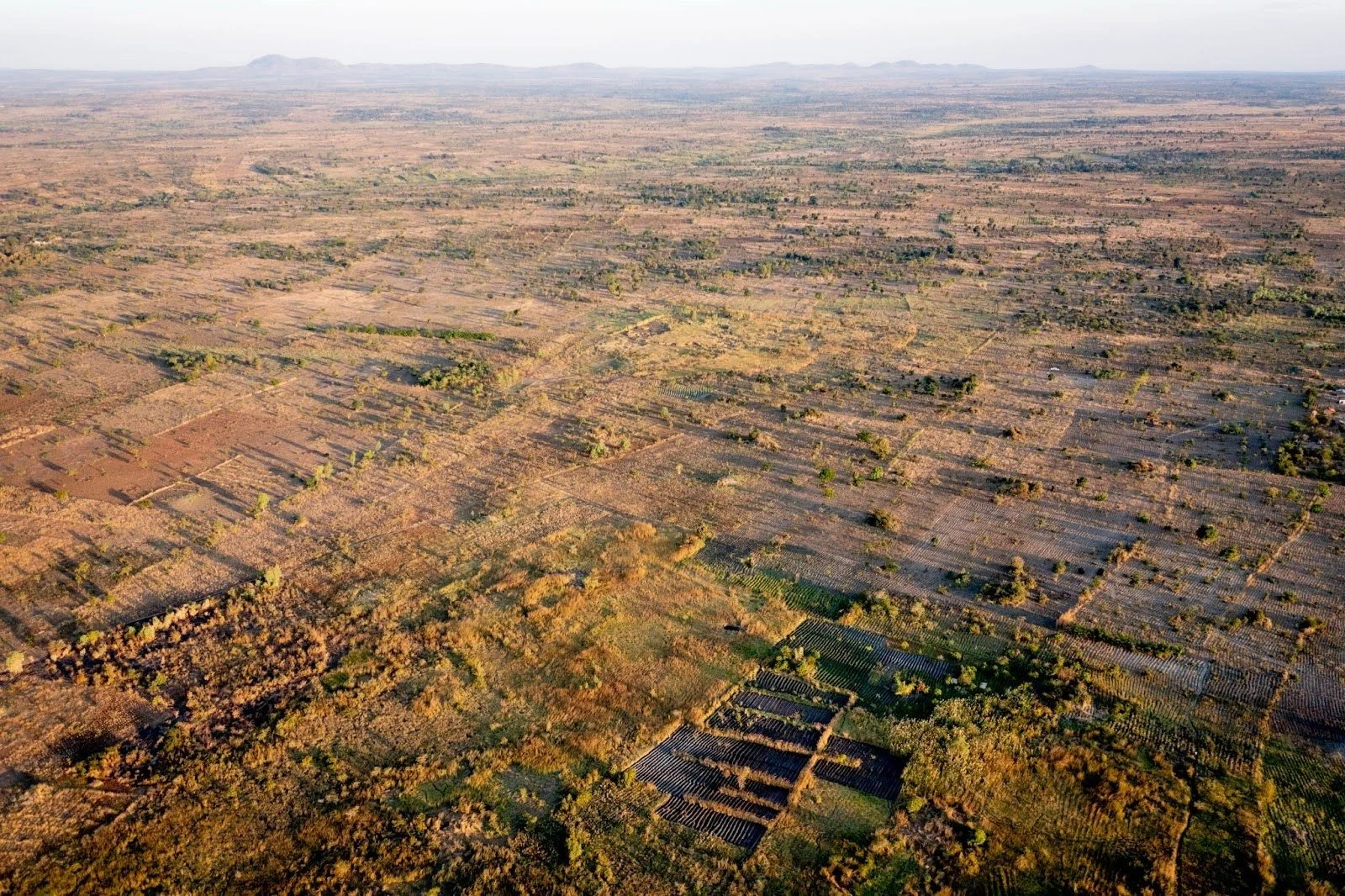
Agricultural landscape in Malawi. Photo: Kelvin Trautman.
The Breakthrough Agenda
The Breakthrough Agenda, an annual international collaboration launched at COP26, brings together more than 60 countries and over 150 initiatives working to accelerate the deployment of clean technologies and sustainable practices across major emitting sectors.
The 2024 Breakthrough Agenda Report on Agriculture, was the first edition in the series to focus exclusively on agriculture. Informed by insights from CGIAR and diverse global partners, the report examined the state of international cooperation in scaling sustainable agricultural practices and set out practical, sector-specific recommendations to guide joint action by governments and non-state stakeholders.
The 2025 Breakthrough Agenda report built on the 2024 report, with a focus on moving from pledges to delivery, highlighting sector-specific collaboration across energy, transport, industry and fertilisers sectors. In advance of COP30, CA4SH Co-Lead Dr Leigh Winowiecki (CIFOR-ICRAF) contributed to the development of a new focus chapter led by International Energy Agency (IEA) and the Climate High-level Champions, examining emissions linked to fertiliser production and use. The report outlines key collaboration priorities across standards and certification, demand management and creation, international finance and investment, and research and innovation for the production and use of fertilisers.
“Fertilisers are an important input to world’s agricultural and food systems, making it possible to sustain high crop yields and feed a growing world population. At the same time, fertilisers also consume significant quantities of energy and contribute to nearly 2.5% of global GHG emissions – up to 5% if you count all emissions related to manure. Reducing emissions from fertilisers can be made faster and less difficult through international collaboration between producers, governments, farmers, and the private sector.” - Carl Greenfield, International Energy Agency (IEA)
The chapter highlights the environmental risks associated with inefficient nutrient application, including nutrient leaching and elevated greenhouse gas emissions, and calls for stronger global cooperation to improve soil health monitoring and optimising fertiliser use efficiency. The Breakthrough Agenda report shows that:
“Around 60-70% of total GHG emissions in the fertiliser value chain result from use, as application generates N2O emissions through soil processes. Depending on the application and the type of fertiliser, the efficiency of fertiliser use can vary significantly – about half of nitrogen-based fertilisers today are used by crops, with fruits and vegetables having the lowest nitrogen use efficiency (NUE), at 14%, compared to soybeans, at 80%.”
Fertilizer use hinges on practices on the ground, and the use section highlights that multistakeholder collaboration is essential for fostering an enabling environment for farmers and land managers to strategically apply fertilisers and adjust their use practices.
Key recommendations from the chapter included:
Align on NUE: Governments and technical institutions should establish international guidance for measuring nitrogen use efficiency (NUE) and agree on a globally accepted range.
Long-term monitoring: Create a network of monitoring sites across diverse agroecosystems to track soil health indicators using consistent protocols and data-sharing arrangements.
Knowledge gaps: Use monitoring to understand fertiliser impacts on soil health, climate resilience, and support circular bio-economy approaches to nutrient management.
Alternative inputs: Develop global standards for biologicals, biopesticides, and organic fertilizers to improve soil health, reduce nitrogen reliance, enhance resilience, and increase carbon sequestration.
Financial incentives: Tailor subsidies and support programs to encourage optimal fertiliser use, adoption of biologicals, and promotion of soil health.
Cross-border collaboration: Pool resources, mobilize international climate finance, and share best practices for effective and equitable soil health policies.
Global demand for fertilizer has been steadily increasing over the past 50 years. Understanding the impacts of this trend and the changing landscape of trade and public incentives is an important component of the chapter. This includes highlighting new programs, for example, those supported by the World Bank to repurposing agricultural support to promote sustainable agricultural practices that improve soil and land health. As soil health continues to gain momentum on the international agenda, there may be an opportunity to develop overarching global guidance to support countries as they develop national soil health policies and strategies.
“There is a need to invest in healthy soil, develop policies that incentivise healthy soil practices, and build robust data systems for local, national and international monitoring of soil health that can provide evidence-based recommendations for the more efficient use of fertilizers on the ground. Furthermore, soil health monitoring can fill key data gaps by establishing long term trials across diverse agroecological systems, leveraging existing agronomic networks to better understand the impact of interventions on soil health,” says Dr. Leigh Winowiecki
Belém Declaration on Fertilisers
Insights from the Breakthrough Agenda informed the Belém Declaration on Fertilisers, endorsed at COP30 by the governments of the United Kingdom, Brazil, Japan, and Canada, alongside leading international organisations and initiatives. The Declaration calls for enhanced international collaboration to accelerate a transition towards the sustainable production and efficient use of fertilisers, aligned with the COP30 Action Agenda.
Through this initiative, stakeholders are committing to improve nutrient use efficiency, reduce emissions intensity across fertiliser value chains, and support sustainable productivity growth. These priorities closely align with CA4SH’s mission to promote integrated, evidence-based approaches that restore soil health, improve land resilience, and advance climate, biodiversity, and food security goals.
The Declaration underscores that both the overuse and underuse of fertilisers pose serious risks. Excessive application in some regions drives ecosystem degradation and economic losses, while limited access in others — particularly across parts of Africa — contributes to soil nutrient depletion, yield gaps, and persistent food insecurity. A balanced, science-led approach to optimised nutrient management is therefore essential.
Importantly, the initiative promotes a holistic understanding of nutrient cycles, recognising the complementary roles of organic inputs, inorganic fertilisers, and emerging biofertiliser solutions. Context-specific strategies will be needed to support diverse agroecological conditions, including nutrient-poor tropical and semi-arid soils where fertiliser access remains critical for land restoration and productivity.
The commitment also highlights opportunities for innovation and investment. Sustainable nutrient management can deliver significant economic returns through improved yields, reduced waste, and more resilient supply chains. Accelerating the shift towards low-carbon fertiliser production — including clean ammonia and circular bioeconomy approaches — offers pathways to climate mitigation while supporting rural development.
Looking ahead, this collaborative effort aims to scale regenerative agriculture and sustainable soil management practices by 2028, contributing to land restoration, climate resilience, and improved food and nutrition security. By strengthening evidence generation, enabling more coherent policy frameworks, and unlocking finance for implementation, partners seek to accelerate progress towards global sustainable development targets.
By supporting this global fertiliser breakthrough, CA4SH reaffirms its role as a convening platform for cross-sector collaboration and practical, science-based action, placing farmers at the centre of the transition towards healthier soils, resilient landscapes, and sustainable food systems worldwide.
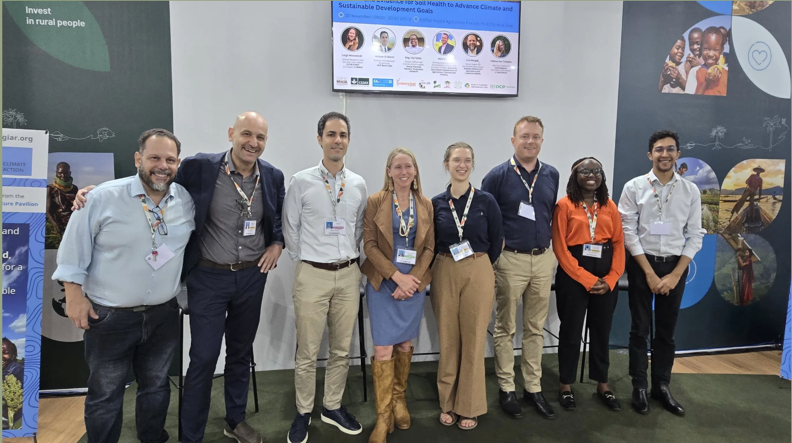
At COP30, the Coalition of Action for Soil Health (CA4SH) played an active role in advancing the Fertiliser Breakthrough agenda, engaging with partners across policy, finance, and implementation spaces. Through its participation in Activation Group discussions and bilateral engagements, CA4SH helped elevate the importance of soil health, advocating for integrated approaches that link productivity, resilience, and ecosystem restoration. This engagement reinforced CA4SH’s position as a key connector between global ambition and on-the-ground action, ensuring that soil health remains central to sustainable agriculture transitions.
Read more about Plans to Accelerate as part of the Action Agenda