
Resource Library
Any CA4SH partner can submit a resource to the Library, where we hope to increase visibility of diverse work related to improving soil health globally.
Please send a web link or a file to communications@coalitionforsoilhealth.org if you would like to submit a resource.
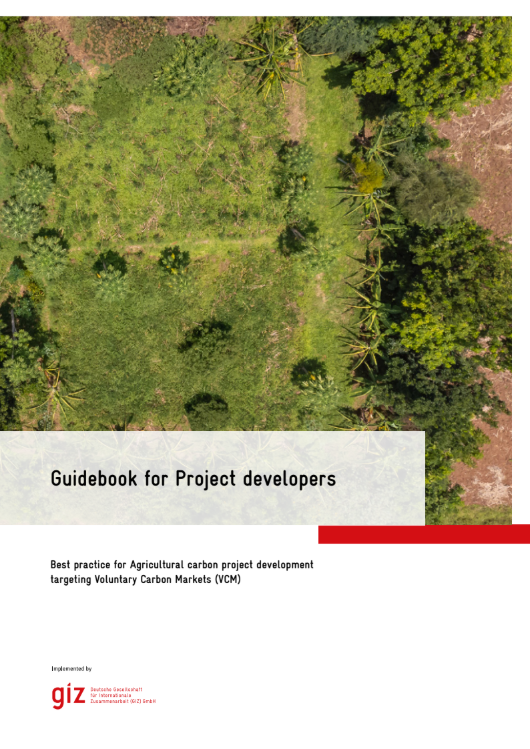
Guidebook for Project developers: Best practice for Agricultural carbon project development targeting Voluntary Carbon Markets (VCM)
This guidebook aims to inform the design of agricultural carbon projects and to support project developers in navigating key project development issues, drawing on lessons learnt from a pilot project; the Western Kenya Soil Carbon Project (WKCP) as well as feasibility studies in India and Madagascar.

Assessing the adaptation relevance of soil protection and rehabilitation: A participatory multi-stakeholder approach for monitoring and evaluation
This guide presents a systematic approach to identify relevant climatic risks and evaluate the effectiveness of SPR technologies regarding these risks as well as the local feasibility of these technologies. The presented methodology strikes a balance between rigor and practicability. The multistakeholder approach and the participatory elements offer opportunities for networking and sensitization of local experts, policy makers, extension officers and most important - farmers themselves. First experiences demonstrate that opening this space allows for fruitful and empowering exchanges.

Economic benefits through agroecological soil practices: Evidence by ProSoil
This compilation of economic evidence looks at the studies and reports about ProSoil activities that were carried out between 2014 to 2023, many in partnership with the Economics of Land Degradation (ELD) Initiative (www.eld-initiative.org). They were analysed in terms of their economic, social, environmental and benefits as the compilation sought to answer two key questions:
I. Are agroecological practices economically viable for smallholder farmers?
II. What are the wider economic and social benefits of agroecological practices?

Economic benefits through agroecological soil practices
Soils worldwide are degrading at an accelerating rate with devastating effects on agricultural productivity and thus food security. Farmers can directly address this challenge by adopting agroecological practices that help maintain or enhance soil fertility over the long term. Evidence from 10 years of implementation of ProSoil shows that these measures not only improve soil fertility but also have a positive economic impact for both farmers and society as a whole. Case studies from ProSoil have been analysed.

Potential of biochar with crop residues in maize systems of Kenya: Ex-ante assessment for strategic guidance of research, investment and policy
Decisions on investment and policy require answers to key questions about the scalability, economic viability, and long-term effects of biochar use under realistic scenarios. Information on market size is key to drive advancements in delivery models, product formulation, regulatory frameworks, and fiscal incentives for effective and sustainable integration into the agri-food value chains. This ex-ante upscaled assessment aims to provide clarity on the potential scale and impact of biochar use in maize systems of Kenya by leveraging official data on land use, crop yields and fertilizer statistics, findings from research and case studies, all while accounting for varied need of residues, uncertainties and safety margins. A modelling procedure (Figure 1) with sequential operations starting from grain production data over standard conversion to residue quantities, deductions of competing pulls for livestock, resource recovery from pyrolytic processes, and dose-response yield gain was implemented that provides a comprehensive approach to evaluating agricultural efficiency and sustainability. As the benefit of soil health interventions is manifested over multiple years, these steps were looped, and legacy effects carried forth. Input data and conversion factors were furnished or reviewed by selected informants that are experts or practitioners in the field, ensuring robust and representative outcome. This framework and methods can be replicated across other geographic scales and regions. Besides the biophysical potential, the financial viability of biochar use was evaluated against prices of production, grain and fertilizer. The main factors used for conversion and response calculation are summarized in Annex #1. Results presented in this brief can help stakeholders anticipate the likely-hood outcomes and make informed decisions about the adoption and implementation.
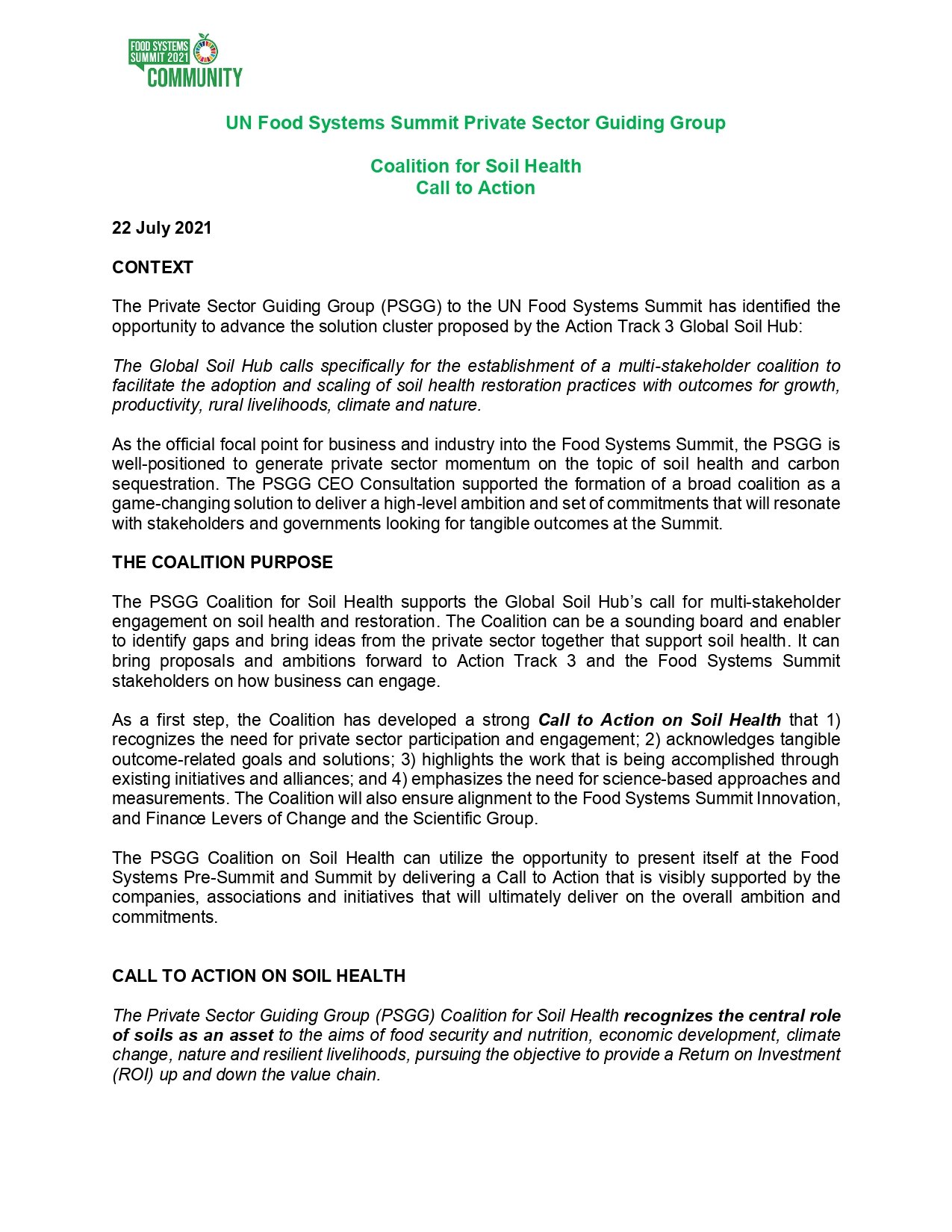
Call to Action for Soil Health
To make progress on some of the world’s most pressing challenges such as food security, nutrition, climate change and inclusive economic opportunity we must look at soil as a vital asset. The Call to Action for Soil Health -- issued in July 2021 by the Private Sector Guiding Group Coalition for Soil Health -- is inspired by these challenges and the UN Food Systems Summit.

Soil Investment Guidance Report
Soil loss and degradation due to poor land management and agricultural practices pose a critical threat to society, our planet and business operations everywhere. This report aims to support corporate investment into impactful, high-value, and long-term solutions that protect and improve soil health.

"The private sector is keen to invest in soil"
CA4SH has set itself the goal of improving soil health globally. Co-Leader Leigh Ann Winowiecki explains the barriers which have to be cleared on the way there and why she is optimistic about achieving this goal.