The Lasting Effect of a Data Drive on #Youth4Soil Members in Kenya
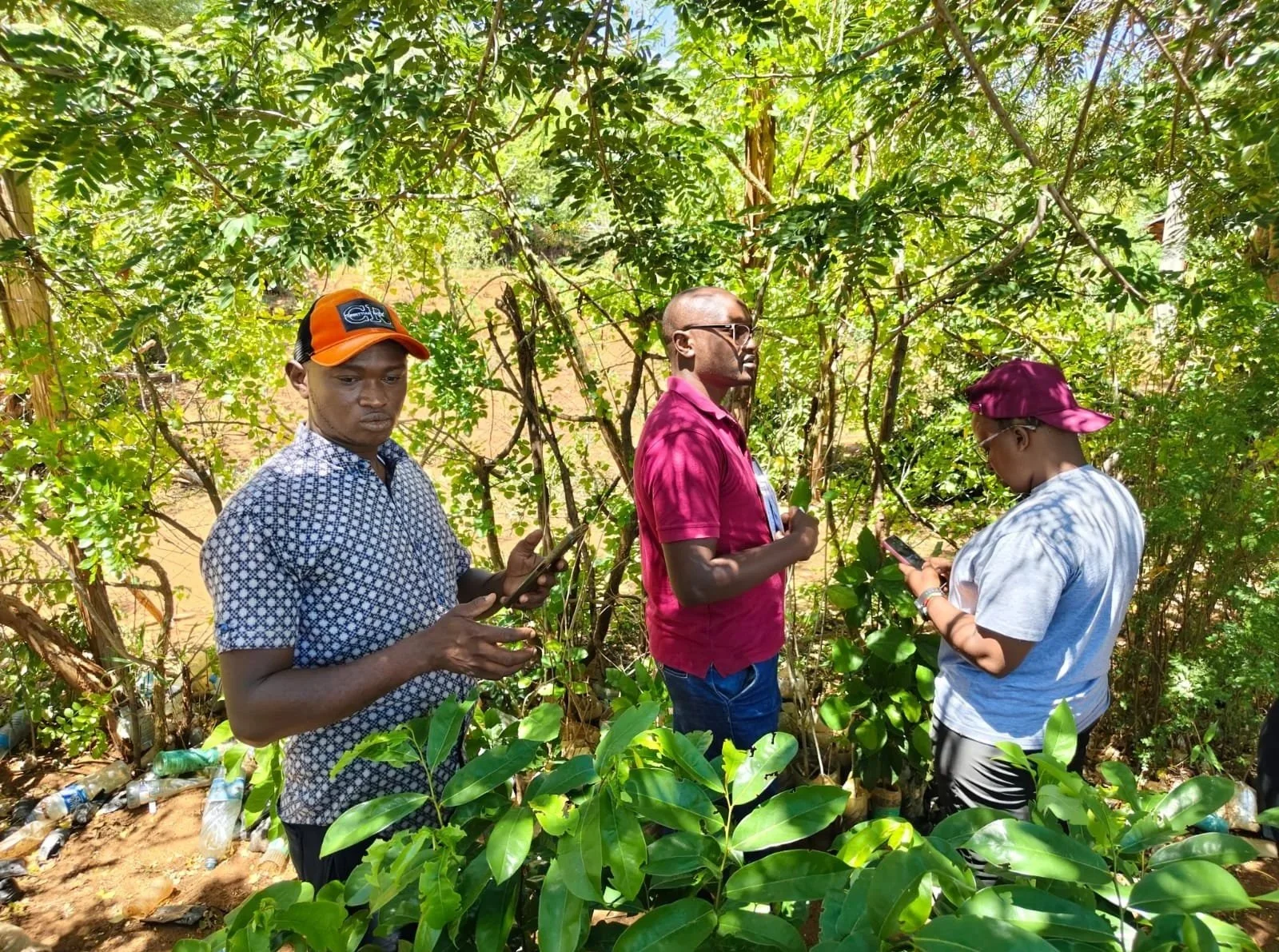
#Youth4Soil Members in the field during the data drive
#Youth4Soil members in Kenya participated in a data drive using the Regreening App between late April and early May 2026, across the Mid Tana, Sabarwawa and Cyulu Landscapes. This exercise went beyond data collection; it gave a chance to young people to engage directly with restoration efforts, learn from communities and strengthen their role in shaping sustainable land management.
The data drive was designed to:
Strengthen monitoring of restoration interventions.
Improve planning by generating spatial data.
Document interventions in land restoration, agroforestry, water management, and livelihoods.
For #Youth4Soil members, it was also about building capacity, gaining field experience, and connecting youth innovation with community realities.
The enumerators documented:
Grass seed banks and reseeding initiatives
Tree nurseries
Tree planting
Soil bunds, terraces, and half‑moons
Water harvesting structures (tanks and pans)
Livelihood enterprises: fodder, honey, camel milk, and meat production
These activities are being implemented by: Local communities and administration, State Department of Livestock, Just Dig It (JDI), NDMA, Conservation International (CI), Water Resources Authority (WRA), IUCN , Maasai Wilderness Conservation Trust (MWCT) and the Landscape Alliance
Findings showed both progress and gaps:
Tree nurseries: Operational but challenged by poor markets and water shortages, capacity building and market linkages are needed.
Tree planting: Low survival rates due to drought and livestock interference , training in monitoring and agroforestry is required.
Grass seed banks: While some are doing very well, poor management and storage are holding others back, training, re‑establishment, and seed replacement strategies need to be reinforced.
Water harvesting structures: Revealed 90% functional tanks, but some pans exposed to contamination, the structures need maintenance and treatment systems to be put in place.
Enterprises: Honey, camel milk, and fodder enterprises are thriving, expanding value addition and market linkages need to be prioritised.
The data drive did not go without challenges, these included:
Long distances between sites
Dense Prosopis (Mathenge) thickets complicating mapping
Inaccurate records due to poor documentation
Community conflicts limiting access in some areas
Inactive interventions in some wards
Low GPS accuracy on some days due to poor weather conditions
For #Youth4Soil members, the data drive was transformative:
It gave them hands‑on exposure to restoration practices.
Strengthened their confidence in using digital tools for environmental monitoring.
Deepened their connection with communities, seeing firsthand the challenges of drought, conflict, and resource management.
Inspired them to innovate further — from mobile soil testing apps to ideas for better record‑keeping and gender‑inclusive monitoring.
The exercise highlighted that youth engagement is not just symbolic at the Coalition of Action for Soil Health, when equipped with tools and mentorship, young people can generate actionable data, influence planning and support communities in scaling restoration.
The data drive showed that data can strengthen restoration systems, improve accountability, and inspire innovation. For #Youth4Soil members, it was a lasting lesson in resilience, collaboration and the power of data to drive change.
