
Resource Library
Any CA4SH partner can submit a resource to the Library, where we hope to increase visibility of diverse work related to improving soil health globally.
Please send a web link or a file to communications@coalitionforsoilhealth.org if you would like to submit a resource.

Mucuna Pruriens - Study
This study was initiated to investigate the commercial feasibility of Mucuna pruriens as an ingredient to the production of livestock feed. The study provides recommendations on possible further interventions that the project can put in place to support development of long-term, sustainable partnerships between the farmers and commercial utilizers of Mucuna for livestock feeds production.

Bungoma County - Utilization of Mucuna Pruriens as a livestock feed
Benjamin Nyongesa, a 44-year-old farmer from Ndengelwa sub-location, Kanduyi sub-county has been feeding his sheep and dairy cattle on Mucuna leaves, stems and pods for a length of time. He was first trained on the benefits of Mucuna in 2022 and allocated a portion of his farm on pure Mucuna. Being a farmer with a large number of livestock he decided to introduce the leguminous plant to his animals and was impressed when he saw the sheep and cattle enjoying the Mucuna with no side effects.

Mucuna Pruriens Business Model Evaluation ProSilience Western Kenya
Contents:
What is Mucuna pruriens
Issues and opportunities in Mucuna farming
Issues and opportunities in Mucuna processing
Conclusions and recommendations

Mucuna - A Promising Animal and Fodder Feed
While the primary function and main reason for the cultivation of mucuna is soil cover and nitrogen fixation, the tremendous biomass produced as well as the pods and seeds have potential as animal feed.

Striga Weed Management Brochure
Striga is a parasitic weed that attaches itself to the roots of host crops mostly cereals (maize, sorgum, millet and rice) and grasses (nappier,bracharia,sugarcane); it flourishes in poor soils and cereals mono-crop. Striga weed is significantly capable of reducing and in some cases wiping out the entire crop.

Mucuna Pruriens Brochure
Brochure explaining the health benefits and home processing methods of the Mucuna Bean.

Mucuna Recipes Cook Book
Mucuna is an annual climbing legume (nitrogen fixing) grown as green manure/ cover crop to improve soil properties and crop yields. It is a rich source of protein that compares well with other edible food legumes such as lima beans and soybean in nutrient quality and digestibility. It can also be used as a fodder crop for livestock. It is commonly referred to as velvet bean, jack bean, Cowhage, Pica (or Pica-Pica), Cowitch, or Yoruba.


Cover Crops and Crop Management Booklet
Cover crops are specific crops that play a major role in Conservation Agriculture by addressing crop production constraints such as low soil fertility. They are primarily grown for the benefit of the soil rather than as a main crop. They are commonly used to surpress weeds, manage soil erosion, help in improving soil Soil fertility and quality by fixing nitrogen in the soil, control disease and pests and increase crop diversity.

Green Manure Cover Crop Seeds Production and Certification for the Rehabilitation of Degraded Soils in Western Kenya
In response to the observed challenges that hinder the widespread adoption of Green Manure Cover Crops (GMCC) practices in Western Kenya, the GIZ ProSoil Project in collaboration with the Kenya Agricultural and Livestock Research Organisation (KALRO) through the Food Crops Research Institute – Alupe Centre under a Financial Agreement have implemented a grant supported project for bulking of seeds for assorted GMMCs and the building of capacities of the farmers and extension staff on the good practices for GMCC production.
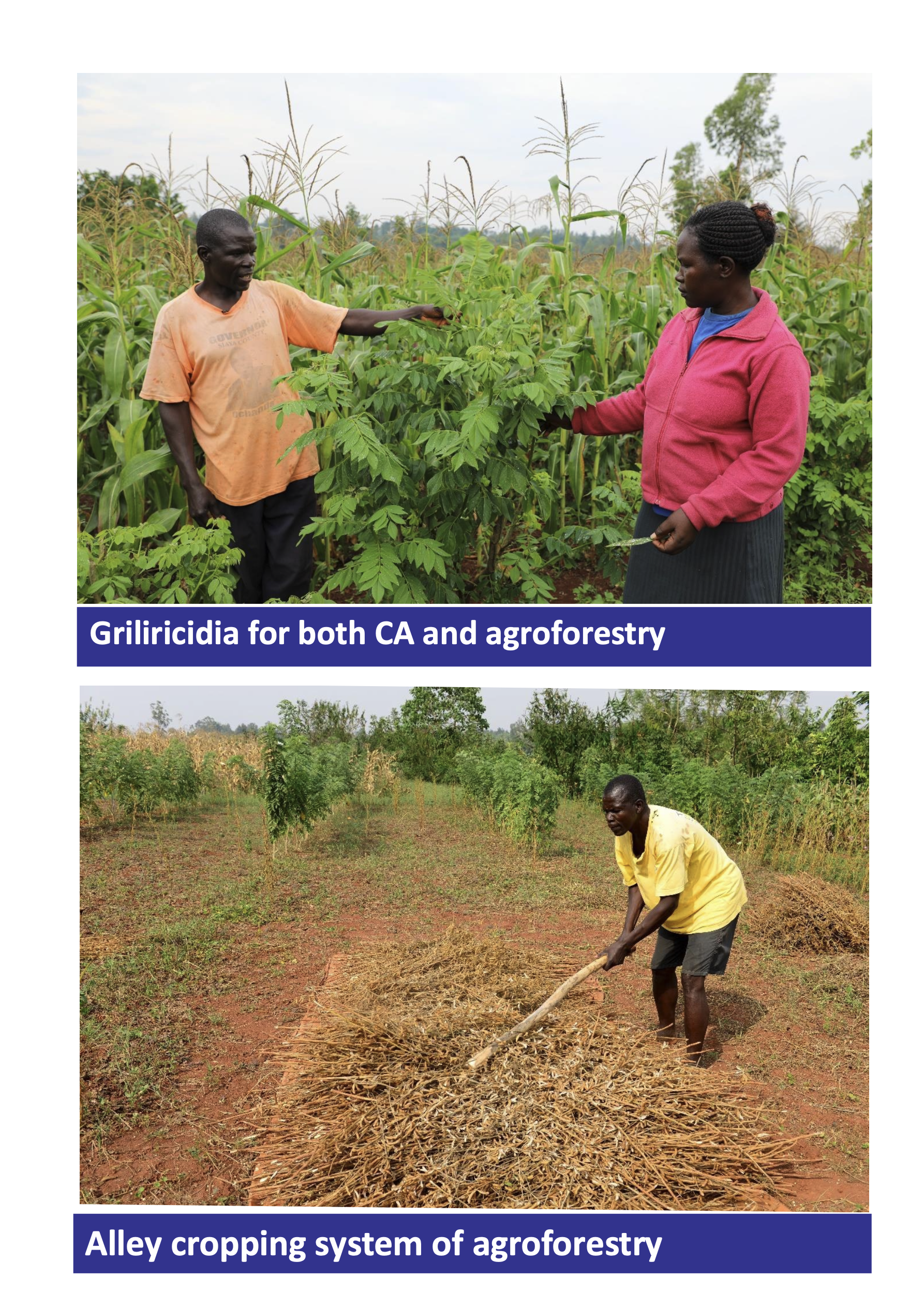
Training Pictorials
A pictorial guide showing conservation agriculture techniques & tools.
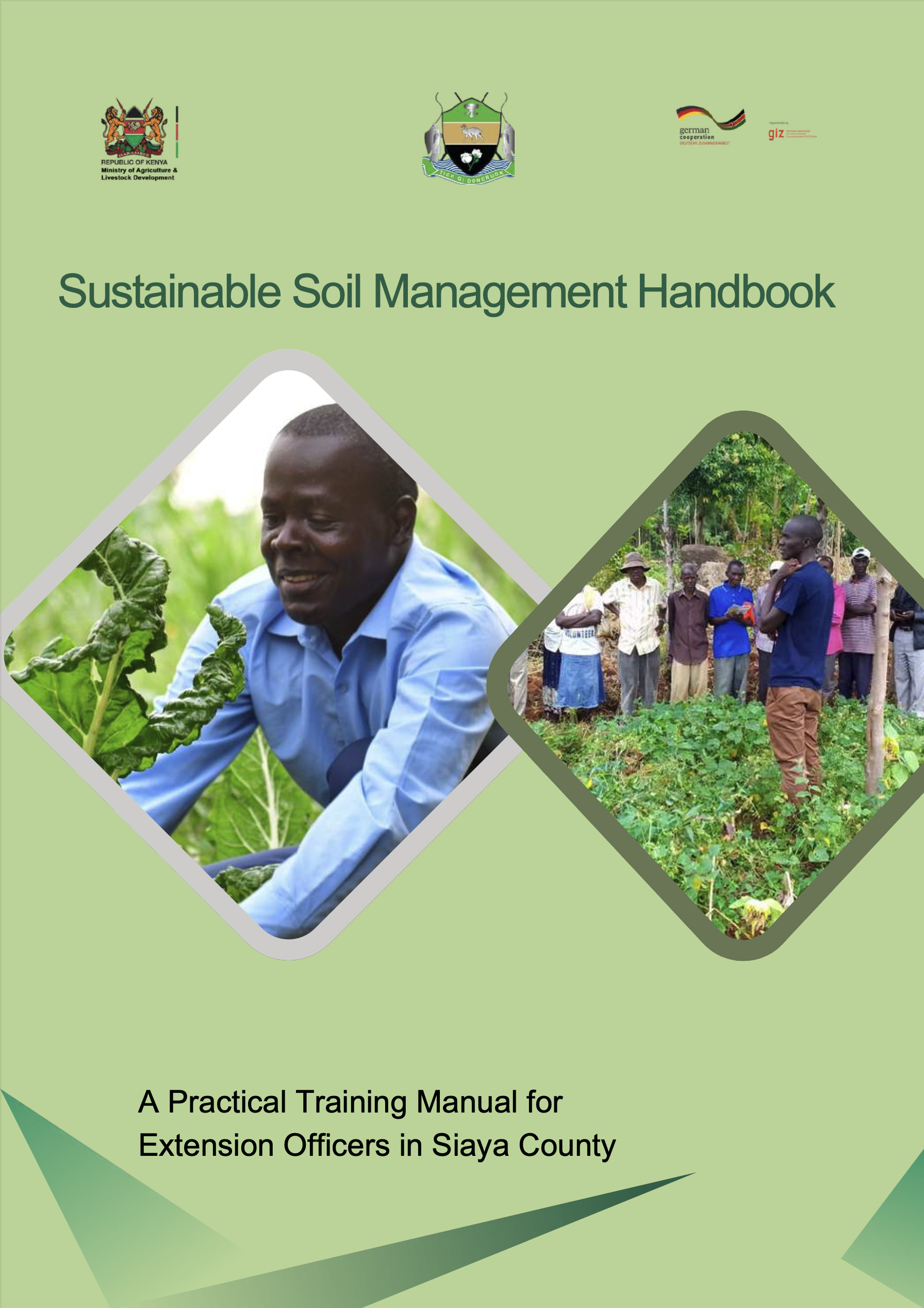
Sustainable Soil Management Handbook
This training manual provides a practical, county-owned, and user-friendly guide to strengthen the capacity of frontline actors in promoting Sustainable Agricultural Land Management (SALM) in Siaya County. Drawing from over a decade of ProSoil project experience, the manual translates proven practices into actionable training content and participatory methodologies tailored to the realities of smallholder farmers.
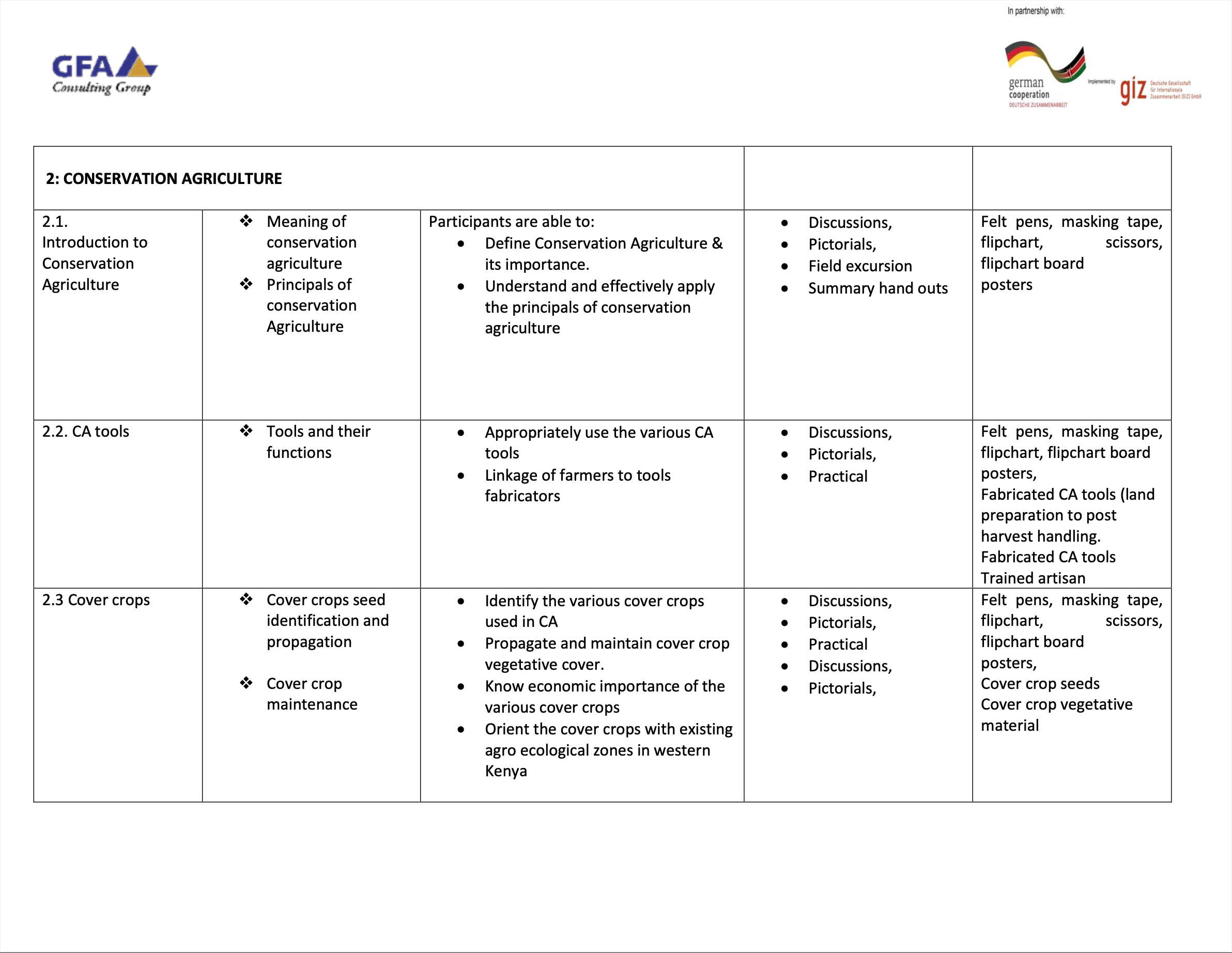
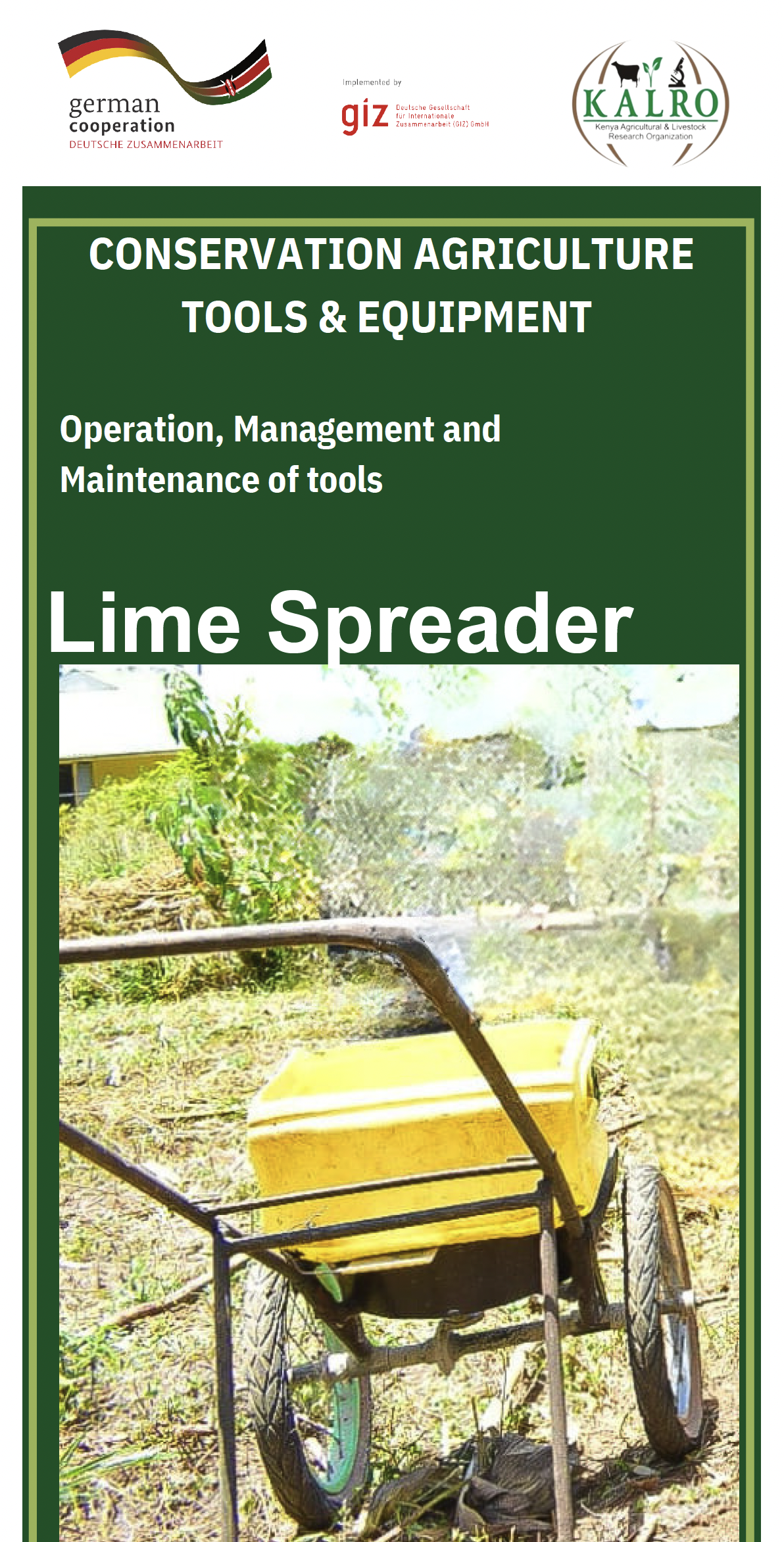
Conservation Agriculture Tools and Equipment - Lime Spreader
Operation, Management and Maintenance of tools.
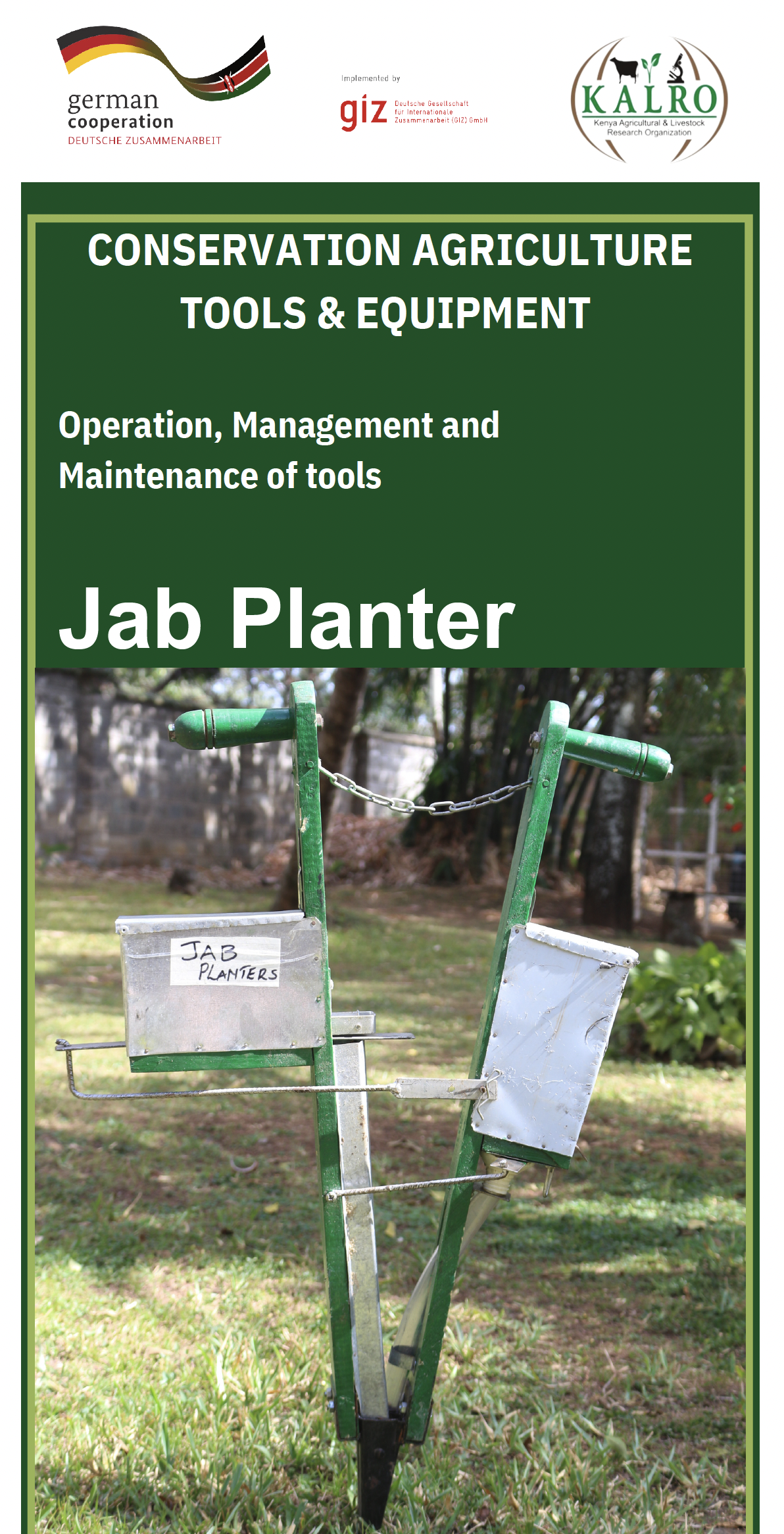
Conservation Agriculture Tools and Equipment - Jab Planter
Operation, Management and Maintenance of tools.
Conservation Agriculture Tools and Equipment - Direct Seeder
Operation, Management and Maintenance of tools.
Conservation Agriculture Tools and Equipment - Dibbler
Operation, Management and Maintenance of tools.
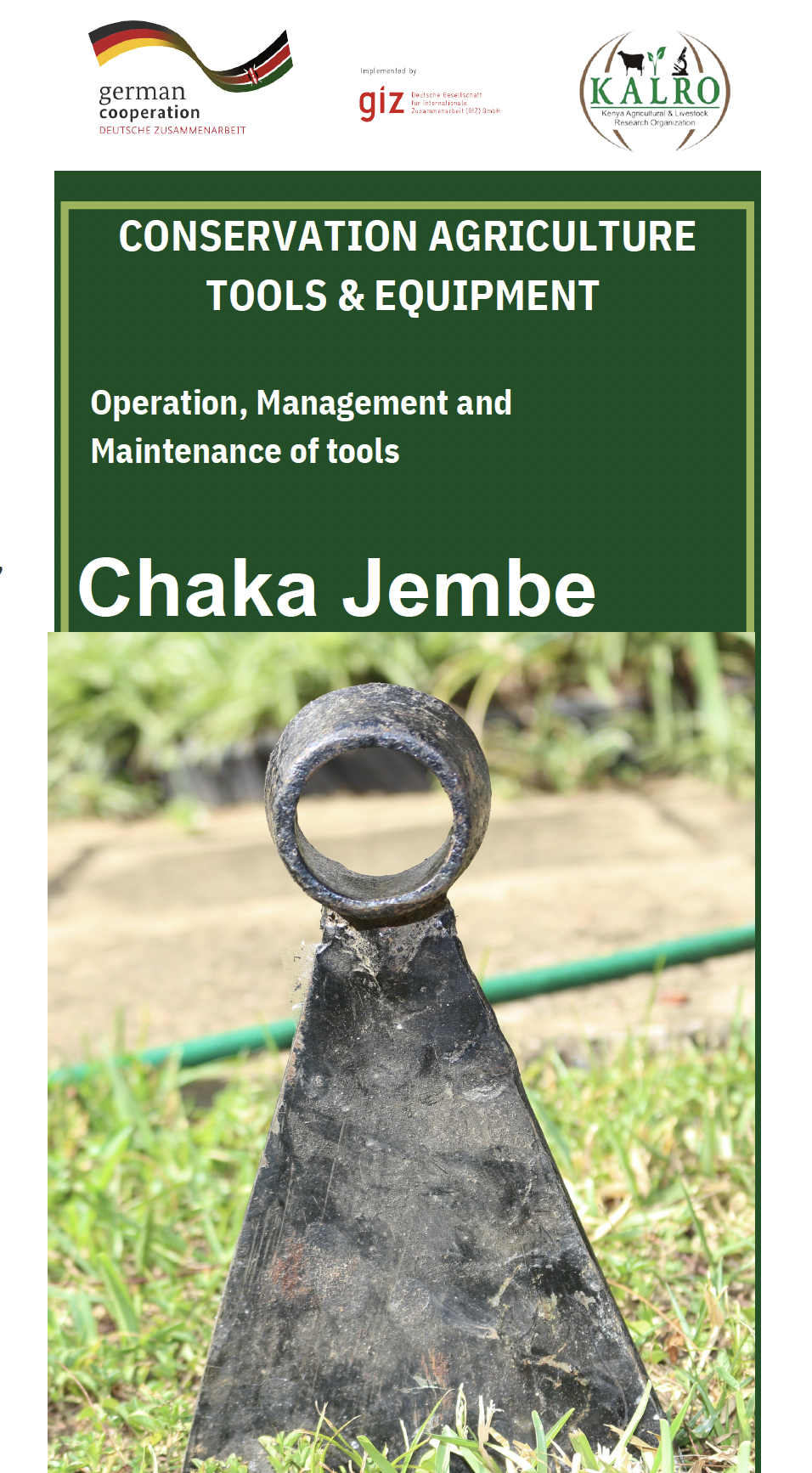
Conservation Agriculture Tools and Equipment - Chaka Jembe
Operation, Management and Maintenance of tools.
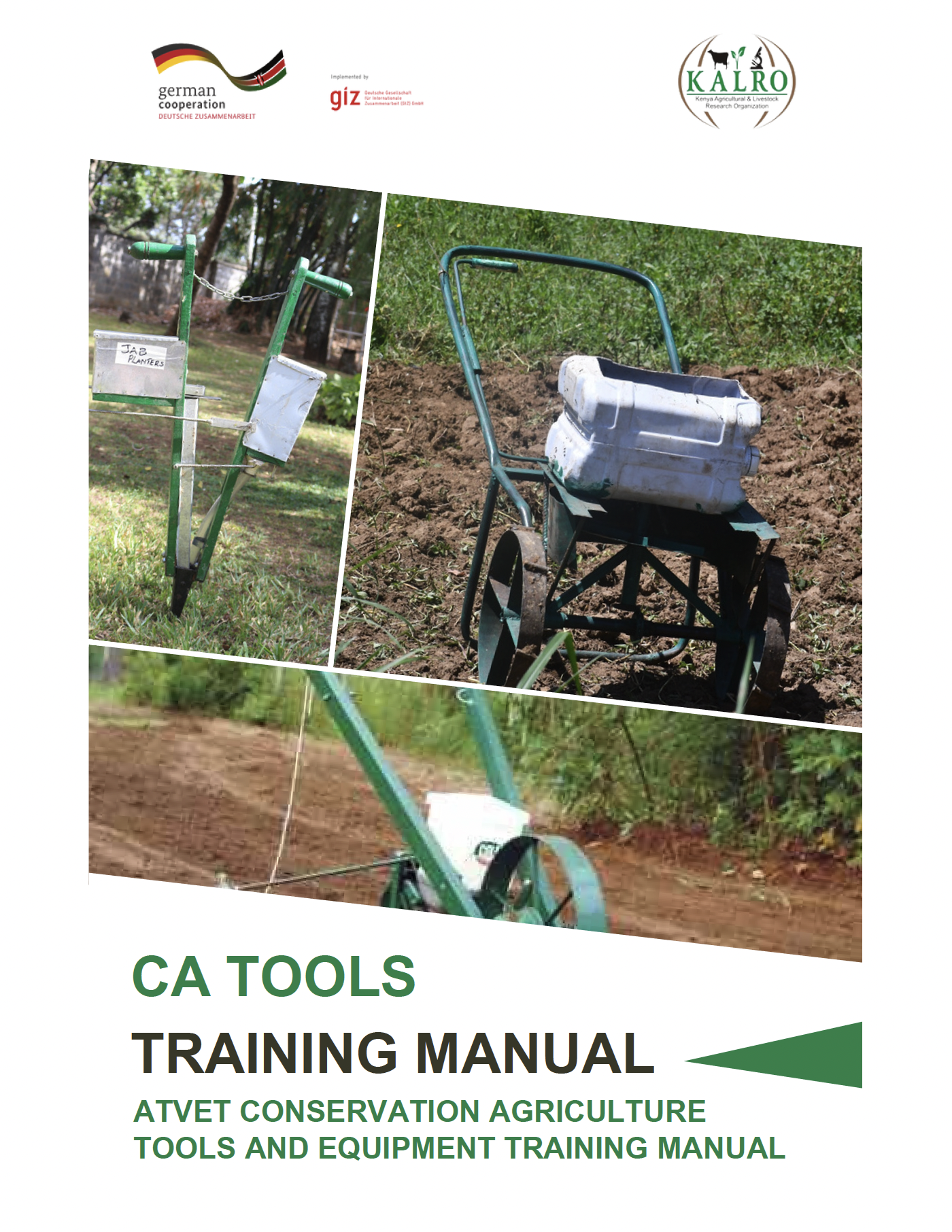
CA Tools Training Manual - Kenya
Conservation agriculture (CA) is an increasingly adopted production system to meet the goals of sustainable crop production intensification in feeding a growing world population whilst conserving natural resources. Mechanisation (especially power units, seeders, rippers and sprayers) is a key input for CA and smallholder farmers often have difficulties in making the necessary investments. The German Ministry for Economic Cooperation and Development (BMZ) through GIZ is implementing a global soil program “Soil protection and rehabilitation for food security” in seven countries, Kenya being one of them. This project aimed to facilitate the implementation of sustainable approaches for the inclusive promotion of soil conservation and for the rehabilitation of degraded soils.
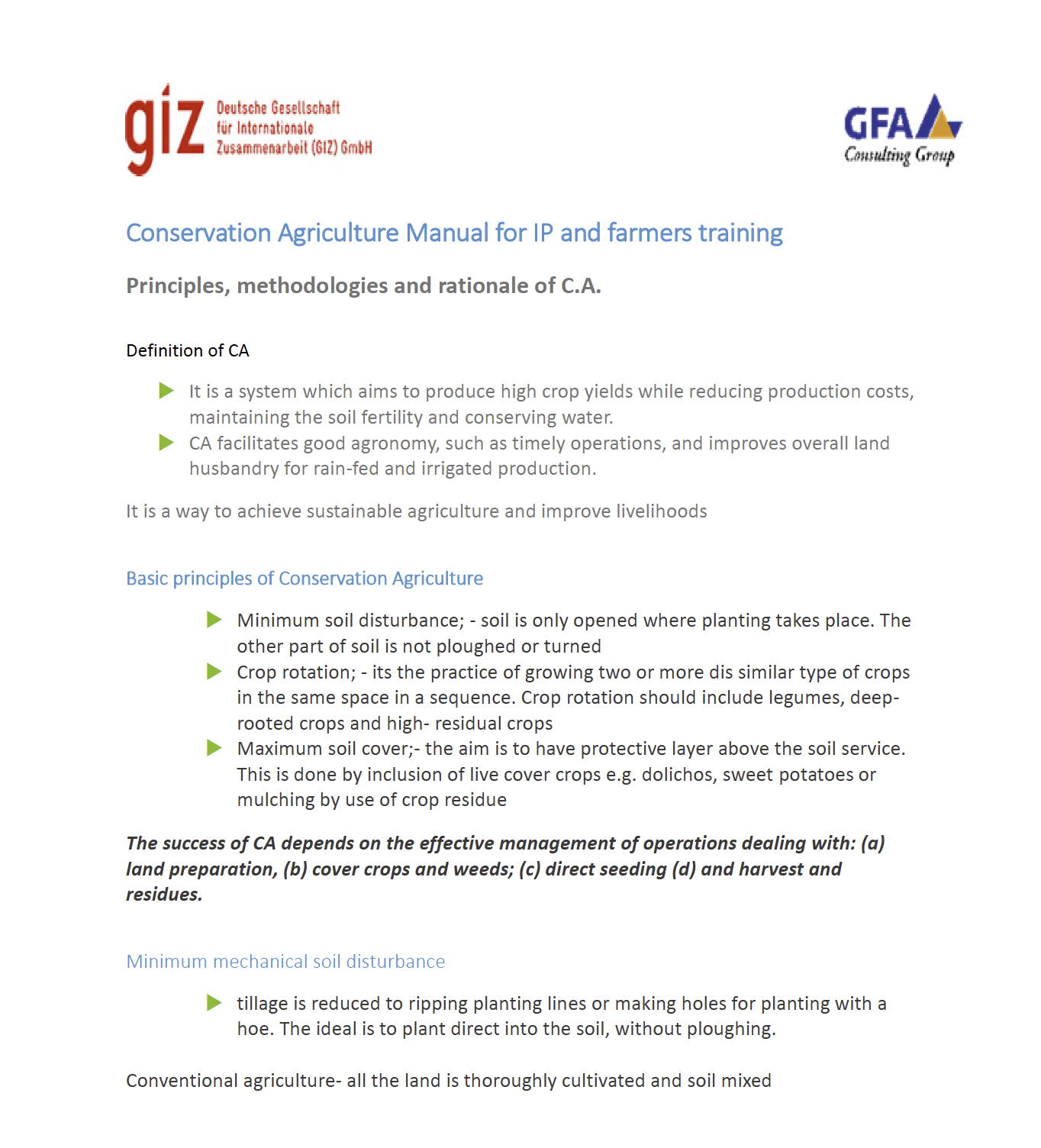
Conservation Agriculture Manual for IP and farmers training - Kenya
Conservation Agriculture is a system which aims to produce high crop yields while reducing production costs, maintaining the soil fertility and conserving water. CA facilitates good agronomy, such as timely operations, and improves overall land husbandry for rain-fed and irrigated production. It is a way to achieve sustainable agriculture and improve livelihoods.