Resource Library
Any CA4SH partner can submit a resource to the Library, where we hope to increase visibility of diverse work related to improving soil health globally.
Please send a web link or a file to communications@coalitionforsoilhealth.org if you would like to submit a resource.

CRP Post-Training Follow-Up Monitoring and Evaluation Framework
Under the ProSoil Project, Community Resource Persons (CRPs) were trained to enhance their technical and business capacities in agripreneurship, group management, VSLA operations, record keeping, and governance. Each group nominated two CRP representatives who participated in the intensive training with the expectation that they would cascade knowledge to their peers and strengthen the performance of their groups.

Global Rangeland Health Monitoring Framework
Despite growing interest in sustainable rangeland management and restoration, there is currently no widely accepted framework for monitoring ecological outcomes across rangeland systems. Existing approaches vary considerably in the indicators used, methods applied, and scales of assessment, making it difficult to compare results, aggregate data, or demonstrate progress consistently across landscapes and regions. These challenges are particularly apparent in rangelands, where high spatial and temporal variability in ecological conditions, climatic fluctuations, and diverse management systems can complicate the interpretation of ecological change. While rangeland resilience also includes important social, cultural and economic dimensions, a key gap currently lies in the measurement of biophysical changes across rangeland landscapes.
This framework responds to that need by defining a harmonised set of indicators of rangeland health and associated methodological principles that enable comparability across regions while allowing flexibility for adaptation to local contexts.

Status of Rangeland Monitoring: Review of Monitoring Frameworks
Rangelands cover more than half the planet’s land surface and sustain the livelihoods, either directly or indirectly, of billions of people. Yet, an estimated 40–50% of these systems show signs of degradation, manifesting as soil erosion, woody encroachment, and declining forage productivity, placing global food security, climate goals, and local livelihoods at risk. While several monitoring frameworks and tools to measure rangeland condition exist, most remain fragmented, narrow in scope, and difficult to compare across projects, sectors, or regions. A credible, global monitoring framework is needed to guide investment, anchor emerging livestock value-chain standards, and track progress toward international restoration targets.
This review synthesizes rangeland monitoring insights from four key source domains: (i) twelve widely used field-based frameworks, (ii) fourteen sustainability standards with mandated landscape monitoring components, (iii) five Earthobservation (EO) platforms that report on rangeland indicators; and (iv) two citizen science mobile applications. We integrate these findings with a review of 62 peer-reviewed studies, along with the insights and recommendations from a multi-stakeholder consultation workshop convened in Nairobi in October 2024.
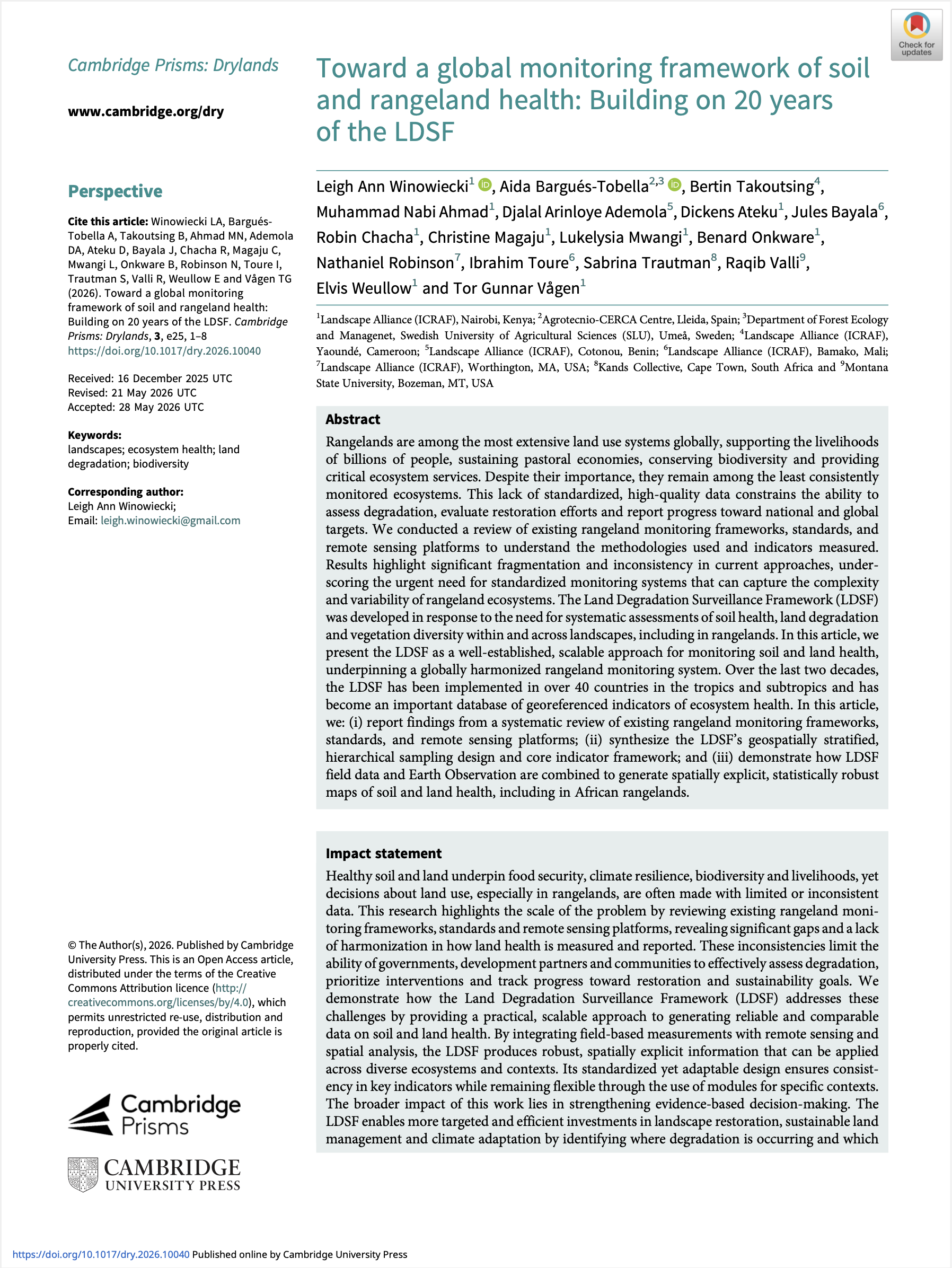
Toward a global monitoring framework of soil and rangeland health: Building on 20 years of the LDSF
Healthy soil and land underpin food security, climate resilience, biodiversity and livelihoods, yet decisions about land use, especially in rangelands, are often made with limited or inconsistent data. This research highlights the scale of the problem by reviewing existing rangeland monitoring frameworks, standards and remote sensing platforms, revealing significant gaps and a lack of harmonization in how land health is measured and reported.
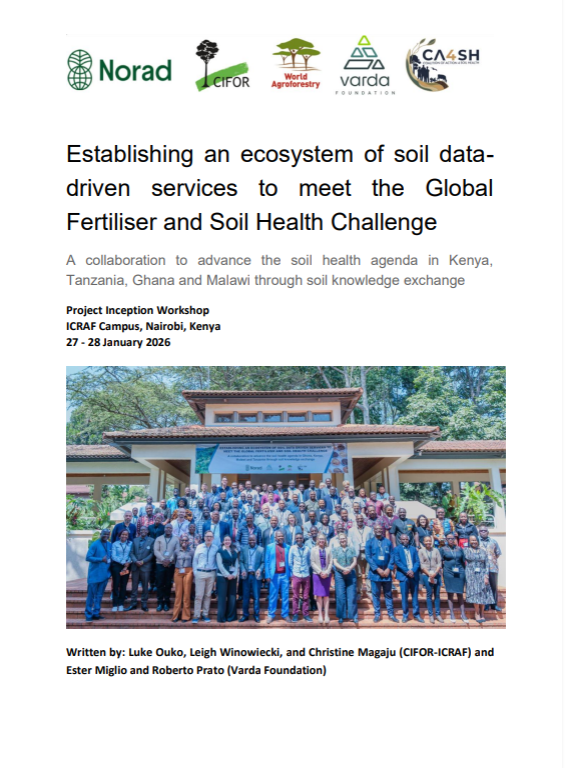
Project Inception Workshop Report: Establishing an ecosystem of soil data-driven services to meet the Global Fertiliser and Soil Health Challenge
In 2024, CIFOR-ICRAF and Varda Foundation piloted a soil knowledge exchange initiative in Kenya and Tanzania, funded by the Norwegian Agency for Development Cooperation (NORAD). The pilot focused on identifying barriers and opportunities for building a collaborative soil data ecosystem and directly shaped the project's design.
Building on the pilot initiative, CIFOR-ICRAF and the Varda Foundation, with support from NORAD, are now launching a new three-year initiative to create a dynamic ecosystem of soil data-driven services across Kenya, Ghana, Malawi, and Tanzania.
From 27 - 28 January 2026, the project consortium met at the CIFOR-ICRAF office in Nairobi for a project inception meeting.

Analyses des effets socio-économiques etenvironnementaux des pratiques agroécologiques
Le guide méthodologique fournit un aperçu des analyses économiques et environnementales les plus récentes, répondant au besoin de ProSol et pertinents pour des contextes de développement plus larges. Il explique les méthodologies proposées, leurs indicateurs et résultats clés ainsi que les besoins en données et fournit des informations sur le contexte d’application. Le guide comprend également des conseils et des astuces sur ce qu’il faut prendre en compte avant d’entreprendre une étude. Des idées pratiques sur la façon d’impliquer les parties prenantes concernées dans les différentes étapes d’une analyse permettent d’adapter les études aux besoins du groupe cible et d’assurer que les résultats sont utiles aux parties prenantes. Grâce à ce produit, les collègues des pays partenaires de ProSol devraient être en mesure d’identifier leurs principales questions de recherche et le but de telles analyses, et de formuler à l’avance le type de résultats qu’ils souhaiteraient obtenir. Ils devraient avoir une compréhension de base des méthodologies d’analyse économique et écologique existantes et savoir quelle méthodologie pourrait convenir à leurs besoins spécifiques. Ils devraient se sentir en mesure de monter un dossier d’analyse et lancer un appel d’offres et sélectionner un partenaire de recherche compétent pour éventuellement se lancer dans une étude personnalisée.

Benin country report on Measuring Agroecology and its Performance (MAP): TAPE application in the context of the Global Programme “Soil Protection and Rehabilitation for Food Security” (ProSoil)
Since 2015, ProSoil has been empowering communities to address environmental and food-security challenges by implementing interventions, such as agroforestry, conservation agriculture, soil and water management, integrated pest management, and policy advice. Through effective collaboration with smallholder farmers, experts and decision makers, ProSoil has fostered a landscape transition towards sustainable farming practices. TAPE results from 120 farms that actively participated in ProSoil activities were compared with 120 farms that had not participated in ProSoil activities. To specifically assess the contribution of agroecology to improved soil health within ProSoil farms, as opposed to the comparison farms, TAPE was complemented with the Land Degradation Surveillance Framework (LDSF) methodology to gain more detailed insights into the contribution of agroecological integration to physiochemical soil characteristics.

Ethiopia country report on Measuring Agroecology and its Performance (MAP): TAPE application in the context of the Global Programme “Soil Protection and Rehabilitation for Food Security” (ProSoil)
Environmental deterioration, ill health, and premature mortality are interrelated, and all are significantly influenced by global food systems. Currently, there is growing interest in switching to a sustainable system that ensures the production of diversified food products while ensuring the regenerative use of natural resources and addressing societal needs. Agroecology – a transdisciplinary approach simultaneously applying ecological and social concepts and promoting sustainable agriculture and food systems – addresses these needs and has therefore received global attention. In widely promoting agroecology, there is also a need to assess its level of integration and effectiveness. To this end, the Tool for Agroecology Performance Evaluation (TAPE) – a global analytical framework developed with contributions from numerous international organizations and with the Food and Agriculture Organization of the United Nations (FAO) serving as the host – is widely employed to assess the multidimensional performance of agroecology and to generate evidence.

Completing the integrated soil fertility management equation: Latest trends in research and scaling for organic and auxiliary inputs
Snapshot of content in technology profiles as related to potential for sustainable intensification, enhanced profitability, emission reduction, and policy mechanisms to promote access and use.

Kenya country report on Measuring Agroecology and its Performance (MAP): TAPE application in the context of the Global Programme “Soil Protection and Rehabilitation for Food Security” (ProSoil)
As agroecology is increasingly viewed as a promising approach to render agricultural and food systems more sustainable, there is growing interest in assessing both the level of agroecological integration and the contribution of agroecology to achieving societal goals. To address both points of interest, the FAO’s Tool for Agroecology Performance Evaluation (TAPE) was applied in the context of the Global Programme “Soil Protection and Rehabilitation for Food Security” (ProSoil) in three Kenyan counties (Bungoma, Kakamega and Siaya). Since 2015, ProSoil has been building community capacity to implement agroecological farming practices. The application of TAPE aimed at assessing the degree to which ProSoil’s interventions contributed to agroecological transitions among beneficiary households, and how the degree of agroecological integration correlates with multidimensional performance. TAPE results from 101 farms that have actively participated in ProSoil activities were compared with 100 farms that had not actively participated in ProSoil activities, serving as a comparison group. These comparison farms were selected from households targeted for the DeSIRA (EU initiative “Development Smart Innovation through Research in Agriculture”) project “Enhancing soils and agroecology for resilient agri-food systems in Sub-Saharan Africa” (ProSilience), co-funded by the EU and BMZ and embedded within ProSoil.

Avantages économiquesdes pratiques agroécologiques en matière de sol : Données produites par ProSol
Cette compilation de données économiques examine les études et les rapports sur les activités de ProSol qui ont été menées entre 2014 et 2023, dont beaucoup ont été réalisées en partenariat avec l’Initiative sur l’économie de la dégradation des terres (ELD) (www.eld-initiative.org). Elles ont été analysées en fonction de leurs avantages sociaux, environnementaux et économiques.

Completing the integrated soil fertility management equation: Latest trends in research and scaling for organic and auxiliary inputs
This toolkit aims to provide nuanced information about key entry points of the six featured technologies within the broader context of ISFM (Figure 3). By compiling up-to-date evidence from research and case studies we discuss the potential benefits for crop production and complementarity with synthetic fertilizer. Critical reflections are made of lessons learned and innovative incentive mechanisms that can help production and use. We also provide examples of how policies and investments can be designed to create practical ways for farmers to access and use technologies that enhance soil health. This toolkit is intended for development organizations and the policy sector to accelerate dissemination and uptake at scale of organic inputs and other amendments with proven ability to maintain and enhance soil health in food production systems of SSA. In light of the Fertilizer and Soil Health Strategy for the next 10 years, the insights provided in this toolkit can aid decision-makers. By assessing the technical aspects and scalability, the toolkit advances understanding to leverage and guide research, commercial investments and policy design. The scope of the assessments in the toolkit includes upland annual and perennial cropping systems such as grains, roots, tubers, and bananas because they represent the largest geographic area and staple food in smallholder systems of SSA.

Assessing the adaptation relevance of soil protection and rehabilitation: A participatory multi-stakeholder approach for monitoring and evaluation
This guide presents a systematic approach to identify relevant climatic risks and evaluate the effectiveness of SPR technologies regarding these risks as well as the local feasibility of these technologies. The presented methodology strikes a balance between rigor and practicability. The multistakeholder approach and the participatory elements offer opportunities for networking and sensitization of local experts, policy makers, extension officers and most important - farmers themselves. First experiences demonstrate that opening this space allows for fruitful and empowering exchanges.

Restoration Monitoring Guide: A Field Technician’s Manual for Monitoring Restoration Across Watersheds
Despite its importance, many national restoration monitoring frameworks still lack robust systems for tracking management practices at finer scales. Most reporting focuses on broad targets such as tree cover increase or total hectares restored—yet these figures alone don’t tell us whether restoration efforts are truly improving ecosystem function. Without clear data on soil health, vegetation recovery, erosion reduction, or water availability, restoration risks being implemented without understanding its actual effectiveness on the ground.
This Restoration Monitoring Guide addresses that gap. It provides a hands-on, field-ready approach for monitoring restoration outcomes at both plot and watershed levels. Developed for district-level field agents, extension staff, and natural resource management officers, the guide supports locally grounded, scientifically robust monitoring that enhances decision-making, accountability, and adaptive management.

PRESENTATION | Positioning Soil Health on the Agenda Bridging Science, Policy and Advocacy
On 27 May 2025, the Vision for Adapted Crops and Soils (VACS) and CA4SH co-hosted a webinar exploring the role of multi-stakeholder action in addressing financing, implementation, and knowledge barriers to scaling soil health solutions.
Healthy soil is the very foundation of our food systems and provides several vital ecosystem services, from carbon sequestration to improving food and nutrition security, to regulating the water cycle to hosting biodiversity. However, land degradation negatively impacts over 3.2 billion people globally. This webinar highlighted the critical role of healthy soil for ecosystem restoration, climate adaptation and mitigation, biodiversity, and food and nutrition security, as well as advancements in monitoring soil health using field assessments, data analytics, Earth Observation, and citizen science.

Rangeland Monitoring Framework To Assess Impact of Interventions
The project STELARR (Sustainable Investments in Large-Scale Rangeland Restoration) is supporting the development of a global rangelands monitoring framework as a component of a global rangelands standard that will be awarded to rangelands products produced sustainably and according to a set of ecological, environmental, social and animal welfare standards. This global rangelands standard development is being led by the Sustainable Fibre Alliance, and in future will be applied and overseen by a Rangelands Stewardship Council in establishment. The standard will incentivize good land management and investments (including private sector investments) in this. ICRAF is leading the development of the global rangelands monitoring framework working with the Sustainable Fibre Alliance and other partners.

Insight Brief: The Imperative for Strengthening Soil Information Systems in Africa: Reflections and Key Insights from Practice
African Heads of State and Government formally adopted the Africa Fertilizer and Soil Health (AFSH) Summit Declaration, also known as the Nairobi Declaration, during the AFSH Summit. The AFSH Summit addressed the urgent need to improve soil health and enhance fertilizer utilization across the continent to boost agricultural productivity and alleviate hunger and poverty. These priorities were initially identified in the 2006 Abuja Declaration on Fertilizer for the African Green Revolution.
Furthermore, the 2014 Malabo Declaration under the Comprehensive Africa Agriculture Development Program (CAADP) reaffirmed AU Member States' commitment to inclusive agricultural transformation, building on earlier initiatives such as the 2003 Maputo Declaration on CAADP and the 2004 Sirte Declaration on sustainable agriculture and water management. Despite these commitments, AU Member States have faced significant challenges in implementing the objectives outlined in these declarations.
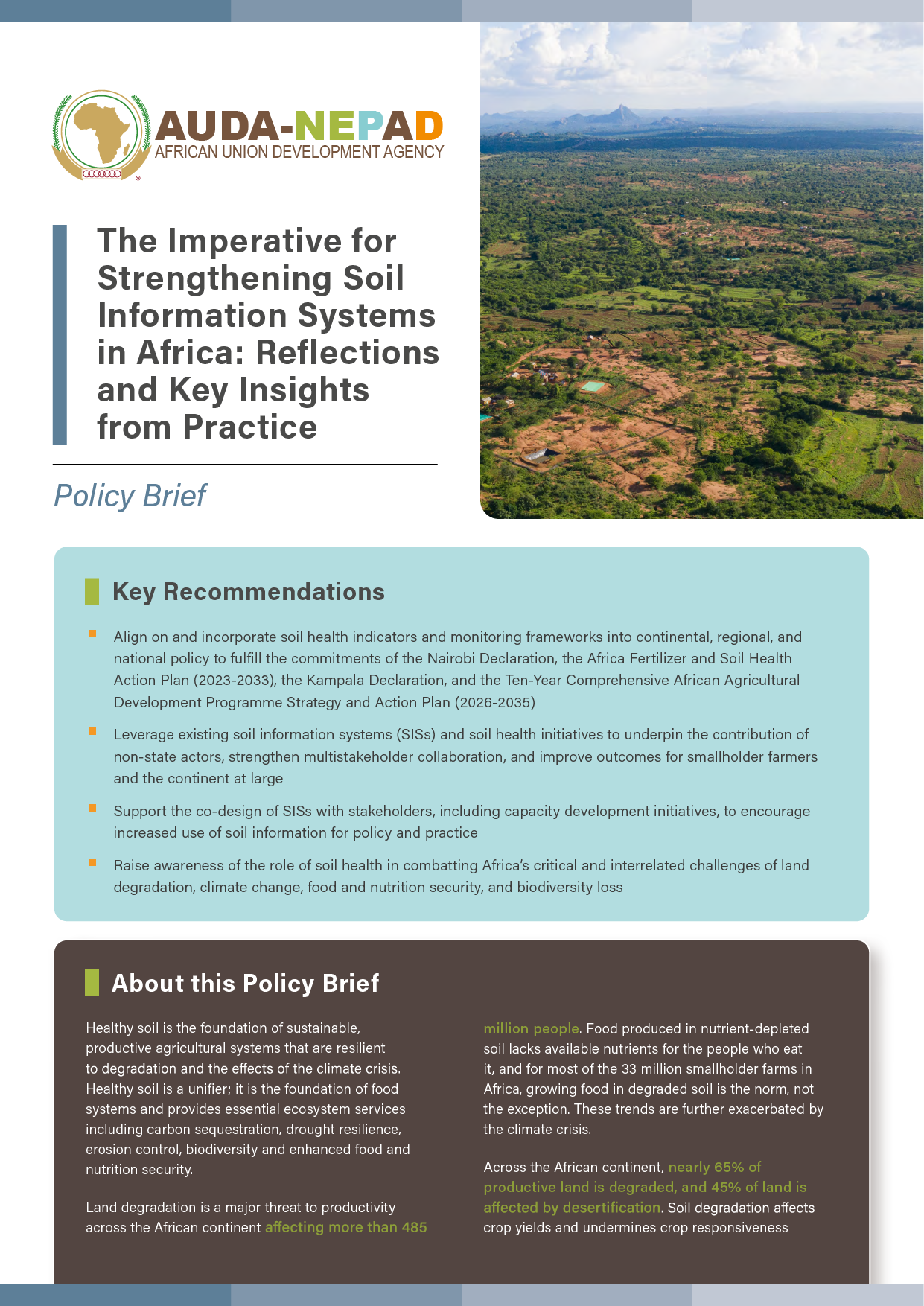
The Imperative for Strengthening Soil Information Systems in Africa: Reflections and Key Insights from Practice
Only through collaborative, cohesive soil health monitoring efforts can AU Member States ensure that interventions are based on evidence to maximize impact. For example, such a monitoring framework can be used to prioritize, track and adapt locally revelant interventions. In turn these data can be used to inform policy and financial investments. This policy brief outlines the case for African policymakers to scale soil information systems (SISs) and integrate them into continental, regional and national policy frameworks.
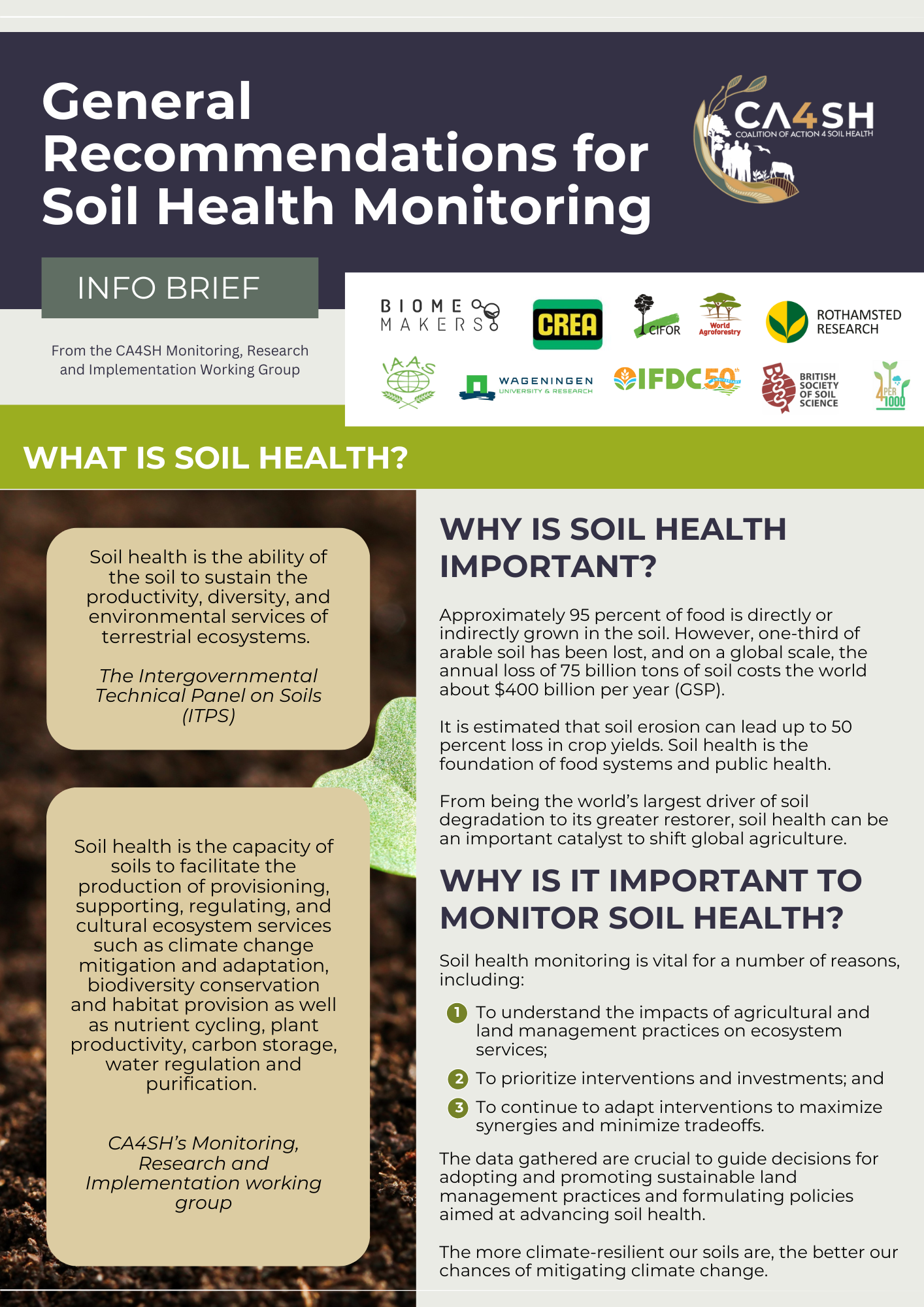
General Recommendations for Soil Health Monitoring
The CA4SH Monitoring, Research and Implementation have compiled expert advice and considerations for those looking to monitor soil health.
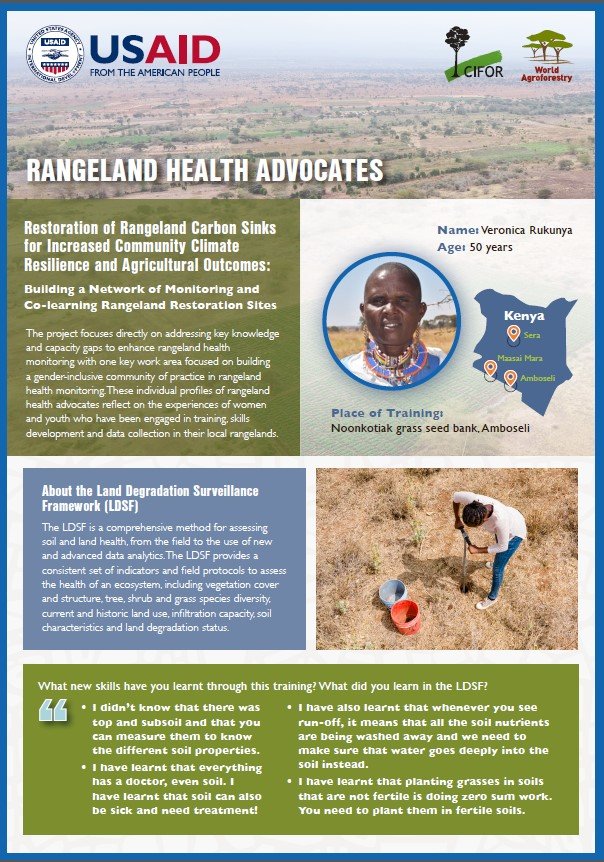
Advocate Briefs: Restoration of Rangeland Carbon Sinks for Increased Community Climate Resilience and Agricultural Outcomes
The Restoration of Rangeland Carbon Sinks focuses directly on addressing key knowledge and capacity gaps to enhance rangeland health monitoring with one key work area focused on building a gender-inclusive community of practice in rangeland health monitoring.
These individual profiles of rangeland health advocates reflect on the experiences of women and youth who have been engaged in training, skills development and data collection in their local rangelands.