
Resource Library
Any CA4SH partner can submit a resource to the Library, where we hope to increase visibility of diverse work related to improving soil health globally.
Please send a web link or a file to communications@coalitionforsoilhealth.org if you would like to submit a resource.
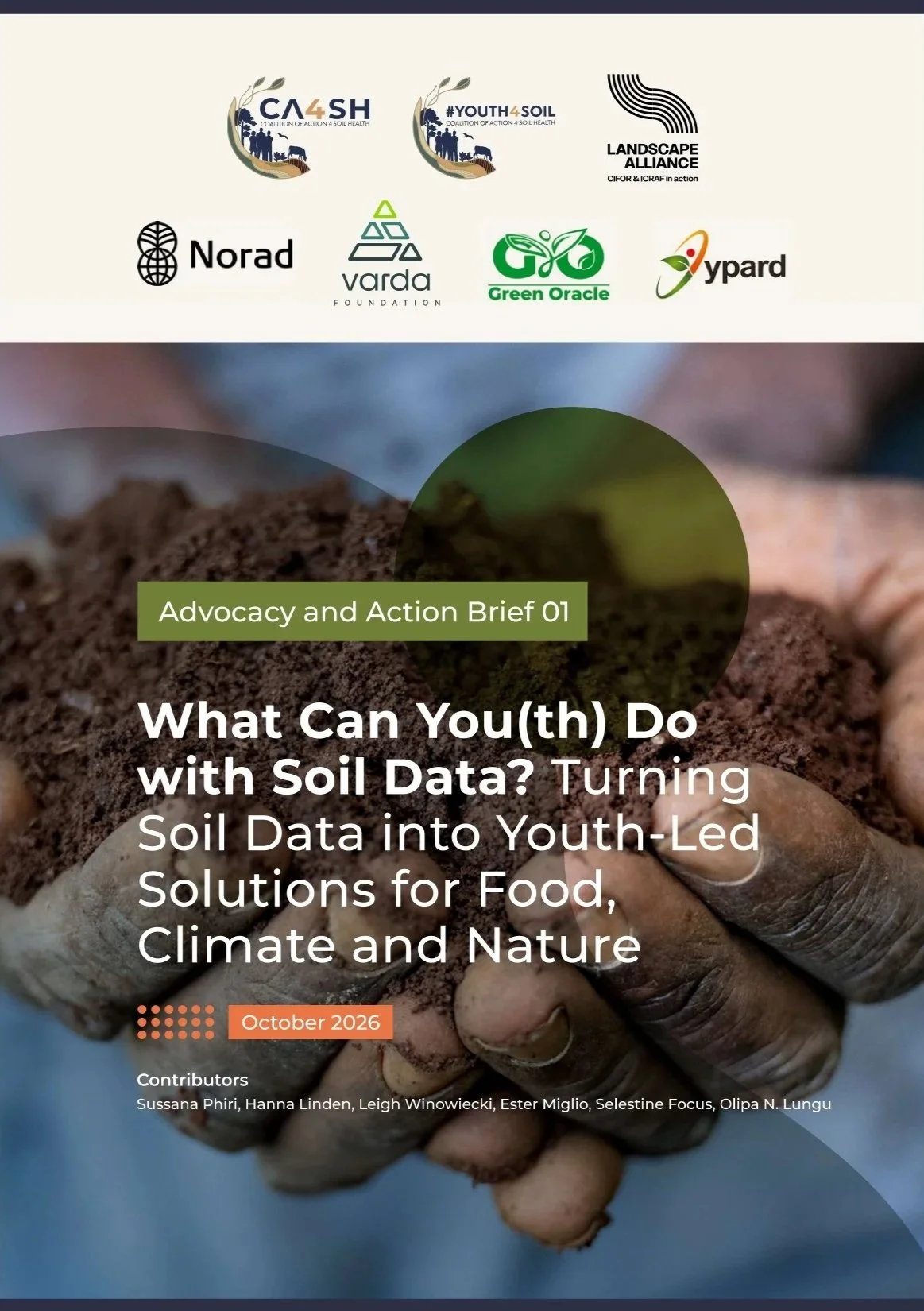
What Can You(th) Do with Soil Data? Turning Soil Data into Youth‑Led Solutions for Food, Climate and Nature
Healthy soil underpins food security, climate resilience, ecosystem restoration, and livelihoods. Yet more than one‑third of the Earth’s surface is degraded, undermining soil’s ability to sustain life. Soil health data is a critical tool to reverse this trend through evidence‑based decision making, but it remains fragmented, hard to understand, and often inaccessible to those who need it most — especially young practitioners, professionals, and advocates. This brief highlights how demystifying soil data can empower youth to lead solutions for food, climate, and ecosystems with four key messages:
Soil data must be democratized
Accessible, usable soil data is essential for youth to design sustainable land management systems, advocate for inclusive policies, and innovate solutions that strengthen resilience.Youth bring unique perspectives
Digital fluency, cross‑disciplinary thinking, proximity to communities, and strong communication skills position young people to translate soil data into action, innovation, and advocacy.Pathways for engagement
From research and technical roles to policy advocacy, entrepreneurship, and community mobilization, soil data offers diverse entry points for youth to drive evidence‑based restoration and sustainable agrifood systems.Co‑creation and equity
Policies and initiatives must not only consult youth but create opportunities for meaningful engagement, ensuring inclusion of young women, indigenous youth, pastoralists, and marginalized communities.
Soil data is a pathway to evidence‑based restoration, sustainability, and resilience. When demystified and linked to livelihoods, it empowers young people to innovate, advocate, and lead restoration efforts that strengthen food systems, protect ecosystems, and build climate resilience. For this potential to be realized, policies and investments must move beyond consultation to genuine co‑creation, ensuring youth — especially young women, indigenous communities, pastoralists, and marginalized groups — have the resources and platforms to act. By centering youth leadership, soil data becomes not only a technical tool but a catalyst for inclusive transformation at local, national, and global levels.

Youth4Soil Manifesto Implementation Guide
This Implementation Guide is an action and advocacy tool that aims to help youth and allied actors design and implement activities that help to achieve the global youth priorities, and align and integrate youth priorities in global frameworks. The Guide builds on the co-creation process that produced the Youth4Soil Manifesto. It draws on the contributions of over 250 youth individuals and 60 youth-led organizations across regions, gathered through surveys, consultations, dialogues, and a call for stories. The Guide highlights key recommendations, enabling conditions, entry points for specific actors, and resources to support implementation of the Global Youth Priorities.

FIELD INSIGHTS | #Youth4Soil Kenya Data Drive: Using the Regreening App to engage young people in restoration
Between 27 April and 10th May, 2026, #Youth4Soil engaged the cohort in Kenya in a data drive using the Regreening App to generate participatory, credible and standardized data while strengthening both scientific understanding and community action among youth. By engaging directly in data collection, youth became active contributors to evidence‐based decision‐making rather than passive beneficiaries of external interventions.
The experiences documented in this brief highlight how the initiative empowered youth with skills, credibility and advocacy capacity, positioning them as agents of change. The initiative fostered stronger youth networks and enhanced confidence, while the lasting impact will be reflected in improved soil practices, informed policies, and resilient communities that can better withstand future shocks.