“La Tierra Habla” by Angie Huezo, El Salvador
Around the world, young people are living the daily realities of land degradation while also leading efforts to protect the soil, water, and ecosystems that sustain their communities. Their experiences offer urgent insight into how environmental decline affects food, health, education, and the future of entire generations.
At the recent twenty-third session of the Committee for the Review of the Implementation of the Convention (CRIC 23) of the United Nations Convention to Combat Desertification (UNCCD), in Panama City, Panama, 15-year-old Angie Michelle Huezo Gámez from El Salvador delivered a powerful and deeply moving intervention. Speaking from lived experience in a region marked by drought, soil degradation, and water scarcity, Angie illuminated how environmental crises shape the lives of children and adolescents, and how young people are already acting to restore land and protect their communities.
Her words are a call to decision-makers to listen to youth, recognise their leadership, and ensure that policies reflect the realities faced by those who will inherit the consequences of today’s choices. Angie's testimony reminds us that land degradation is not only an environmental issue, it is a matter of dignity, equality, and the right to a future.
CA4SH is honoured to share Angie’s full statement below, so her voice can continue to inspire action and strengthen youth leadership across the land and food systems agendas.
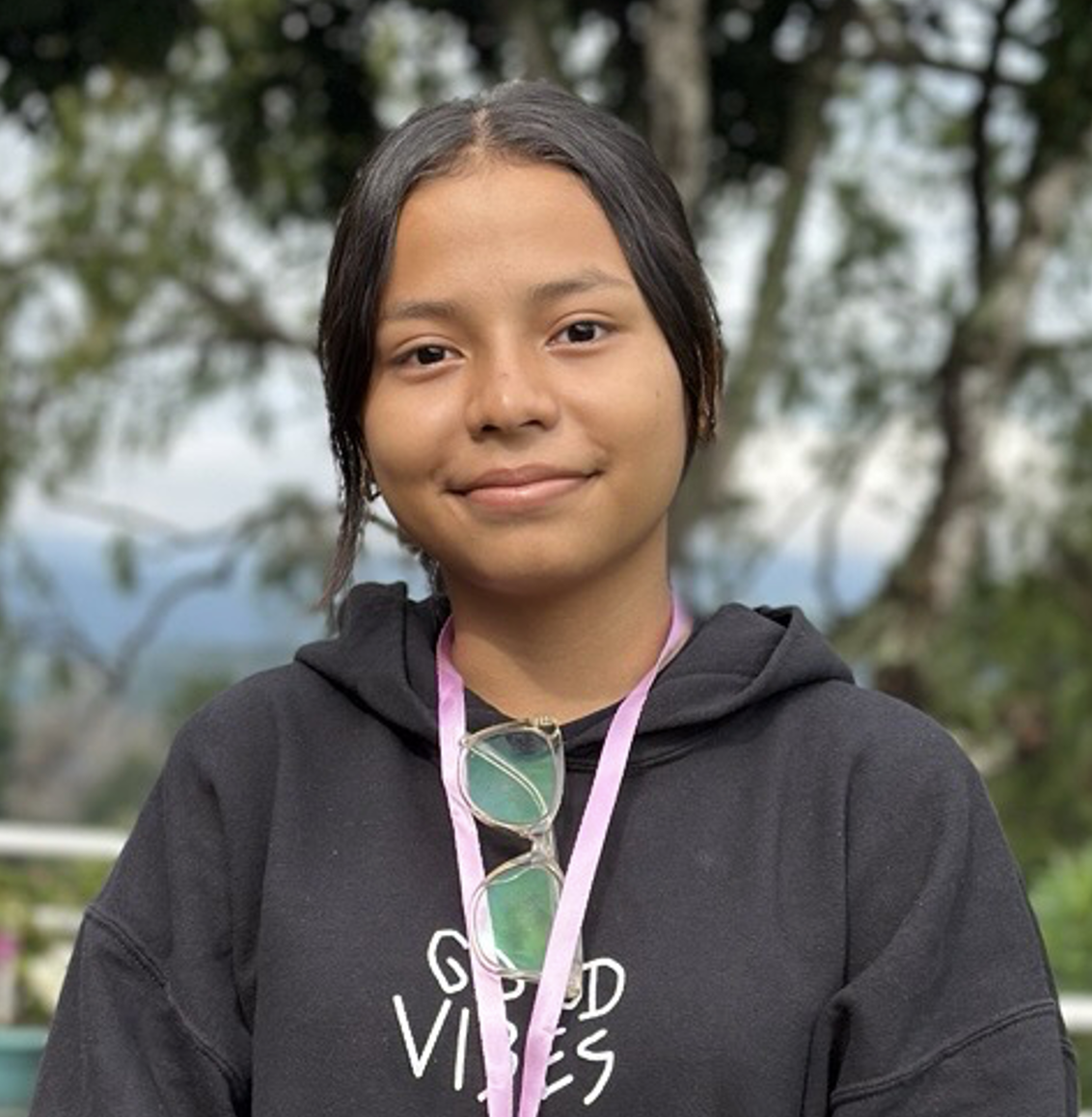
Angie Huezo, 15, is a secondary school student at Centro Escolar Barrio El Calvario in Puerto La Libertad, El Salvador. From a young age, she has demonstrated a strong commitment to defending the rights of children and adolescents. Her leadership has flourished through her active participation in the Youth Meeting House (Casa de Encuentro Juvenil), an initiative promoted by the international NGO Educo, which is a member of the ChildFund Alliance.
In 2023, Angie was selected to represent El Salvador at the United Nations Assembly in New York as part of the global initiative “Joining Forces: Ending Violence Against Children.” From her community to national platforms, she has advocated for the right to quality education, protection from violence, and meaningful participation of children and adolescents in decisions that affect their lives.
For Angie, addressing environmental degradation and climate change is critical: “Our future and living conditions depend on the actions we take today; these issues directly impact our health and well-being.”
English translation is available below.
Una vez acompañé a mi papá a ver su milpa. Él siempre dice que la tierra habla, pero ese día me dijo algo distinto: “Mirá, hija… creo que esta vez la tierra ya no puede más”. La tierra estaba dura, resquebrajada, casi sin vida. Él sacó un puño y se le deshizo entre los dedos como si fuera polvo. Ese momento me dolió… porque entendí que cuando la tierra se enferma, todo lo demás también comienza a quebrarse: la comida, la salud, el trabajo, la escuela… nuestra vida.
Y por eso estoy aquí hoy: para hablar desde la experiencia, pero también desde la esperanza.
Buenas tardes a todas y todos. Mi nombre es Angie Michelle Huezo Gámez, tengo 15 años y orgullosamente represento a El Salvador. Quiero comentarles cómo participar en los proyectos de Educo me cambió la mirada.
Gracias a Educo, miembro de ChildFund Alliance, participo en distintos proyectos: Plan de Vida, la Red de Adolescentes y Jóvenes, la Casa de Encuentro Juvenil y espacios internacionales como el foro “Niñez como Agentes de Cambio” en donde participé en Nueva York.
¡Por eso hoy no hablo solo por mí!
Hablo con la voz de las niñas, adolescentes y jóvenes de El Salvador que quieren un futuro distinto. La degradación del suelo es una herida que atraviesa nuestras vidas, es una de las crisis más graves del planeta. La Organización de las Naciones Unidas para la Alimentación y la Agricultura (FAO) estima que más de 1.600 millones de hectáreas están dañadas en el mundo, muchas en zonas agrícolas. En Centroamérica, especialmente en el Corredor Seco, más de 7.1 millones de personas sufren inseguridad alimentaria. Y los más afectados somos las niñas, niños y adolescentes.
En El Salvador, la degradación ocurre por deforestación, agricultura intensiva, urbanización y sequías prolongadas… y se siente en nuestros hogares.
Cuando una cosecha falla, hay niñas y niños que dejan la escuela para ayudar en casa. Pierden clases, pierden oportunidades… pierden derechos. Lo sé porque lo vivo: mi papá cultiva maíz, y el calor extremos, ese que ahora quema la piel a pocos minutos, hace su trabajo más difícil y peligroso. Él enfrenta riesgos de salud todos los días: deshidratación, insolación, problemas en la piel.
Otro problema grave es la contaminación del agua. En El Salvador, cerca del 80% de los ríos están contaminados. El agua es nuestro bien más frágil. Son cifras, sí, pero detrás hay realidades: ríos convertidos en basureros, peces con microplásticos, comunidades sin agua para beber ni para sembrar.
Y cuando no llueve, cuando las lluvias cambian o se concentran en tormentas violentas… todo empeora.
Hoy el invierno ya no es como antes. El clima ya cambió, y lo vivimos cada día. Antes llovía suave, constante. Ahora a veces no llueve nada… o llueve demasiado.
Las inundaciones arrasan cosechas y hogares; las sequías secan los pozos y las tierras. Y el calor… ese calor que nos obliga a escondernos en la sombra, mientras muchas familias compran aires acondicionados que aumentan aún más el consumo energético del país.
El transporte también afecta. El CO₂ de los autos contribuye a: 74% más sequías, 41% derretimiento de glaciares, 40% acidificación de los océanos.
Pero a la par de este panorama difícil, también existen acciones que están haciendo la diferencia.
Yo misma he participado en proyectos ambientales como Jóvenes por la Libertad, donde investigamos el impacto de los desechos sólidos en comunidades que no reciben recolección de basura. Las personas jóvenes estamos actuando, son pequeñas acciones que construyen futuro. También he sido parte de jornadas de limpieza, reforestación, campañas de protección de ríos y prevención de incendios junto a mi comunidad, Educo, otras ONG y centros escolares.
Muchos jóvenes en El Salvador y la región están liderando huertos comunitarios, restaurando manglares, cuidando cuencas, promoviendo compostaje o retomando saberes ancestrales. Puede parecer pequeño, pero suma.
Educo me enseñó algo clave: educar cura, empodera y protege. La educación no solo nos abre puertas, también nos prepara para cuidar la tierra que nos sostiene.
Educo trabaja para que tengamos espacios seguros, herramientas para comprender la crisis climática, conocimientos para proteger nuestro entorno y participación real en decisiones que nos afectan.
Porque la justicia climática también es un derecho de niñas, niños y adolescentes. Tenemos derecho a un ambiente sano. A un futuro digno. A que nuestra voz sea escuchada.
Por eso... Hoy quiero pedir algo muy simple, pero muy grande:
Que este foro no quede en discursos.
Que no olvidemos lo que la tierra nos está suplicando.
Que sigamos escuchando la voz de la niñez y la juventud.
Porque los países pequeños somos los más vulnerables, pero también los más valientes.
Porque aún estamos a tiempo.
Y porque las futuras generaciones, incluyéndome a mí, merecemos vivir en un mundo sano.
No estamos luchando solo por la tierra… estamos luchando por nuestra dignidad, por nuestra igualdad y por nuestro derecho a existir.
Si seguimos así… ¿qué futuro nos espera?...
O mejor dicho: ¿tendremos futuro?
Ustedes, ¿qué piensan? Ustedes personas adultas, ¿qué futuro nos están dejando?
English Translation:
Once, I went with my dad to see his milpa (maize field). He always says that the land speaks, but that day he told me something different: “Look, my daughter… I think this time the land can’t take it anymore.” The soil was hard, cracked, almost without life. He grabbed a handful and it crumbled between his fingers like dust. That moment hurt me… because I understood that when the land gets sick, everything else also begins to break: food, health, work, school… our life.
And that’s why I’m here today: to speak from experience, but also from hope.
Good afternoon to everyone. My name is Angie Michelle Huezo Gámez, I am 15 years old, and I proudly represent El Salvador. I want to share how participating in Educo’s projects changed the way I see things.
Thanks to Educo, a member of ChildFund Alliance, I participate in several projects: Life Plan, the Network of Adolescents and Youth, the Youth Gathering House, and international spaces such as the forum “Children as Agents of Change,” where I participated in New York.
That’s why today I’m not speaking only for myself!
I speak with the voice of the girls, adolescents, and young people of El Salvador who want a different future.
Soil degradation is a wound that cuts through our lives; it is one of the most serious crises on the planet. The Food and Agriculture Organization of the United Nations (FAO) estimates that more than 1.6 billion hectares are damaged around the world, many in agricultural areas. In Central America, especially in the Dry Corridor, more than 7.1 million people suffer from food insecurity. And the most affected are girls, boys, and adolescents.
In El Salvador, degradation happens because of deforestation, intensive agriculture, urbanization, and prolonged droughts… and it is felt in our homes.
When a harvest fails, there are girls and boys who leave school to help at home. They miss classes, they lose opportunities… they lose rights. I know this because I live it: my dad grows maize, and the extreme heat, heat that now burns your skin in just a few minutes, makes his work more difficult and dangerous. He faces health risks every day: dehydration, heat exhaustion, skin problems.
Another serious problem is water pollution. In El Salvador, around 80% of rivers are contaminated. Water is our most fragile resource. These are numbers, yes, but behind them are realities: rivers turned into dumpsites, fish with microplastics, communities without water to drink or to farm.
And when it doesn’t rain, when rainfall changes or comes all at once in violent storms… everything gets worse.
Today, the rainy season is not like before. The climate has already changed, and we live it every day. Before, it rained softly, consistently. Now sometimes it doesn’t rain at all… or it rains too much.
Floods destroy crops and homes; droughts dry up wells and land. And the heat… that heat that forces us to hide in the shade, while many families buy air conditioners that increase the country’s energy consumption even more.
Transportation also affects us. CO₂ emissions from cars contribute to: 74% more droughts, 41% glacier melt, 40% ocean acidification.
But alongside this difficult reality, there are also actions making a difference.
I myself have participated in environmental projects like “Youth for Freedom,” where we investigated the impact of solid waste in communities that do not receive waste collection services. Young people are acting, small actions that build the future. I have also been part of clean-up days, reforestation, river protection campaigns, and fire prevention efforts with my community, Educo, other NGOs, and schools.
Many young people in El Salvador and the region are leading community gardens, restoring mangroves, caring for watersheds, promoting composting, or recovering ancestral knowledge. These actions may seem small, but they add up.
Educo taught me something essential: education heals, empowers, and protects. Education not only opens doors, it also prepares us to care for the land that sustains us.
Educo works so that we have safe spaces, tools to understand the climate crisis, knowledge to protect our environment, and real participation in decisions that affect us.
Because climate justice is also a right of girls, boys, and adolescents. We have the right to a healthy environment. To a dignified future. To have our voices heard.
That is why today I want to ask for something very simple, but very big:
That this forum does not remain just speeches.
That we do not forget what the land is begging us.
That we continue listening to the voices of children and youth.
Because small countries are the most vulnerable, but also the bravest. Because there is still time. And because future generations, including myself, deserve to live in a healthy world.
We are not fighting only for the land… we are fighting for our dignity, for our equality, and for our right to exist.
If we continue like this… what future awaits us?
Or rather: will we even have a future?
You, adults, what future are you leaving us?