Resource Library
Any CA4SH partner can submit a resource to the Library, where we hope to increase visibility of diverse work related to improving soil health globally.
Please send a web link or a file to communications@coalitionforsoilhealth.org if you would like to submit a resource.

Completing the integrated soil fertility management equation: Latest trends in research and scaling for organic and auxiliary inputs
This toolkit aims to provide nuanced information about key entry points of the six featured technologies within the broader context of ISFM (Figure 3). By compiling up-to-date evidence from research and case studies we discuss the potential benefits for crop production and complementarity with synthetic fertilizer. Critical reflections are made of lessons learned and innovative incentive mechanisms that can help production and use. We also provide examples of how policies and investments can be designed to create practical ways for farmers to access and use technologies that enhance soil health. This toolkit is intended for development organizations and the policy sector to accelerate dissemination and uptake at scale of organic inputs and other amendments with proven ability to maintain and enhance soil health in food production systems of SSA. In light of the Fertilizer and Soil Health Strategy for the next 10 years, the insights provided in this toolkit can aid decision-makers. By assessing the technical aspects and scalability, the toolkit advances understanding to leverage and guide research, commercial investments and policy design. The scope of the assessments in the toolkit includes upland annual and perennial cropping systems such as grains, roots, tubers, and bananas because they represent the largest geographic area and staple food in smallholder systems of SSA.

Assessing the adaptation relevance of soil protection and rehabilitation: A participatory multi-stakeholder approach for monitoring and evaluation
This guide presents a systematic approach to identify relevant climatic risks and evaluate the effectiveness of SPR technologies regarding these risks as well as the local feasibility of these technologies. The presented methodology strikes a balance between rigor and practicability. The multistakeholder approach and the participatory elements offer opportunities for networking and sensitization of local experts, policy makers, extension officers and most important - farmers themselves. First experiences demonstrate that opening this space allows for fruitful and empowering exchanges.

One Earth Voices | Cell Press Journal | 17 Oct 2025, Volume 8, Issue 10
Toxic pollution on croplands—from pesticides, heavy metals, and industrial waste—poses a growing threat to soil health and the safety of crops for consumption. Addressing these contaminants is essential for food security, human well-being, and ecosystem resilience, yet significant challenges remain. In this Voices article, we ask, ‘‘What innovations and actions are needed to preserve croplands as a safe, sustainable foundation for the future of food?’’

Youth Initiatives for Scaling Soil Health: Advice from #Youth4Soil Global Advocates
The Coalition of Action 4 Soil Health (CA4SH) is a multistakeholder partnership committed to scaling soil health, globally. CA4SH places a high degree of importance on the role of youth as innovators and experts toward scaling global soil health. Youth are engaged through the #Youth4Soil movement, which includes a working group, mentorship opportunities, and support for speaking and engagement. We also want to highlight youth approaches to advocating for global soil health.
In April 2024, Roël D. Houdanon, Founder & Chief Technical Advisor, Land and Health Association shared an op-ed highlighting the role of youth in defending soil health. He presented several avenues for youth to get involved in scaling soil health:
Awareness Raising
Innovation & Technology
Policy Advocacy
Community Engagement
Education
Science & Research
We reached out to youth partners to learn about their individual approaches to scaling soil health through these thematic action areas.
These are their responses.

Production, Regeneration and Networking Innovation in Argentina: GoodPractices and Lessons Learned from Farmers in Argentina
The Carbon Gap Network or Red de Brechas de Carbono (RBC) project from the Argentine No-Till Farmers Association (Aapresid) takes localized information on climate and the environment and translates it into actionable recommendations for farmers on the ground to maximize their soil’s organic carbon, and foster overall healthier soils.
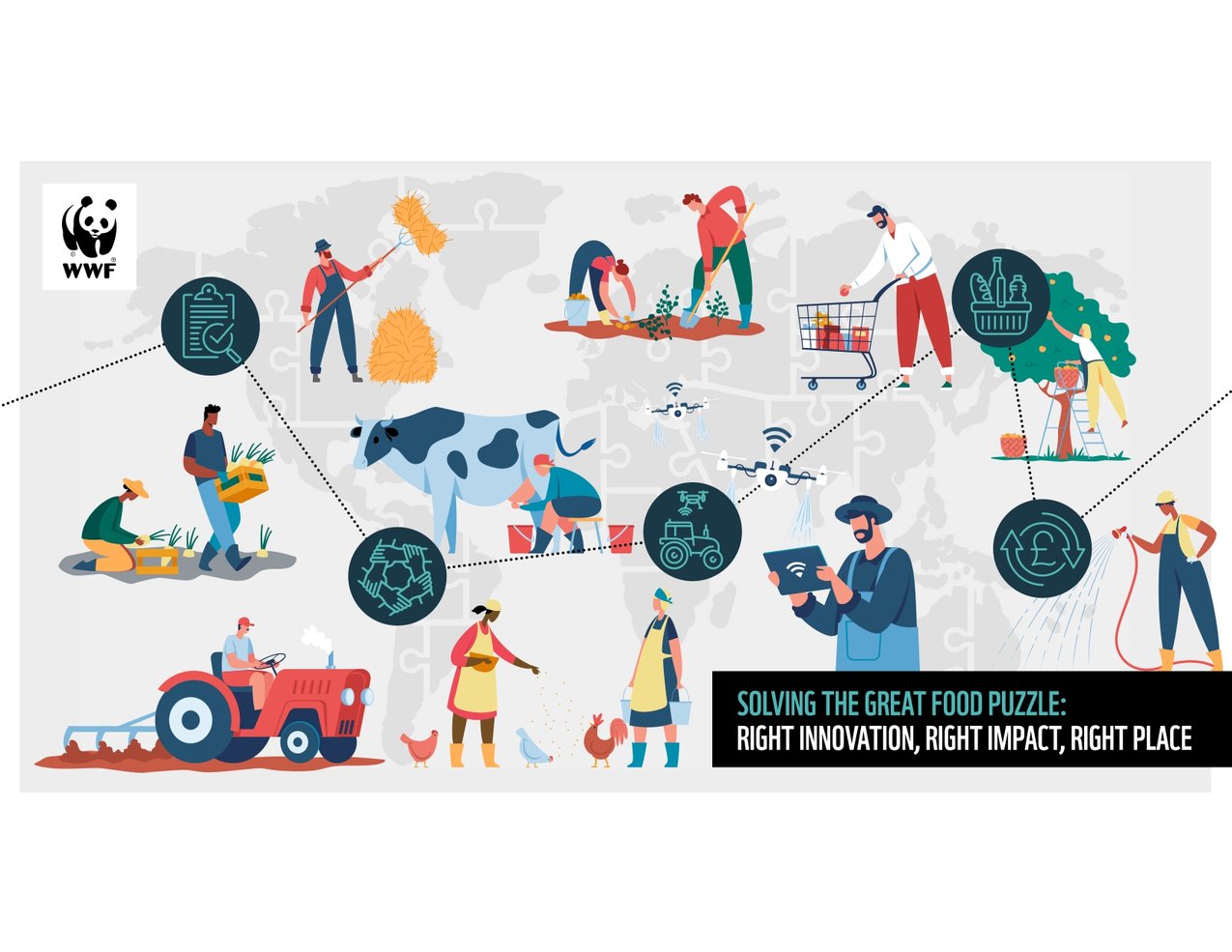
Solving the Great Food Puzzle: Right Innovation, Right Impact, Right Place
Innovations aren’t delivered by just a few people – everyone working within a food system can innovate. It is important that all stakeholders identify the actions that will deliver most impact in the shortest time – identifying new actions that can be applied, and scaling those that are already delivering success. Everyone must work to rapidly accelerate food systems transformation. Those investing money in food systems transformation (be they governments, banks, private investors, public donors or businesses) have a significant say in what innovations are implemented. Not only does the amount of funding for food systems innovation need to be increase, the direction of funds must become even more focused and context-specific.
There are already many innovations in our food systems and several are demonstrating their ability to deliver big impacts in short timeframes. Innovating doesn’t require developing completely new ways of doing things and decision-makers can learn from the approaches being applied in similar food systems round the world.