BLOGS, ARTICLES AND NEWS
Get updates directly from the CA4SH Global team and stakeholders

European Parliament seals the deal of first-ever EU law on soils
Today, EU lawmakers listened to citizens and science and rubber stamped the deal on the Soil Monitoring Law, the EU’s first ever law on soil health, after months of negotiations. Despite severe shortcomings of the endorsed text, this is an important milestone towards addressing Europe’s crisis of soil degradation. Its success will depend on impactful implementation.

Pathways to agrifood system transformation: From Local Innovation to Policy Change
Stories of Change to capture innovation journeys and invisible transformative changes
The DeSIRA initiative is a portfolio of 80 research and innovation (R&I) projects run in over 65 countries across three continents between 2019 and 2026, supported by a European Union contribution of €340 million. DeSIRA aims to enhance the contribution of R&I in addressing complex issues relating to sustainability transitions and agrifood system (AFS) transformation, towards achieving the Sustainable Development Goals, in low- and middle-income countries.

AfrioCAT To Boost Sustainable Land Management in Africa: AUDA-NEPAD Programme Officer for Climate Change
Addis Ababa, October 21, 2025 (ENA) - The launch of the AfrioCAT network in Addis Ababa is expected to assist the fight against land degradation and food insecurity in the continent, AUDA-NEPAD Programme Officer for Climate Change said.
This was made public during an inaugural workshop convened in Addis Ababa today co-hosted by AUDA-NEPAD and the Water and Land Resource Centre of African Union Development Agency (AUDA-NEPAD) and other key partners, and the World Overview of Conservation Approaches and Technologies (WOCAT).
AfrioCAT will serve as the official WOCAT Regional Cluster for Africa, is expected to significantly boost regional efforts in Sustainable Land Management (SLM) and Land Degradation Neutrality (LDN).

Top 10 Emerging Technologies for the Planet
Seven of Earth’s nine planetary boundaries – the natural systems that keep our planet stable – have now been breached.
Climate disasters are disrupting industries from agriculture to finance, exposing deep vulnerabilities in supply chains, infrastructure and communities worldwide.
From precision fermentation to green concrete, what are the most promising emerging technologies that can strengthen planetary resilience when climate risks know no boundaries?
Watch a recroding from the session at the 2025 World Economic Forum and download the report in collaboration with Frontiers, highlighting how innovation can help restore balance within these limits.

GCSAYN ED meets British Society of Soil Science Delegation
New York (USA), 26th September 2025 :- The Executive Director of Climate Smart Agriculture Youth Network Global Mr. Divine Ntiokam had a special meeting with Mr. Andrew Morris, the Executive Director of British Society of Soil Science (BSSS) on September 25th on the sidelines of UNGA80 & UN Climate Summit. Also present in the meeting was Mr. Khalid Mahmood Partnerships and Development Manager for BSSS.

Science of Scaling Biosolutions for Soil Health
As Brazil prepares to host COP30 in Belém, CGIAR Climate Action, together with the Brazilian Ministry of Agriculture and Livestock (Ministerio da Agricultura - MAPA), Embrapa, and CGIAR Multifunctional Landscapes, are convening a series of high-level dialogues to put biological solutions at the center of climate action in agriculture.
This webinar showcased how biological nutrient management technologies can be mainstreamed across cropping systems through evidence-based solutions that align science, policy, and practice. By highlighting innovations in phosphorus solubilization, microbial inoculants, and integrated crop-livestock-agroforestry systems, the session aimed to catalyze increased investment from governments, private sector actors, and development partners while demonstrating concrete pathways for farmers to reduce input dependency and enhance soil health at scale.

Climate Smart Agriculture Youth Network Global Executive Director Mr. Divine Ntiokam Attends UN General Assembly and Climate Summit 2025 in New York
Mr. Divine Ntiokam, Executive Director of the Climate Smart Agriculture Youth Network Global (CSAYN Global), was in New York to participate in the 80th session of the United Nations General Assembly (UNGA) and the 2025 UN Climate Action Summit, at the UN Headquarters.
Mr. Ntiokam’s participation underscored the growing importance of youth-led initiatives in shaping global climate policy and sustainable agriculture. As the founder and leader of CSAYN Global — a network that empowers young people to drive climate-smart agriculture practices across more than 100 countries — his participation aims to elevate the voices of youth and grassroots communities often left out of high-level climate discussions.

YPARD Zambia Trained in Tree Nursery and Community Forestry Management
In September 2025, 3 YPARD Zambia members participated in a transformative four-day training under the FACE-NDC Project, aimed at equipping young professionals with practical skills in tree nursery establishment and community forestry management.
Held in Lusaka, the workshop was facilitated by Vincent Ziba from the Food and Agriculture Organization (FAO), with contributions from Arthur Parry of Just One Tree Foundation.

#Youth4Soil: A Global Uprising Cultivating Resilience from the Ground Up
At the third 2025 #Youth4Soil Solutions Showcase, held virtually on September 25, young people from around the world presented ground breaking initiatives that exemplify how young people, rooted in their communities and connected to the land, are cultivating fresh, innovative solutions to restore soil health. Reiterating that just like plants need healthy soil to grow, a sustainable future needs youth-led ideas to flourish. Youth and soil together form the bedrock of regeneration, resilience and renewal.

Soil Cover and Landscape Integrity
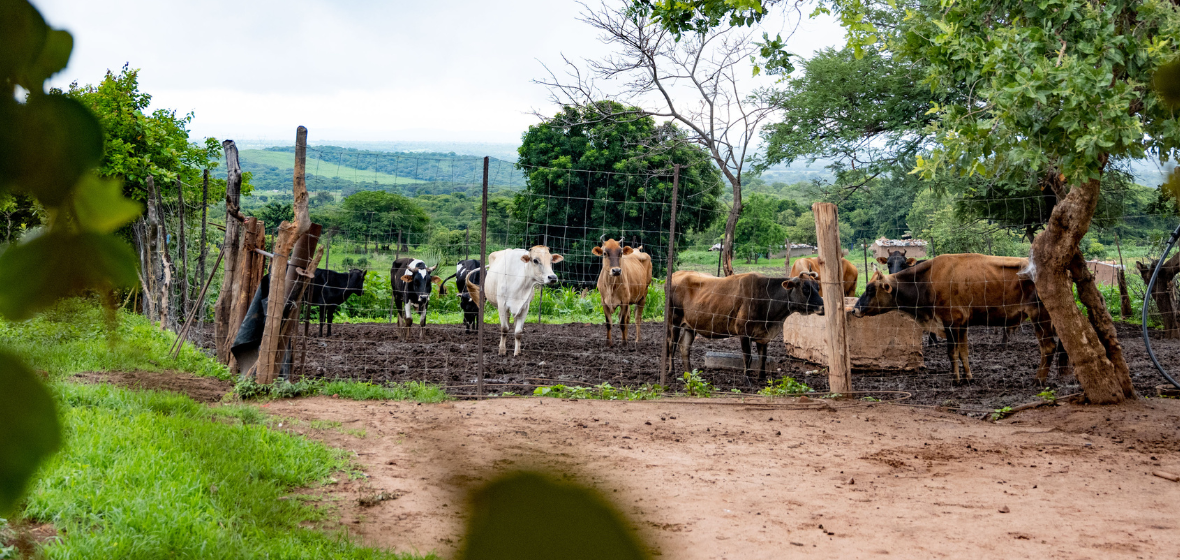
The devastating drought of 2021/22 in Kenya severely stressed the soil, underscoring the urgent need for restoration and conservation efforts. On one side of the boundary fence, within the Lewa Wildlife Conservancy, lies a protected area dedicated entirely to safeguarding wildlife. In stark contrast, the area on the left is used for livestock grazing, exemplifying how different land uses impact soil health. This stark juxtaposition serves as a potent reminder: understanding how landscapes function at the soil level is crucial for preserving landscape integrity and ensuring a thriving environment for future generations. Our actions today will determine the health of our land tomorrow.

CA4SH Partner and Steering Committee Meetings | September 2025
CA4SH was launched at the UN Food Systems Summit in 2021 and continues to grow, with over 300 members including government, NGOs, the private sector, research institutions, and youth-led organizations. The main goal of the Coalition is to improve soil health globally by addressing critical implementation, monitoring, policy, and public and private investment barriers that constrain the adoption and scaling of healthy soil practices. Central to this approach is experience and opportunity sharing, so on 8 and 9 September 2025, the CA4SH SteerCo and CA4SH Partners met to share updates and chart a way forward for the Coalition.

Unveiling the Underground Allies of Rangelands: A Case Study from Lumo Conservancy
The sun rises over the vast savannas of Lumo Conservancy in Taita Taveta, casting a golden glow across the horizon. Elephants move calmly across the rangelands, leaving soft footprints in the soil. Nearby, antelopes and other herbivores feed in groups, nibbling at the tough grasses. The land, though alive, bears the marks of a harsh climate scarred by heat and irregular rains. Yet just beneath the open-cracked soil is a hidden network, a secret force of life that continues to perpetuate life in a chaotic paradigm of failure even at a time when everything else fails. This hidden life is arbuscular mycorrhizal fungi (AMF). These fungi live in the soil and form a symbiotic relationship with plants. You may not see them, but their impact is clear. Without AMF, many plants would struggle to survive in the tough conditions of the rangelands.
Learn more from the field, by Lukelysia Mwangi, Research Associate, Living Soils at CIFOR-ICRAF
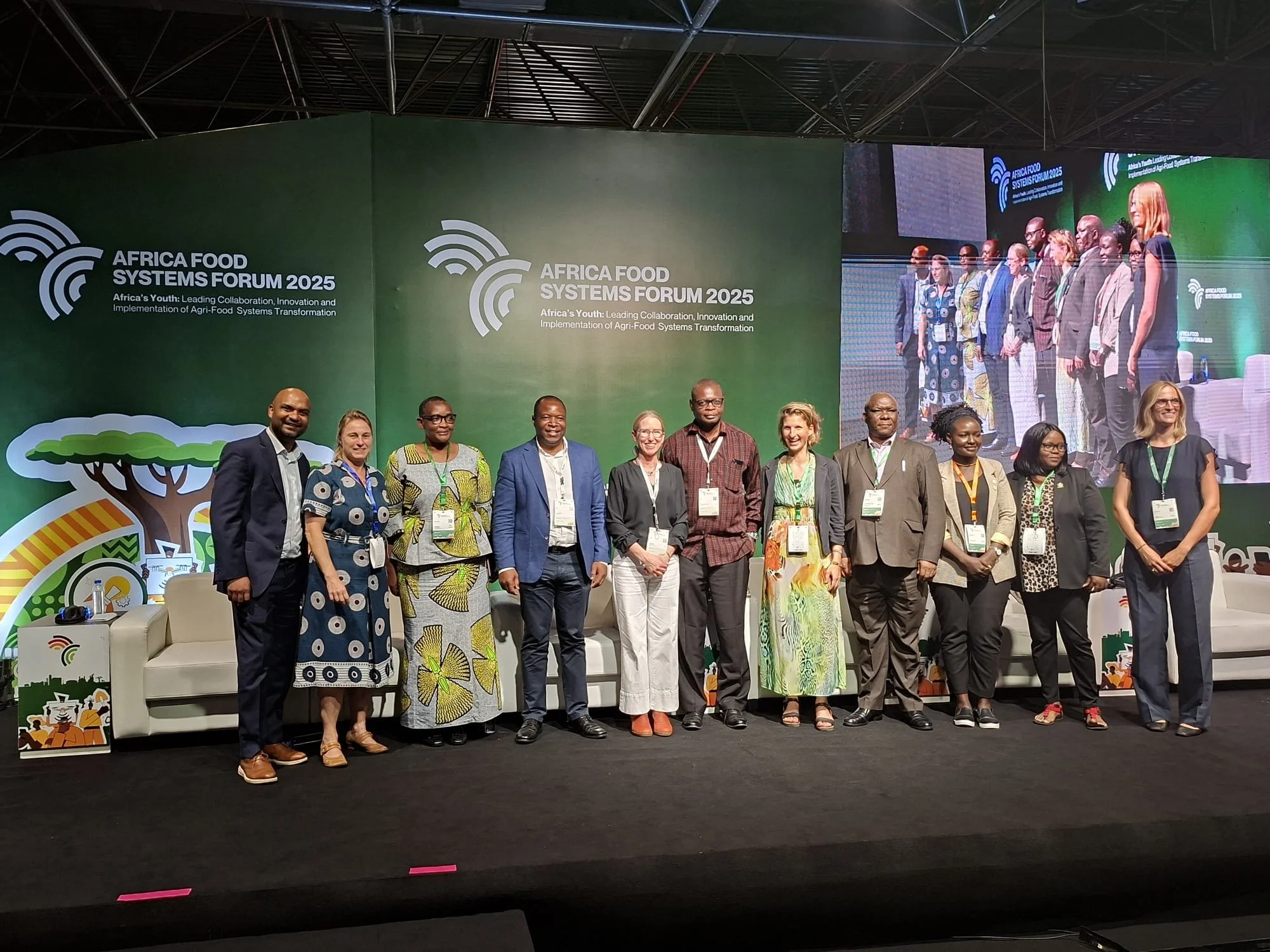
Soil Health in Focus: CA4SH and Partners Position Soil Health and Youth at the Heart of Africa’s Food Systems at AFSF 2025
From 31st August, 2025 to 5th September, 2025, the 15th Africa Food Systems Forum took place in Dakar, Senegal under the theme "Africa's Youth: Leading Collaboration, Innovation and Implementation of Agri-Food Systems Transformation". The 2025 forum convened over 6,000 stakeholders from 106 countries, representing more than 120 institutions. The Coalition of Action for Soil Health (CA4SH), alongside partners and #Youth4Soil, played a pivotal role across multiple high-level sessions, advancing the soil health agenda and youth engagement in sustainable agri-food systems transformation.

Beyond Workshops: Hands-on Restoration Training for Farmers in Mbooni Community Forest Association, Kenya
CIFOR-ICRAF has been conducting a series of trainings on Gender and Social Inclusion (GESI) in forest and landscape restoration for Community Forest Associations (CFAs) in Makueni County, Kenya as part of the UK PACT project.
To date, the trainings have reached more than 600 individuals, emphasizing the importance of gender equity in achieving sustainable restoration outcomes. Over the past two years of implementation, some common themes have emerged, highlighting that many CFA members feel held back by their current level of skill in agroforestry practices and soil conservation techniques. In response, CIFOR-ICRAF followed up with technical, on-farm training in sustainable agroforestry practices and composting for soil conservation.

Strengthening Youth Voices in Agri-Food Systems Governance: An Advocacy Workshop for Change in Lusaka, Zambia
On August 28th, 2025, youth organizations and cooperatives from across Lusaka gathered at Protea Hotel Lusaka Tower for a transformative workshop under the theme “Strengthening Youth Voices in Agri-Food Systems Governance.”
Organized by FAO Zambia and ICLEI Africa, with active participation from YPARD Zambia, the session marked a pivotal moment in building youth capacity to influence food systems governance.
This wasn’t just another training—it was a shift in mindset. Following a series of engagements in agri-food systems governance dialogues and consultations that exposed a gap in youth capacity to effectively engage decision-makers, young leaders came together to move from “What is advocacy?” to “How do we make our advocacy more targeted, meaningful, and influential?”

Elevating Soil Health for a Sustainable Future
May 20–22, 2025 - The Conference "Partners for Change – SOILutions for a Food Secure, Resilient, and Sustainable Future" in Berlin was more than a closing celebration; it was a call to action and a moment of convergence. Over 25 countries came together to chart a bold new course for global soil health. Celebrating a decade of impact, the event called for political leadership, farmer-led solutions, and coordinated action to embed soil health at the heart of sustainable food systems and climate resilience.

From the ground up: Why non-state action will be vital for soil health at COP30
As COP30 approaches, Dr Leigh Ann Winowiecki from the Coalition of Action 4 Soil Health (CA4SH) asserts the need to include non-state actors in global discussions to unlock soil health’s vital role in resilient food systems, climate solutions and planetary well-being.
Read the full Op-Ed published by New Food Magazine

Empowering Youth Entrepreneurship in Agri Food Systems in Zambia
On 28th and 29th May, 2025, Youth including Young professionals from the YPARD Zambia Chapter joined industry leaders, policymakers, and agripreneurs for a two-day workshop under the theme "Promoting Youth Entrepreneurship Across Agrifood Systems." Convened by Hydrangea, WEAC, ICLEI, and the FAO, the event focused on unlocking opportunities, improving market access, and driving sustainable innovation in Zambia’s agrifood sector.

Indigenous Peoples must shape climate and environmental agendas: Hanieh Moghani addresses UNFSS+4
At the recent UN Food Systems Stocktake (UNFSS +4) in Addis Ababa, Ethiopia, Hanieh Moghani, Expert Member of the United Nations Permanent Forum on Indigenous Issues, addressed audiences at a side event titled From Riyadh to Mongolia: Bridging Action for Agroecology and Soil Health to Transform Food Systems. CA4SH is pleased to share Hanieh’s address so that her words can continue to move stakeholders to take action together.
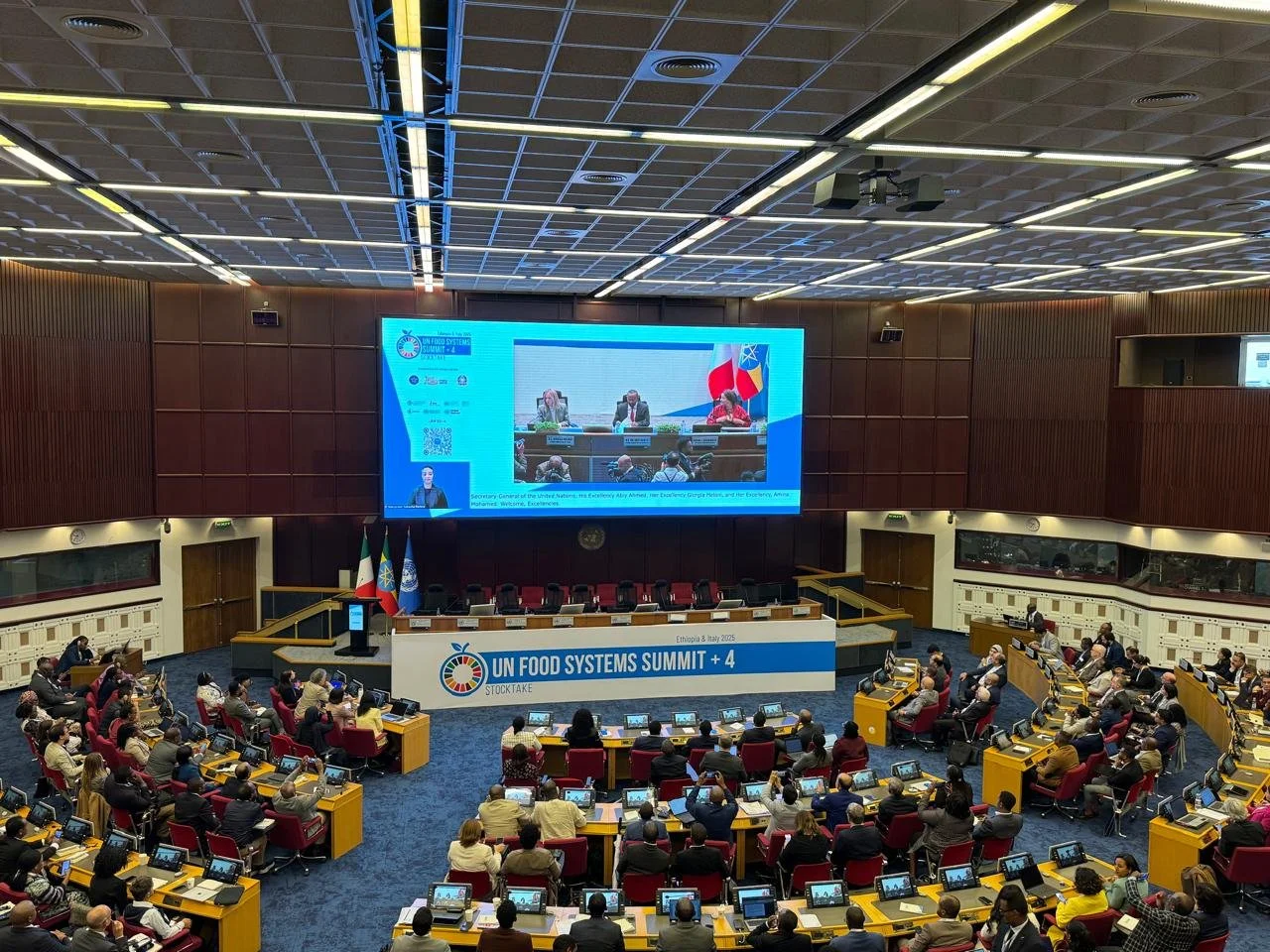
CA4SH and partners highlight the role of healthy soil at the Second United Nations Food Systems Summit Stocktake
The second United Nations Food Systems Summit Stocktake (UNFSS+4) was held from 27–29 July 2025 in Addis Ababa, Ethiopia, co-hosted by the Governments of Ethiopia and Italy. Marking four years since the inaugural 2021 UN Food Systems Summit, UNFSS+4 served as a critical moment to assess progress, deepen partnerships, and mobilize investments to accelerate food systems transformation globally.
The Coalition of Action 4 Soil Health (CA4SH)—established during the 2021 Summit—was actively engaged throughout the Stocktake. CA4SH co-hosted two thematic side events, co-organized a joint session with fellow UNFSS Coalitions of Action, and showcased its work through an exhibition booth, amplifying the role of healthy soil in delivering on food, nutrition, climate, nature, and land goals.