Resource Library


Feature Resources

Greenhouse gas emissions from Terra Preta substrates in India
For all investigated concepts, the production and application of the Terra Preta Substrate (TPS) lead to negative emission results under the selected assumptions, resulting from an assumed carbon sequestration that exceeds the greenhouse gas emissions from the production of the TPS. Whereby, the concepts with advanced pyrolysis technology are the most advantageous due to the reduced CH4 emissions from pyrolysis.
Emissions of methane and nitrous oxide from composting and pyrolysis process are by far the most significant emission sources in the overall result. The result shows a high influence of carbon sequestration in the overall balance. The carbon introduced and permanently sequestered, mainly via the biochar, leads to high CO2 credits.
TPS production, including pyrolysis and composting processes, and the application to agricultural soils interact with the environment and climate system in multiple complex ways, this results in many uncertainties.
In order to reduce these ranges in the future and to further increase the robustness of the accounting results, measurements of actual emission values or sequestered carbon should be taken regularly during the further implementation and operation of the investigated technologies in India.

Sustainable Land Management (SLM): A compilation of SLM technologies and approaches to enhance Integrated Soil Fertility Management in Ethiopia
Fourteen selected SLM practices under the ISFM+ project were documented by the Alliance of Bioversity International and CIAT and published on the World Overview of Conservation Approaches and Technologies (WOCAT) global database for scaling out. By documenting and disseminating these ISFM technologies, this compilation aims to support the efforts of policymakers, practitioners, and communities working to safeguard Ethiopia’s soil health and agricultural productivity. It is our hope that this resource will contribute to informed decision-making, foster knowledge exchange, and ultimately help build a more resilient and sustainable agricultural sector in Ethiopia.

Business Model for Bio-PROM: Case Example from Suvarnakranthi FPCL, Sindhudurg, Maharashtra
Indo-German development cooperation project ‘Soil Protection and Rehabilitation of Degraded Soil for Food Security in India (ProSoil) is implemented by Deutsche Gesellschaft für Internationale Zusammenarbeit (GIZ) GmbH on behalf of the German Federal Ministry for Economic Cooperation and Development (BMZ) in partnership with the National Bank for Agriculture and Rural Development (NABARD). The project is part of a larger global programme under BMZ’s Special Initiative “Transformation of Agricultural and Food Systems”. Under this project, GIZ India in collaboration with BAIF Development Research Foundation, is supporting an initiative in the Sindhudurg district of Maharashtra to prepare an organic manure called Bio-PROM using residue from biogas plants.
Bio-PROM can generally be produced using different sources like organic manure, plant-based biomass, de-oiled cakes, potassium hummate, to name a few.

SOLution: L’approche de diffusion Paysan·ne Relais (PR)
L'approche de diffusion « Paysan·nes Relais (PR) » mise en œuvre par le programme ProSol depuis 2019 vise à renforcer la résilience des agriculteur·rice·s à Madagascar en facilitant l'adoption de pratiques agroécologiques. Cette méthode repose sur la formation de PR, qui sont des agriculteur·rice·s locaux·ales sélectionné·e·s pour transmettre leurs connaissances et compétences à d'autres agriculteur·rice·s de leur communauté. Les PR jouent un rôle central en réalisant des démonstrations pratiques sur leurs propres parcelles, ce qui favorise l'apprentissage par l'expérience et l'échange entre pairs.

From Roots to Riches: Priority Policy and Investment Decisions for Grasslands and Savannahs
Clarifying and communicating the values of grasslands is essential to catalysing increased conservation, restoration and sustainable management. Grasslands and savannahs face significant and widespread threats from multiple fronts and are an underacknowledged ecosystem in the minds and imaginations of people around the world. The report reflects a growing recognition and commitment to grassland and savannah conservation within WWF and partners, due to their critical roles in food security, biodiversity, ecosystem services and human cultures. It contributes to momentum building towards the International Year of Rangelands and Pastoralists and the next Conference of the Parties of the UN Convention to Combat Desertification (UNCCD) in Mongolia, both in 2026. This report aims to help governments to develop ambitious yet realistic conservation strategies for these critical ecosystems and inform private sector initiatives and finance.

Breakthrough Agenda Report 2025: Accelerating sector transitions through stronger International collaboration
Since its launch at COP 26, the Breakthrough Agenda has become established as an annual collaborative process centred around the Conference of the Parties (COP) meetings of the United Nations Framework Convention on Climate Change (UNFCCC). It is currently supported by over 60 countries representing over 80% of global GDP, and by over 150 initiatives working to enhance collaboration within major emitting sectors. Countries can endorse Breakthrough goals to make clean technologies and sustainable practices more affordable, accessible and attractive than their alternatives by 2030 in the power, road transport, hydrogen, steel, cement and buildings sectors.
The Breakthrough Agenda establishes an annual cycle to track developments towards these goals, identify where further co-ordinated international action is urgently needed to accelerate progress and then galvanise public and private international action behind these specific priorities in order to make these transitions quicker, cheaper, and easier for all.
To initiate this cycle, world leaders tasked the IEA and the Climate High-Level Champions to develop an annual Breakthrough Agenda report to provide an independent evidence base and expert recommendations for where stronger international collaboration is needed. From 2022-2024, the reports contained a detailed assessment on the state of international collaboration across these sectors in areas such as definitions, standards and certification, demand creation and management, research and innovation, finance and investment, infrastructure, and trade conditions, among others.
The Breakthrough Agenda Report 2025 – the fourth in the annual series – takes a different approach to previous reports, in that it does not contain the same detailed sector-by-sector assessment. Instead, this year’s report focuses on enhancing the methodology behind the detailed progress assessments, provides practical examples of collaboration through deep dives, and introduces a new focus chapter on fertilisers.

STORIES OF IMPАСТ MAGAZINE | The Power of the People: Driving Africa's Food Agenda
This document, encompassing various success stories and strategic insights, highlights the diverse contributions of Non-State Actors in advancing agricultural development. It features case studies such as Pambana Enterprise in Zambia, which exemplifies youth-led initiatives in reducing post-harvest losses and promoting food security and climate resilience. The role of media, as demonstrated by Sydney Katunga Phiri, is underscored as crucial for translating complex agricultural policies, fostering public accountability, and building a continental narrative around key themes like youth agripreneurship, gender inclusion, and climate-smart agriculture.

One Earth Voices | Cell Press Journal | 17 Oct 2025, Volume 8, Issue 10
Toxic pollution on croplands—from pesticides, heavy metals, and industrial waste—poses a growing threat to soil health and the safety of crops for consumption. Addressing these contaminants is essential for food security, human well-being, and ecosystem resilience, yet significant challenges remain. In this Voices article, we ask, ‘‘What innovations and actions are needed to preserve croplands as a safe, sustainable foundation for the future of food?’’

Soil First: Advancing Food System Transformation from the Ground Up
This paper is the outcome of the “Partners for Change – SOILutions for a Food Secure, Resilient, and Sustainable Future” (short SOILutions) conference held in Berlin, Germany, from 20th to 22nd May 2025. It is based on the experience and lessons learned from over a decade of on-the-ground implementation through a major investment in soil protection and rehabilitation. Since 2015, the Federal Ministry for Economic Cooperation and Development (BMZ) together with the European Union (EU) and the Gates Foundation (GF) have provided over EUR 240 million through the programme “Soil Protection and Rehabilitation for Food Security” (short ProSoil) This programme has been successfully implemented in several African countries and India using a multipartnership approach. To date, nearly 1 million hectares of agricultural land have been protected and rehabilitated, achieving an average yield increase of 44 per cent and providing more food and better nutrition for 2.6 million people in seven countries.

2024 Annual Report | Center for Rural Empowerment and Agricultural Transformation for Sustainability (Creats International)
Presenting the 2024 Annual Report of the Center for Rural Empowerment and Agricultural Transformation for Sustainability (Creats International). Through your generous donations, strong partnerships, and unwavering support, we achieved remarkable milestones captured in this report.
As we celebrate ten years since our founding, we extend our heartfelt gratitude for walking with us on this transformative journey. Together, we look forward to deepening our impact and continuing to empower communities to move from merely surviving to truly thriving.

Policy Brief | Healthy Soils, Resilient Systems: Levers for Sustainable Agricultural and Food Systems
This Policy Brief derives from the “Partners for Change – SOILutions for a Food Secure, Resilient, and Sustainable Future” (short SOILutions) conference in May 2025. The Partners for Change (P4C) Network brings together around 250 key stakeholders from government, civil society, and the private sector from over 30 countries. To advance the transformation of agricultural and food systems, the P4C Network provides an inclusive dialogue platform that fosters the c ocreation of sustainable transformation pathways across the three stakeholder groups.

Soil Health, Carbon, and Ecosystems – An Overview of Interdependencies that are Vital for the Planet
This new paper from IFDC outlines the role of soil in mitigating and adapting to the effects of climate change while also being influenced by these changes – a complex two-way relationship.
The authors first provide an understanding of this relationship before discussing the direct and indirect pathways through which soil health impacts carbon sequestration. Next, they highlight global evidence on soil health’s role in ecosystem services, including its ability to promote resilient, climate-adaptable systems.
Then, they discuss how these beneficial effects are under threat, as the increase in climate change-induced events limits the ability of soil to mitigate and manage climate change. Finally, they conclude by identifying areas where further action and research are needed.

Enhancing Soil Health for Sustainable Food Security: Achieving Zero Hunger
A new paper from IFDC seeks to elaborate on this theory of change and build the case for improving soil health as a pathway to food security.
The paper begins with an overview of how soil health is critical to multiple SDGs, including SDG 2: Zero Hunger. It then discusses the challenge of global hunger; including its persistence and rising trend in recent years.
Next, the authors delve into approaches that are critical to improving soil health so that crop systems can thrive. Next, is a look at not just overall food availability but the challenge of hidden hunger which is closely linked to levels of plant nutrition and healthy soils, before concluding with the caveats of the assessment.

CA4SH General Presentation
This presentation is for use by CA4SH members and stakeholders to introduce CA4SH, our ongoing activities, and key achievements.
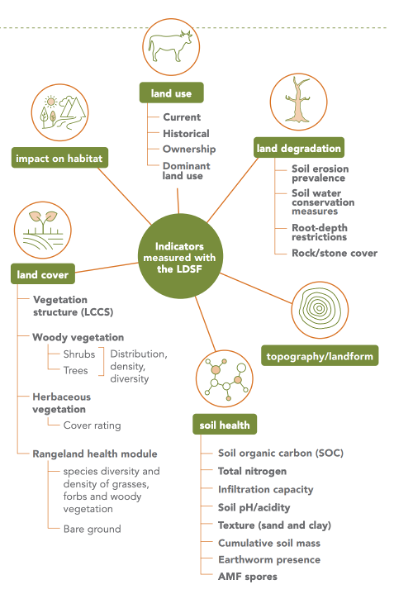
Land Health Monitoring in Kenya: Land Degradation Surveillance Framework
The Land Degradation Surveillance Framework (LDSF), a comprehensive method developed by World Agroforestry (ICRAF) scientists, provides a science-based field protocol for quantifying land and soil characteristics, vegetation composition and land degradation status over time. LDSF was developed as a response to a lack of methods for systematic landscape-level assessment of soil and ecosystem health, using a robust and consistent indicator framework.
Learn more from the University of British Columbia Virtual Soil Science Learning Resources Library
The Soil Health Resolution flyer
The Soil Health Resolution is a set of commitments to enable and scale healthy soil practices to mitigate and adapt to climate change, restore biodiversity, improve water resilience, enhance food and nutrition security, and protect natural and cultural heritage.

Digging Deeper: Soil Health as the Game Changer for Poverty Reduction
In his Nobel Prize acceptance lecture, economist Theodore Schultz (1979) remarked, “Most of the world’s poor people earn their living from agriculture, so if we knew the economics of agriculture, we would know much of the economics of being poor”. If agriculture, then, largely determines the fate of the world’s poor, soil health has a fundamental role to play, given its impact on agriculture. In this paper, we lay out the deep relationships between soil health, agriculture, and poverty, and their implications for policy making. We focus on the United Nations Sustainable Development Goal 1 (SDG 1): No Poverty (United Nations, n.d.- a), which seeks to end poverty in all its forms everywhere. Extreme poverty is defined as surviving on less than $2.15 per person per day, at 2017 prices. We use the Intergovernmental Technical Panel’s definition of soil health: “. . . the ability of the soil to sustain the productivity, diversity, and environmental services of terrestrial ecosystem” (FAO, 2020).

Restoration Monitoring Guide: A Field Technician’s Manual for Monitoring Restoration Across Watersheds
Despite its importance, many national restoration monitoring frameworks still lack robust systems for tracking management practices at finer scales. Most reporting focuses on broad targets such as tree cover increase or total hectares restored—yet these figures alone don’t tell us whether restoration efforts are truly improving ecosystem function. Without clear data on soil health, vegetation recovery, erosion reduction, or water availability, restoration risks being implemented without understanding its actual effectiveness on the ground.
This Restoration Monitoring Guide addresses that gap. It provides a hands-on, field-ready approach for monitoring restoration outcomes at both plot and watershed levels. Developed for district-level field agents, extension staff, and natural resource management officers, the guide supports locally grounded, scientifically robust monitoring that enhances decision-making, accountability, and adaptive management.

Regional Policy Coherence for the Great Green Wall Initiative: Soil Health as the Foundation to Realising the Ambitions of the Great Green Wall Initiative (ENG & FR)
Healthy soil is the foundation of resilient landscapes, sustainable food systems, and climate adaptation in Africa’s drylands. As a unifying element across climate, nutrition, biodiversity, and restoration agendas, soil health plays a critical role in realising the ambitions of the African Union’s Great Green Wall Initiative (GGWI). With over 65% of productive land degraded and soil erosion undermining agricultural productivity, smallholder farmers across the continent face compounding vulnerabilities. The GGWI Strategy (2024–2034) recognises soil health as central to reversing land degradation and building long-term resilience, aligning closely with the Africa Fertiliser and Soil Health Action Plan (AFSH-AP) (2023 – 2033) and broader goals outlined in the Ten-Year Comprehensive Africa Agriculture Development Programme (CAADP) Strategy and Action Plan (2026-2035).

Delivering nature-based solution outcomes by addressing policy, institutional, and monitoring gaps in forest and landscape restoration (Research Summary Brief)
Under the UK PACT funded project ‘Promoting nature-based solutions for land restoration while strengthening the national monitoring technical working group in Kenya’, CIFOR-ICRAF have undertaken practical training sessions with various stakeholders on using the Regreening App, a citizen science data collection initiative that enables farmers, government agents, project officers and implementors to track and provide evidence of restoration practices on the ground by reporting data on key indicators of land restoration.
This knowledge brief seeks to outline uptake of the Regreening Mobile App following two three-day practical workshops attended by a range of multi-disciplinary participants.